Quick answer
Stay within a few minutes of the harbour: the centre is small, the rain is constant, and the ferries, the market and the funicular are all there. Nordnes is quieter, the station side cheaper. Favour somewhere with space to dry a wet coat.
On this page
- Where to stay in Bergen: the short answer
- Around the harbour
- Nordnes
- Near the station
- What the accommodation is like
- The rain, honestly
- The cruise season
- How many nights
- Where this fits
- What you are here for
- Eating in Bergen
- Getting here and away
- Bergen with children
- Bergen in each season
- Booking ahead
- The seven mountains, and what they mean for a stay
- What to check before booking
- Where Bergen fits in a trip
- The short version
- Frequently asked questions
Bergen is small, wedged between seven mountains and a harbour, and almost everything a visitor wants sits within fifteen minutes’ walk of the fish market.
Some links below are affiliate links. We may earn a commission if you book through them, at no extra cost to you. We do not rank hotels, and any prices on the map come live from the booking sites.
That makes the accommodation question less about location than about two other things: the rain, which is constant enough to be a planning factor, and the cruise season, which fills the old town with day visitors from mid-morning.
Where to stay in Bergen: the short answer
| If you are | Stay | Why |
|---|---|---|
| Here one or two nights | Around the harbour and Bryggen | Everything on foot |
| Arriving by train | Near the station | Ten minutes from the harbour |
| Wanting quiet and character | Nordnes | Wooden houses, the peninsula, residential |
| Wanting value | Sandviken or the edge of the centre | Short walk or bus |
| Here for the fjord boats | Harbour side | The terminals are there |
One answer with no caveats: within a few minutes of the harbour, on either side. Bergen’s centre is small enough that nothing else buys you much.
Map shows live availability and prices. We may earn a commission on bookings made through it, at no extra cost to you.
Around the harbour
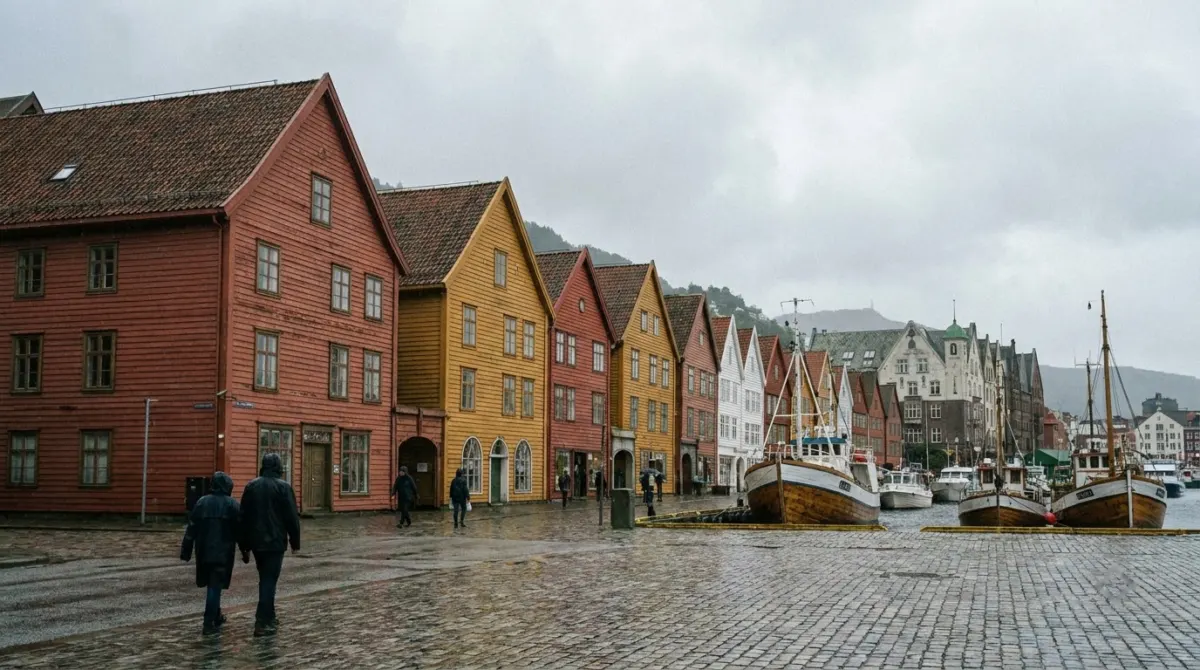
Bryggen, the row of wooden Hanseatic warehouses on the eastern quay, is the postcard and a UNESCO site. The fish market faces it across the water, and the Fløibanen funicular climbs from behind it to a viewpoint over the city.
Staying in this area means you are at the ferries, the market and the start of every walk. It is also where the cruise crowds concentrate between ten and four.
Nordnes
The peninsula west of the harbour is residential: narrow lanes of white wooden houses, a park at the end, and the aquarium.
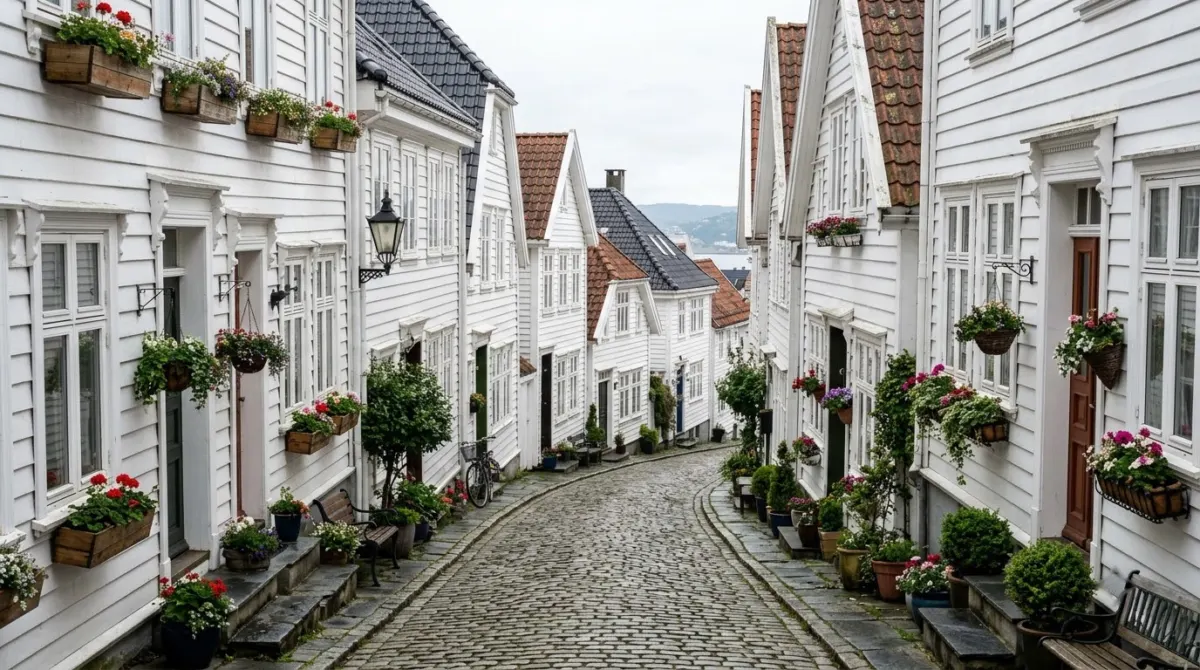
It is five to ten minutes’ walk from the centre and considerably quieter. For two nights or more, this is the pleasanter place to come back to.
Near the station
Bergen’s railway station, the western end of the Oslo line, is about ten minutes’ walk from the harbour, with a cluster of modern hotels around it. For the other end of the line, see where to stay in Oslo.
Convenient if you are arriving on the Bergen railway or leaving early, and generally cheaper than the harbour front.
What the accommodation is like
Bergen’s stock is a mixture of modern hotels and conversions of older wooden buildings. The modern ones have lifts and reliable heating; the older ones have character and stairs.
Breakfast is usually included and is substantial, which matters in Norway.
Apartments are widespread and suit stays of three nights or more.
Air conditioning is rare and almost never needed; heating and drying space matter far more.
The rain, honestly
Bergen is among the wettest cities in Europe, with rain on well over half the days of the year.
Two practical consequences for booking. A property with somewhere to dry coats and boots is worth more here than almost anywhere else. And a central position matters more than usual, because you will not want a twenty-minute walk in horizontal rain twice a day.
It is not a reason to avoid the city — locals simply dress for it — but it is a reason to pack properly and stay close in.
The cruise season
From roughly May to September, large cruise ships dock beside the centre and several thousand people walk into a very small old town at once.
Bryggen and the fish market are busiest between about ten and four. Early mornings and evenings are quiet, which is the argument for staying overnight rather than passing through.
How many nights
Two nights covers Bryggen, the funicular, the fish market and one museum, with an evening in the city.
Three adds a fjord trip — the boats to the Hardangerfjord and the Mostraumen leave from the harbour — or the Ulriken cable car and a mountain walk.
Our guide to how many days in Bergen covers the choice.
Where this fits
Bergen is the western end of the Bergen railway from Oslo and the main gateway to the fjords, which is why most Norwegian itineraries pass through it.
Our Norway itinerary puts it at the end of the classic week, after the Sognefjord.
What you are here for
Bergen’s sights are close together and individually short, which is why two days is usually enough.
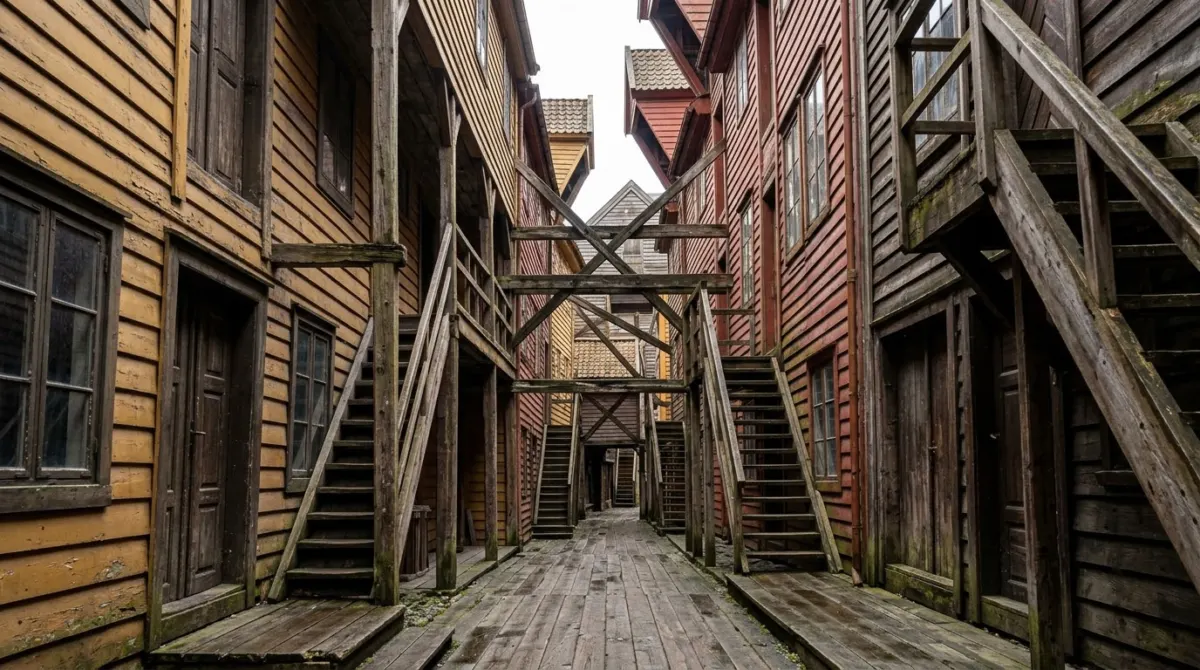
Bryggen, the wooden Hanseatic wharf, and the narrow wooden passages behind it, which are the part most visitors miss.
The fish market on the opposite quay, which is partly a tourist operation and partly a real market.
The Fløibanen funicular up Fløyen, ten minutes each way, with walking trails and a view over the islands at the top.
KODE, four art museums around the city lake, holding the largest Munch collection outside Oslo.
Fjord boats from the harbour, which is the easiest fjord access in Norway.
Eating in Bergen
Norway is expensive and Bergen is no exception, with the harbour front carrying the usual premium.
The fish market sells cooked seafood to eat on the spot, which is good and not cheap. One street back from the harbour the prices fall, and the food halls and bakeries are where locals buy lunch.
If you are staying three nights or more, an apartment with a kitchen changes the arithmetic significantly, as it does everywhere in Norway.
Getting here and away
The Bergen railway from Oslo takes about seven hours and is one of the great train journeys in Europe rather than a transfer.
Flights from Oslo take under an hour, and Bergen airport is about twenty minutes from the centre by bus or light rail.
Boats run up the coast, including the coastal ferry that works its way to the Arctic.
Most visitors arrive by train from Oslo or by ship, and leave by air.
Bergen with children
The funicular is the obvious winner, with a playground and easy trails at the top. The aquarium on Nordnes is a short walk from the centre. And the fjord boats are a boat trip as far as a child is concerned.
For a family stay, Nordnes or the streets just behind the harbour give quieter nights than the waterfront, with everything still within ten minutes.
Bergen in each season
May to September is the main season: fjord boats running, long days, everything open, and cruise ships in the harbour most days.
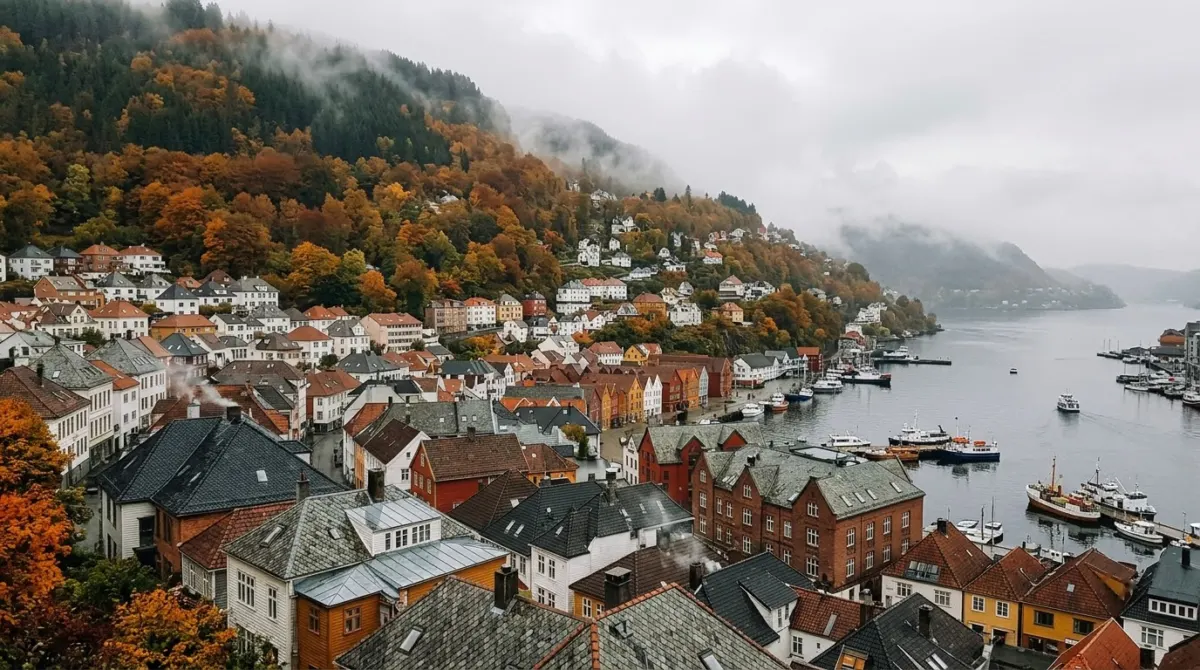
Late September and October brings autumn colour on the seven mountains, fewer visitors and reduced boat schedules.
November to March is dark and wet, with daylight down to around six hours in December. The city is cheap, atmospheric and genuinely quiet, and several fjord excursions stop entirely.
There is no dry season. Bergen’s rainfall is spread across the year rather than concentrated, which is why locals treat waterproofs as ordinary clothing.
Booking ahead
Bergen has a small centre and a large number of summer visitors, which tightens supply from June to August.
Book the harbour-side and Nordnes properties early for those months. Outside summer, a couple of weeks is usually enough.
Two local peaks worth checking: the Bergen International Festival in late spring, and any week with several large ships in port, which lifts demand for everything including restaurant tables.
The seven mountains, and what they mean for a stay
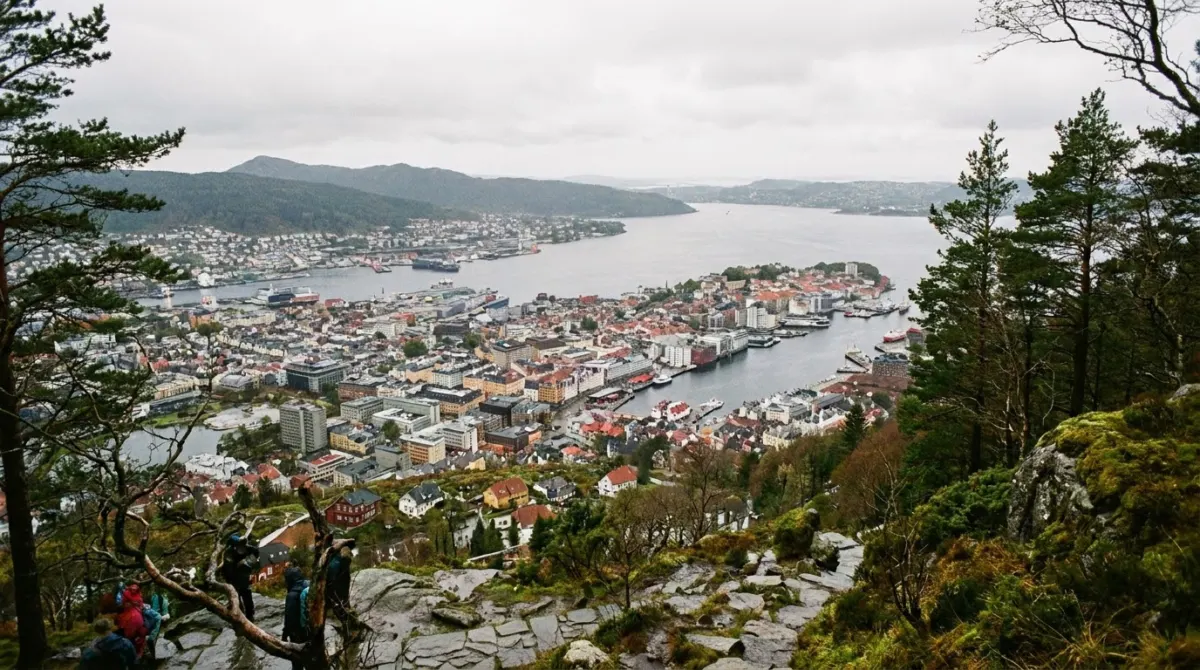
Bergen is enclosed by seven hills, and two of them are reachable from the centre.
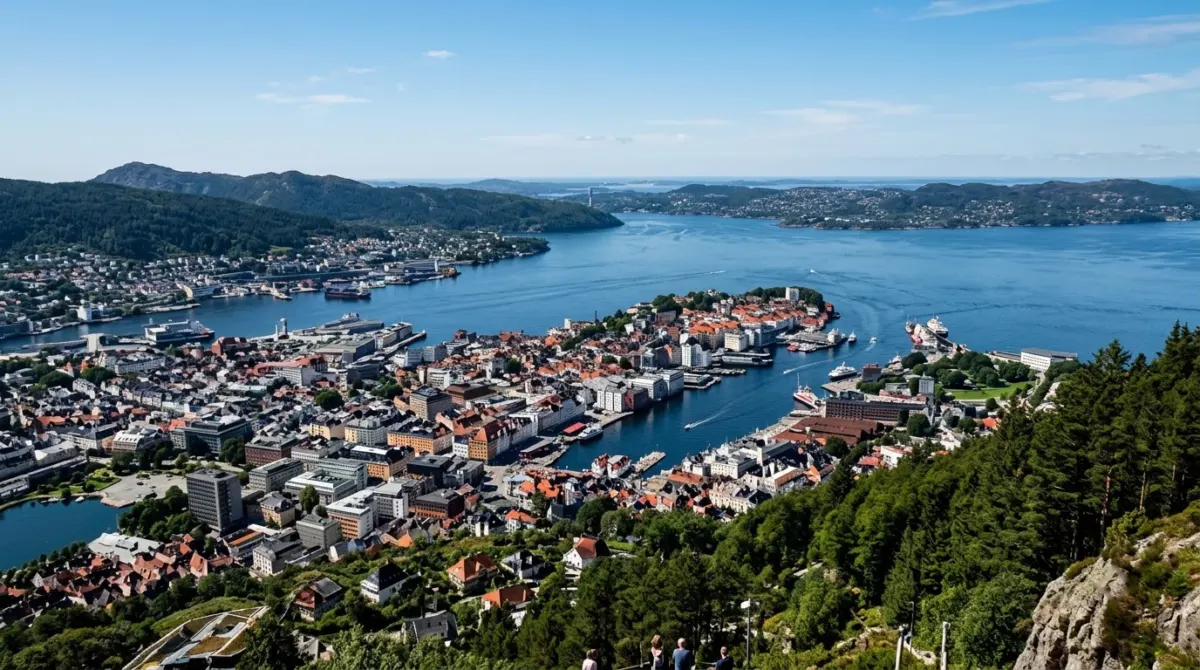
Fløyen is the one with the funicular, which climbs from behind Bryggen in about ten minutes. At the top there are marked trails, a cafe and a view over the harbour and the islands.
Ulriken is the highest, reached by a cable car from a bus ride outside the centre, and a marked ridge walk connects the two in four to five hours.
For a visitor this matters in one practical way: a hotel near the harbour is also near the funicular, which means a clear morning can become a mountain morning without planning.
What to check before booking
Somewhere to dry wet clothes, which matters more here than anywhere else in this guide.
Distance to the harbour, since the ferries, the market and the funicular are all there.
Breakfast included, which in Norway is worth real money.
Whether a cruise ship is in port on your dates, which affects restaurant tables as well as the streets.
Where Bergen fits in a trip
Bergen is the western end of the railway from Oslo and the gateway to the fjords, which means almost every Norwegian itinerary passes through it.
Two nights at the end of the classic week is the standard allocation, and it is the right one for the city itself. Three or four turn it into a base for the western fjords without a car, which is unusual in Norway and genuinely useful outside summer.
Our how many days in Bergen guide covers that choice, and the Norway itinerary puts it in context.
The short version
Stay within a few minutes of the harbour because the centre is tiny and the rain is constant. Nordnes for quiet, the station side for value and early trains. Two nights rather than one, because an extra night is an extra chance at the view from Fløyen. Book the fjord boats in summer, favour somewhere with space to dry wet coats, and plan to be out early before the cruise passengers arrive.
Plan the days with our list of things to do in Bergen.
Frequently asked questions
Where is the best place to stay in Bergen?
Within a few minutes of the harbour on either side — the centre is small enough that nothing else buys much. Nordnes on the western peninsula is quieter, and the streets near the station are cheaper.
Is Bergen really that rainy?
Yes. It is among the wettest cities in Europe, with rain on well over half the days of the year. Stay central so you are not walking far in it, and favour accommodation with somewhere to dry wet coats.
How many nights do you need in Bergen?
Two for Bryggen, the funicular, the fish market and a museum. Three if you want a fjord boat trip from the harbour or a mountain walk from the Ulriken cable car.
When is Bergen busiest?
Between about ten and four from May to September, when cruise ships dock beside the centre and several thousand people arrive in a very small old town at once. Early mornings and evenings are quiet.
Is Bergen walkable?
Entirely. Almost everything a visitor wants is within fifteen minutes' walk of the fish market, including the station, the funicular and the fjord boat terminals.
Should I stay near Bergen station?
If you are arriving on the Bergen railway or leaving early, yes — it is about ten minutes from the harbour and generally cheaper than the waterfront.
Keep planning Norway
- Where to Stay in Tromso: Central, Because the Tours Leave From There
- Where to Stay in Oslo: Sentrum First, Then the Districts
- Best Hotels in Oslo: The Pricing Runs Backwards Here
- How Many Days in Norway? Seven for the Fjords, Ten for the Arctic
- How Many Days in Oslo? Two, and Three If You Like Museums
- How Many Days in Bergen? Two, and the Rain Is the Reason
- 5 Day Norway Itinerary: One City and One Fjord
- 7 Day Norway Itinerary: Two Cities, One Railway, One Fjord
Written and checked by
Triplarks Editorial
An editorial desk, not an invented persona: research, drafting and fact-checking are done by the same small team. Every number here carries the date it was read.