Quick answer
Sentrum for a first visit, because the harbour ferries and every tram line pass through it. Grunerlokka for evenings, Frogner for quiet, Gronland for the cheapest central rooms. Pick by the nearest tram or metro stop rather than by the map.
On this page
- Where to stay in Oslo: the short answer
- Sentrum
- Grünerløkka
- Frogner and Majorstuen
- Bjørvika and the waterfront
- Grønland
- Where not to stay
- How many nights
- What you are here for
- Oslo in summer and winter
- Food, and where to eat without paying twice
- How long to stay, by district
- Getting around, in practice
- What each district costs, relatively
- Where this fits in a longer trip
- Oslo city centre, and what is walkable from it
- The short version
- Frequently asked questions
Oslo is spread along the end of a fjord with forest behind it, and it is larger than most visitors expect. The centre is walkable, but the museums are on a peninsula, the sculpture park is west, and the hills are north — so the district you pick decides how much time you spend on trams.
Some links below are affiliate links. We may earn a commission if you book through them, at no extra cost to you. We do not rank hotels, and any prices on the map come live from the booking sites.
Where to stay in Oslo: the short answer
| If you are | Stay in | Why |
|---|---|---|
| Here two nights, first visit | Sentrum | Everything connects from here |
| Wanting bars, cafes and character | Grünerløkka | The district Oslo actually goes out in |
| Wanting quiet and space | Frogner or Majorstuen | Residential, near the sculpture park |
| Here for the waterfront and new architecture | Bjørvika or Aker Brygge | Opera house, Munch museum, the harbour |
| On a budget | Grønland | Cheapest central rooms |
| Arriving late or leaving early | Near the central station | Airport trains below the building |
One answer with no caveats: Sentrum, between the station and the palace. The ferries to the museums leave from the harbour, the trams and T-bane all pass through, and you can walk to most of the centre. For specific hotels, see the best hotels in Oslo.
Map shows live availability and prices. We may earn a commission on bookings made through it, at no extra cost to you.
Sentrum
The centre runs from Oslo Central Station along Karl Johans gate to the Royal Palace, with the harbour on one side.
Staying here puts you within walking distance of the National Museum, the city hall, the fortress and the waterfront, and on the transport network for everything else.
It is busy during the day and quieter in the evening, because much of it is offices and shops. For a two-night first visit it is the obvious choice.
Grünerløkka
East across the Akerselva river, Grünerløkka is a nineteenth-century working-class district turned into the city’s café and bar quarter: independent shops, street food halls, a long park and a Sunday market.
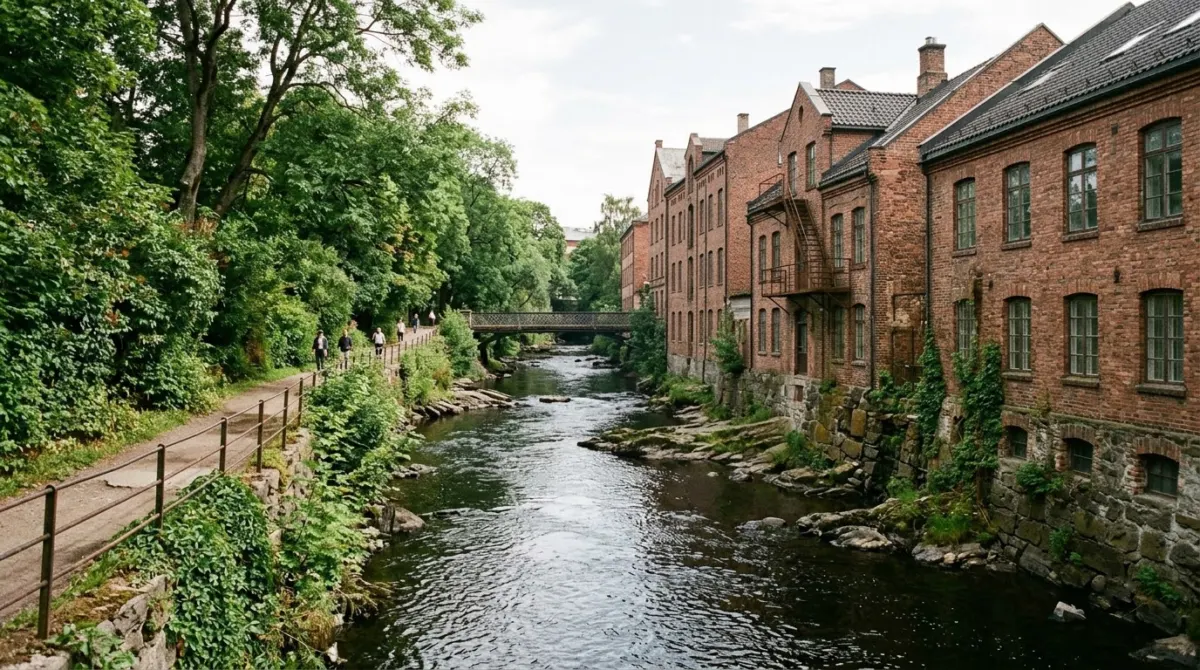
It is fifteen to twenty minutes’ walk from the centre or a short tram ride, and it is where Oslo goes out in the evening.
Accommodation here leans towards apartments rather than hotels, which suits longer stays.
Frogner and Majorstuen
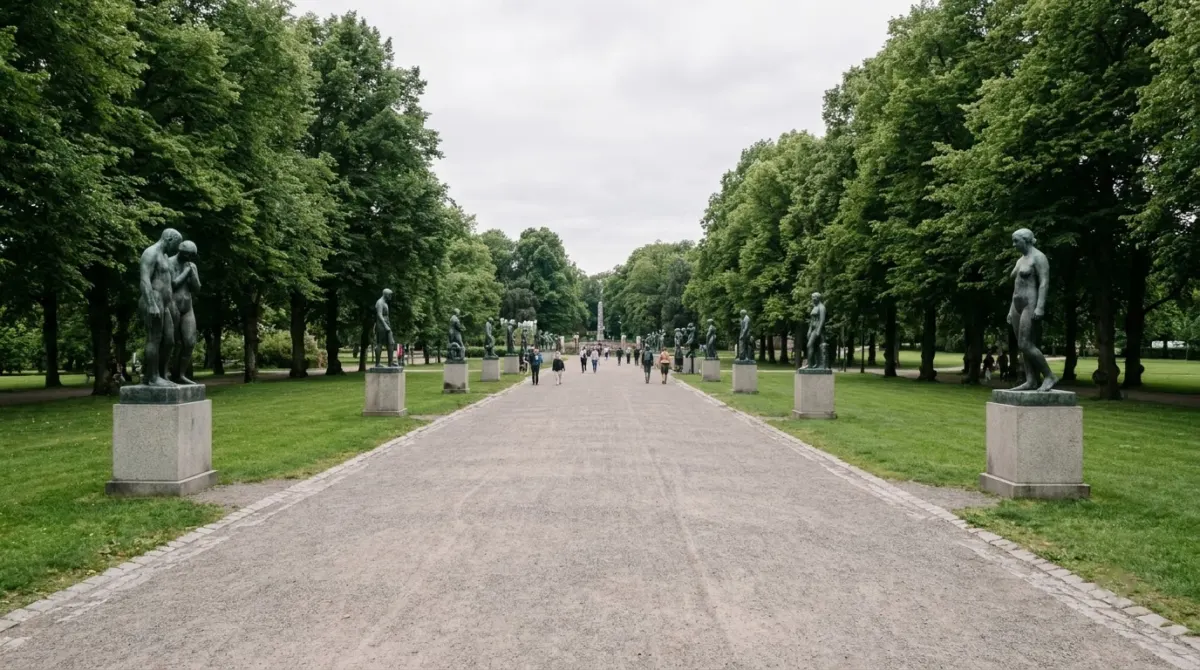
West of the palace, these are the handsome residential districts: wide streets, nineteenth-century apartment buildings, embassies, and the Vigeland sculpture park, which is free and open at all hours and holds more than two hundred sculptures by one artist.
It is quieter and greener than the centre, about twenty minutes’ walk or five minutes by tram.
Good for families and for anyone staying several nights.
Bjørvika and the waterfront
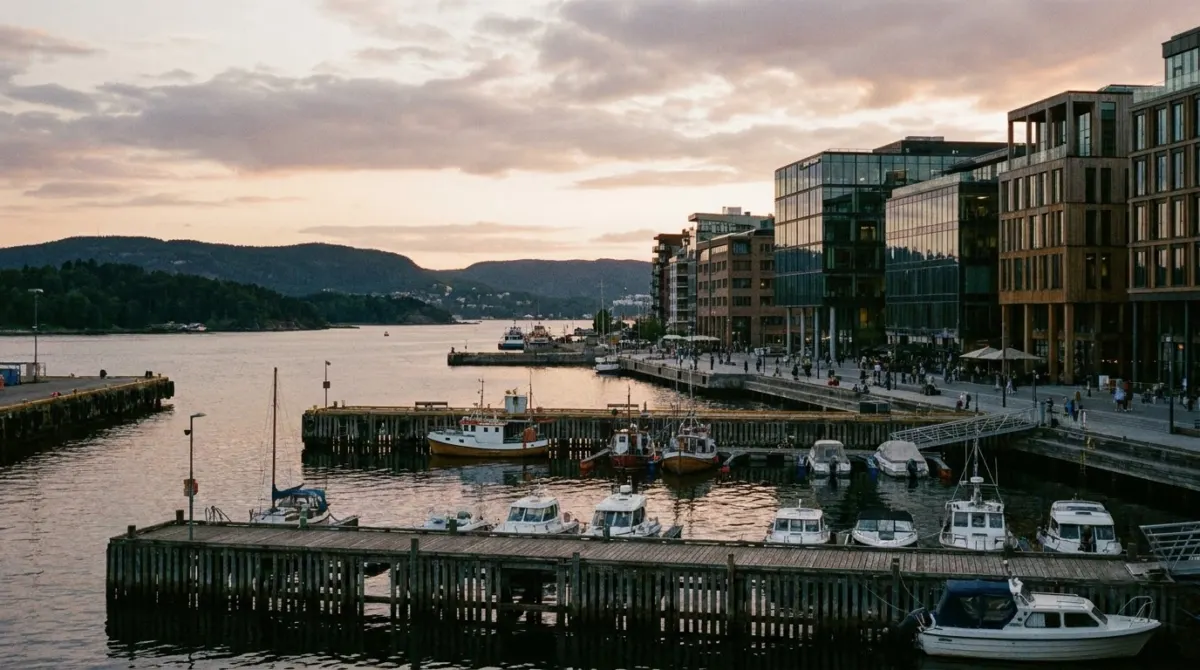
The eastern waterfront has been rebuilt over the last twenty years and now holds the opera house, whose sloping roof you can walk up, the Munch museum and the new public library.
Aker Brygge and Tjuvholmen, on the western side of the harbour, are the older version of the same idea: restaurants along the water and the Astrup Fearnley modern art museum.
Both are central, modern and more expensive than the equivalent inland.
Grønland
Immediately east of the station, Grønland is the most multicultural part of Oslo: markets, cheap restaurants and the lowest central room rates in the city.
It is a five-minute walk to the centre and ten to Grünerløkka. Like station districts everywhere it is livelier and rougher at night than the west side, and for most visitors it is perfectly fine.
Where not to stay
The far suburbs, which are well connected but put you a long way from the evening.
Airport hotels, except for a flight before about seven, since the train takes twenty minutes.
Anywhere chosen without checking the day of the week, because Oslo’s midweek business pricing is the single biggest variable in what you pay.
How many nights
Two covers the museums, the sculpture park and the waterfront. Three adds Holmenkollen, the Munch museum and a district. Four or more if you are using Oslo as a base before heading west to the fjords.
Our how many days in Oslo guide covers each length, and the Norway itinerary shows where the city fits in a longer trip.
What you are here for
Oslo’s sights split into two clusters and one outlier, which explains the transport advice.
The Bygdøy peninsula, about ten minutes by ferry from the city hall pier, holds the Viking Ship Museum, the Fram polar ship, the Kon-Tiki raft and the open-air folk museum. That is a full day.
The centre and the waterfront hold the National Museum, the fortress, the city hall, the opera house and the Munch museum in Bjørvika.
Holmenkollen, the ski jump above the city, is the outlier, reachable on the T-bane in about half an hour.
Oslo in summer and winter
The city is close to two different places depending on the month.

In summer, the fjord islands are twenty minutes away by public ferry and are where Oslo swims, and the forest behind the city is full of walkers. Daylight runs to nearly eleven at night in June.
In winter, it is dark by half past three in December, the islands close and the forest becomes cross-country skiing, which Oslo residents reach by metro with skis over their shoulder.
Both are good. They need different clothes and different plans.
Food, and where to eat without paying twice
Three patterns that work in Oslo specifically.
Food halls. Mathallen in Grünerløkka and the halls around the centre offer good food at a fraction of restaurant prices.
Lunch rather than dinner. Many restaurants serve a cheaper lunch menu, and the price gap is large.
Supermarkets. Buying breakfast and lunch is normal behaviour here rather than a sacrifice, and it is what makes a longer stay affordable.
How long to stay, by district
The right district depends partly on how many nights you have.
One or two nights: Sentrum, because the walking distances matter most on a short stay.
Three or four nights: Grünerløkka or Frogner, where there are supermarkets, ordinary restaurants and a sense of the city rather than the centre.
A week or more: an apartment anywhere on a tram line, since the kitchen matters more than the address.
Our how many days in Oslo guide works through what each length actually covers.
Getting around, in practice
One ticket covers the T-bane, trams, buses and the local ferries, and the ferries are the part visitors miss.
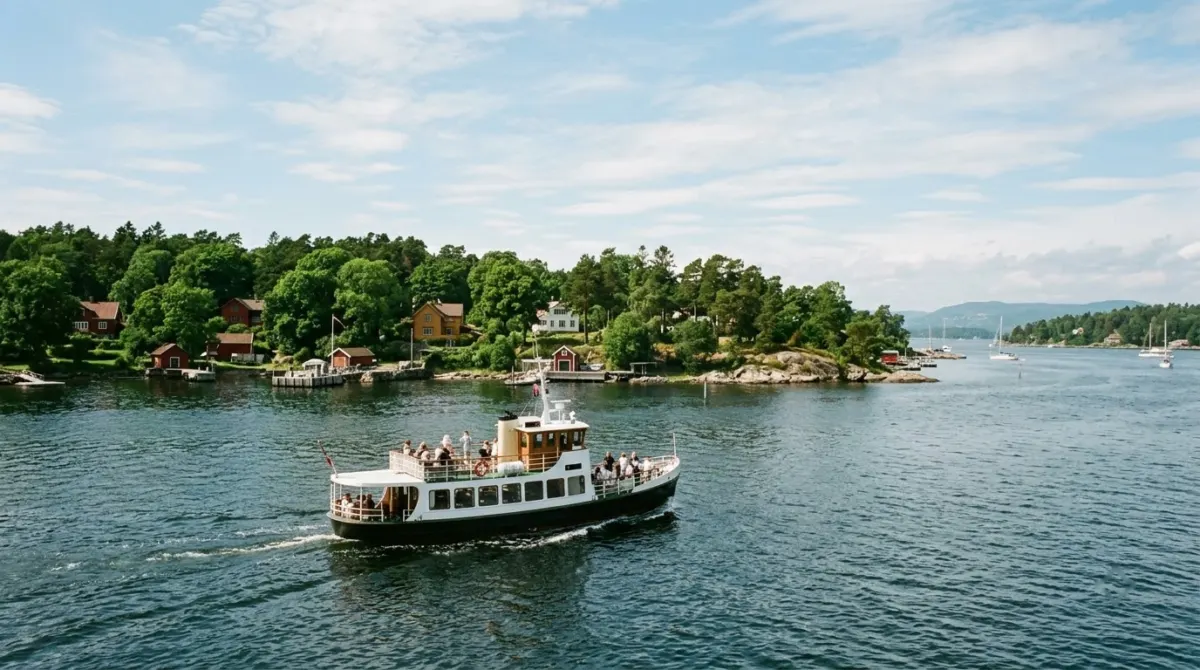
In summer, the boats to Bygdøy and to the fjord islands run on the same ticket as the metro, which turns a museum trip or a swim into an ordinary journey rather than an excursion.
Buy a 24- or 72-hour ticket rather than singles, and check which zone you need if you are going to Holmenkollen or the airport.
What each district costs, relatively
The price gradient in Oslo is less steep than in most capitals, and it runs in a predictable direction.
Bjørvika and Aker Brygge are the most expensive, because the buildings are newest and the water is outside.
Sentrum sits in the middle with the most supply and therefore the most range.
Frogner and Majorstuen are similar to Sentrum, with more apartments than hotels.
Grünerløkka is slightly cheaper and dominated by apartments.
Grønland is the cheapest central option by a clear margin.
Across all of them, the day of the week matters more than the postcode: a Saturday in Grønland and a Saturday in Sentrum may be closer in price than a Tuesday and a Saturday in the same hotel.
Where this fits in a longer trip
Oslo is where most Norwegian trips begin, and the usual shape is two nights here before taking the Bergen railway west.
That makes the practical priority a room near the central station or on a line that reaches it quickly, because the train west leaves early and is a full day.
If you are flying on to Lofoten or Tromsø instead, the airport trains leave from the same station, so the same advice applies.
Our Norway itinerary shows both routes.
Oslo city centre, and what is walkable from it
Oslo is compact for a capital, and the centre is the default answer for a first visit.
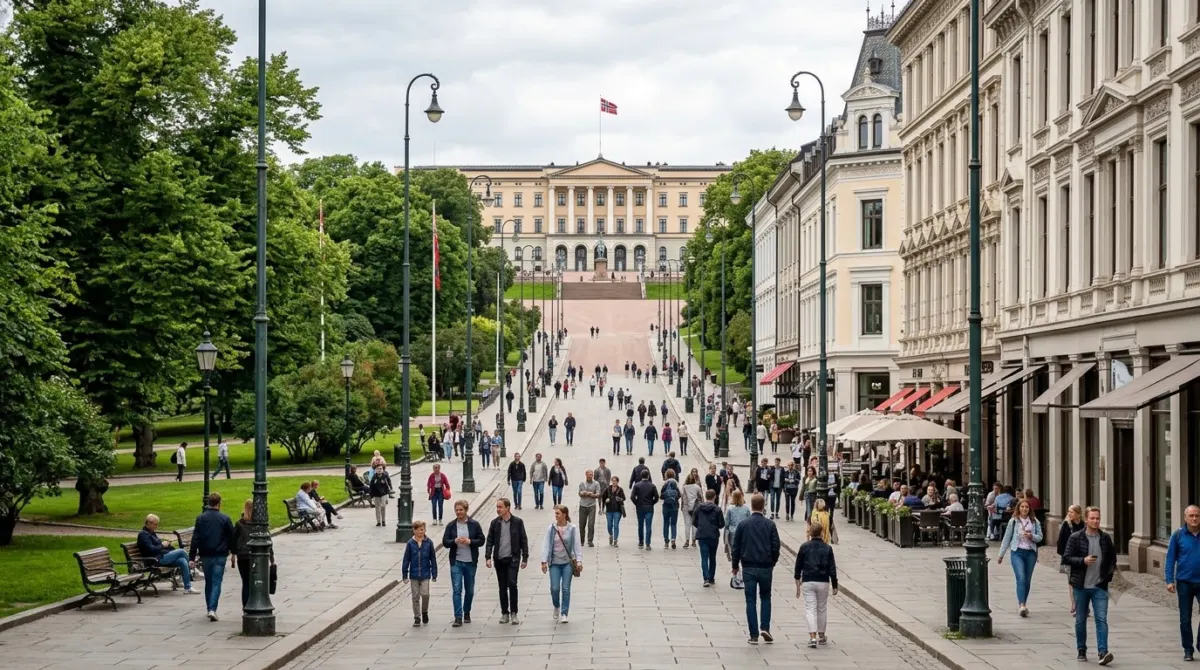
Sentrum runs from the Central Station down Karl Johans gate to the Royal Palace, with the harbour at Aker Brygge on one side. Almost every major attraction — the Opera House, the new Munch museum, the National Museum, the fortress — is within twenty minutes’ walk of it.
Why that matters here more than in most cities: Oslo’s public transport is good but the city is small enough that walking is usually faster, and a central address removes the daily cost of getting in and out.
Family-friendly is worth flagging separately. The centre is safe and quiet after dark but short of green space; Frogner, with the sculpture park and wider pavements, is the easier base with children.
The chain hotels clustered around the Central Station are the reliable mid-market option and the shortest walk to the airport train, which is the one journey everyone makes.
The short version
Sentrum for a first visit, Grünerløkka for the evenings, Frogner or Majorstuen for quiet and families, Bjørvika for the new waterfront, Grønland for the cheapest central rooms, and the station for early flights. Choose by the nearest tram or metro stop, check whether your dates fall midweek, and plan one day on Bygdøy and one in the centre.
Plan the days with our list of things to do in Oslo.
Frequently asked questions
What is the best area to stay in Oslo?
Sentrum, between the central station and the palace, for a first visit: walkable to the centre, with the harbour ferries and every tram and metro line passing through. Grünerløkka for bars and cafes, Frogner for quiet, Grønland for the cheapest central rooms.
Is Grünerløkka a good place to stay?
Yes, if you want evenings rather than mornings. It is the city's cafe and bar district, fifteen to twenty minutes' walk from the centre, with more apartments than hotels, which suits longer stays.
Is Oslo walkable?
The centre is, end to end in about half an hour. The museums on Bygdøy, the Vigeland park and Holmenkollen are not, so you will use trams, the metro or the harbour ferries most days.
Where should I stay in Oslo with family?
Frogner or Majorstuen in the west: residential, quieter, larger rooms, and the Vigeland sculpture park on the doorstep, which is free and open at all hours.
Is Grønland safe in Oslo?
It is the most multicultural district and the cheapest central area, five minutes from the centre. Like station districts everywhere it is livelier at night, and for most visitors it is perfectly fine.
How many nights do you need in Oslo?
Two for the museums, the sculpture park and the waterfront. Three if you want the Munch museum, Holmenkollen and a district beyond the centre.
Keep planning Norway
- Where to Stay in Tromso: Central, Because the Tours Leave From There
- Where to Stay in Bergen: Close to the Harbour, Because of the Rain
- Best Hotels in Oslo: The Pricing Runs Backwards Here
- How Many Days in Norway? Seven for the Fjords, Ten for the Arctic
- How Many Days in Oslo? Two, and Three If You Like Museums
- How Many Days in Bergen? Two, and the Rain Is the Reason
- 5 Day Norway Itinerary: One City and One Fjord
- 7 Day Norway Itinerary: Two Cities, One Railway, One Fjord
Written and checked by
Triplarks Editorial
An editorial desk, not an invented persona: research, drafting and fact-checking are done by the same small team. Every number here carries the date it was read.