Things to do
Things to Do in Dublin: The Best of the City, by Area
By Nora Castell Checked
Hotel links open Stay22 (Booking.com and Agoda) and tour links open GetYourGuide. We may earn a commission at no extra cost to you.
Our top choice
First visit? Stay in Grafton Street and Dame Street.
South of the river, between Grafton Street and Dame Street, for a first visit.
Quick answer where to stay
Almost everything is within twenty-five minutes’ walk, so a central address does real work: south of the river between Grafton Street and Dame Street for a first visit. Stay near Temple Bar rather than inside it.
On this page
- Top attractions in Dublin: the short answer
- Trinity College, the Book of Kells and Grafton Street
- Dublin Castle and the medieval city
- Temple Bar, the pubs and where to actually drink
- The Guinness Storehouse, the Liberties and the distilleries
- Kilmainham Gaol and Irish history
- Phoenix Park and Dublin Zoo
- North of the River Liffey
- Free things to do in Dublin
- Day trips from Dublin: around Dublin Bay and beyond
- Best time to visit Dublin
- Walking tours and guided experiences in Dublin
- How many days in Dublin, and a Dublin itinerary that fits
- Where to stay in Dublin
- The short version
- Frequently asked questions
2 areas: where to sleep
First visit
Grafton Street and Dame Street
South of the river, between Grafton Street and Dame Street, for a first visit.
- €€
- The Mercantile HotelDame Street, Grafton Street and Dame Street
- €
- Trinity Townhouse HotelSouth Frederick Street, Grafton Street and Dame Street
Near Temple Bar
Temple Bar edge
Near Temple Bar rather than inside it, to keep the location without the noise.
- €€
- The Temple Bar LaneTemple Lane South, Temple Bar edge
- €€
- Temple Bar Hotel Dublin by The Unlimited CollectionFleet Street, Temple Bar edge
Hotels shortlisted by location and recent guest reviews on Booking.com; we have not stayed in them. Affiliate links.
Timed entry · via GetYourGuide
Book these before you go
- Book of Kells and Old Library entry with Dublin Castle tourThe Book of Kells sells out, so book a timed slot before you fly and aim for opening or late in the day.See times ↗
- Guinness Storehouse entryThe most visited attraction in Ireland; entry runs on timed slots, and an afternoon visit suits the Gravity Bar view.See times ↗
- Glendalough and Wicklow Mountains day tourThe best full day out of Dublin, an hour away by bus or tour, to the monastic settlement between two lakes.See times ↗
- Newgrange and Boyne Valley with Brú na Bóinne entryNewgrange is visited only by shuttle from the Brú na Bóinne visitor centre, and a tour with entry takes care of the limited places.See times ↗
Dublin is small enough to walk across in half an hour, which is both its great advantage and the reason people underestimate it. The famous sights sit within a few streets of each other, and the city only opens up once you leave them.
Some links below are affiliate links. We may earn a commission if you book through them, at no extra cost to you. Where we name hotels, we shortlist them by location and recent guest reviews, and we have not stayed in them. Any prices on the map come live from the booking sites.
This guide groups the best things to do in Dublin by area, with the pubs, the day trips and the free things set out separately.
Top attractions in Dublin: the short answer
Dublin city is small enough to walk across in half an hour, and everything below sits in or near the heart of Dublin between Trinity College and the Liffey.
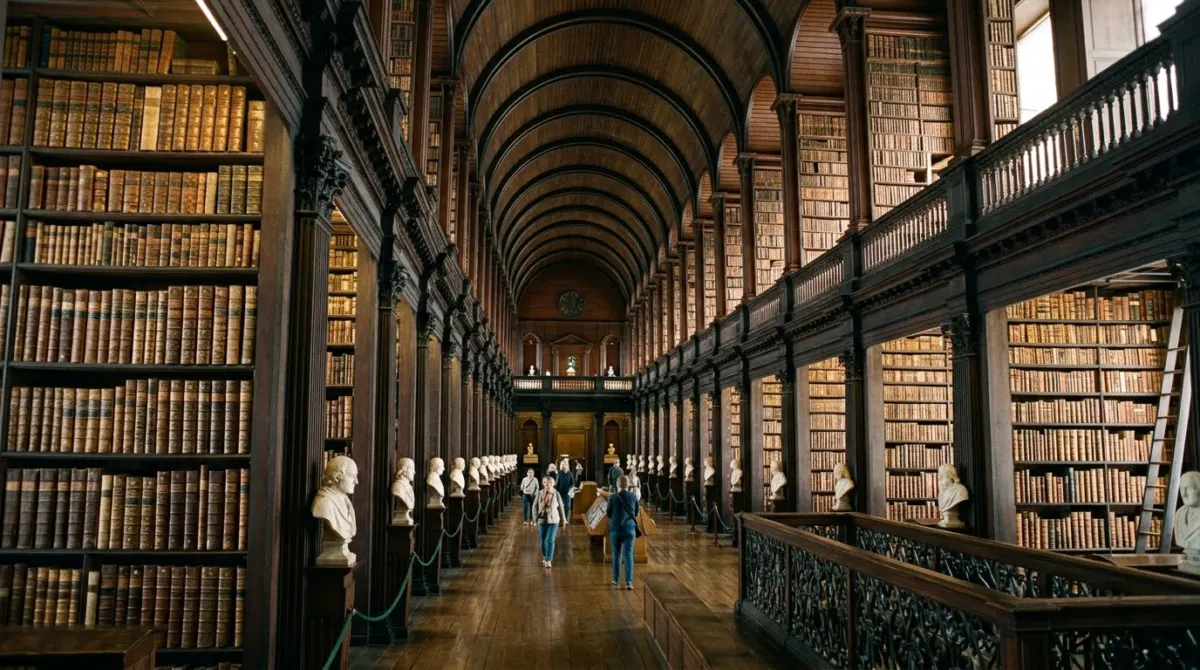
Trinity College and the Book of Kells for the Long Room, which is the single most photographed interior in Ireland.
Kilmainham Gaol for the history that explains the rest of the country.
The Guinness Storehouse if you want the view from the Gravity Bar, and a smaller distillery tour if you want the drink.
One cathedral, either Christ Church or St Patrick’s.
An evening in a pub with live music, which is not in Temple Bar.
Trinity College, the Book of Kells and Grafton Street
Trinity College sits in the middle of the city centre behind a plain grey front, and its cobbled squares are open to walk through for nothing.
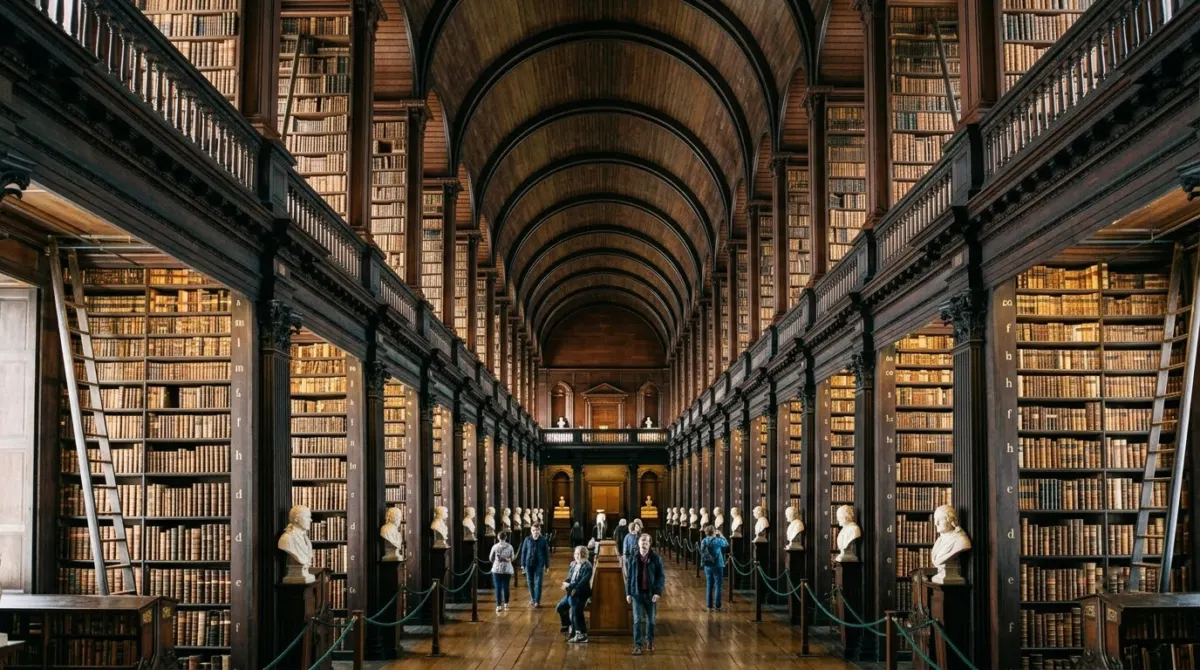
The Book of Kells is a ninth-century illuminated gospel manuscript, displayed two pages at a time. The exhibition around it explains the making of it, and the manuscript itself takes about four minutes to look at.
The Long Room above it is the reason to buy the ticket: a barrel-vaulted oak ceiling with marble busts down both sides, although almost all of its books have been removed for the Old Library redevelopment. Book a timed slot, and go at opening or late in the day.
Grafton Street runs south from the college gate and is the main pedestrian street, busy with buskers who are genuinely worth stopping for. At the top of it, St Stephen’s Green is a Victorian public park with a lake and a bandstand, and it is free.
The Museum of Literature Ireland, on the corner of the Green, holds the first copy of Ulysses and makes a better case for Irish writing than the pub plaques do.
Dublin Castle and the medieval city
West of Trinity, the oldest part of Dublin is compact and often skipped.
Dublin Castle is not a castle in the way visitors expect — the Norman fortress is mostly gone and what stands is a Georgian complex around a courtyard, with the State Apartments open for guided tours and the medieval undercroft visible below.
The Chester Beatty Library in the castle gardens is free, holds one of the finest collections of manuscripts and Islamic and East Asian art in Europe, and is consistently the most underrated museum in the city.
Christ Church Cathedral and St Patrick’s Cathedral are ten minutes apart and both worth a look; Christ Church has the better crypt, St Patrick’s the stronger literary connection through Jonathan Swift, who was dean here.
Dublinia, attached to Christ Church, covers the Viking and medieval city and is the one attraction in Dublin squarely aimed at children.
Temple Bar, the pubs and where to actually drink
Temple Bar is the cobbled quarter between Dame Street and the river, and it is the thing visitors are most often warned about. The warning is fair: the pubs on the main lanes charge a premium for a pint, the music is loud and continuous, and most people who live in Dublin do not drink there.
Walk through it once for the look of it, and go one street back.
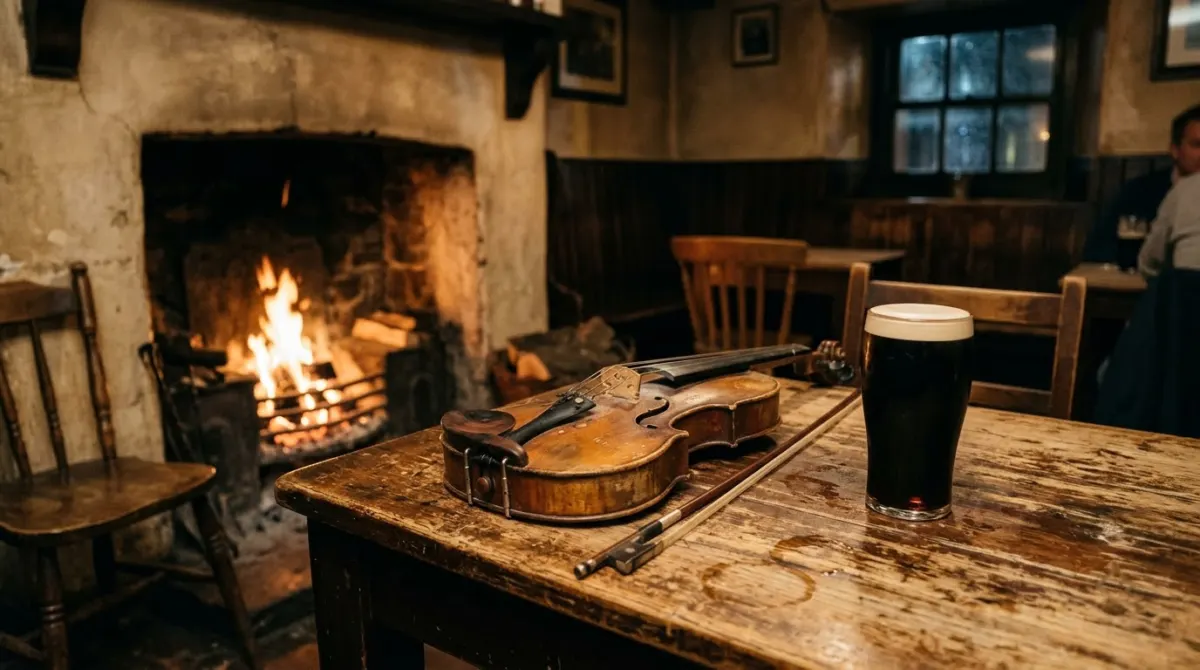
What a good Dublin pub looks like: a snug or a partitioned bar, a fire, no television, and musicians sitting in a corner rather than on a stage. Traditional sessions are usually unamplified and start late.
The Victorian pubs around South Great George’s Street, the lanes off Capel Street north of the river, and the older houses out towards Stoneybatter are where to look.
One practical note. A pint of Guinness takes about two minutes to pour properly in two stages, and a bar that hands it over immediately has not done it right.
The Guinness Storehouse, the Liberties and the distilleries
The Liberties, west of the cathedrals, is where Dublin brewed and distilled.
The Guinness Storehouse is the most visited attraction in Ireland: seven floors inside the old fermentation plant, ending at the Gravity Bar, a glass room at the top with a full circle of views over the city. The exhibition is a brand museum and knows it. The view and the included pint are what people remember.
The distillery tours are the alternative. Teeling and Roe & Co are working distilleries in the Liberties; Jameson’s Bow Street is a visitor centre rather than a working plant. All run tastings, and the smaller ones are more interesting than the famous one.
St James’s Gate around the Storehouse is otherwise industrial, so plan to arrive and leave rather than linger.
Kilmainham Gaol and Irish history
Kilmainham Gaol is the most important thing to do in Dublin and the one visitors most often leave out.
The prison held the leaders of every Irish rebellion from 1798 onwards, and the executions after the 1916 Rising took place in its stonebreakers’ yard. Entry is by guided tour only, the tours sell out days ahead online, and the East Wing — a Victorian panopticon of iron walkways under a glass roof — is the space most people have seen in photographs without knowing where it is.
Allow ninety minutes. It explains more about modern Ireland than everything else on this page put together.
The Irish Museum of Modern Art next door occupies the seventeenth-century Royal Hospital Kilmainham, and the grounds are free.
Phoenix Park and Dublin Zoo
Phoenix Park is one of the largest enclosed public parks in any European capital — seven hundred hectares, twice the size of Central Park, with a herd of fallow deer that has lived there since the seventeenth century and is usually visible near the Papal Cross.
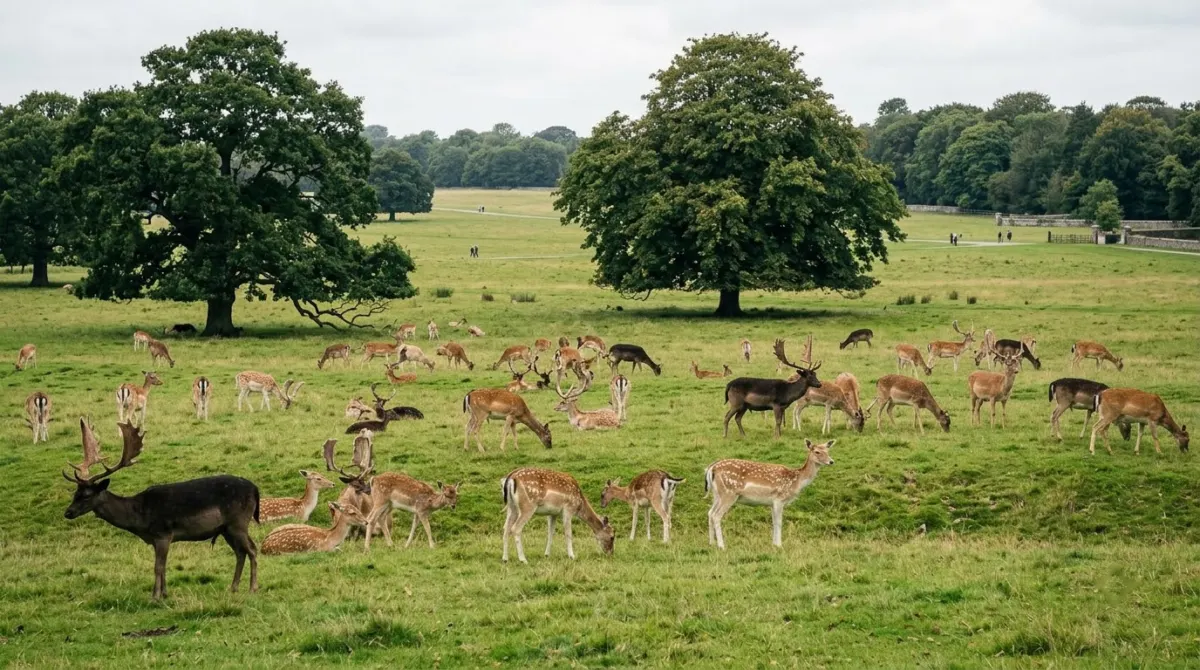
It holds the President’s residence, a Victorian flower garden, and enough space that it never feels busy. Rent a bike at the gate; walking the whole park takes most of a day.
Dublin Zoo sits inside the park and is one of the oldest in the world. It is a half-day with children and a reasonable one without.
The park is about forty minutes’ walk from the city centre, or fifteen minutes on the bus along the quays.
North of the River Liffey
The Liffey splits Dublin, and most visitors stay south of it. The north side holds three things worth crossing for.
The National Museum of Ireland — Archaeology is actually on the south side at Kildare Street, and holds the bog bodies and the Iron Age gold that are the best things in any Dublin museum. The Decorative Arts and History branch at Collins Barracks is north of the river and covers the 1916 Rising properly.
O’Connell Street is the main north-side boulevard, with the General Post Office at its centre — the headquarters of the 1916 Rising, with the bullet marks still in the columns.
The Hugh Lane Gallery on Parnell Square holds Francis Bacon’s studio, moved from London and reassembled in full chaotic detail. It is free.
Free things to do in Dublin
Start with the Georgian squares. Merrion Square is the finest of them — brick terraces with painted doors around a public park, with the National Gallery and the Natural History Museum on its edge and a statue of Oscar Wilde reclining on a rock inside it. All three are free.
Dublin is expensive, and a good deal of it is not.
The National Museum of Ireland, all branches, and the National Gallery, the Chester Beatty, the Hugh Lane and the Irish Museum of Modern Art are all free.
Trinity College’s squares, St Stephen’s Green, Phoenix Park and the Iveagh Gardens cost nothing.
The coastal walk from Howth, reachable on the DART for the price of a train ticket.
Live traditional music in a pub, where you pay for a drink and nothing else.
Day trips from Dublin: around Dublin Bay and beyond
The DART, the coastal train, makes most of these simple.
Howth is thirty minutes north on the DART: a working fishing harbour, a cliff walk around the head with views back across Dublin Bay, and seafood at the pier.
Dún Laoghaire and Dalkey are the same distance south, with a Victorian seafront and a small castle.
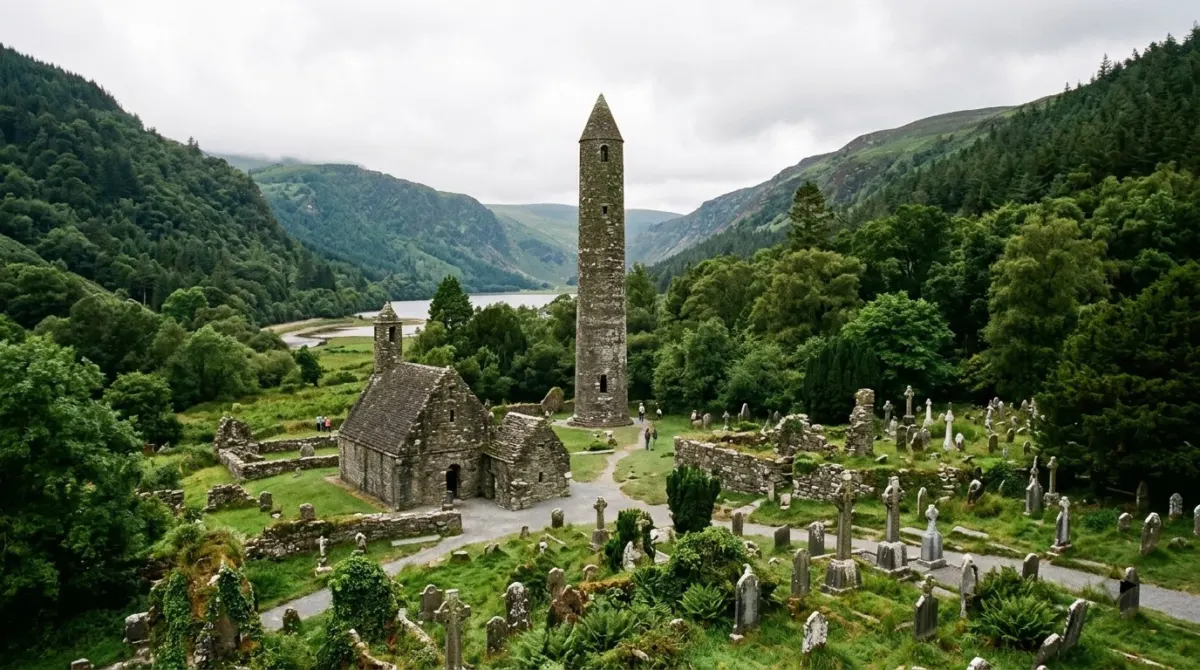
Glendalough in the Wicklow Mountains is an hour by bus or tour: a sixth-century monastic settlement with a round tower, set between two lakes in a glacial valley. It is the best full day out of Dublin.
Newgrange, in the Boyne Valley, is a passage tomb older than the pyramids, visited from a visitor centre by shuttle bus.
Best time to visit Dublin
May, June and September are the best months: long evenings, the parks at their best, and manageable crowds.
July and August are busiest and wettest in the way Ireland is wet — showers rather than rain.
St Patrick’s Day in mid-March fills the city entirely, and accommodation goes months ahead.
November to February is dark by four and cheap, and the pubs are at their best when it is miserable outside.
Walking tours and guided experiences in Dublin
Dublin is a city where a guide earns their fee, because a great deal of what matters here is not visible in the buildings.
A historical walking tour of the city centre covers the 1916 Rising, the Georgian squares and the famine memorials in about two hours, and turns a set of attractions in Dublin into a story. Free tip-based tours leave from outside the Dublin Tourism office and from Trinity’s front gate; paid small-group versions go deeper.
A literary pub crawl is the one guided experience in Dublin that is genuinely unlike anything elsewhere — actors perform passages from Joyce, Beckett and Behan between pubs, in the pubs those writers drank in.
A traditional music pub tour is the honest version of what Temple Bar sells, led by working musicians who explain what a session is before you sit in one.
Kilmainham Gaol is guided-tour-only, so that one is decided for you.
What not to book: hop-on-hop-off buses in a city this walkable, and anything billing itself as the best adventure in Dublin, which in practice means a boat that does not leave the Liffey.
How many days in Dublin, and a Dublin itinerary that fits
The things to do above divide neatly by the number of days in Dublin you have.
One day: Trinity and the Long Room in the morning, Dublin Castle and one cathedral at midday, a pub with music in the evening.
Two days: add Kilmainham Gaol and either the Guinness Storehouse or a distillery, with the free national museums in whatever gap is left.
Three days: add Phoenix Park or the north side, and an afternoon out on the DART.
Beyond three days, Dublin becomes a base rather than a destination, and the Wicklow Mountains and the Boyne Valley are what the extra days are for.
Where to stay in Dublin
Almost everything above is within twenty-five minutes’ walk of each other, so a central address does real work here.
Our guide to where to stay in Dublin compares the areas, and how many days you need in Dublin sets out what each extra day buys. If Dublin is the start of a longer trip, the Ireland itinerary continues from here.
Map shows live availability and prices. We may earn a commission on bookings made through it, at no extra cost to you.
The short version
Book Kilmainham Gaol and the Book of Kells before you fly, because both sell out. Walk Trinity, the castle and one cathedral in a morning. Give the Guinness Storehouse an afternoon if the view appeals, or a small distillery if the drink does. Drink one street back from Temple Bar. Keep a day for Phoenix Park or the DART out to Howth, and remember that the best museums in the city are free.
Frequently asked questions
What should I not miss in Dublin?
Kilmainham Gaol, which explains modern Ireland better than anything else in the city, and the Long Room at Trinity College. Both need booking ahead. After that, one cathedral, Phoenix Park, and an evening of live music in a pub away from Temple Bar.
What is the number one thing to do in Dublin?
The Guinness Storehouse is the most visited attraction in Ireland, mainly for the Gravity Bar at the top and the view over the city. For most visitors Kilmainham Gaol is the more rewarding ticket, and the Long Room at Trinity is the more memorable room.
Is 2 days enough to see Dublin?
Two days covers the main attractions comfortably because the city centre is small and walkable. A third day is for Phoenix Park, the north side museums, or a trip out to Howth or Glendalough.
Is Dublin a walkable city?
Yes, unusually so. Trinity College, Dublin Castle, both cathedrals, Temple Bar and Grafton Street are within fifteen minutes of each other on foot. Only Kilmainham, the Guinness Storehouse and Phoenix Park need a bus, and even those are walkable if you have the time.
Is Temple Bar worth visiting?
Walk through it once for the look of it. The pubs on the main lanes charge a premium and the music is aimed at visitors. The Victorian pubs around South Great George’s Street and the lanes off Capel Street are where the traditional sessions actually are.
What free things are there to do in Dublin?
The National Museum of Ireland, the National Gallery, the Chester Beatty Library, the Hugh Lane and the Irish Museum of Modern Art are all free. So are Trinity College’s squares, St Stephen’s Green, Phoenix Park and the cliff walk at Howth.
What is the best day trip from Dublin?
Glendalough in the Wicklow Mountains, a sixth-century monastic site with a round tower between two lakes, about an hour away. For a half day, take the DART to Howth for the harbour and the cliff walk around Dublin Bay.
Keep planning Ireland
- Where to Stay in Kilkenny: On the Mile, or Beside the Station
- Where to Stay in Doolin: Book a Room You Can Walk Home To
- Where to Stay in Belfast: Four Quarters, Four Different Trips
- Where to Stay in Killarney: The Town, or the Lakes
- Where to Stay in Dingle: In Town, or Out Where the View Is
- Where to Stay in Ireland: Pick Three Bases, Not Seven
- Where to Stay in Galway: The Noise Decides It, Not the Distance
- Best Hotels in Dublin: What Each Kind of Building Gives You

Written and checked by
Nora Castell is the pen name of the Triplarks editorial desk and the editor of its Costa Rica and Central America guides. Each guide is built from national park, transport and tourism sources, operator rate cards and recent traveller reports, then fact-checked, with every figure dated to the day it was read. Triplarks uses AI tools to help draft; nothing goes live until it has been edited and checked. Where we have not been somewhere, we do not write as though we have.