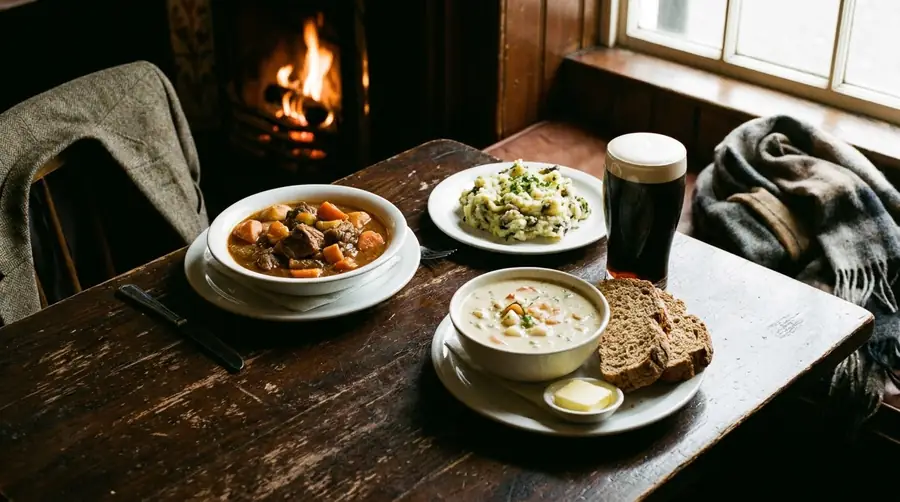
Where to stay to eat well in Ireland
Pick the town by the food. Dublin for a first trip and pub classics, Galway for oysters and seafood, Cork for markets and farmhouse cheese.
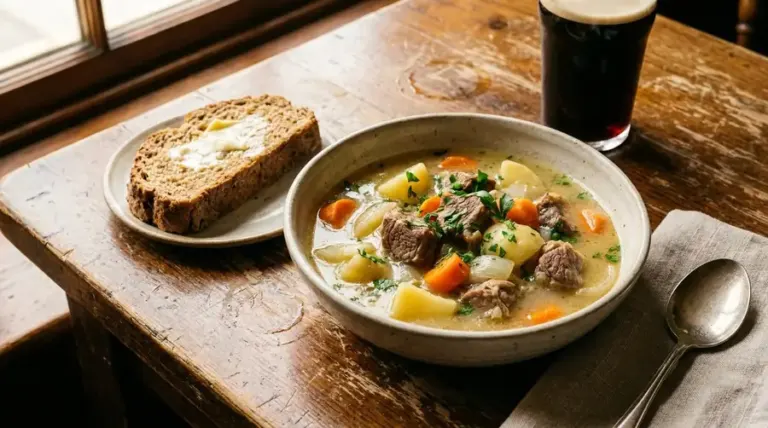
Illustration Check hotels in Dublinor compare on AgodaFirst trip
Dublin
Pub classics, coddle and Guinness, with the sights between meals.
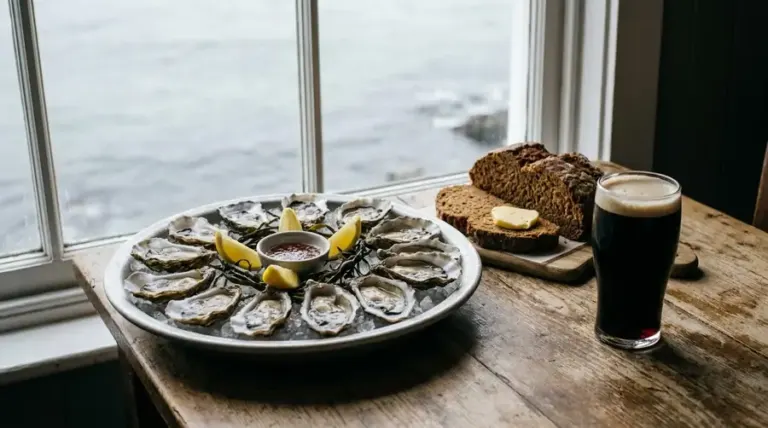
Illustration Check hotels in Galwayor compare on AgodaBest for seafood
Galway
Galway Bay oysters, chowder in every pub, and Connemara on the doorstep.
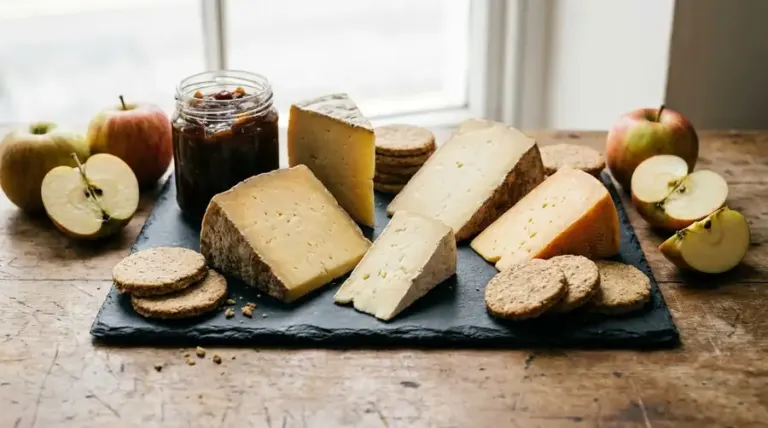
Illustration Check hotels in Corkor compare on AgodaBest for food
Cork
A covered food market, West Cork cheese and Kinsale seafood close by.
On this page
- Traditional Irish food by region: the menu
- Where to eat traditional Irish dishes, region by region
- Dublin: Irish stew, Dublin coddle and a pint of Guinness
- Galway and Connemara: Galway Bay oysters, seafood chowder and Connemara lamb
- Doolin and the Burren: smoked salmon, goat's cheese and pub chowder
- Dingle: crab claws, Dingle pie and sea salt ice cream
- Killarney and the Ring of Kerry: Irish lamb, bacon and cabbage and Kerry apple cake
- Cork: the English Market, black pudding, spiced beef and drisheen
- Kilkenny: Smithwick's red ale, bacon and cabbage and the Waterford blaa
- Belfast and Northern Ireland: the Ulster fry, champ and soda farls
- How Irish cuisine works: Irish pub grub, the carvery and Sunday dinner
- Traditional Irish recipes worth ordering in Ireland
- Traditional Irish potato dishes
- Irish brown bread, Irish butter and Irish cheddar
- Irish drinks: Irish whiskey, Irish cream and Irish coffee
- Irish-American dishes you will not find on Irish menus
- When to eat what: Irish food by season
- Ordering words
- When the Irish eat
- Hotels near the food in Dublin, with live prices
- Famous Irish food: FAQ
Irish food is better than its reputation. For a long time Ireland was known for boiled meat and potatoes, but Irish cuisine has always been built on very good raw ingredients: grass-fed beef and lamb, butter and cream, Atlantic seafood and bread made with buttermilk. The potato arrived in the late 1500s and became the staple food of the poor until the Irish potato famine of the 1840s, a turning point in Irish culture that sent millions of Irish immigrants abroad, and you still see it on every plate, mashed, boiled, fried or baked into bread. Traditional Irish food is regional in a quieter way than in Italy or France. The same Irish stew is served across the country, but oysters belong to Galway, coddle to Dublin, drisheen and spiced beef to Cork, and the Ulster fry and champ to the north. This guide is for travellers, not cooks: it is not a list of traditional Irish recipes to make at home, but a guide to good Irish fare and where to find it. First comes the menu, with every popular Irish dish and authentic Irish speciality and the place it belongs to. Then we go region by region, from Dublin to Galway and Connemara, Doolin and the Burren, Dingle, Killarney, Cork, Kilkenny and Belfast, with what to order there, when it is in season, and where to stay so dinner is a short walk home. If you are still planning the route, our 7-day Ireland itinerary connects most of these towns by road.
Some links below are affiliate links. We may earn a commission if you book through them, at no extra cost to you. We do not rank hotels, and any prices on the map come live from the booking sites.
Short answer
- Eat each dish where it belongs: coddle in Dublin, oysters in Galway, drisheen and spiced beef in Cork, the Ulster fry in Belfast.
- Pubs are where most Irish food is eaten; kitchens often close by about 9 pm.
- Belfast is in the UK: prices in pounds sterling, and a different name for the breakfast.
Triplarks · Ireland
Traditional Irish food by region: the menu
Each famous Irish dish and the county or city where it is best.
Irish stew, potatoes and Sunday dinner the main course
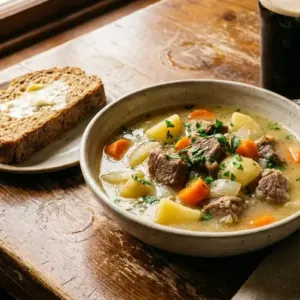
Irish stewEverywhere, Dublin
Made with lamb or mutton, potatoes and onions simmered slowly in one pot. Whether carrots belong in it is an old family argument.
Guinness beef stewDublin
A beef stew made with stout, onions and carrots, served with mashed potatoes or under a pastry lid as a pie.
Dublin coddleDublin
Pork sausages, rashers, sliced potatoes and onion simmered slowly, Dublin comfort food since the 1700s.
Irish potato soupEverywhere
Potato and leek soup, or a thick Irish vegetable soup of the day, with brown bread on the side.
Bacon and cabbageEverywhere
A boiled joint of Irish bacon with cabbage, boiled potatoes and parsley sauce, the classic family dinner.
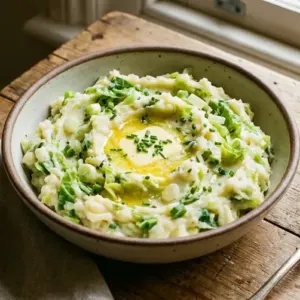
ColcannonEverywhere
Mashed potatoes mixed with cabbage or kale, butter and milk, traditionally eaten at Halloween.
ChampUlster, Belfast
Mashed potatoes beaten with spring onions (scallions) and milk, served with a well of melting butter.
BoxtyLeitrim, Fermanagh
The Irish potato pancake, made from grated raw potatoes and mashed potatoes, fried on a griddle.
Shepherd's pieEverywhere
Minced lamb in gravy under a mashed potato crust. Made with beef, it is cottage pie.
Kerry and Connemara lambKerry, Connemara
Irish lamb raised on mountain grass and heather, roasting joints or slow-braised shoulder.
Spiced beefCork
Beef cured with salt and spices, then slow cooked; a Cork Christmas tradition.
DrisheenCork
A soft blood pudding, traditionally served with tripe, found almost only in Cork.
CrubeensCork
Boiled pig’s trotters, once a pub snack eaten with a pint of stout.
Dingle pieDingle
A small mutton pie in hot-water pastry, once made for fishermen and fair days.
Irish breakfast, breads and cheese the fry and the bread basket
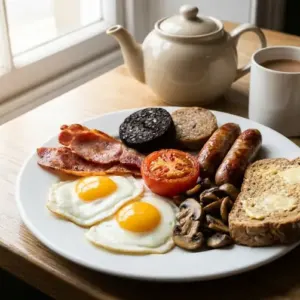
Full Irish breakfastEverywhere
Rashers, sausages, black and white pudding, eggs, grilled tomato, mushrooms, toast or brown bread, and tea.
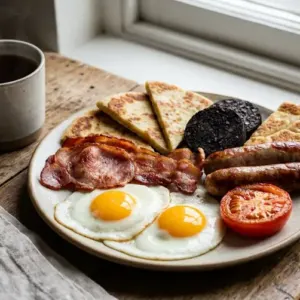
Ulster fryBelfast
The Northern Irish fry, with fried soda farls and potato bread on the plate.
Black and white puddingClonakilty, Cork
Black pudding is made with pork, oats and blood; white pudding leaves out the blood.
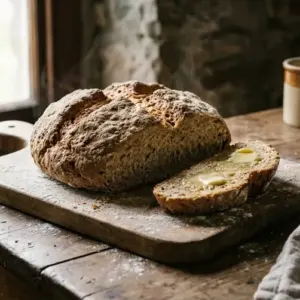
Brown soda breadEverywhere
Wholemeal flour, buttermilk and bread soda, no yeast. It comes with butter beside every bowl of soup.
Soda farlsBelfast, Ulster
White soda bread cooked flat on a griddle and cut into quarters, or farls, then fried.
Potato breadBelfast, Ulster
Thin potato cakes, also called fadge or tattie bread, fried for the Ulster fry.
Waterford blaaWaterford
A soft, floury bread roll with protected status, filled with rashers or sausages.
BarmbrackEverywhere
A fruit loaf with tea-soaked raisins, eaten at Halloween with a ring baked inside.
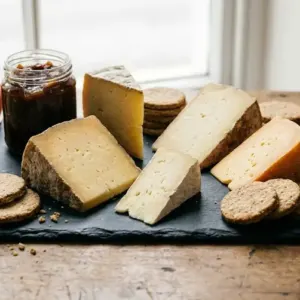
Irish farmhouse cheeseWest Cork, Clare
Washed-rind and hard cheeses from small dairy farms, such as Gubbeen, Durrus and Milleens.
Irish fish and seafood the Atlantic, shellfish and the chipper
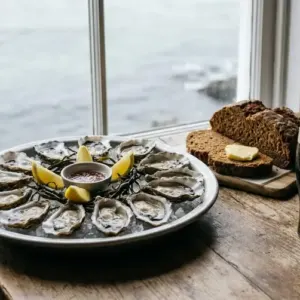
Galway Bay oystersGalway
Native flat oysters in season from September; Pacific rock oysters all year. Eaten raw with brown bread and stout.
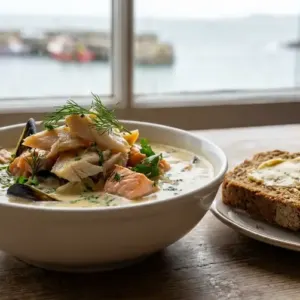
Seafood chowderWest coast
A creamy Irish seafood soup of smoked and fresh fish, mussels and potato, with brown soda bread.
Irish smoked salmonBurren, Connemara, Cork
Salmon cured and smoked over oak, sliced thin and served on brown bread with lemon.
MusselsKillary Harbour, Bantry Bay
Rope-grown mussels steamed with garlic, white wine, cream or cider.
Dublin Bay prawnsDublin, Howth
Langoustines, cooked in garlic butter or fried as scampi.
Crab clawsDingle, Kerry
Crab claws tossed in hot garlic butter, a staple of seaside pubs.
Fish and chipsEverywhere
Battered cod or haddock with thick chips (French fries) from a chipper. In Dublin, a “one and one”.
DulseAntrim coast
Dried red seaweed eaten as a salty snack on the north coast.
Irish desserts, sweets and Irish drinks afters and the pub
Apple tartEverywhere
Shortcrust pastry filled with Bramley apples, served warm with cream or custard.
Kerry apple cakeKerry
An Irish apple cake: a buttery sponge baked with sliced apples and a crumbly sugar top.
Bread and butter puddingEverywhere
Buttered bread baked in custard with raisins, sometimes with a splash of whiskey.
Porter cakeEverywhere
A dark fruit cake made with stout.
YellowmanBallycastle, Antrim
A sweet treat of chewy honeycomb toffee sold at the Ould Lammas Fair each August.
FifteensNorthern Ireland
A no-bake traybake of fifteen digestives, fifteen marshmallows and fifteen glacé cherries.
Sea salt ice creamDingle
Small-batch ice cream in local flavours such as sea salt, brown bread and gin.
Irish coffeeFoynes, Limerick
Hot coffee, Irish whiskey and brown sugar with cold cream floated on top, first served at Foynes in the 1940s.
Guinness and stoutDublin, Cork
Brewed at St James’s Gate in Dublin since 1759. In Cork, order Murphy’s.
Smithwick's red aleKilkenny
An Irish red ale with roots in a Kilkenny brewery going back to 1710.
Irish whiskeyMidleton, Bushmills
Spelt with an e, unlike Scotch whisky. Midleton in Cork and Bushmills in Antrim are the best-known distilleries.
Baileys Irish CreamDublin
The Irish drink of whiskey, cream and sugar, launched in Ireland in 1974.
Seasonal dishes come and go, so check what is on the day.Dish photos are illustrations.
Where to eat it
Where to eat traditional Irish dishes, region by region
- 1Dublin
Pub food · coddle · Dublin Bay prawns
Where to eat ↓Hotels in Dublin → - 2Galway
Oysters · chowder · hill lamb
Where to eat ↓Hotels in Galway → - 3Doolin
Smokehouse fish · farm cheese · music pubs
Where to eat ↓Hotels in Doolin → - 4Dingle
Harbour seafood · mutton pies · ice cream
Where to eat ↓Hotels in Dingle → - 5Killarney
Hill lamb · farm dinners · Kenmare
Where to eat ↓Hotels in Killarney → - 6Cork
Market food · cheese · Murphy's
Where to eat ↓Hotels in Cork → - 7Kilkenny
Red ale · orchards · farm food
Where to eat ↓Hotels in Kilkenny → - 8Belfast
UK, pounds sterling · Ulster fry · St George's Market
Where to eat ↓Hotels in Belfast →
Region 1 of 8
Dublin: Irish stew, Dublin coddle and a pint of Guinness
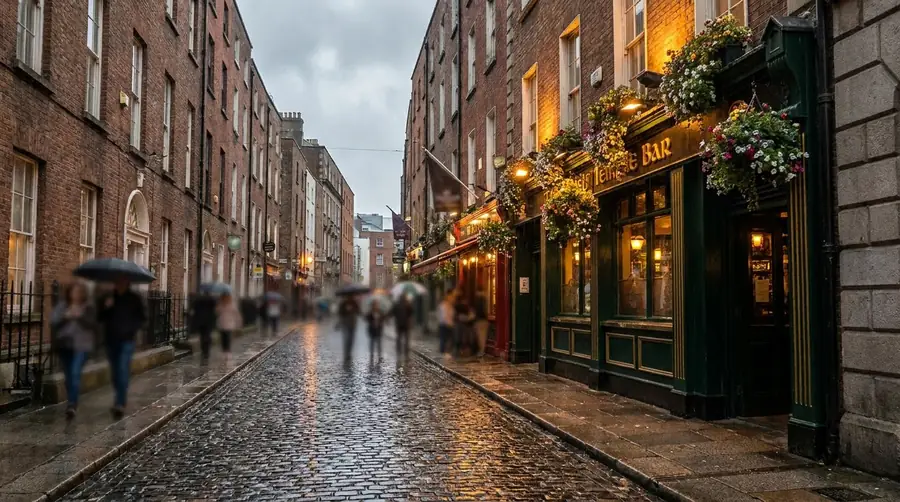
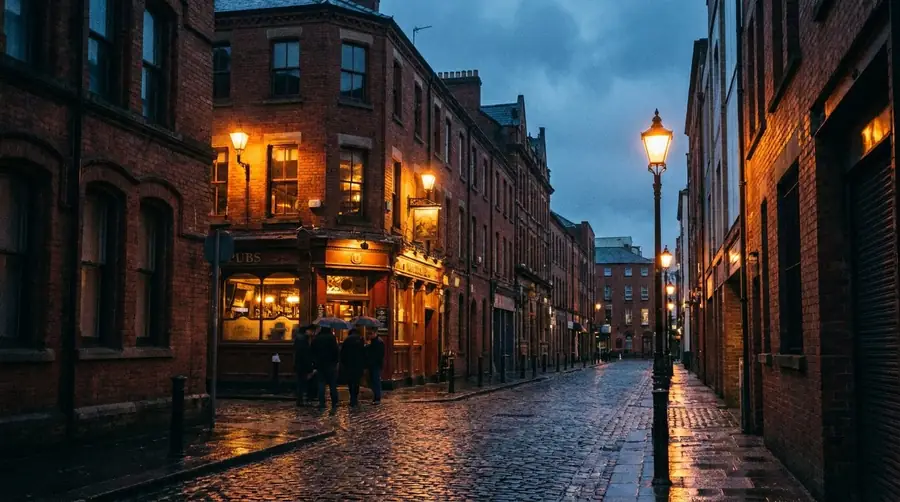
Dublin is where most visitors eat their first traditional Irish food, and usually in an Irish pub. Old pubs serve a hearty Irish stew of lamb, potatoes and onions, and Guinness beef stew, braised in stout and served with mashed potatoes or under a pastry lid. The dish only Dublin claims is Dublin coddle: pork sausages, rashers (Irish bacon), sliced potatoes and onion simmered slowly in one pot, the Saturday-night comfort food of the old inner city. Jonathan Swift is said to have liked it, and it still turns up on pub menus in winter. For seafood, take the DART train to Howth, a fishing village on the north side of Dublin Bay, for Dublin Bay prawns, fish and chips and seafood chowder by the harbour. Back in town, a takeaway from a chipper is as Dublin as it gets: ask for a “one and one”, one fish and one bag of chips. Guinness has been brewed at St James’s Gate since 1759, and the Guinness Storehouse is the city’s most visited paid attraction. Boxty, a potato pancake from the north midlands, now has its own restaurant in Temple Bar. If it is your first trip, work out how many days in Dublin you need before you plan the meals.
Order hereDublin coddleIrish stewGuinness beef stewDublin Bay prawnsOne and one
Region 2 of 8
Galway and Connemara: Galway Bay oysters, seafood chowder and Connemara lamb
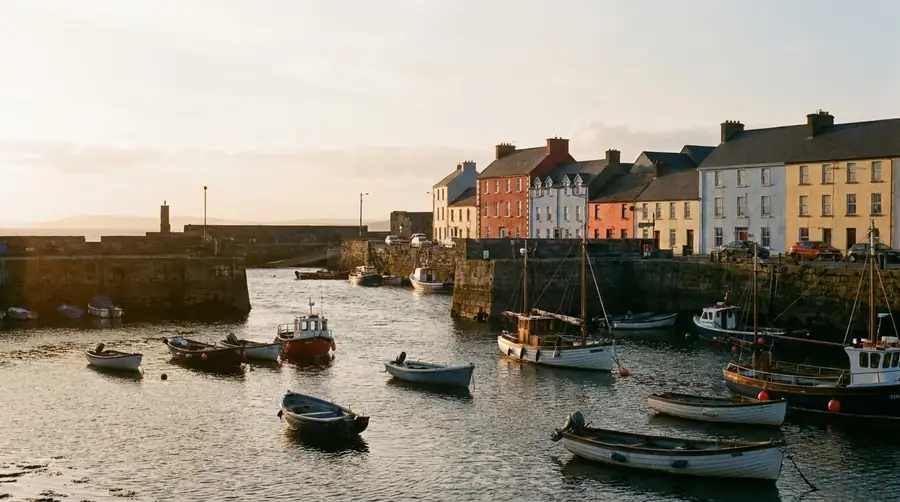
Galway is the seafood town of the west coast, and the oyster is its symbol. Native flat oysters from Galway Bay are in season from September, and the Galway International Oyster and Seafood Festival marks the start of the season each September; Pacific rock oysters are farmed all year. Eat them raw with lemon, buttered brown soda bread and a glass of stout. Almost every pub around Quay Street and the Latin Quarter serves seafood chowder, a creamy soup of smoked fish, salmon, mussels and potato, and fish and chips are sold on every corner. On Saturdays, the street market beside St Nicholas’ Church sells farmhouse cheese, smoked fish, bread and hot food. Drive west into Connemara and the menu turns to Connemara lamb, raised on mountain grass and heather, and to mussels farmed in Killary Harbour, a long fjord on the Mayo border. Connemara is also smoked salmon country, cured and smoked over oak. Our Ireland itinerary shows how Galway links to Clare and Kerry.
Order hereGalway Bay oystersSeafood chowderConnemara lambMusselsSmoked salmon
Region 3 of 8
Doolin and the Burren: smoked salmon, goat's cheese and pub chowder
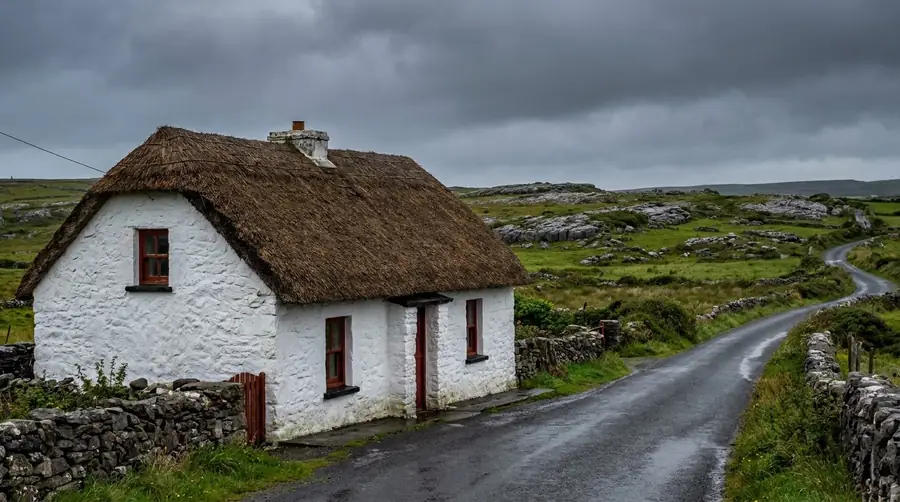
Doolin is a small village in County Clare, close to the Cliffs of Moher, and it is known for traditional music more than restaurants. Its pubs are where you will eat: seafood chowder with brown bread, crab claws, fish and chips and bowls of Irish stew, with a music session after dinner. Inland, the Burren is a bare limestone landscape where farmers move cattle up to the high ground for the winter, an old practice called winterage, and beef and lamb from these farms appear on local menus. In nearby Lisdoonvarna, a smokehouse cures Atlantic smoked salmon over oak, and you will find it on brown bread at lunch across the area. Look out for goat’s cheese and other farmhouse cheese made in County Clare, and for the Burren Food Trail, a group of local producers, farms and cafés that welcome visitors. Lisdoonvarna also holds a matchmaking festival every September, more about music and dancing than food. Doolin is one of the ferry ports for the Aran Islands, where the islanders still fish and farm small walled fields; the year-round crossing leaves from Rossaveal in Connemara.
Order hereSeafood chowderSmoked salmonCrab clawsFarmhouse cheese
Region 4 of 8
Dingle: crab claws, Dingle pie and sea salt ice cream
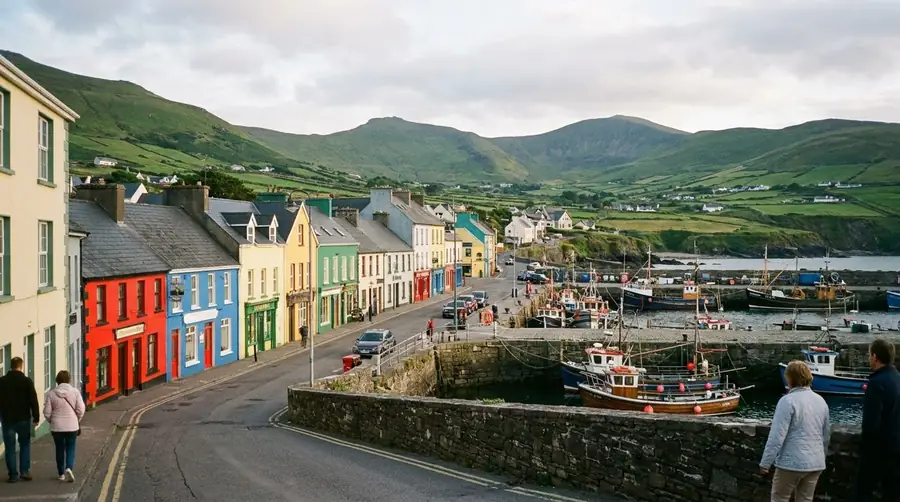
Dingle is a fishing town near the end of a peninsula in County Kerry, and it eats far better than its size suggests. Boats land fish, crab and lobster at the pier, so order crab claws in garlic butter, the catch of the day, or fish and chips eaten by the harbour. The local speciality is the Dingle pie, a small mutton pie in hot-water pastry that was once made for fishermen and fair days and is kept alive by local bakers, especially around the Dingle Food Festival in early October. Lamb from the peninsula’s hills is on most menus. Dingle’s ice cream makers turn local ingredients into flavours such as sea salt, brown bread and Dingle gin, and the Dingle Distillery makes whiskey, gin and vodka on the edge of town. Some pubs here still double as shops, a hardware store or a shoe shop by day with a bar at the back, and most have live traditional music in the evening. Our where to stay in Dingle guide covers the town and the peninsula.
Order hereCrab clawsDingle pieFish and chipsSea salt ice cream
Region 5 of 8
Killarney and the Ring of Kerry: Irish lamb, bacon and cabbage and Kerry apple cake
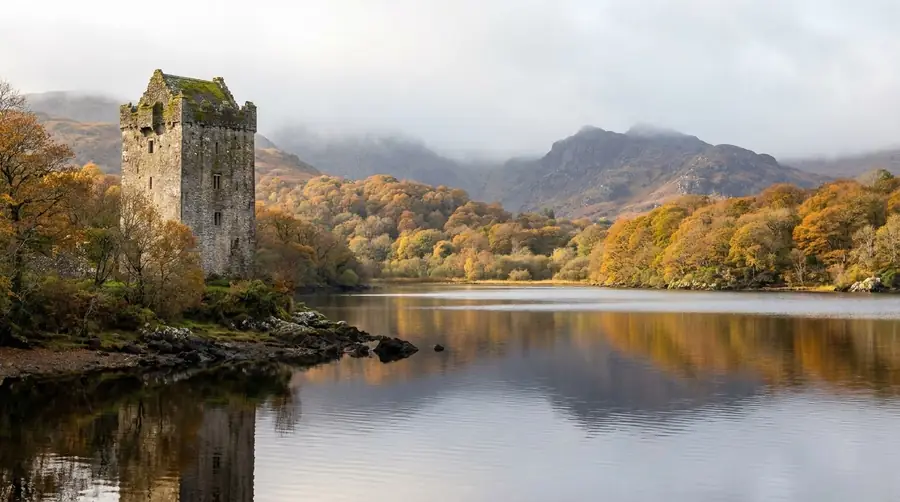
Killarney is Kerry’s busiest tourist town, with more hotels than anywhere else in the county and menus built for people who have spent the day outdoors. This is lamb and dairy country. Order roast or braised Kerry lamb, Irish lamb raised on the mountains around the lakes, or bacon and cabbage: a boiled joint of bacon with cabbage, boiled potatoes and parsley sauce, the dinner many Irish families still eat in the middle of the week. The Kerry cow, a small black breed native to the county, is one of the oldest cattle breeds in Europe, and good butter and cream go into almost everything. Brown soda bread arrives warm with soup, and dessert is apple tart with cream or Kerry apple cake, an Irish apple cake of buttery sponge baked around sliced apples. If you drive the Ring of Kerry, stop in Kenmare, a small town with a lot of good restaurants for its size, and in Portmagee for seafood chowder before the boats to the Skelligs. Our Ring of Kerry driving itinerary lists the stops.
Order hereKerry lambBacon and cabbageBrown soda breadKerry apple cake
Region 6 of 8
Cork: the English Market, black pudding, spiced beef and drisheen
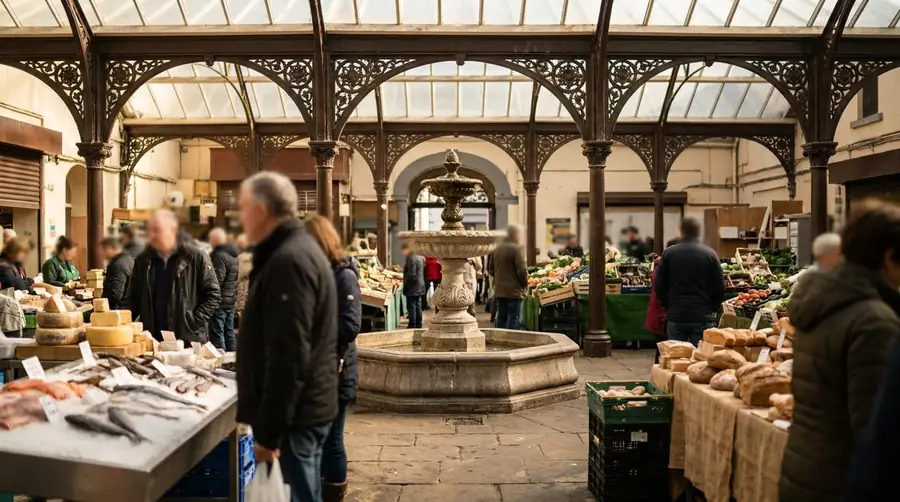
Cork calls itself the food capital of Ireland, and the claim is easy to test. Start at the English Market, a covered market that has traded since 1788, where butchers sell spiced beef, a Cork Christmas tradition, fishmongers sell the local catch, and a few stalls still sell drisheen, a soft blood pudding traditionally eaten with tripe, and crubeens, boiled pig’s trotters. West Cork is farmhouse cheese country, and Gubbeen, Durrus and Milleens are the names to look for, while the town of Clonakilty is famous for its black pudding and white pudding. Kinsale, about half an hour south, is a harbour town known for its seafood restaurants. East Cork has Ballymaloe, the country house and cookery school that did a great deal to bring Irish cooking back to local ingredients, and Midleton, where Jameson whiskey is distilled. In the pub, Cork drinks its own stout, Murphy’s, as well as Guinness. Our southern Ireland itinerary combines Cork with Kerry.
Order hereSpiced beefBlack puddingDrisheenFarmhouse cheeseCrubeens
Region 7 of 8
Kilkenny: Smithwick's red ale, bacon and cabbage and the Waterford blaa
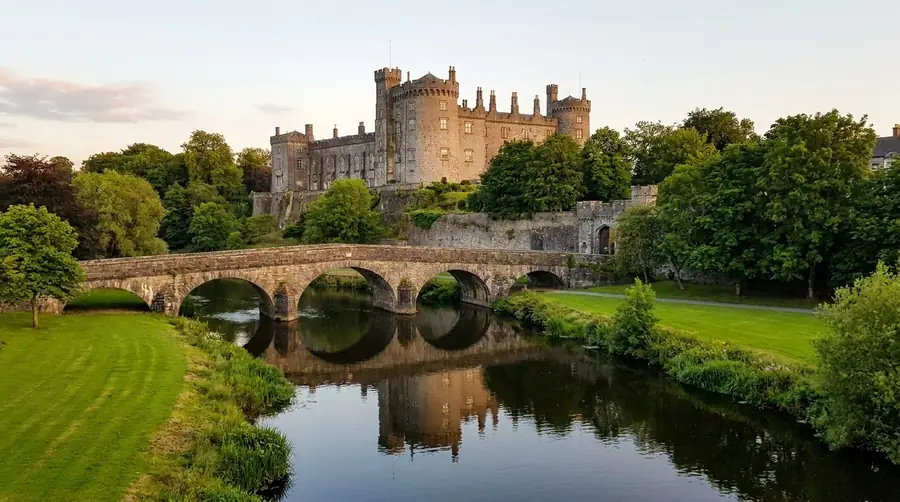
Kilkenny is a small medieval city with a castle, a cathedral and a strong local food scene. Its drink is Smithwick’s, an Irish red ale with roots in a Kilkenny brewery going back to 1710; the brewing has moved to Dublin, but the old brewery site now runs a visitor experience. The county around it is farmland, with apple orchards, cider makers and farmhouse cheese producers, and Kilkenny holds its Savour Kilkenny food festival each autumn. In the city pubs, expect the Irish classics done well: bacon and cabbage, beef and Guinness stew, shepherd’s pie and apple tart with cream. Kilkenny is less than an hour by road from Waterford, home of the Waterford blaa, a soft, floury bread roll with protected status that locals fill with rashers or sausages at breakfast. Kilkenny also makes an easy overnight stop between Dublin and Cork or Kerry. Our where to stay in Kilkenny guide covers the medieval centre.
Order hereSmithwick'sBacon and cabbageShepherd's pieWaterford blaa
Region 8 of 8
Belfast and Northern Ireland: the Ulster fry, champ and soda farls
Belfast is in Northern Ireland, which is part of the United Kingdom, not the Republic of Ireland. Prices are in pounds sterling, not euros, and your phone may switch networks; there are no border checks on the road or train from Dublin, but most visitors who are not British or Irish citizens still need a UK Electronic Travel Authorisation. The food overlaps with the rest of the island but uses its own names. The Ulster fry is the breakfast: bacon, sausages, eggs, black pudding and, the part that makes it Northern Irish, fried soda farls and potato bread. Mashed potatoes come as champ, with spring onions and butter. Chip shops sell the pastie supper, a battered patty of pork, onion and potato with chips, found almost nowhere else. From Friday to Sunday, St George’s Market, a Victorian market hall, has food stalls, local seafood such as Strangford Lough oysters and Portavogie prawns, and live music. Bakeries sell traybakes such as fifteens. On the Causeway Coast, the Bushmills distillery and Ballycastle, home of yellowman and dulse at the Ould Lammas Fair, make an easy day trip.
How Irish cuisine works: Irish pub grub, the carvery and Sunday dinner
Most traditional Irish food is eaten in pubs, not formal restaurants. A pub kitchen serves lunch and an early dinner, and food is ordered at the bar in many places. A traditional Irish meal is meat, potatoes and vegetables, often with roasting juices made into gravy, and a main course rarely comes without potatoes. A few words help you read the menu.
- Pub grub
- Hearty pub food: stews, chowder, fish and chips, burgers and toasted sandwiches.
- Carvery
- A lunch counter where roast meat, often turkey and ham or beef, is carved to order and served with vegetables and potatoes, usually more than one kind.
- Sunday roast
- The big family dinner: roast beef, lamb or chicken with roast potatoes and gravy.
- Starter, main, dessert
- Menus run in three courses. Soup of the day with brown bread is the usual starter.
- Afters
- Dessert, usually apple tart, crumble or bread and butter pudding, then tea or coffee.
Traditional Irish recipes worth ordering in Ireland
These traditional Irish dishes are simple, delicious Irish home cooking, and they appear all over the country, so you can order them in almost any Irish pub or restaurant. Irish stew recipes and soda bread recipes change from family to family, which is part of the fun.
Irish stew and Guinness beef stew: made with lamb or made with beef
The national dish of Ireland is the subject of friendly argument. The oldest versions were made with lamb or mutton, the meat of an older sheep, with potatoes and onions and nothing else; today most cooks use lamb and many add carrots, a little celery or parsnip and fresh herbs, and some thicken the stock with pearl barley. A good Irish stew is light, not a thick gravy, and comes with brown bread to mop it up. Guinness beef stew is a different dish: a beef stew made with stout, darker and richer, and a pub favourite in winter.
Traditional Irish potato dishes
The potato has been the staple of Irish cooking for four centuries, and it still turns up two ways on one plate. These are the potato dishes to look for.
Mashed potato two ways: Irish colcannon and champ
Both are mashed potato with something green. Irish colcannon is mixed with cabbage or kale; champ, from the north, with spring onions (scallions). Both are served with a knob of Irish butter melting in the middle, and both go well with sausages or boiled bacon as a side dish.
Boxty, the Irish potato pancake
Irish boxty is a potato pancake from the north midlands and the border counties, such as Leitrim and Fermanagh. It is made from grated raw potatoes mixed with mashed potatoes, wheat flour and buttermilk, then fried on a griddle. Restaurants now serve it as a wrap around fillings, or boiled as dumplings.
Irish potato soup and Irish vegetable soup
Almost every Irish menu starts with a soup of the day, served with brown bread and butter. Potato and leek is the classic Irish potato soup; others are thick Irish vegetable soups of carrot, turnip and parsnip, or carrot and coriander. They are cheap, filling and good after a wet walk.
Irish brown bread, Irish butter and Irish cheddar
Ireland is dairy country, and bread, butter and cheese are where it shows.
Irish soda bread and Irish brown bread
Soda bread is raised with bread soda and buttermilk instead of yeast. Irish brown bread is soda bread made with wholemeal (whole wheat flour); white soda bread is often baked as a round loaf with a cross cut on top, or as a flat griddle bread in the north. With raisins added, it is called spotted dog. Baking it at home is still common.
Irish butter
Irish butter is yellow because the cows eat grass most of the year. It goes on brown bread, into mashed potato and on top of colcannon, and you will taste the difference from butter at home.
Irish cheddar and farmhouse cheese
Irish cheddar, made from the same grass-fed milk, is the everyday cheese in sandwiches and on toast. For something more local, look for farmhouse cheeses from West Cork, Clare and Tipperary on cheese boards in good restaurants.
Black and white pudding and the full Irish breakfast
A full Irish breakfast includes black pudding, a sausage of pork, oats and blood, and usually white pudding, the same without the blood, with rashers, sausages, eggs, grilled tomato, mushrooms and toast. Restaurants also use black pudding in starters, with scallops or in a salad. Vegetarian versions of the fry are easy to find in cities.
Irish apple cake and barmbrack
Irish apple cake is a simple buttery sponge baked with apples, served warm with custard or cream. Barmbrack is a fruit loaf with raisins soaked in tea, eaten toasted with butter. At Halloween a ring is baked inside, and whoever finds it is said to marry within the year.
Irish drinks: Irish whiskey, Irish cream and Irish coffee
Food in Ireland comes with a drink, and not always alcohol: tea is drunk all day, and a strong Irish breakfast tea with milk is the standard.
Irish stout and Irish whiskey
Guinness is the Irish stout everyone knows, brewed in Dublin since 1759; in Cork, Murphy’s is the local alternative. Irish whiskey is usually triple distilled and smoother than most Scotch whisky; if Scotland is next on your route, our traditional Scottish food guide covers what to order there. A hot whiskey, whiskey with hot water, lemon, cloves and sugar, is the Irish hot whiskey ordered on cold nights.
Irish coffee
The original Irish coffee was first served at the flying boat terminal in Foynes, County Limerick, in the 1940s, to warm passengers arriving from the Atlantic. It is hot coffee, Irish whiskey and brown sugar with lightly whipped cream floated on top. Do not stir it.
Irish cream
Baileys, the best-known Irish cream liqueur, was launched in Ireland in 1974 and mixes Irish whiskey with cream. Irish people drink it mostly at Christmas, often over ice.
Irish-American dishes you will not find on Irish menus
Some of the foods people outside Ireland think of as Irish come from Irish Americans, the families of Irish immigrants in the United States. They are fine food, but you will rarely see them in Ireland. And it is St Patrick’s Day or St Paddy’s Day here, never St Patty’s Day.
Corned beef and cabbage
In Ireland, the dish is bacon and cabbage. Irish immigrants in New York found corned beef cheaper than bacon and made it their St Patrick’s Day dinner, sometimes as a glazed corned beef from the oven. Corned beef was made in Ireland for export in the past, and Cork still makes spiced beef at Christmas, but corned beef and cabbage is an Irish-American tradition and an Irish style of cooking only in America.
Green beer and shamrock shakes
Green beer, green bagels and mint milkshakes, with the luck of the Irish on every sign, belong to St Patrick’s Day in America. In Ireland, people mark the day with a parade and a pint of stout.
Irish soda bread with caraway
American “Irish soda bread” often has sugar, raisins and caraway seeds. Irish soda bread is usually plain brown or white bread eaten with soup or butter; the sweeter version with raisins is spotted dog.
When to eat what: Irish food by season
Irish cooking follows the farm and the sea, so the specials board changes through the year. Plan around a season and order what is on it.
- Spring (March to May): spring lamb at Easter, pancakes on Shrove Tuesday, wild garlic and rhubarb.
- Summer (June to August): new potatoes, strawberries, crab and mackerel on the coast, and the Ould Lammas Fair in Ballycastle in late August.
- Autumn (September to November): native oysters from September and the Galway oyster festival, apples and cider, food festivals in Dingle and Kilkenny, barmbrack and colcannon at Halloween.
- Winter (December to February): spiced beef, Christmas cake and mince pies, stews and coddle, and the best season for a pub fire.
Ordering words
- Rashers
- Slices of Irish back bacon, leaner than American streaky bacon.
- Chipper
- A fish and chip shop.
- One and one
- Dublin for fish and chips.
- A pint of plain
- An old way to ask for a pint of stout.
- A mineral
- A soft drink.
- Tea
- The drink, but also the evening meal in many homes.
- Spice bag
- A takeaway bag of chips, chicken and peppers with spice, a modern Dublin favourite.
- Sláinte
- Cheers, in Irish.
When the Irish eat
Meal times are close to those in Britain. Many pub kitchens stop serving food around 9 pm, earlier in small villages, even when the bar stays open late.
A typical day
- BreakfastAbout 7–10 amA full Irish at weekends and in hotels; toast or porridge at home.
- LunchAbout 12.30–2.30 pmSoup and a sandwich, or the pub carvery.
- DinnerAbout 6–9 pmThe main meal; called tea in many homes.
- The pubFrom about 9 pmDrinks and music, usually without food.
Typical times, not opening hours. Check each place.
Live prices
Hotels near the food in Dublin, with live prices
Prices appear on the pins once dates are set. We pre-fill a week about a month ahead; change the dates on the map to see yours.
Famous Irish food: FAQ
What is the most famous Irish food?
Irish stew is the best-known Irish dish, followed by the full Irish breakfast, soda bread, colcannon, bacon and cabbage, seafood chowder and Galway Bay oysters. Each is at its best in a different part of the country.
What is the national dish of Ireland?
Ireland has no official national dish, but Irish stew of lamb or mutton, potatoes and onions is the one most often named.
What is traditional Irish food?
Traditional Irish food is simple home cooking built on potatoes, lamb, beef, pork, dairy, seafood and soda bread: stews, boiled bacon, mashed potato dishes such as colcannon and champ, and chowder on the coast.
What do Irish people eat for breakfast?
At weekends and in hotels, a full Irish breakfast of rashers, sausages, black and white pudding, eggs and toast with tea. In Northern Ireland the Ulster fry adds soda farls and potato bread. On weekdays most people eat porridge, cereal or toast.
Is corned beef and cabbage Irish?
Not really. In Ireland the dish is bacon and cabbage. Corned beef and cabbage became popular among Irish immigrants in the United States.
What are some must-try Irish snacks?
Tayto cheese and onion crisps, a sausage roll or a chicken fillet roll from a shop deli counter, a bag of chips from a chipper, and in the north, dulse and yellowman. With tea, try a slice of barmbrack or a scone with butter and jam.
Which Irish city has the best food?
Cork is the usual answer, for the English Market, West Cork cheese and Kinsale seafood. Galway is best for oysters and seafood, and Dublin has the widest choice of restaurants.
Where should I stay in Ireland for food?
Dublin for a first trip, Galway for seafood and music, and Cork if food is the main reason to travel. Dingle and Kilkenny are smaller towns with very good food for their size.
Keep planning Ireland
- Where to Stay in Kilkenny: On the Mile, or Beside the Station
- Where to Stay in Doolin: Book a Room You Can Walk Home To
- Where to Stay in Belfast: Four Quarters, Four Different Trips
- Where to Stay in Killarney: The Town, or the Lakes
- Where to Stay in Dingle: In Town, or Out Where the View Is
- Where to Stay in Ireland: Pick Three Bases, Not Seven
- Where to Stay in Galway: The Noise Decides It, Not the Distance
- Best Hotels in Dublin: What Each Kind of Building Gives You
Written and checked by
Triplarks Editorial
An editorial desk, not an invented persona: research, drafting and fact-checking are done by the same small team. Every number here carries the date it was read.