Quick answer
Two days inside the canal ring and one outside it. Stay in the canal belt or the Jordaan to keep days one and two on foot, and leave day three flexible so it lands on the better weather — Noord, Haarlem, Utrecht or the windmills.
On this page
- 3 day Amsterdam itinerary at a glance
- Day 1 — the Golden Age and the canals
- Day 2 — Van Gogh and the occupation
- Day 3, option A — the districts
- Day 3, option B — Haarlem or Utrecht
- Day 3, option C — windmills and the water
- Smaller sights between the big three
- De Wallen by daylight
- Three days with children
- Seeing the canals from the water
- Practical notes
- Arrival, departure and luggage
- Where to stay for three days
- Eating across three days
- Getting around on three days
- Three days in each season
- What three days still leaves out
- Fitting the Anne Frank House into three days
- Three days without the big museums
- Keeping three days cheap
- The short version
- Frequently asked questions
Three days is the right length for Amsterdam: two for the museums and the canals, and one spent outside the centre — which is where the city stops being a queue and starts being a place.
Some links below are affiliate links. We may earn a commission if you book through them, at no extra cost to you. We do not rank hotels, and any prices on the map come live from the booking sites.
This is the plan with the hours filled in, plus three variants for the third day. For the shorter version see our two day Amsterdam itinerary; for the question itself, how many days in Amsterdam.
3 day Amsterdam itinerary at a glance
| Day | Morning | Afternoon | Evening |
|---|---|---|---|
| 1 | Rijksmuseum | Canal belt, Nine Streets, Jordaan | Jordaan |
| 2 | Van Gogh Museum | Anne Frank House and the Westerkerk | De Pijp |
| 3 | Out of the centre: a district, or a town | Wherever you ended up | |
Map shows live availability and prices. We may earn a commission on bookings made through it, at no extra cost to you.
Where to sleep on this route
Day 1 — the Golden Age and the canals
Morning. The Rijksmuseum on an early timed slot: Rembrandt’s Night Watch, Vermeer’s small rooms, and a national collection that explains the city you are standing in. Two to three hours.
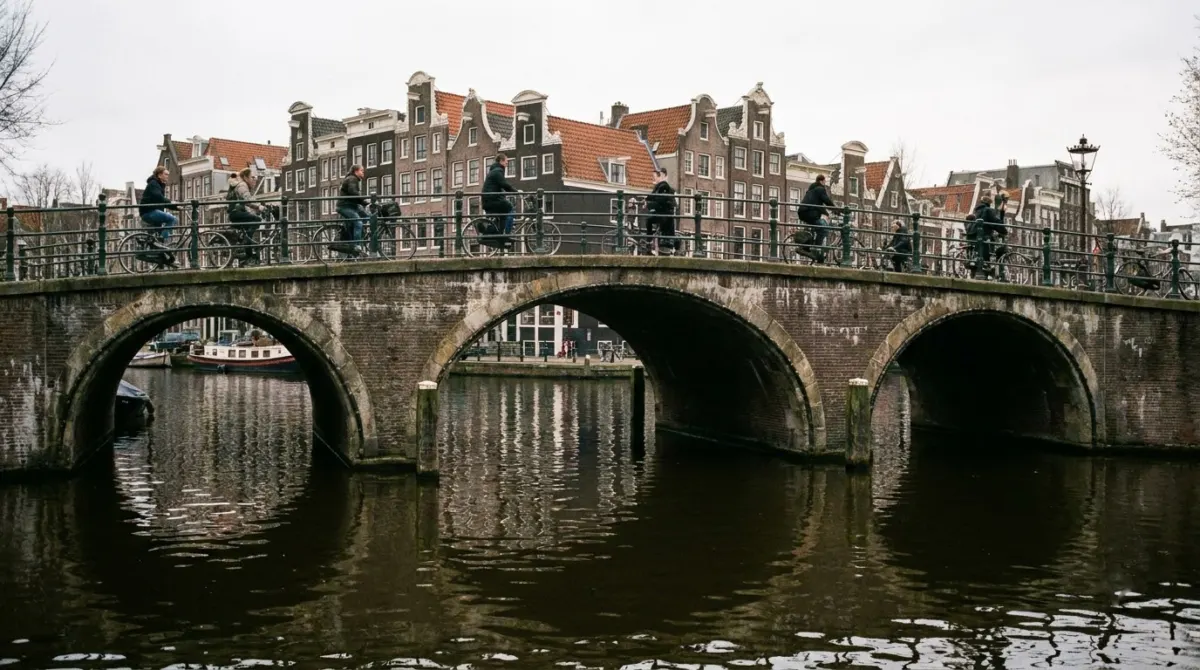
Afternoon. North into the canal belt. The three main rings — Herengracht, Keizersgracht, Prinsengracht — were dug in the seventeenth century as a planned expansion, and the narrow gabled houses along them were taxed on frontage, which is why they are tall and thin.
Cut through the Nine Streets for small shops and cafes, and into the Jordaan.
Evening. The Jordaan, which is quiet after nine and has the best casual eating in central Amsterdam.
Day 2 — Van Gogh and the occupation
Morning. The Van Gogh Museum, arranged chronologically so you watch the work change. Two hours.
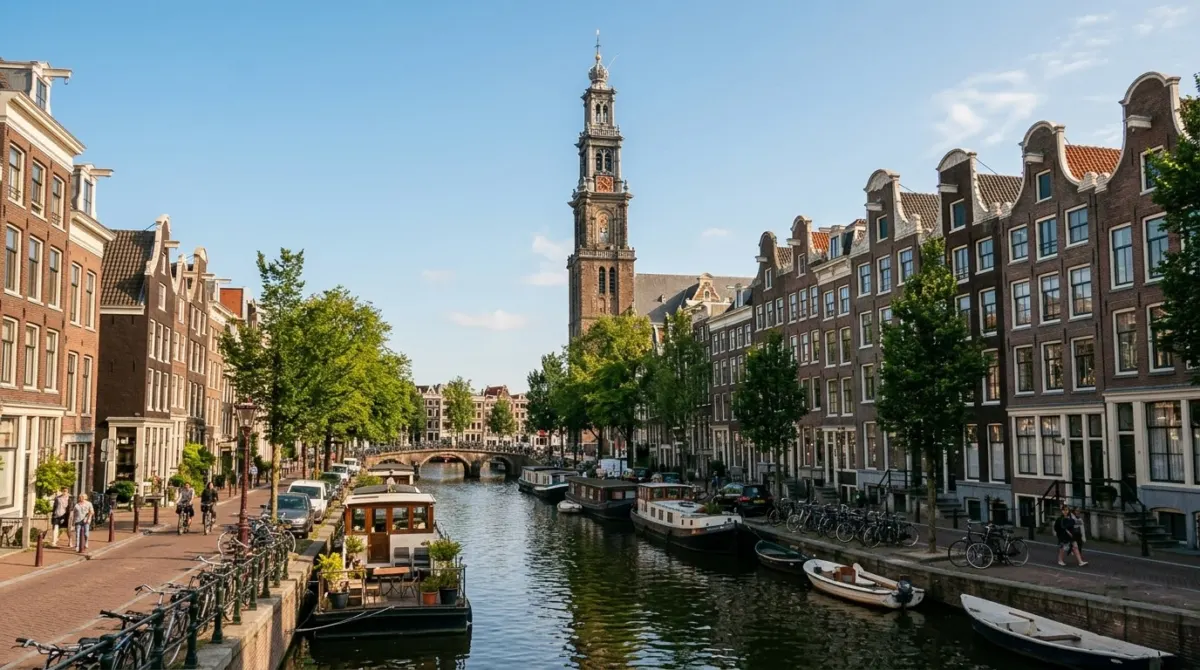
Afternoon. The Anne Frank House on the Prinsengracht, in the building where the family hid for two years. Tickets are online only in timed slots and sell out within minutes of release, so this is the appointment you plan around. Ninety minutes.
The Westerkerk beside it is the church whose bells are mentioned in the diary, and its tower can be climbed.
Evening. De Pijp, twenty minutes’ walk south, for dinner.
Day 3, option A — the districts
Stay in the city and leave the ring.
Noord, across the IJ on a free ferry from behind Centraal Station: the EYE film museum on the waterfront, the A’DAM tower, and the former NDSM shipyard, a wharf of street art, studios and markets.
Back across for the afternoon in Oost — the Oosterpark, the Wereldmuseum (the former Tropenmuseum) — or the Westerpark and the converted gasworks.
Day 3, option B — Haarlem or Utrecht
Haarlem is fifteen minutes by train: a smaller, quieter version of Amsterdam with a huge church on the market square, the Frans Hals Museum, and almost none of the crowds. It is the easiest escape from the city.
Utrecht is half an hour, and it has the one thing Amsterdam does not: canals with wharf-level terraces, built a storey below the street, with cafes on the water. The Dom tower is the tallest church tower in the Netherlands.
Both are cheaper, calmer and genuinely different from Amsterdam.
Day 3, option C — windmills and the water
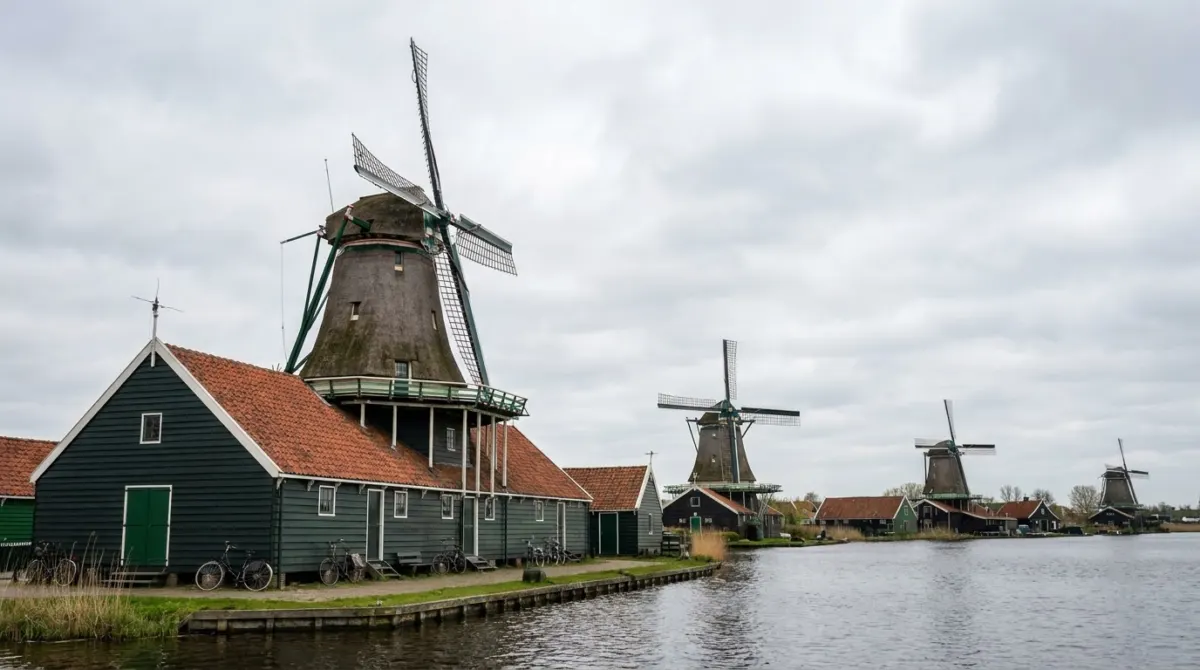
Zaanse Schans is twenty minutes by train and a short walk: a collection of working windmills, wooden houses and workshops on the river Zaan, moved here from around the region. It is touristy and it is also the easiest place in the Netherlands to see a working mill.
Pair it with Marken or Volendam on the old Zuiderzee coast, reached by bus, for fishing villages and dykes.
In spring, swap all of this for Keukenhof and the bulb fields, open for roughly eight weeks from late March and about an hour away.
Smaller sights between the big three
The timed tickets leave gaps, and the best use of an hour between them is one of the small places that the queue for the big three walks straight past.
The Royal Palace on the Dam was built between 1648 and 1665 as the city hall, at the height of the Golden Age, and its marble Citizens’ Hall is the grandest room in Amsterdam. It is open to visitors except during official events, with a free audio tour, and there is no need to reserve.
The Museum of the Canals, in a canal house on the Herengracht, explains how the ring you have been walking along was planned and built. It is the right stop on the afternoon of day one, before you walk the rest of the belt.
The Rembrandt House, where he lived and worked for almost twenty years, pairs naturally with the Rijksmuseum: you see the Night Watch in the morning and the studio where he painted in the afternoon.
Huis Marseille, the photography museum on the Keizersgracht, occupies two seventeenth-century canal houses with a garden behind, and it is rarely crowded.
Any one of these fits into an hour, and together they turn the canal belt from a walk past houses into a walk through them.
De Wallen by daylight
The Red Light District is the oldest part of the city, and on a three-day visit it is better seen in the morning than at midnight.
By day the lanes around the Oude Kerk, the oldest building in Amsterdam, are quiet, and the architecture is the best-preserved medieval fabric in the centre. Our Lord in the Attic, on the Oudezijds Voorburgwal in the middle of the district, is a seventeenth-century canal house with a whole Catholic church built into its upper floors in 1663, when Catholic worship had to be hidden. It is one of the most remarkable small museums in Europe.
From there, the Nieuwmarkt and its castle-like weigh house, the Waag, are two minutes east, and Chinatown along the Zeedijk is between the two.
The city’s rules are worth knowing. Guided tours in the centre are capped at fifteen people, may only run between 8:00 and 22:00, and are not allowed to pass the windows at all. That tells you how the city wants the area treated: walk through it, do not stand and stare, and do not photograph the windows.
Three days with children
Day 1: the Rijksmuseum for an hour rather than three, then the Vondelpark.
Day 2: NEMO, the science museum in the ship-shaped building in the east, which is a full day with younger children, or the Maritime Museum beside it with its replica East Indiaman.
Day 3: the free ferry to Noord, or the Zaanse Schans windmills.
The Anne Frank House suits older children and not younger ones.
Seeing the canals from the water
On a three-day trip you have time for one boat, and the choice is between three quite different ones.
A standard canal cruise is a glass-roofed boat with a recorded commentary, about an hour long, and it runs in any weather. It is the right choice on a wet afternoon and the wrong one on a fine evening. The I amsterdam City Card includes one, from a list of participating operators.
A small open boat is the better version when it is dry: fewer people, a live skipper, and a boat small enough for the narrower canals of the Jordaan. Go in the last two hours of daylight.
Your own paddle. Oud-West, around the Vondelpark’s western edge, has quieter canals where kayaks and stand-up paddleboards can be hired by the hour. It suits day three if you stay in the city.
And for free: the ferries to Noord cross the IJ, the city’s wide harbour water, with Centraal Station behind you.
Practical notes
Book the Anne Frank House the moment slots release, and the Rijksmuseum and Van Gogh Museum online with timed entry.
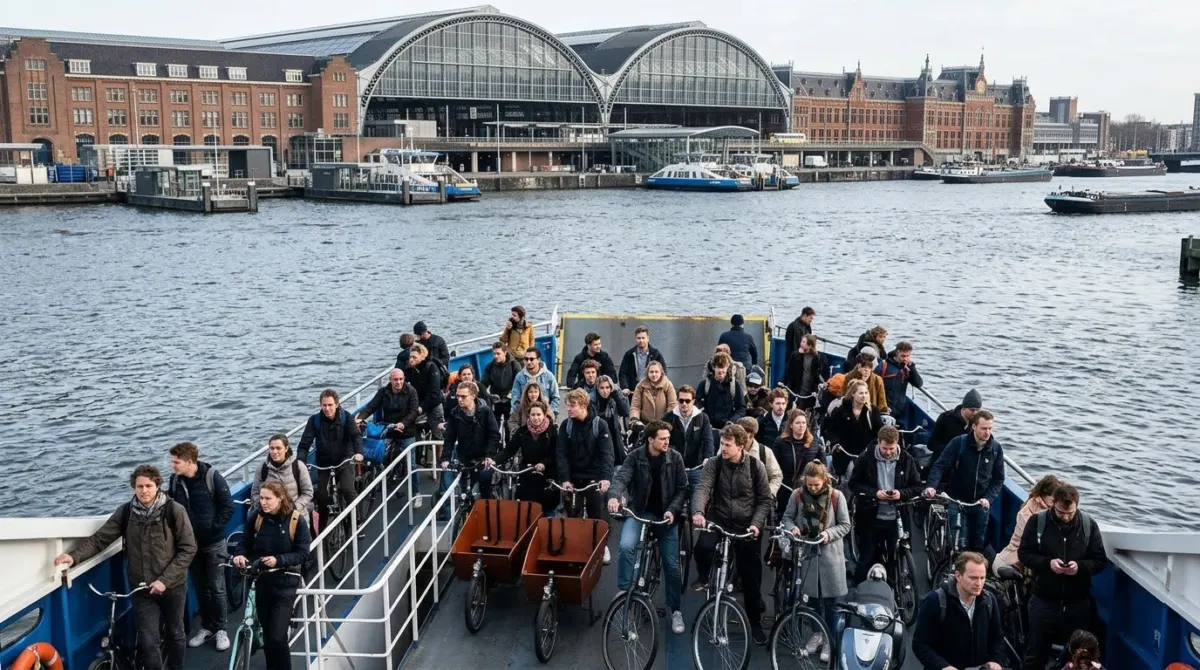
Watch the bike lanes. They are not pavements and cyclists do not slow down.
The free ferries to Noord run day and night from behind Centraal Station, every few minutes, and take no ticket.
Schiphol is fifteen to twenty minutes by train, so a midday flight still leaves you a morning in the city.
For districts, see where to stay in Amsterdam.
Arrival, departure and luggage
Three days is often three days plus two half days, and the halves are worth planning.
Arriving. NS runs eight Sprinter trains an hour from Schiphol to Centraal, taking about seventeen minutes, plus Intercity services. Check in at the card poles on the airport platform and out at the gates at Centraal. If you land before check-in time, drop your bags and start day one in the afternoon with the canal belt and the Jordaan, then move the Rijksmuseum to the morning of day three.
Leaving. NS rents luggage lockers at and around Centraal Station, for up to three consecutive days, and private left-luggage shops near the station take bags by the day. That turns a late flight into a free morning: check out, store the bags, and spend the morning on Noord or the eastern islands, both a few minutes from the station.
Allow margin. The train itself is quick, but give yourself the walk to the platform at Centraal and the security queue at Schiphol, which in summer can be the slowest part of the trip.
Where to stay for three days
All three days work from the canal belt or the Jordaan, which keeps days one and two on foot and puts you ten minutes from Centraal for day three.
Oud-Zuid is the alternative if the museums matter most, and it is where lifts and larger rooms are reliable. De Pijp suits anyone whose evenings matter more than their mornings.
Avoid the streets immediately around Centraal Station and De Wallen for sleeping, and check the staircase before you book anywhere in a canal house — our guide to where to stay in Amsterdam explains why that matters here more than the district does.
Eating across three days
Three patterns that work.
Lunch from a market or a bakery. The Albert Cuyp in De Pijp is the obvious one, and a broodje from a good bakery is what the city actually eats at midday.
Dinner one canal back from the tourist streets. The Jordaan, the Nine Streets and De Pijp all have small restaurants that fill with locals, and reserving is normal even midweek.
One Indonesian meal. The rijsttafel — a spread of many small dishes — is a legacy of the colonial period and is a genuinely Dutch-Indonesian institution rather than a tourist invention.
Getting around on three days
Walking covers days one and two entirely. Day three is where transport appears.
The free ferries behind Centraal Station cross to Noord every few minutes, day and night, and take no ticket at all.
Trains to Haarlem, Utrecht and Zaandam leave from Centraal and run frequently without advance booking for domestic journeys, so day three can be decided on the morning depending on the weather.
Trams and the metro cover De Pijp, Oost and the south.
Paying is simple. Tap a contactless bank card or phone on the reader when you board a GVB tram, bus or metro and again when you get off, using the same card both times. If you expect to ride a lot, a GVB multi-day ticket starts counting from your first check-in, and the trains to Haarlem, Utrecht and Zaandam are paid separately at the NS gates.
Three days in each season
Spring is the busiest and the prettiest. If you are here between late March and mid-May, consider swapping day three for Keukenhof and the bulb fields, which are open for roughly eight weeks only.
Summer gives long evenings on the water and the heaviest crowds at the museums.
Autumn is quiet, and the light along the canals is at its best.
Winter is dark by five, which removes the evening walking but empties the museums. Day three works better as Haarlem or Utrecht than as Noord in January.
What three days still leaves out
Rotterdam, forty minutes away and architecturally the opposite of Amsterdam.
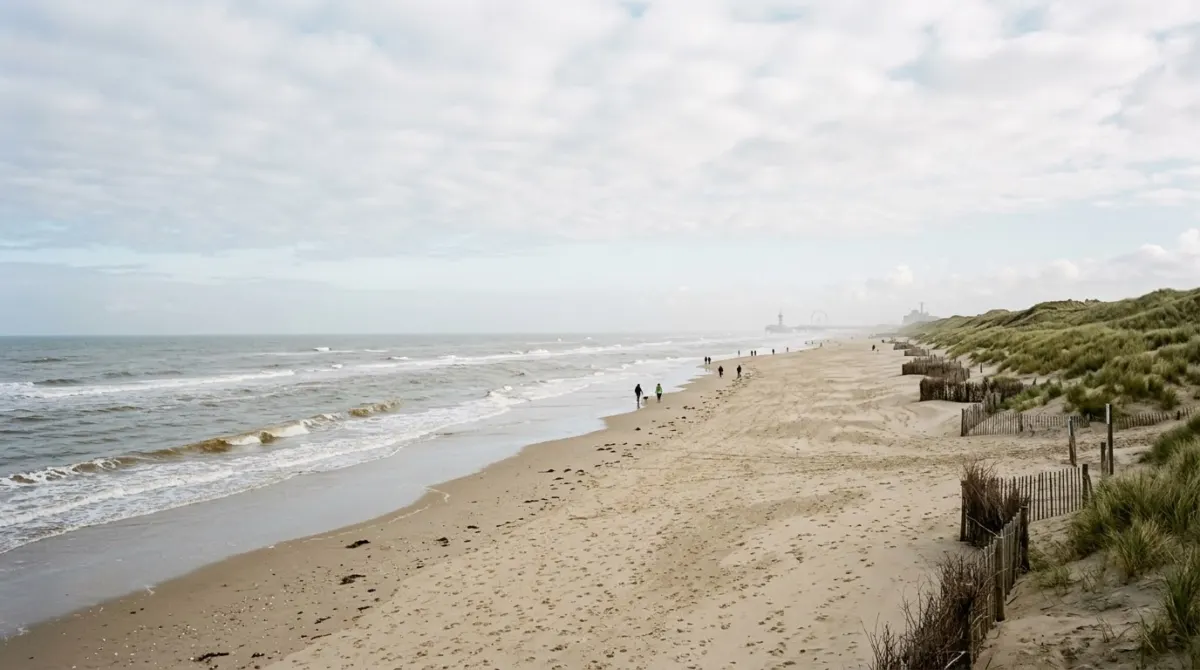
The Hague and the beach at Scheveningen, fifty minutes.
Delft and Leiden, the classic small Dutch cities.
The islands and the north, which almost no visitor reaches.
All of them are day trips from the same room, which is the argument for four or five days rather than three — see how many days in Amsterdam.
Fitting the Anne Frank House into three days
Because the slot is fixed and nothing else is, the rest of the plan bends around it.
A morning slot suits day two as written: the house first, the Van Gogh Museum afterwards.
An afternoon slot is the version above, with the museum first.
An evening slot — the house stays open late on many days — frees the whole of day two for the museum and a district, which is arguably the best version.
No slot at all means swapping in the Dutch Resistance Museum in the Plantage, opposite the Artis zoo, which covers the occupation in far more depth and is almost never busy.
Whatever you get, do not plan the three days before you have the ticket. Everything else in Amsterdam can be rearranged; this cannot.
Three days without the big museums
Not everyone comes to Amsterdam for art, and the city still holds three days comfortably without it.
Day 1: the canal belt on foot, the Nine Streets, the Jordaan, and a hofje or two — the almshouse courtyards hidden behind street doors, of which the Begijnhof is the best known.
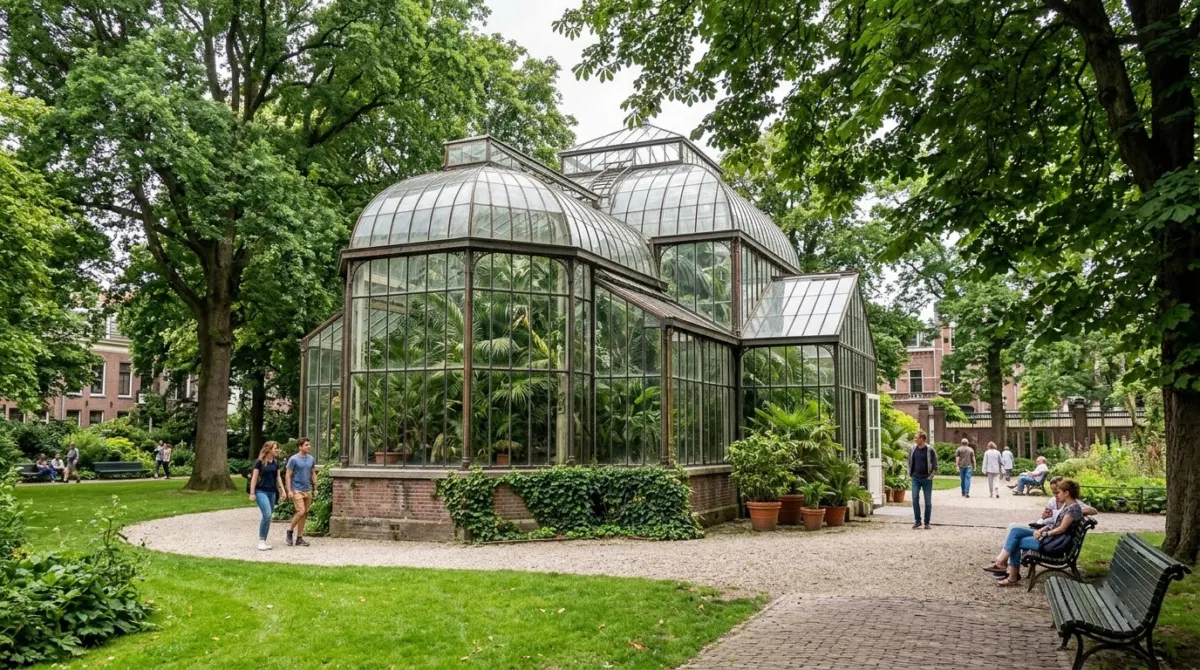
Day 2: the eastern islands and the Maritime Museum, the Plantage with the botanical garden, and the Dutch Resistance Museum, which is the best museum in the city that nobody queues for.
Day 3: Noord on the free ferry, or Haarlem by train.
That is a three-day visit with no timed tickets and no queueing at all.
Keeping three days cheap
Amsterdam is expensive to sleep in, but a lot of the best of it costs nothing.
The free list. The ferries to Noord, the Begijnhof courtyard, the Vondelpark and the Westerpark, the canal belt itself, and the Albert Cuyp market as a sight rather than a lunch. The Concertgebouw runs free lunchtime concerts during its season, for which you reserve a free ticket online.
Choose museums, not passes. Two of the big three plus one small museum is a full program. A pass only pays off if you will enter many more, and the I amsterdam City Card excludes both the Van Gogh Museum and the Anne Frank House.
Use the daily cap. GVB caps what you pay in a day when you check in and out with a contactless bank card, so there is no need to buy a ticket in advance for a day of trams.
Eat lunch, not dinner, as your main meal out, and buy breakfast from a bakery rather than the hotel.
Mind the tax. The city adds a tourist tax of 12.5% of the room price, and VAT on overnight stays rose to 21% in 2026, so check whether the rate you see includes both.
The short version
Two days inside the canal ring and one outside it. Rijksmuseum and the canals, then Van Gogh and the Anne Frank House, then Noord, Haarlem, Utrecht or the windmills. Book the Anne Frank House the moment slots release, stay in the canal belt or the Jordaan, use the free ferries, and leave day three flexible so it lands on the better weather.
Check Amsterdam availability →
Frequently asked questions
Is 3 days enough for Amsterdam?
Yes, and it is the right length. Two days cover the museums and the canals, and the third takes you out of the centre — to Noord, Haarlem, Utrecht or the windmills — which is where the city is most enjoyable.
What is the best 3 day Amsterdam itinerary?
Rijksmuseum and the canal belt on day one, the Van Gogh Museum and the Anne Frank House on day two, and a district or a day trip on day three. Build the whole plan around your Anne Frank House slot.
What should I do on a third day in Amsterdam?
Leave the ring. Noord on the free ferry for the EYE museum and the NDSM shipyard, or take the train to Haarlem in fifteen minutes or Utrecht in thirty, both of which are calmer and cheaper than Amsterdam.
Is Zaanse Schans worth a day trip?
It is twenty minutes by train and it is the easiest place in the Netherlands to see working windmills. It is also busy and openly touristic, so go early and pair it with Marken or Volendam if you want a quieter afternoon.
Can you do Amsterdam in 3 days with kids?
Yes, with a different plan: an hour rather than three at the Rijksmuseum, NEMO or the Maritime Museum for a full day, and the free ferry to Noord or the windmills on day three. The Anne Frank House suits older children only.
Can I store luggage at Amsterdam Centraal?
Yes. NS rents lockers at and around Centraal Station for up to three consecutive days, and several private left-luggage shops nearby take bags by the day. It makes a late departure into a usable last morning.
How far in advance should I book Amsterdam museums?
The Anne Frank House the moment slots are released, because they go within minutes. The Rijksmuseum and Van Gogh Museum a few days to a week ahead, and both use timed entry that sells out at busy times.
Keep planning Netherlands
- Where to Stay in Amsterdam: Check the Stairs Before the District
- How Many Days in Amsterdam? Three, and Five as a Base
- 5 Day Amsterdam Itinerary: One Hotel, Three Cities
- Amsterdam in 1 Day: Pick One Thing, Then Walk
- Netherlands Itinerary: Three Bases, or One and a Rail Pass
- 4 Day Amsterdam Itinerary: Three Days In, One Day Out
- Two Day Amsterdam Itinerary: Built Around One Ticket
Written and checked by
Triplarks Editorial
An editorial desk, not an invented persona: research, drafting and fact-checking are done by the same small team. Every number here carries the date it was read.