Quick answer
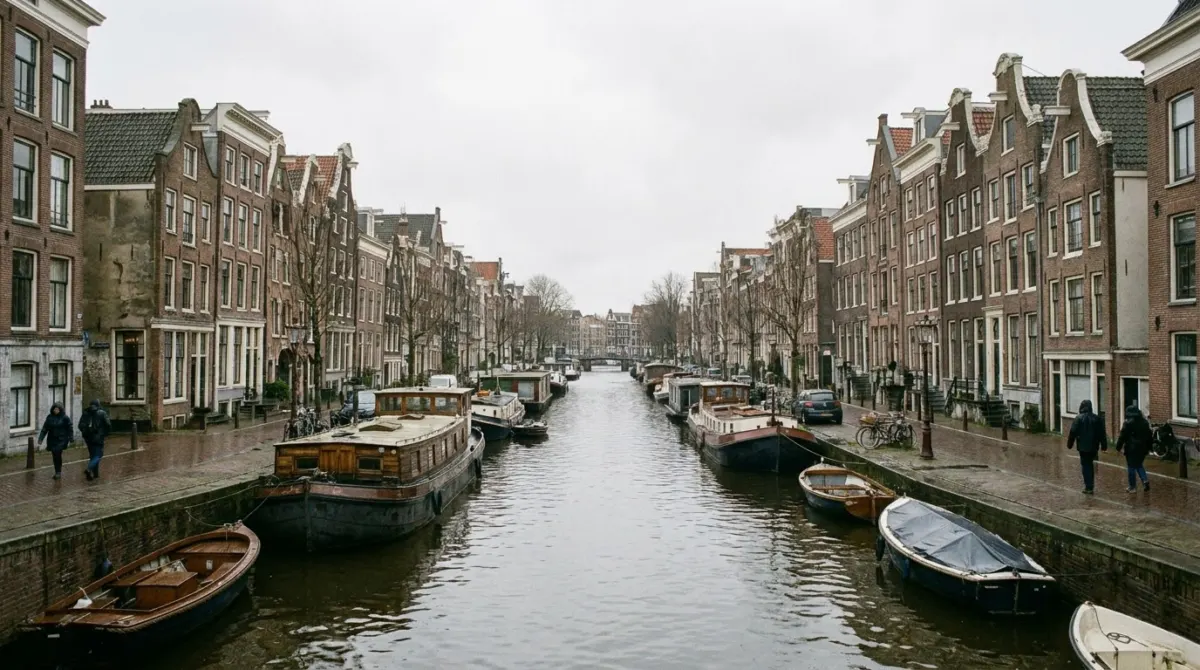
Keep one hotel for all four nights — the trains are frequent enough that moving costs you the middle of a day for nothing. Stay in the canal belt or the Jordaan, or in Haarlem and commute in for fifteen minutes if the Amsterdam price is the problem.
On this page
- 4 day Amsterdam itinerary at a glance
- Days 1 to 3 in the city
- Day 4, option A — Haarlem
- Day 4, option B — Utrecht
- Day 4, option C — Rotterdam
- Day 4, option D — the windmills and the water
- Which to choose
- If you would rather not leave the city
- Why you stay in Amsterdam for all four nights
- Practical notes
- Where to stay for four days
- Four days with children
- Four days in each season
- Festivals and events that change the plan
- What four days still leaves out
- Eating across four days
- What to skip on four days
- Getting around on four days
- The short version
- Frequently asked questions
Four days is where Amsterdam stops being a city break and starts being a trip to the Netherlands. The city itself needs three; the fourth day is best spent on a train, because everything in this country is close and almost nothing else is as expensive as Amsterdam.
Some links below are affiliate links. We may earn a commission if you book through them, at no extra cost to you. We do not rank hotels, and any prices on the map come live from the booking sites.
This guide gives you the three days in the city briefly, then four options for the fourth day with an honest comparison. For other lengths, see how many days in Amsterdam.
4 day Amsterdam itinerary at a glance
| Day | Where | Doing |
|---|---|---|
| 1 | Amsterdam | Rijksmuseum, canal belt, the Jordaan |
| 2 | Amsterdam | Van Gogh Museum, Anne Frank House, De Pijp |
| 3 | Amsterdam | Noord, Oost or the eastern islands |
| 4 | Out of town | Haarlem, Utrecht, Rotterdam or the windmills |
Map shows live availability and prices. We may earn a commission on bookings made through it, at no extra cost to you.
Where to sleep on this route
Days 1 to 3 in the city
Day 1: the Rijksmuseum on an early timed slot, then the canal belt on foot — Herengracht, Keizersgracht, Prinsengracht — through the Nine Streets into the Jordaan.
Day 2: the Van Gogh Museum in the morning, the Anne Frank House at whatever time your slot falls, and De Pijp with the Albert Cuyp market in the evening.
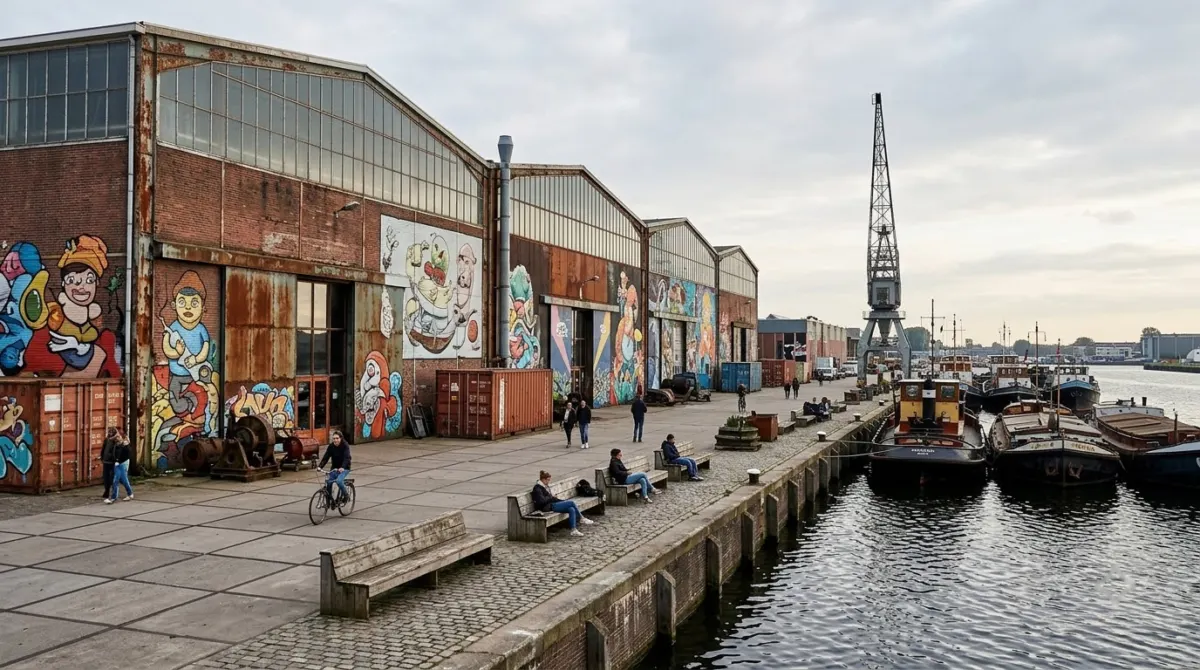
Day 3: out of the ring. Noord on the free ferry for the EYE film museum and the NDSM shipyard, or Oost and the eastern islands.
Our 3 day Amsterdam itinerary sets these out hour by hour.
Day 4, option A — Haarlem
Fifteen minutes by train, and the easiest escape from Amsterdam.
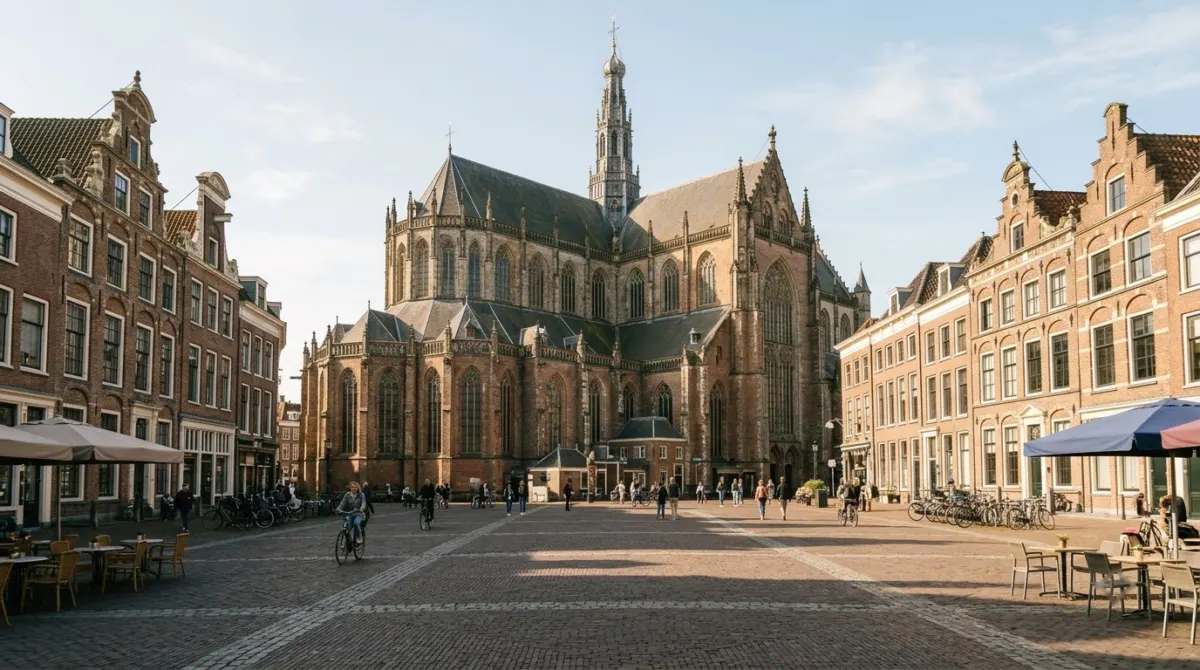
Haarlem is a smaller version of the same city: canals, gabled houses, a vast church on a market square, and the Frans Hals Museum in a former almshouse. The difference is that it has a fraction of the visitors and the centre is compact enough to see in an afternoon.
It also puts you twenty minutes from the beach at Zandvoort, which in summer turns the day into something else entirely.
Take this option if you want the least effort for the most contrast.
Day 4, option B — Utrecht
Half an hour by train, and the best single day trip from Amsterdam.
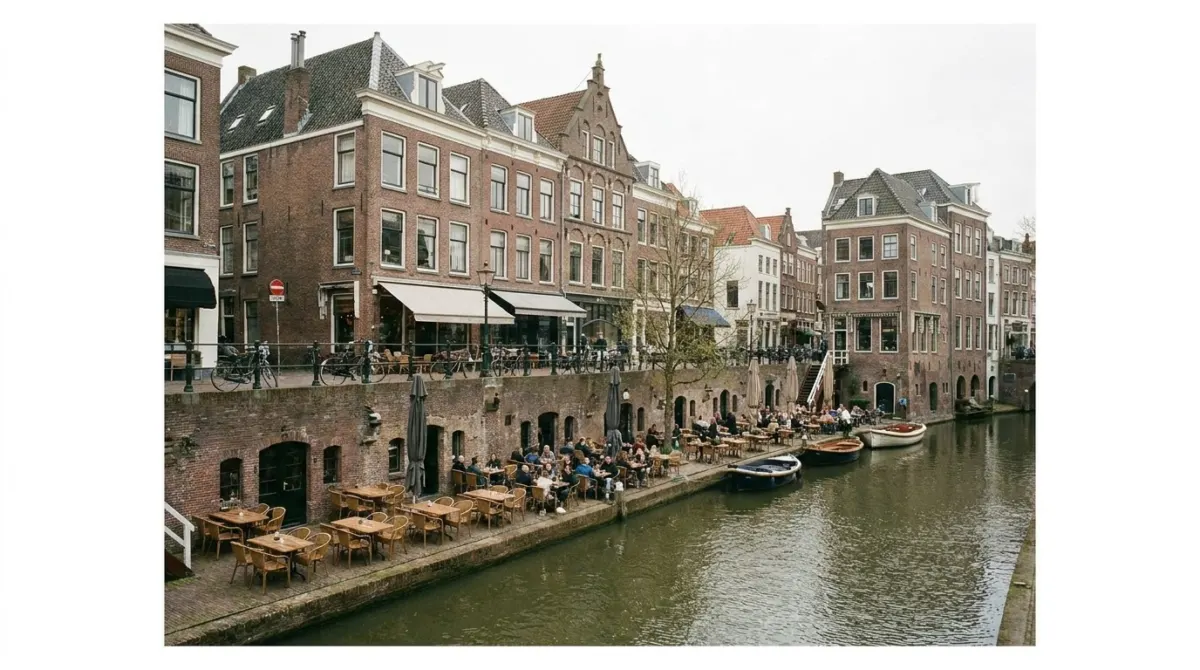
Utrecht has the one thing Amsterdam does not: wharf-level canals, built a full storey below the street, with cellars opening onto the water and cafes along them. The Dom tower is the tallest church tower in the Netherlands and stands apart from its cathedral, because the nave between them collapsed in a storm in 1674 and was never rebuilt.
It is a university city, so it is livelier and younger than Haarlem, with better eating.
Take this option if you want a second real city rather than a quieter version of the first.
Day 4, option C — Rotterdam
About forty minutes on the fast train, and the opposite of everything else in this itinerary.
Rotterdam’s centre was destroyed by bombing in 1940 and rebuilt as a modern city: the Markthal, the cube houses, the Erasmus bridge and a skyline no other Dutch city has. The Kunsthal and the Boijmans depot are the art.
Take this option if seventeenth-century gables are starting to blur and you want architecture from the last eighty years instead.
Day 4, option D — the windmills and the water
Zaanse Schans is twenty minutes by train: working windmills, green wooden houses and workshops on the river Zaan. It is openly touristic and it is also the easiest place in the country to see a mill actually turning.
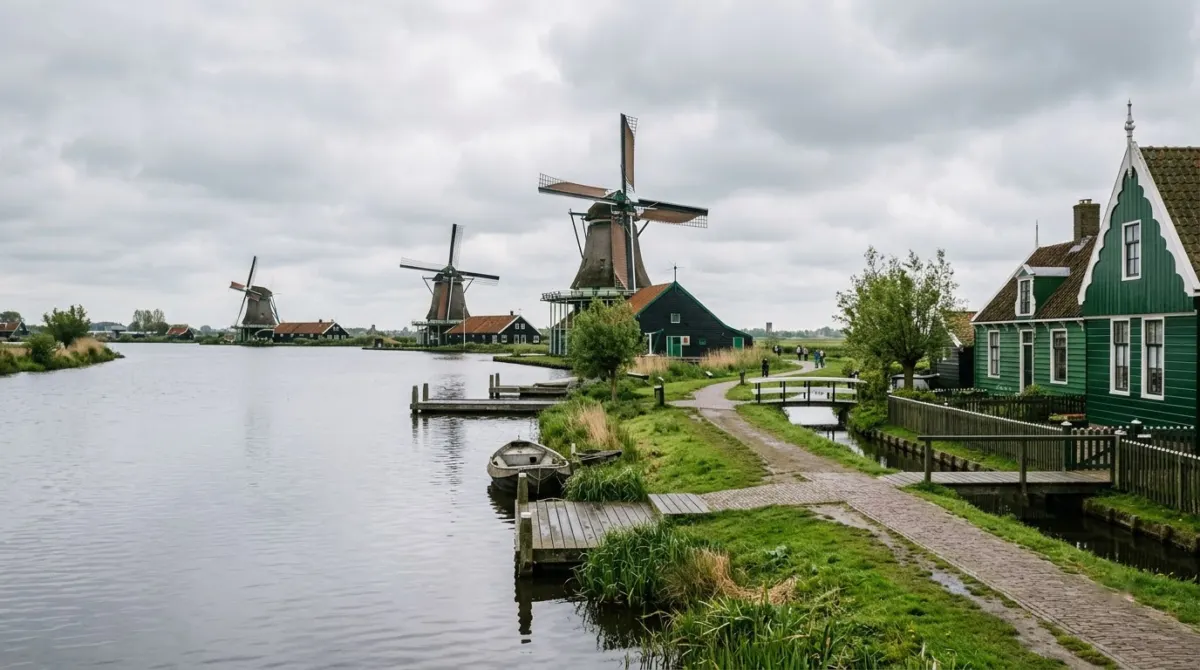
Combine it with Marken or Volendam on the old Zuiderzee coast, reached by bus, for dykes and fishing villages.
In spring — roughly late March to mid-May — swap all of this for Keukenhof and the bulb fields, which are about an hour away and open for eight weeks only.
Take this option if you are travelling with children, or if the postcard Netherlands is what you came for.
Which to choose
If you want one recommendation: Utrecht. It is close, it is a genuinely different city, and the wharf canals are something you cannot see in Amsterdam.
Haarlem is the easy one, Rotterdam the surprising one, and the windmills the one for children and photographs. All four are under an hour, all run on frequent trains that need no advance booking, and all are cheaper than Amsterdam for lunch.
If you would rather not leave the city
Some people come for Amsterdam and nothing else, and the fourth day works just as well spent in two districts the first three days never reach.
The Plantage, just east of the old centre, is the green, quiet one. Artis, the zoo, has been here since 1838; the Hortus Botanicus began in 1638 as a medicinal herb garden; and the Wertheimpark holds the Auschwitz monument. The Dutch Resistance Museum faces Artis, and the Jewish Cultural Quarter around the Jewish Museum and the Portuguese Synagogue is a short walk away. It is the most coherent half day of history in the city.
Westerpark, north-west of the Jordaan, is the other half. The Westergas, a former gasworks, is now a park-side complex of cafes, a cinema and event halls, and on the first Sunday of the month it hosts a market. Walk on to Het Schip in the Spaarndammerbuurt, a housing block built in the Amsterdam School style and now a museum of that movement.
Neither needs a ticket to enjoy, both are walkable from the Jordaan or Centraal, and together they give a fourth day with no train and no queue.
Why you stay in Amsterdam for all four nights
Because moving hotels for one night costs more than it saves.
Dutch trains are frequent, fast and do not require reservations for domestic journeys. The country is small enough that every city in this guide is a day trip, and changing accommodation for a single night means packing, checking out at eleven and checking in at three — which eats the middle of the day you were trying to save.
The exception is if Amsterdam prices are the problem, in which case stay in Haarlem for all four nights and commute in. It is fifteen minutes each way and noticeably cheaper.
Practical notes
Book the Anne Frank House the moment slots release, and the Rijksmuseum and Van Gogh Museum online with timed entry.
Domestic trains need no advance booking, so decide day four on the morning according to the weather.
Buy an OV-chipkaart or use contactless on the trains and trams; both work.
Do not rent a car. Parking in Amsterdam is among the most expensive in Europe and every destination here is on a train line.
Know when the Anne Frank House releases tickets. They are sold online only, every Tuesday at 10:00 Amsterdam time, for visits six weeks later. Nothing is sold at the door. Set a reminder for the Tuesday that matches your dates, and fit days one to three around the slot you get.
Reserve the Rijksmuseum start time early in the day. The museum opens every day from 9:00 to 17:00 and says it is quietest before noon and after 15:00, which makes an opening slot on day one the right call.
For districts, see where to stay in Amsterdam.
Where to stay for four days
All four days work from the same room, and on this itinerary the location matters less than usual because three of the days start with a walk and the fourth starts at Centraal Station.
The canal belt and the Jordaan are the comfortable choice: central, quiet at night, and ten minutes from the station. Oud-Zuid works if the museums matter most and you want a lift. Noord and Oost are cheaper and ten minutes out.
If price is the constraint, stay in Haarlem for all four nights and commute in. It is fifteen minutes each way on frequent trains, noticeably cheaper, and a pleasant small city to come back to in the evening.
Whatever you pick, check the staircase — Amsterdam’s canal houses are steep and many have no lift. See where to stay in Amsterdam.
Four days with children
The shape holds, with substitutions.
Day 1: an hour at the Rijksmuseum rather than three, then the Vondelpark.
Day 2: NEMO, the science museum in the ship-shaped building by the water, which is a full day, or the Maritime Museum beside it with a replica East Indiaman to climb over.
Day 3: the free ferry to Noord, which is a boat trip as far as a child is concerned, and the NDSM yard.
Day 4: Zaanse Schans for the windmills, which is the day-trip option children remember.
The Anne Frank House suits older children only, and the queue-free alternative is the Dutch Resistance Museum.
Four days in each season
Spring, late March to mid-May, is tulip season. If you are here then, make day four Keukenhof and the bulb fields, which are open for about eight weeks only and are a full day.
Summer gives long light evenings on the canals and the busiest museums. Book everything.
Autumn is quiet and the light on the water is at its best.
Winter is dark by five, which removes evening walking but empties the museums. Day four works better as Utrecht or Haarlem than as the windmills in January.
Festivals and events that change the plan
A handful of dates reshape a four-day visit, either because the city fills or because they are the reason to come.
King’s Day, 27 April, is the king’s birthday, and the whole city turns orange, with street markets and parties on the canals. Some sights keep shorter hours (the Anne Frank House closes at 17:00 that day), so treat it as a day for the streets rather than the museums.
Pride Amsterdam, in late July and early August, has Canal Pride at its centre, a parade of decorated boats along the canals, and the centre is packed for it.
The Grachtenfestival brings ten days of classical and jazz concerts to canal-side venues in August, including a concert played from a floating stage on the Prinsengracht.
Amsterdam Dance Event takes over the clubs for five days every October, and rooms are scarce that week.
The Amsterdam Light Festival lines the canals with light artworks from late November to mid-January, and the 2026–27 edition is planned to run from 26 November to 17 January. The artworks are free to see on foot; boat routes are ticketed. It is the best reason to choose four winter days over three.
For any of these, reserve your hotel before you plan anything else.
What four days still leaves out
The Hague and Scheveningen, fifty minutes away, with the Mauritshuis and the beach.
Delft and Leiden, the two prettiest small Dutch cities.
Maastricht and the south, which is two and a half hours and a different country in feel.
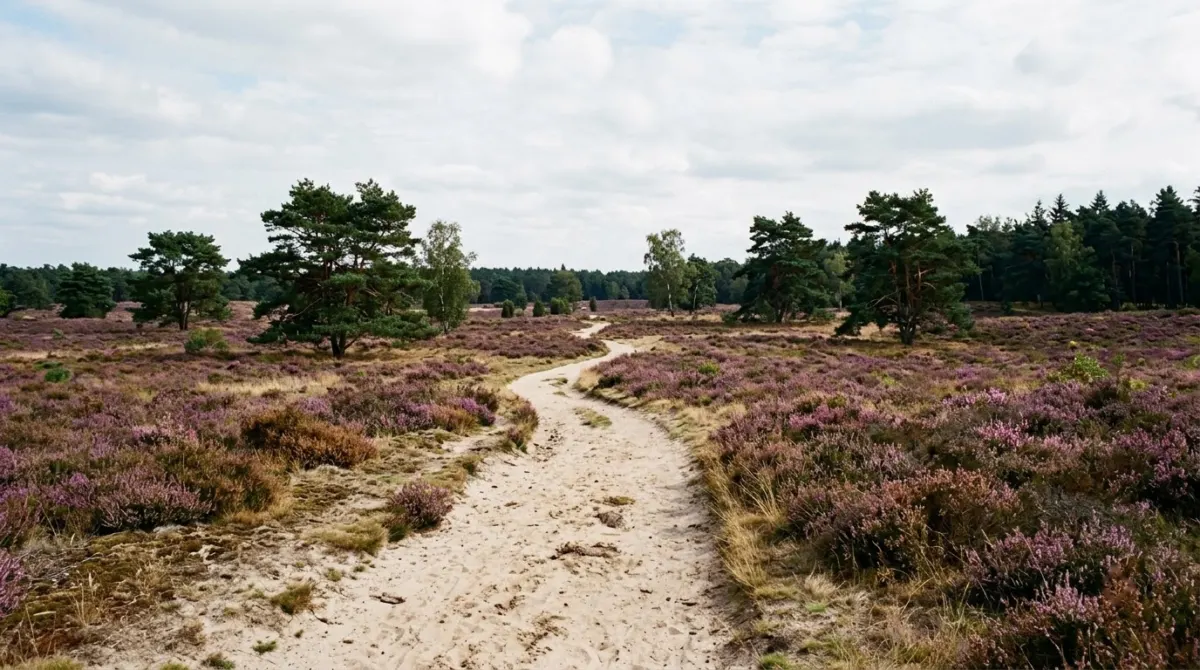
The Hoge Veluwe, a national park with the Kröller-Müller Museum and its Van Goghs in the middle of it.
All of those fit into a longer Dutch trip — see our Netherlands itinerary.
Eating across four days
Four days means about eight meals out, and the trick is spreading them across districts rather than eating where the sights are.
Day one, lunch in the Nine Streets or the Jordaan, which you walk through anyway. Avoid the streets around the Dam and the Damrak for anything other than a coffee.
Day two, the Albert Cuyp market in De Pijp, open Monday to Saturday, for stroopwafels made in front of you and a long street of food stalls. De Pijp is also the best dinner district in the city.
Day three, the Foodhallen in De Hallen, a converted tram depot in Oud-West, if you want many choices under one roof. It is busy in the evening and best at lunch. The Ten Katemarkt next to it is the local alternative for Dutch snacks such as kibbeling and broodje haring.
Day four, wherever the train takes you. Lunch on a wharf terrace in Utrecht or on the Grote Markt in Haarlem is cheaper than anything comparable in Amsterdam.
Reserve dinner a day or two ahead, especially from Thursday to Saturday.
What to skip on four days
Four days feels generous, which is exactly when filler creeps in.
The hop-on hop-off bus. The centre is half an hour across on foot, the trams are frequent, and the canals are best seen from the bridges, not from a bus window.
A coach tour that combines four villages. The windmills, Volendam, Marken and Edam in one bus day means four short stops and a lot of motorway. Zaanse Schans by train, plus one fishing village by local bus, is calmer and cheaper.
A canal cruise on a fine day. On foot you see the same canals more closely. Keep the cruise for a wet afternoon.
Moving hotels for the day trip, for the reasons above. Every option on day four is a return train ride, not an overnight.
Getting around on four days
Walking covers days one to three almost entirely: Centraal to Museumplein is about half an hour and the canal ring is on the way.
Day four is the train, and Dutch domestic services need no reservation, run every fifteen to thirty minutes and are paid for with contactless or an OV-chipkaart at the gate. The free ferries behind Centraal cross to Noord every few minutes and take no ticket at all.
The train from Schiphol runs every few minutes and takes fifteen to twenty, which means an afternoon arrival still gives you an evening and a midday departure still gives you a morning.
At Schiphol, check in at the card poles on the platform before boarding and check out at the gates at Centraal. NS runs eight Sprinter trains an hour on this route, taking about seventeen minutes, alongside the faster Intercity services. A contactless bank card or phone works on the poles, but use the same card or phone to check in and out.
If you would rather have one ticket, the Amsterdam Travel Ticket covers a second-class train between Schiphol and Amsterdam stations plus GVB trams, buses, metro and ferries for one to three consecutive days. The Amsterdam & Region Travel Ticket adds trains and buses to places such as Haarlem and the Zaanse Schans area.
Check Amsterdam availability →
The short version
Three days in Amsterdam and one on a train. Utrecht is the best of the four day-trip options, Haarlem the easiest, Rotterdam the most different and the windmills the one for children. Keep the same hotel for all four nights, book the museums online, and decide day four on the morning.
Frequently asked questions
Is 4 days too long in Amsterdam?
Not if the fourth day leaves the city. Haarlem is fifteen minutes by train, Utrecht thirty, the Zaanse Schans windmills twenty and Rotterdam about forty. Four days spent only in the centre would start to feel long.
What is the best day trip from Amsterdam?
Utrecht, half an hour away, which has wharf-level canals a storey below the street and a cathedral tower standing apart from its church. Haarlem is the easier option at fifteen minutes, and Rotterdam the most different.
Should I change hotels on a 4 day Netherlands trip?
No. Dutch trains are frequent and every city here is a day trip, so moving for one night costs you the middle of a day for nothing. Stay in Amsterdam, or in Haarlem if the price matters.
Can you see the windmills from Amsterdam in a day?
Yes. Zaanse Schans is twenty minutes by train and a short walk, with working mills, wooden houses and workshops. Go early, and pair it with Marken or Volendam if you want a quieter afternoon.
Is Rotterdam worth a day trip from Amsterdam?
If modern architecture interests you. The centre was destroyed in 1940 and rebuilt, so it has a skyline, the Markthal and the cube houses — none of which exist anywhere else in the Netherlands.
When are Anne Frank House tickets released?
Every Tuesday at 10:00 Amsterdam time, for visits six weeks later. They are sold online only, with no tickets at the door, and the house is open until 22:00 on most days, so evening slots are worth looking for.
Do I need to book Dutch trains in advance?
No, domestic trains do not require reservations and run frequently, so you can decide your day trip on the morning. Contactless payment or an OV-chipkaart both work at the gates.
Keep planning Netherlands
- Where to Stay in Amsterdam: Check the Stairs Before the District
- How Many Days in Amsterdam? Three, and Five as a Base
- 5 Day Amsterdam Itinerary: One Hotel, Three Cities
- Amsterdam in 1 Day: Pick One Thing, Then Walk
- Netherlands Itinerary: Three Bases, or One and a Rail Pass
- 3 Day Amsterdam Itinerary: Two Days In, One Day Out
- Two Day Amsterdam Itinerary: Built Around One Ticket
Written and checked by
Triplarks Editorial
An editorial desk, not an invented persona: research, drafting and fact-checking are done by the same small team. Every number here carries the date it was read.