Quick answer
Three days for a first visit, two for a weekend, four or five if you use the city as a base — Haarlem is fifteen minutes by train, Utrecht thirty and the windmills twenty. Book the Anne Frank House the moment slots release, because nothing else in the city sells out like it.
On this page
- How many days in Amsterdam: what each length gets you
- What one day covers
- Two days, and the booking that decides them
- The third day: out of the centre
- Four and five days: Amsterdam as a base
- Six days or a week
- When fewer days are enough
- When you need more
- How to use the days you have
- Why Amsterdam needs fewer days than you might think
- What the museums actually take
- The Netherlands from an Amsterdam base
- Amsterdam by season
- Events that change the answer
- How many days with children
- What to do with a spare half day
- Amsterdam as one stop on a European trip
- Travel tips that change how many days you need
- Arrival and departure days count
- The sweet spot, and when to add a day
- The short version
- Frequently asked questions
Three days. Two if Amsterdam is one stop on a longer European trip, four or five if you want to use it as a base for the rest of the Netherlands — which is an underrated way to spend a week, because everything is within an hour by train.
Some links below are affiliate links. We may earn a commission if you book through them, at no extra cost to you. We do not rank hotels, and any prices on the map come live from the booking sites.
How many days in Amsterdam: what each length gets you
| Days | What fits | Who it suits |
|---|---|---|
| 1 | One major museum and the canals | A stopover |
| 2 | Two museums, the canal ring, one district | A weekend |
| 3 | The above plus a day out of the centre | Most first visits |
| 4–5 | Adds Haarlem, Utrecht or the windmills | Using it as a base |
| 6+ | The whole country, from one room | Slow travel, no packing |
Where to sleep on this route
What one day covers
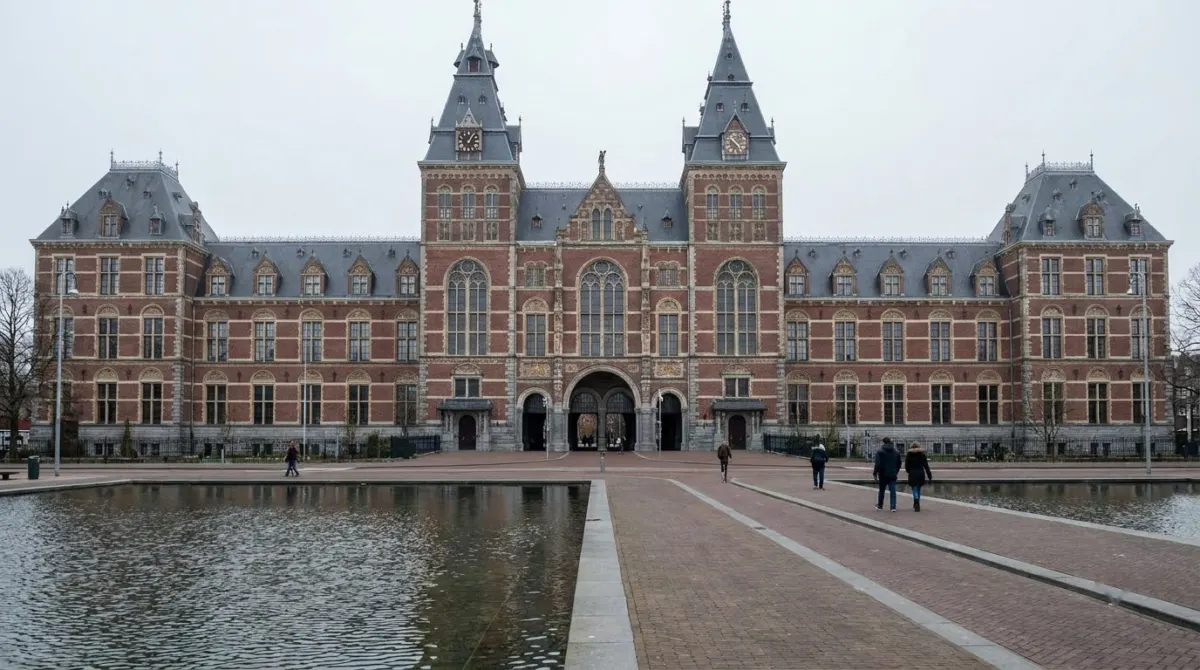
One major museum — the Rijksmuseum or the Van Gogh Museum, not both — then a walk through the canal belt into the Jordaan, and an hour in the Vondelpark or along the Prinsengracht.
That is a full day. It leaves out the Anne Frank House, the second museum, every district beyond the ring and any sense of the city at night.
Two days, and the booking that decides them
Two days covers the big three if you plan them, and the plan is really one decision.
The Anne Frank House sells tickets online only, in timed slots released a set period in advance, and they go within minutes. There is no walk-up queue to join. If you want to see it, you build your two days around the slot you get rather than the other way round.
Around that: the Rijksmuseum for an afternoon, the Van Gogh Museum for a morning, and the canals on foot between them.
The third day: out of the centre
This is where Amsterdam improves, because the centre is the busiest part of it.
De Pijp and the Albert Cuyp market, for the food. Oost and the Oosterpark. Noord across the free ferry, for the NDSM shipyard and the EYE film museum. Or the Westerpark and the former gasworks.
Alternatively leave the city entirely: Haarlem is fifteen minutes by train, Utrecht is half an hour, and the Zaanse Schans windmills are twenty minutes.
Four and five days: Amsterdam as a base
The Netherlands is small and the trains are excellent, which makes this the best argument for a longer stay.
Haarlem, fifteen minutes, is a smaller Amsterdam with a cathedral and no crowds. Utrecht, half an hour, has canals with wharf-level terraces and a university town’s energy. Leiden and Delft, both under an hour, are the classic small Dutch cities. The Hague and the beach at Scheveningen are fifty minutes.
In spring, the Keukenhof gardens and the bulb fields are about an hour, and they are open for roughly eight weeks only.
None of these need a car, and all of them are cheaper to sleep in than Amsterdam.
Six days or a week
The table’s last row deserves more than a line, because a week based in Amsterdam is a different trip rather than a longer version of the same one.
What it adds in the city. The districts nobody reaches on three days: the Plantage with the Artis zoo, the Hortus Botanicus and the Jewish Cultural Quarter; Westerpark and the former gasworks; the Amsterdam School housing around Het Schip; and the small canal-house museums that a short trip walks past.
What it adds outside. Three or four day trips rather than one: Utrecht, Haarlem, Rotterdam, and The Hague with Delft on the same line, each on a separate day and each decided that morning.
How to pace it. Alternate a city day and a train day, so that no two days in a row are spent on platforms, and leave one day with nothing planned at all.
Tickets. On a week, the Museumkaart’s temporary card, valid for 31 days and up to five museum visits at participating museums nationwide, earns its keep. For the train days, a contactless bank card at the NS gates is as simple as any pass.
Beyond a week, the honest advice is to move once, to the south or the east of the country, rather than add more day trips from the same station.
When fewer days are enough
If you do not care about museums, Amsterdam is a two-day city. The canals, the Jordaan and a district cover it.
If you are passing through on a longer European trip, two days is a fair share, and Schiphol’s connections make it easy to add.
When you need more
If the art is the point. The Rijksmuseum alone can take a full day, and the Van Gogh Museum half of one. Add a day.

In tulip season, roughly late March to mid-May, when Keukenhof and the bulb fields are a full day in themselves.
If you are using it as a base, in which case five or six days with no packing is a genuinely good way to see the Netherlands.
How to use the days you have
Book the Anne Frank House the moment slots release. It is the one thing in Amsterdam that cannot be improvised, and the most common regret.
Book the Rijksmuseum and Van Gogh Museum online with timed entry. Both are busy, and Van Gogh in particular.
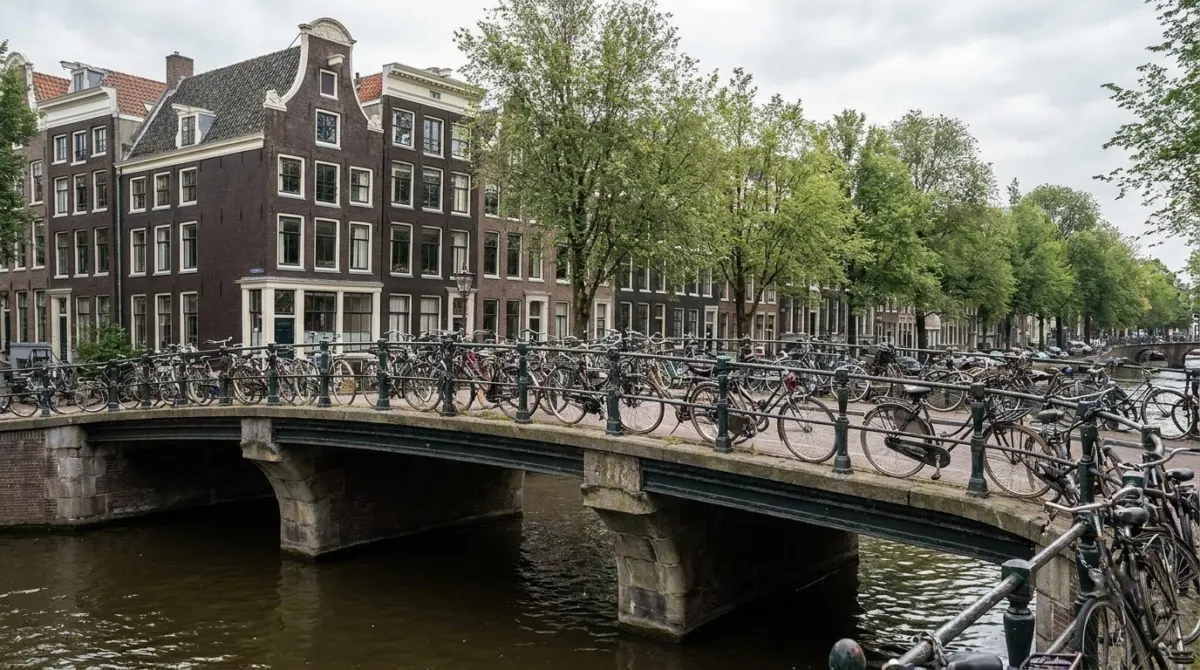
Walk. The centre is half an hour across and the canal ring is the sight, not the route between sights.
Do not rent a car. Parking is among the most expensive in Europe and the city is designed against it.
Our guides to two days and three days in Amsterdam set out the plans, and where to stay in Amsterdam covers the districts.
Why Amsterdam needs fewer days than you might think
Three reasons, and they are all about scale.
The centre is small. Centraal Station to Museumplein is about half an hour on foot, and the canal ring fits inside that.
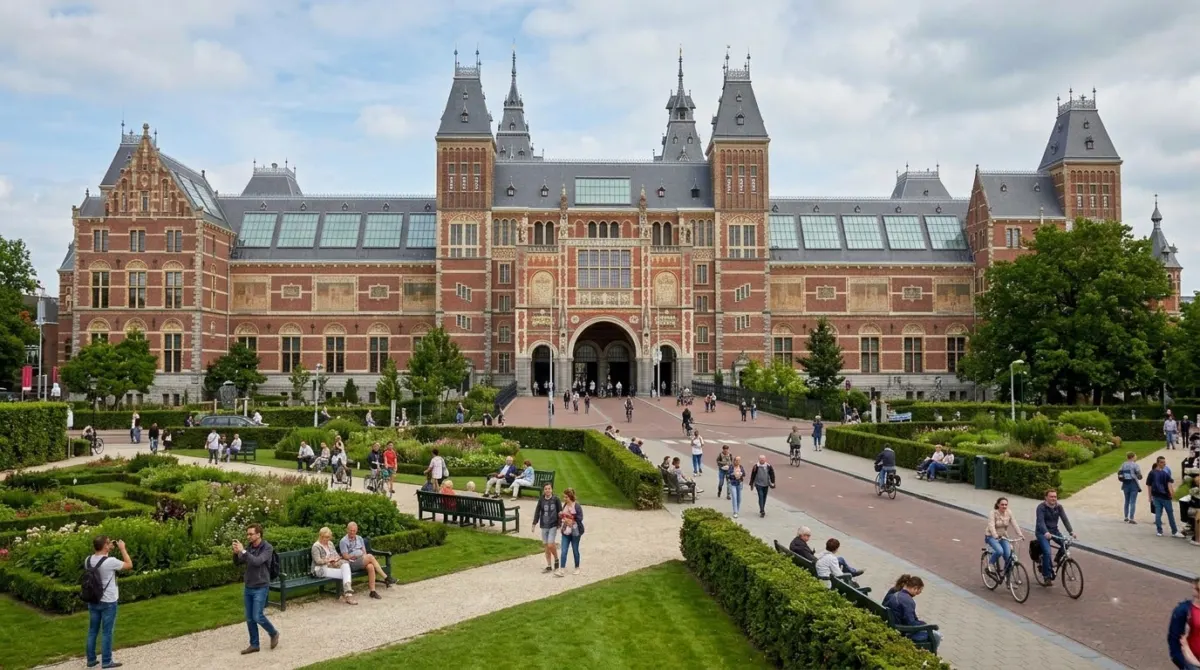
The main sights are concentrated. The Rijksmuseum, the Van Gogh Museum and the Stedelijk are on the same square, and the Anne Frank House is twenty minutes’ walk away.
The city is best walked rather than ticked. Once you have done the three museums, what remains is the canals, the districts and the cafes, which reward wandering rather than planning.
That is why three days is usually right and six is only worth it if you are using the city as a base.
What the museums actually take
Useful durations, because this is where days are won and lost.
Rijksmuseum: two to three hours for the highlights, a full day if you are thorough.
Van Gogh Museum: about two hours, and it is arranged chronologically so it reads as a story.
Anne Frank House: ninety minutes, on a fixed timed slot.
Stedelijk: ninety minutes for modern and contemporary art.
Rembrandt House: an hour.
Two of the large ones in a day is comfortable. Three is a lot of looking.
Map shows live availability and prices. We may earn a commission on bookings made through it, at no extra cost to you.
The Netherlands from an Amsterdam base
This is the strongest argument for four or five days, and it is underused.
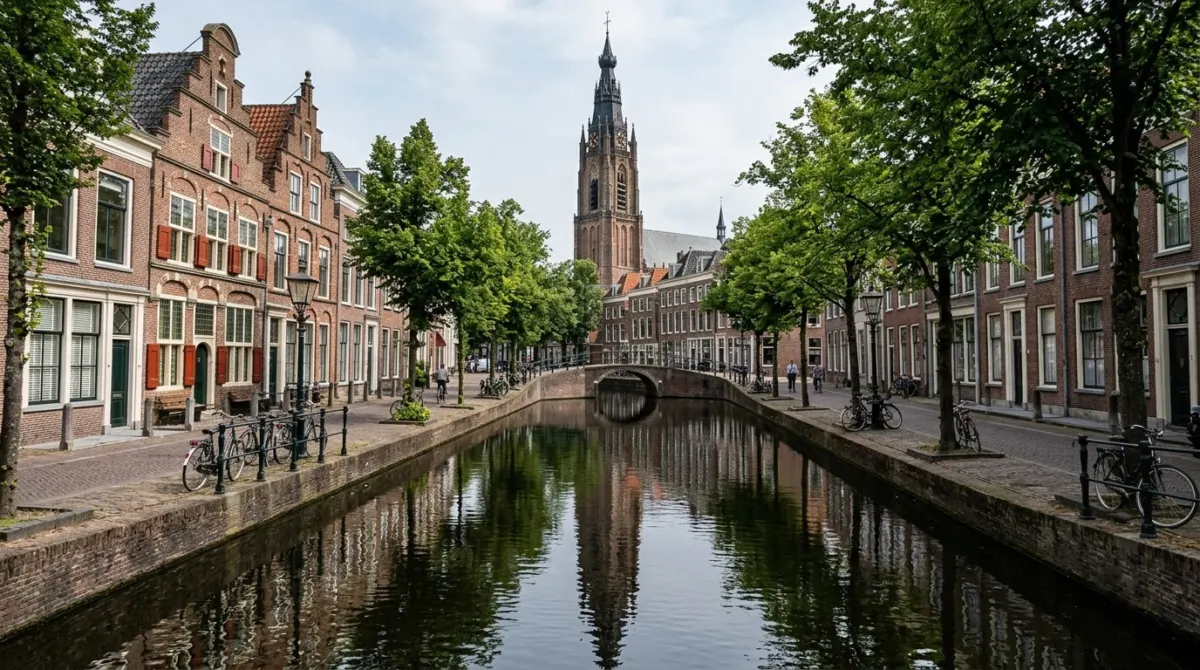
Train journeys from Centraal: Haarlem fifteen minutes, Zaanse Schans twenty, Utrecht thirty, Leiden thirty-five, The Hague fifty, Delft an hour, Rotterdam about forty minutes on the fast train.
That means a five-day trip can cover four Dutch cities without changing hotel, which in a country this size is a better plan than moving every two nights.
Trains are frequent and do not require advance booking for domestic journeys, so these days can be decided on the morning depending on the weather.
Amsterdam by season
Spring, late March to May, has the tulips, the best weather and the biggest crowds. Keukenhof is open for roughly eight weeks only.
Summer is long, light and busy, with the canals at their best in the evening.
Autumn is quieter and the light on the water is good.
Winter is cold, dark by five, and the cheapest and calmest time to visit. The museums are the trip, and they are empty.
Add a day in winter for the lost daylight, and a day in spring if the tulips matter.
Events that change the answer
The calendar can add a day, or cost you one.
King’s Day, 27 April. The city becomes one long street market and party, and some sights shorten their hours — the Anne Frank House closes at 17:00 that day. Count it as a day for the streets, not the museums, and add a day if you came for the art.
Pride, late July to early August. Canal Pride, the parade of boats through the centre, draws huge crowds to the canals, and rooms that week fill early.
The Grachtenfestival in August, ten days of classical and jazz concerts in canal-side venues, is a reason to add an evening or two.
Amsterdam Dance Event in October fills the clubs and the hotels for five days.
The Amsterdam Light Festival, late November to mid-January, puts light artworks along the canals. It is free to walk and is the best argument for an extra winter evening.
For all of these, accommodation decides the length of the trip more than the program: reserve first, then plan.
How many days with children
Three, with a different list. NEMO, the science museum in the ship-shaped building, is a full day. The Maritime Museum beside it has a replica East Indiaman to climb over. The Vondelpark and the free ferries to Noord cost nothing and both work.
The Rijksmuseum works for an hour rather than three. The Anne Frank House suits older children only.
What to do with a spare half day
Amsterdam rewards small gaps better than most cities, because so much of it is free and close together.
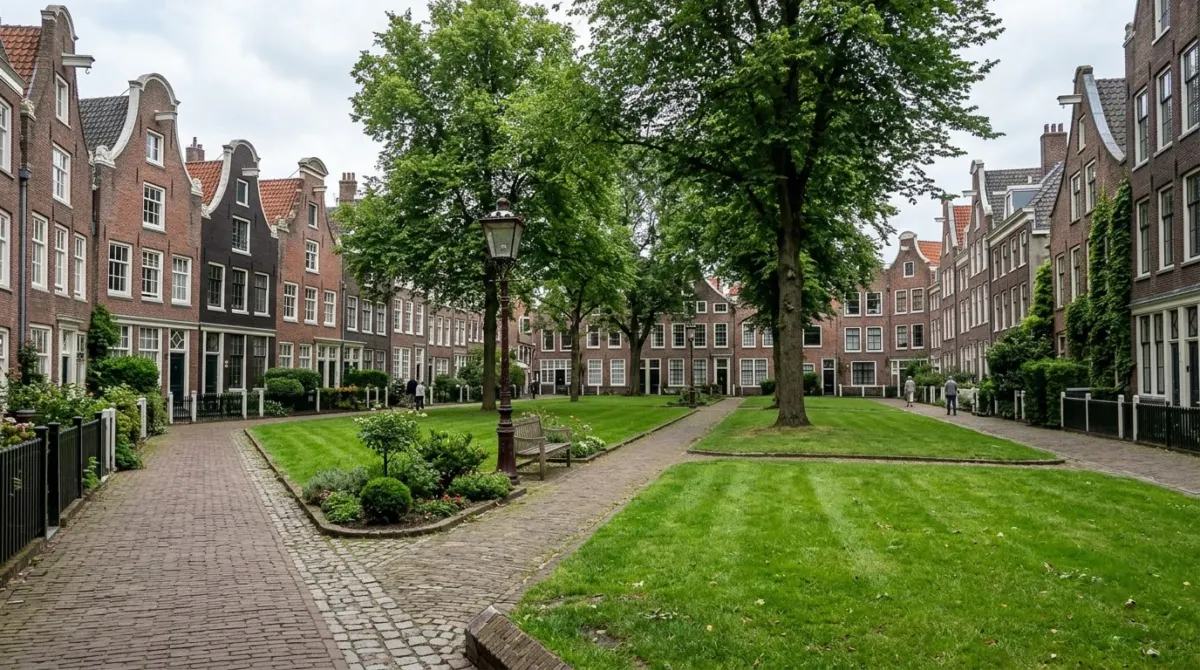
The Begijnhof, a medieval courtyard of almshouses hidden behind a door off a busy shopping street, takes fifteen minutes and is the quietest place in the centre.
The Vondelpark is five minutes from Museumplein and is where the city relaxes.
The free ferries to Noord take a few minutes each way and give you the waterfront and the EYE film museum.
The Albert Cuyp market in De Pijp runs most days except Sunday and is lunch as well as a sight.
None of these need a ticket, and all of them fit into the gap left by a museum you finished sooner than expected.
Amsterdam as one stop on a European trip
The city is unusually well placed for this, which is why so many visits are two days rather than four.
From Centraal, direct trains reach Brussels in about two hours, Paris in three and a half, Cologne in under three and Berlin in about six. Schiphol connects almost everywhere.
If Amsterdam is one of three or four European cities on a trip, two days is a fair share and the museums are the right use of them. For the next stops, see where to stay in Paris and how many days in Berlin. If it is the only stop in the Netherlands, three or four days lets you see the country as well as the capital, which most visitors never do.
Travel tips that change how many days you need
Several practical things compress or stretch an Amsterdam trip, and they are worth knowing before you fix the dates.
Book the big three before you fly. The Anne Frank House, the Van Gogh Museum and the Rijksmuseum all run timed entry and all sell out, the Anne Frank House weeks ahead. An unbooked museum day is the single most common way a short trip loses half a day.
The city centre is walkable end to end in about forty minutes, which means two full days covers more here than in most capitals. Dam Square sits at the middle of it and is the easiest orientation point.
Mondays are thin. Several smaller museums close, and some restaurants with them.
Daylight decides the shape of the trip. In December it is dark by half four, which makes a two-day visit feel like one; in June you get light until ten and the same two days feel generous.
Arrival and departure days count
The number on the ticket is not the number of usable days, and in Amsterdam it is usually more.
NS runs eight Sprinter trains an hour between Schiphol and Centraal, taking about seventeen minutes, along with Intercity services, and the airport station is directly under the terminal. A morning landing therefore gives you most of a day, and an evening flight still leaves a full morning and an early afternoon.
Two things make those half days work. Luggage lockers, run by NS at and around Centraal Station and rentable for up to three consecutive days, let you check out and keep going. And a hotel near Centraal or on a tram line from it cuts the dead time at each end.
The practical rule: a trip of three nights with a morning arrival and an evening departure is close to four days of sightseeing. Count the half days before deciding you need another night.
The sweet spot, and when to add a day
For most first visits, three full days is the sweet spot: two for the centre and the museums, one for a district or a town outside the city.
Add a fourth if any of these apply: you want Keukenhof or the windmills at Zaanse Schans, you are travelling with children and need the pace halved, or you are visiting between November and February when the short afternoons cut what fits into a day.
The short version
Three days for a first visit: two for the museums and the canals, one outside the centre. Two if it is a weekend or one stop on a longer trip. Four or five if you want Haarlem, Utrecht, Delft or the windmills, all of which are day trips from the same room. Add a day in winter for the short daylight and in spring for the tulips.
Check Amsterdam availability →
Only have a day? See our 1-day Amsterdam itinerary.
Frequently asked questions
How many days do you need in Amsterdam?
Three for a first visit: two for the museums and the canals, one for a district or a day trip. Two is enough for a weekend if you book the museums, and four or five if you want to use the city as a base for the rest of the Netherlands.
Is 2 days enough for Amsterdam?
Yes, if you plan around the Anne Frank House slot and add the Rijksmuseum or Van Gogh Museum. What you lose is any district beyond the canal ring and any day trip.
Is 4 days too long in Amsterdam?
Not if you leave the city. Haarlem is fifteen minutes by train, Utrecht half an hour and the Zaanse Schans windmills twenty minutes, so four or five days works well as a base with no packing.
What is the hardest ticket to get in Amsterdam?
The Anne Frank House. Tickets are sold online only in timed slots released a set period ahead, they go within minutes, and there is no walk-up queue. Build your dates around the slot you get.
Can you do Amsterdam in one day?
One major museum, the canal belt and the Jordaan on foot. That is a full day and it leaves out the Anne Frank House, the second museum and everything outside the ring.
Is a week too long in Amsterdam?
Not if you use it as a base. Spend three or four days on the city, including the Plantage and Westerpark, and the rest on day trips to Utrecht, Haarlem, Rotterdam, The Hague and Delft, all within about an hour by train and all reachable without changing hotels.
Do you need more days in Amsterdam in spring?
If you want the tulips, yes. Keukenhof and the bulb fields are about an hour away and open for roughly eight weeks from late March, and they take a full day.
Keep planning Netherlands
- Where to Stay in Amsterdam: Check the Stairs Before the District
- 5 Day Amsterdam Itinerary: One Hotel, Three Cities
- Amsterdam in 1 Day: Pick One Thing, Then Walk
- Netherlands Itinerary: Three Bases, or One and a Rail Pass
- 4 Day Amsterdam Itinerary: Three Days In, One Day Out
- 3 Day Amsterdam Itinerary: Two Days In, One Day Out
- Two Day Amsterdam Itinerary: Built Around One Ticket
Written and checked by
Triplarks Editorial
An editorial desk, not an invented persona: research, drafting and fact-checking are done by the same small team. Every number here carries the date it was read.