Quick answer
Stay in the canal belt or the Jordaan and both days are on foot. Book all three museums online, and build the two days around whatever Anne Frank House slot you are given — it is the only thing here that cannot be rearranged.
On this page
- Two day Amsterdam itinerary at a glance
- Day 1, hour by hour
- Day 2, hour by hour
- What to reserve, and when
- Working around the Anne Frank slot
- Rijksmuseum or Van Gogh, if only one
- The weekend version
- If it rains
- The Dam and the old centre in an hour
- What two days leaves out
- Practical notes
- Passes on a two-day trip
- Where to stay for two days
- Eating on a short visit
- Getting around in two days
- Two days with children
- Two days in winter
- Arriving and leaving on a two-day trip
- What to skip on two days
- The short version
- Frequently asked questions
Two days in Amsterdam works, and it hangs on one booking. The Anne Frank House sells timed tickets online only, released a set period in advance, and they are gone within minutes. Whatever slot you get becomes the fixed point of your trip, and everything else arranges around it.
Some links below are affiliate links. We may earn a commission if you book through them, at no extra cost to you. We do not rank hotels, and any prices on the map come live from the booking sites.
This is the two-day plan with the hours filled in. For three days, see our 3 day Amsterdam itinerary; for the question of length, how many days in Amsterdam.
Two day Amsterdam itinerary at a glance
| Day | Morning | Afternoon | Evening |
|---|---|---|---|
| 1 | Rijksmuseum | Canal belt and the Jordaan | Jordaan or the Nine Streets |
| 2 | Van Gogh Museum | Anne Frank House, or De Pijp | De Pijp |
Four substantial things in two days, in a city you can cross on foot in half an hour. Adding a fifth is where two-day plans break.
Map shows live availability and prices. We may earn a commission on bookings made through it, at no extra cost to you.
Where to sleep on this route
Day 1, hour by hour
From opening. The Rijksmuseum, with a timed ticket booked online. It holds the Dutch Golden Age — Rembrandt’s Night Watch, Vermeer, Hals — along with the national collection from the middle ages onward. Two to three hours, and the first hour of the day is the quiet one.
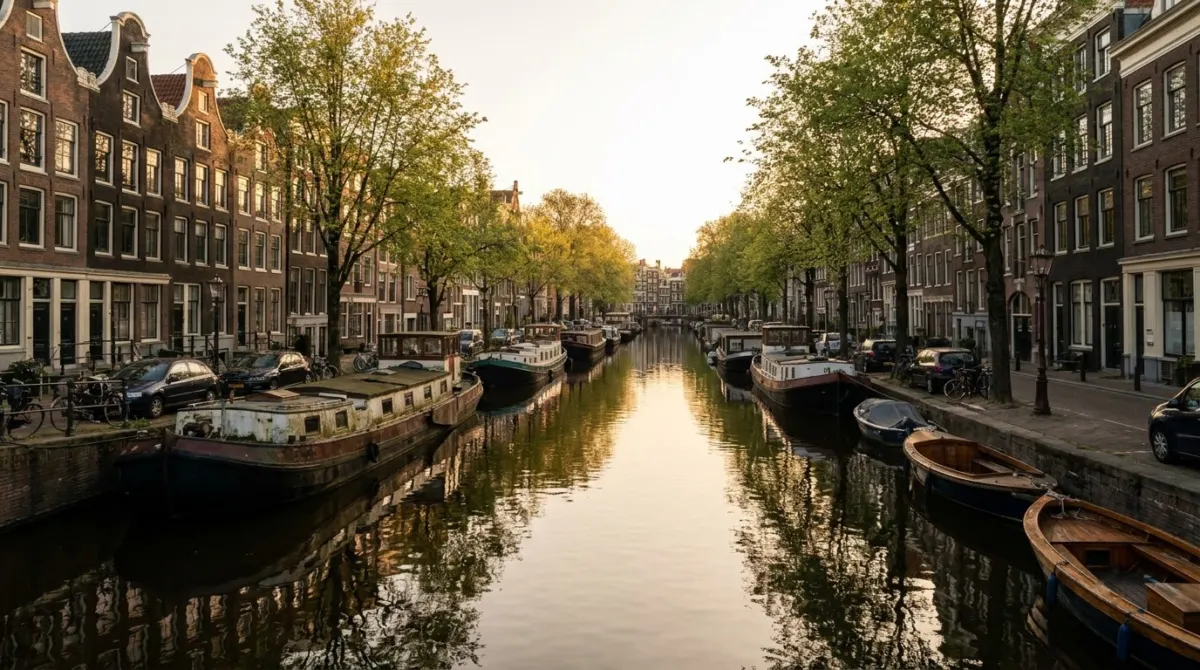
Late morning. Walk north into the canal belt: the Prinsengracht, Keizersgracht and Herengracht, the three main rings dug in the seventeenth century, lined with the narrow gabled houses the city was built on.
Afternoon. The Nine Streets — a grid of small shops and cafes between the canals — and then into the Jordaan, which is the most pleasant walking in Amsterdam.
Evening. Eat in the Jordaan or on the edge of it. The streets here are quiet by nine, which after a day in the centre is the point.
Day 2, hour by hour
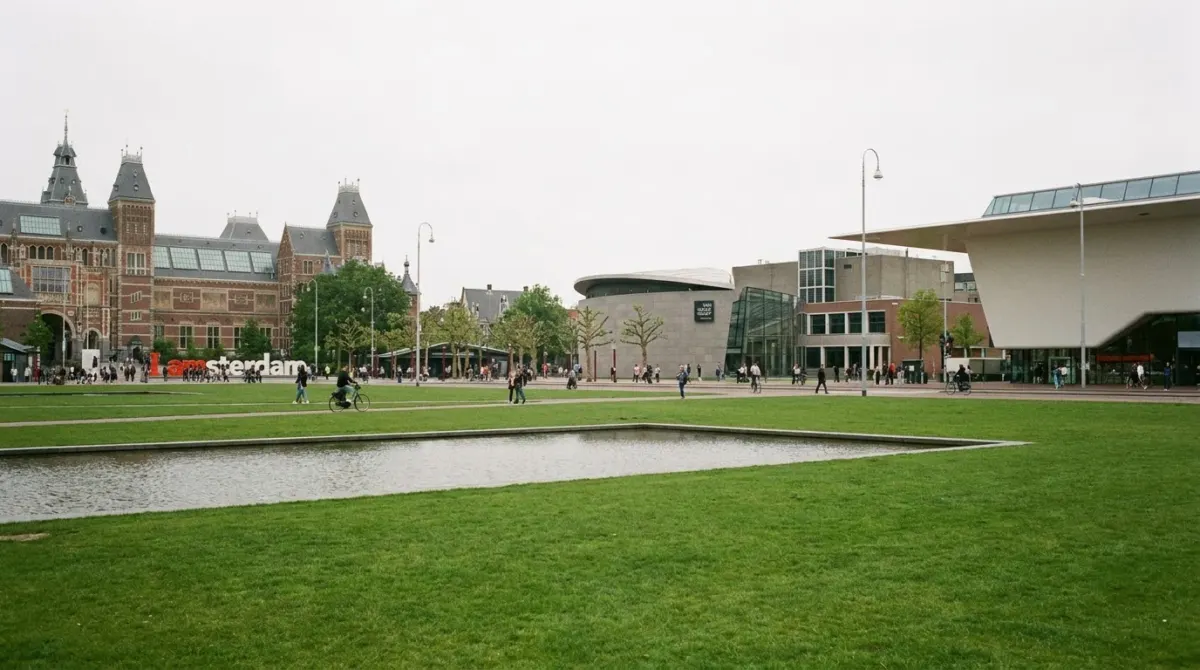
From opening. The Van Gogh Museum, five minutes from the Rijksmuseum on Museumplein. It holds the largest collection of his work anywhere, arranged chronologically, and two hours is enough.
Midday. The Vondelpark, immediately beside it, which is where Amsterdam goes outdoors.
Afternoon. The Anne Frank House if your slot falls here — allow ninety minutes — or De Pijp and the Albert Cuyp street market if you did not get one.
Evening. De Pijp, which has the best concentration of restaurants in the city and is twenty minutes’ walk from the centre.
What to reserve, and when
On two days there is no slack for a sold-out museum, so the reservations are the real first step of this itinerary.
Six weeks out: the Anne Frank House. Tickets are sold online only, released every Tuesday at 10:00 Amsterdam time for visits six weeks later, and there is no sale at the door. Children under ten need a timed ticket too. The house offers an optional thirty-minute introductory program in English, which is worth adding if you know little of the history.
As soon as your dates are fixed: the Van Gogh Museum. Every visitor needs a ticket with a start time, and each slot has a limited number.
A week or so ahead: the Rijksmuseum. A start time is required for everyone, including Museumkaart holders. The museum is open every day from 9:00 to 17:00 and says it is quietest before noon and after 15:00.
The day before: dinner. Reserving is normal in the Jordaan and De Pijp, and Saturday night fills first.
Under-18s enter both the Rijksmuseum and the Van Gogh Museum free, but still need a timed ticket.
Working around the Anne Frank slot
Because the slot is fixed and the rest is not, treat it as the anchor.
If your slot is in the morning, do the house first and move the Van Gogh Museum to the afternoon; both are busy but neither is time-critical.
If it is in the evening, which is common, keep the afternoon light and eat afterwards rather than before.
If you did not get one, the honest alternative is not another Anne Frank experience but the Dutch Resistance Museum in the Plantage, opposite the Artis zoo, which covers the occupation in depth and is rarely busy.
Rijksmuseum or Van Gogh, if only one
Two museums in two days is the plan, but many visitors find after day one that they want the canals more than a second gallery. If you are choosing, here is how.
Choose the Rijksmuseum if you want the city explained. It is the national museum, and its Golden Age rooms — the Night Watch, the Vermeers, the ship models and the dolls’ houses — are the story of the canal belt you will walk through afterwards. It is big enough that two hours only covers the highlights.
Choose the Van Gogh Museum if you want one artist in depth. It holds the largest collection of his work in the world, hung in order, and in two hours you watch him go from dark Dutch peasant scenes to the colours of the south of France.
The deciding question is whether you would rather understand Amsterdam or see Van Gogh. Both are on Museumplein, so the one you skip is a five-minute walk away if you change your mind on the day — provided it has a free slot.
The weekend version
Most two-day visits are a Friday evening to a Sunday afternoon.
Friday evening: dinner in the Jordaan and a walk along the canals when they are lit, which is the best hour of the day in Amsterdam.
Saturday: day 1 above, with the Albert Cuyp market added if you want it — it runs most days except Sunday.
Sunday: the Van Gogh Museum, the Vondelpark, and the train to Schiphol, which takes fifteen to twenty minutes from Centraal.
If it rains
It will. The plan survives because both days are built around museums, and the walking sections can be shortened.
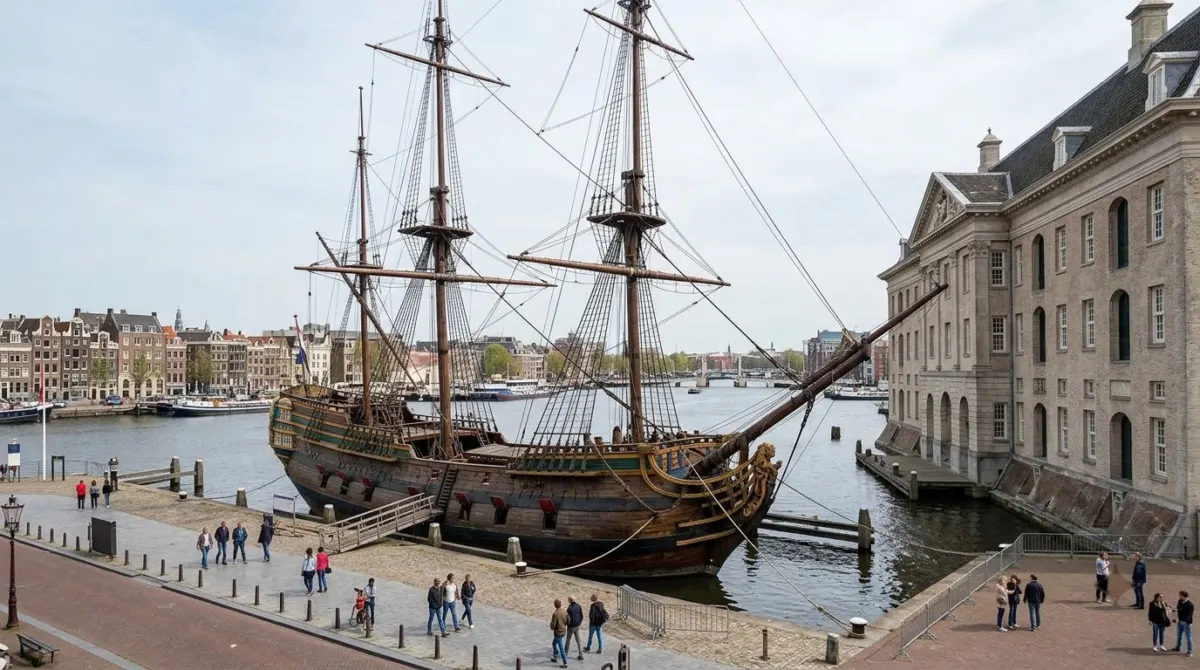
The useful wet-weather additions are the Rembrandt House, the Stedelijk on Museumplein, and the Maritime Museum in the east with a replica East Indiaman moored outside.
The canal boats also run in rain and are covered, which is the one time a canal cruise is genuinely the right call.
The Dam and the old centre in an hour
The plan above skirts the old centre, because it is the most crowded part of the city. But an hour there fills a gap well, and these are the parts worth it.
The Royal Palace, on the west side of the Dam, was built in the seventeenth century as the city hall and became a royal palace only in 1808, under Louis Bonaparte. Visitors are let in except during official events, there is no need to reserve, and the free audio tour takes you through the marble Citizens’ Hall.
The Begijnhof, five minutes south, is a courtyard of almshouses hidden behind a door off the Spui. Its wooden house, number 34, dates from around 1425 and is the oldest house in the city. Entry is free, the gate is open during the day only, and people still live there, so keep your voice down.
Between the two, the Kalverstraat is the main shopping street and is best crossed rather than walked. From the Begijnhof the Nine Streets are three minutes west, which puts this hour neatly before the afternoon of day one.
What two days leaves out
Noord, across the free ferry, with the NDSM shipyard and the EYE film museum.
Any day trip — Haarlem, Utrecht, the Zaanse Schans windmills — all of which are under an hour by train.
The eastern islands and the modern architecture around them.
A second look at anything. Two days is one pass through the city.
Practical notes
Book all three museums online with timed entry, and the Anne Frank House the moment slots release.
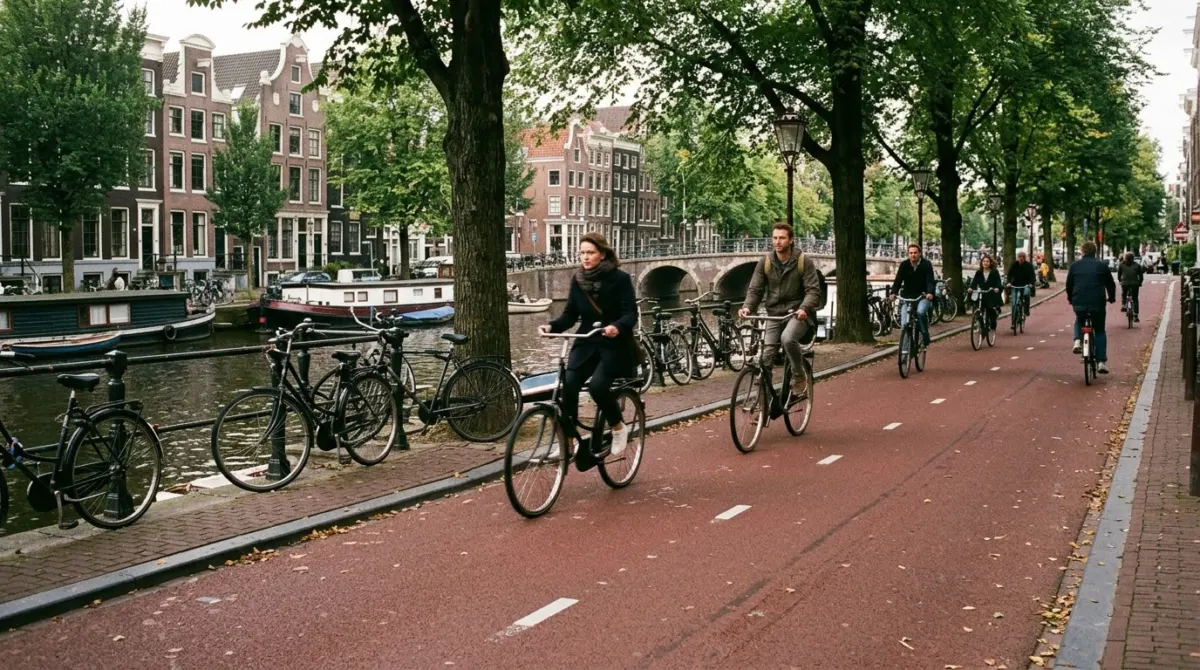
Walk, and watch the bike lanes. They are not pavements, they are fast, and cyclists have right of way in practice as well as in law.
Buy a transport ticket if you plan to use the trams, though on this itinerary you may not need one.
The airport train runs every few minutes and takes fifteen to twenty minutes, so a midday flight still leaves you a morning.
For districts, see where to stay in Amsterdam.
Passes on a two-day trip
The honest answer for most two-day visitors is no pass, but there are three cases where one helps.
The Amsterdam Travel Ticket is the most useful. It covers a second-class train between Schiphol and Centraal and unlimited GVB trams, buses, metro and ferries for one to three consecutive days, so it handles both airport journeys on a single ticket. Validity starts at your first check-in.
The I amsterdam City Card counts its time in consecutive hours from first use, so a 48-hour card started at noon on day one runs to noon on day three. It includes GVB transport, a canal cruise and the Rijksmuseum (with a reserved slot) among more than seventy places, but not the Van Gogh Museum or the Anne Frank House, which on this plan leaves it doing little.
The Explorer card is the lighter version: three, five or seven attractions of your choice with no transport, and worth it only if you add several small museums.
Otherwise, tap a contactless bank card on the trams. GVB caps the daily charge when you check in and out that way, which on a walking plan you are unlikely to reach.
Where to stay for two days
On a two-day trip the location matters more than usual, because an hour lost crossing the city is a noticeable share of the visit.
Anywhere in the canal belt or the Jordaan puts both days on foot. Oud-Zuid near Museumplein works equally well for this plan, since two of the four fixtures are on that square.
What to avoid is the streets immediately around Centraal Station and De Wallen, which are loud until very late. And whatever district you choose, check whether the building has a lift — Amsterdam’s canal house staircases are the steepest in Europe.
Our guide to where to stay in Amsterdam covers this properly.
Eating on a short visit
The pattern is the usual one, sharpened by how concentrated the tourist centre is.
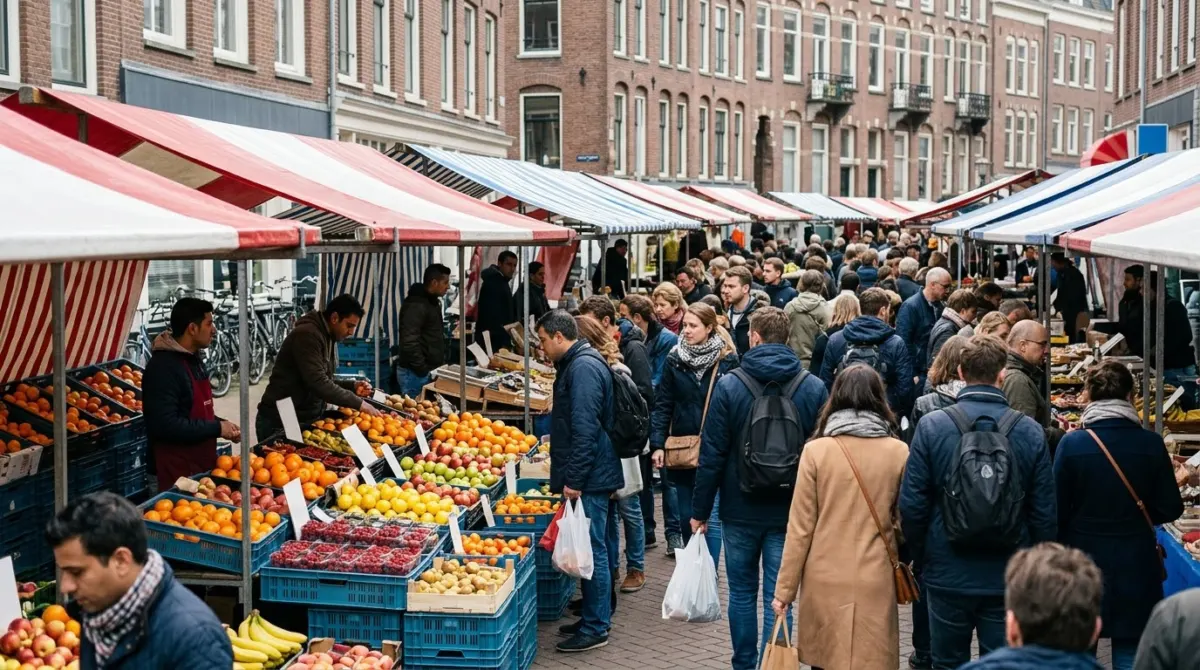
The streets around the Dam, the Damrak and Leidseplein are where you pay most for least. Five minutes away in the Jordaan, the Nine Streets or across the canals into De Pijp, the quality rises and the price falls.
Dutch specifics worth knowing: lunch is often bread-based and quick, dinner is eaten earlier than in southern Europe, and reserving is normal even midweek in the better places. The Albert Cuyp market in De Pijp is the cheapest good lunch in the city.
Getting around in two days
You will walk nearly all of it. Centraal Station to Museumplein is about thirty minutes on foot and takes in the canal ring on the way, which is the point rather than the journey.
Trams fill the gaps and are frequent. A day ticket is worth it only if you are using them several times; on this plan you may not be.
The train from Schiphol runs every few minutes and takes fifteen to twenty minutes, which means a midday flight still leaves you a morning in the city.
Two days with children
Swap one museum. The Rijksmuseum for an hour rather than three works; NEMO, the science museum in the ship-shaped building by the water, is a full day and children rarely want to leave.
Add the free ferry to Noord, which costs nothing, takes a few minutes and is a boat trip as far as a child is concerned.
Keep the Anne Frank House for older children.
Two days in winter
It is dark by five from November, which removes the evening canal walking but leaves the plan otherwise intact — both days are built around museums.
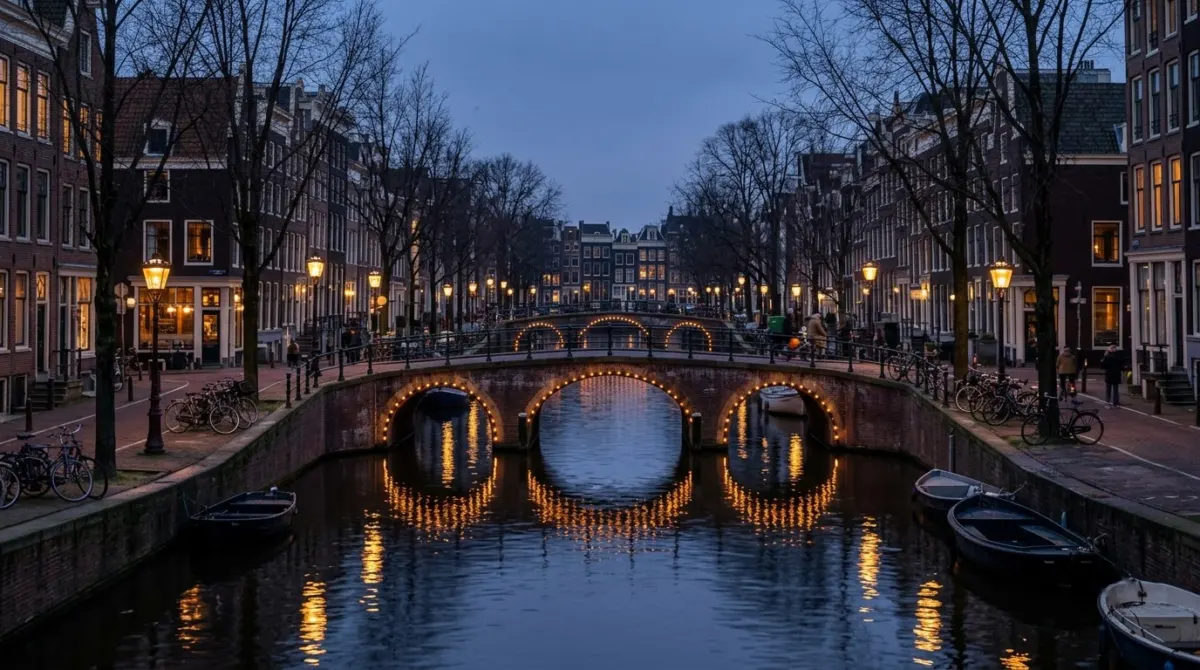
What improves is the queueing: the Rijksmuseum and Van Gogh Museum are noticeably quieter, and the Anne Frank House slots are slightly easier to get. The canals lit at dusk are better in winter than in summer, because dusk arrives while you are still out.
Accommodation in January and February is the cheapest of the year by a wide margin.
Arriving and leaving on a two-day trip
Schiphol’s rail connection is what makes two days workable: trains run to Centraal every few minutes and take fifteen to twenty minutes.
That means an afternoon arrival still gives you an evening on the canals, and a mid-afternoon departure still gives you a morning at a museum. In practice a two-day visit is often two full days plus two useful halves, which is why it covers more than the number suggests.
Staying near a tram line from Centraal, or within walking distance of it, removes a taxi at each end.
What to skip on two days
Said plainly, because the two-day list fills quickly.
The canal cruise, unless it is raining. You see the canals better and more cheaply on foot.
Madame Tussauds and the Dam attractions, which are the same in every city.
A day trip. Haarlem and the windmills are tempting and they cost a full day you do not have.
The third museum. Two in two days is already a lot of looking, and the canals are the other half of the city.
The short version
Four things over two days: the Rijksmuseum, the canal belt and the Jordaan, the Van Gogh Museum, and the Anne Frank House if you got a slot. Book all three museums online, build the plan around the Anne Frank time you are given, stay in the canal belt so everything is on foot, and keep an eye on the bike lanes.
Check Amsterdam availability →
Only one day in the city? The 1-day Amsterdam itinerary keeps to the essentials.
Frequently asked questions
Is 2 days enough for Amsterdam?
Yes, for the main museums and the canal ring. The plan hangs on the Anne Frank House slot, which is sold online in timed releases that go within minutes, so build the two days around whatever time you get.
What should I do in Amsterdam in 2 days?
Day one: the Rijksmuseum in the morning, then the canal belt, the Nine Streets and the Jordaan. Day two: the Van Gogh Museum, the Vondelpark, and either the Anne Frank House or De Pijp and the Albert Cuyp market.
Can you see the Rijksmuseum and Van Gogh Museum in one day?
You can, and it is a lot of art for one day. They are five minutes apart on Museumplein, but the Rijksmuseum alone takes two to three hours. Splitting them across two mornings is better.
What if I cannot get Anne Frank House tickets?
The Dutch Resistance Museum in the Plantage, opposite the Artis zoo, covers the occupation in depth and is rarely busy. Tickets for the Anne Frank House are released online a set period ahead and go within minutes, with no walk-up queue.
Is the I amsterdam City Card worth it for two days?
Rarely. It covers trams, a canal cruise and the Rijksmuseum, but not the Van Gogh Museum or the Anne Frank House, and this plan is mostly on foot. The Amsterdam Travel Ticket, which includes the Schiphol train and the trams, is the more useful buy for a short visit.
Is a weekend enough for Amsterdam?
A Friday evening to Sunday afternoon covers most of the two-day plan. The casualty is usually the third museum, so decide in advance whether the Anne Frank House or the Van Gogh Museum matters more.
Do I need to book museums in Amsterdam in advance?
Yes for all three of the main ones. The Anne Frank House is online only with timed slots, and the Rijksmuseum and Van Gogh Museum both use timed entry that sells out at busy times.
Keep planning Netherlands
- Where to Stay in Amsterdam: Check the Stairs Before the District
- How Many Days in Amsterdam? Three, and Five as a Base
- 5 Day Amsterdam Itinerary: One Hotel, Three Cities
- Amsterdam in 1 Day: Pick One Thing, Then Walk
- Netherlands Itinerary: Three Bases, or One and a Rail Pass
- 4 Day Amsterdam Itinerary: Three Days In, One Day Out
- 3 Day Amsterdam Itinerary: Two Days In, One Day Out
Written and checked by
Triplarks Editorial
An editorial desk, not an invented persona: research, drafting and fact-checking are done by the same small team. Every number here carries the date it was read.