Quick answer
Three bases cover ten days: Amsterdam for the north, Delft or The Hague for the western cities, and Maastricht or the east. Everywhere outside Amsterdam is noticeably cheaper, so give the capital four nights rather than six.
On this page
- Netherlands itinerary: the ten day route
- Days 1 to 4 — Amsterdam and the north
- Days 5 to 7 — the Randstad
- Days 8 to 10 — the south, or the east
- The seven day version
- The five day version
- Trains, bikes and why not to drive
- When to go
- Where to stay on this route
- Cycling in the Netherlands
- Food, and what is actually Dutch
- Practical notes
- Where the Netherlands surprises people
- How long each city needs
- What most itineraries get wrong
- The short version
- Frequently asked questions
The Netherlands is small, flat and joined together by the densest rail network in Europe. Amsterdam to Rotterdam takes about forty minutes; Amsterdam to Maastricht, which is as far as the country goes, takes two and a half hours.
Some links below are affiliate links. We may earn a commission if you book through them, at no extra cost to you. We do not rank hotels, and any prices on the map come live from the booking sites.
That single fact should shape your itinerary: you do not need to move hotels as often as you think, and you almost certainly do not need a car.
Netherlands itinerary: the ten day route
| Days | Base | Reaches |
|---|---|---|
| 1–4 | Amsterdam | The city, Haarlem, Zaanse Schans, Utrecht |
| 5–7 | The Hague or Delft | Delft, Leiden, Rotterdam, the coast |
| 8–10 | Maastricht or Utrecht | The south, or the east and the national park |
Three bases in ten days, and every journey between them under two hours. You could do the whole trip from Amsterdam and never change hotel, which is a legitimate choice.
Where to sleep on this route
Days 1 to 4 — Amsterdam and the north
Three days in Amsterdam: the Rijksmuseum and the canal belt, the Van Gogh Museum and the Anne Frank House, then a district outside the ring.
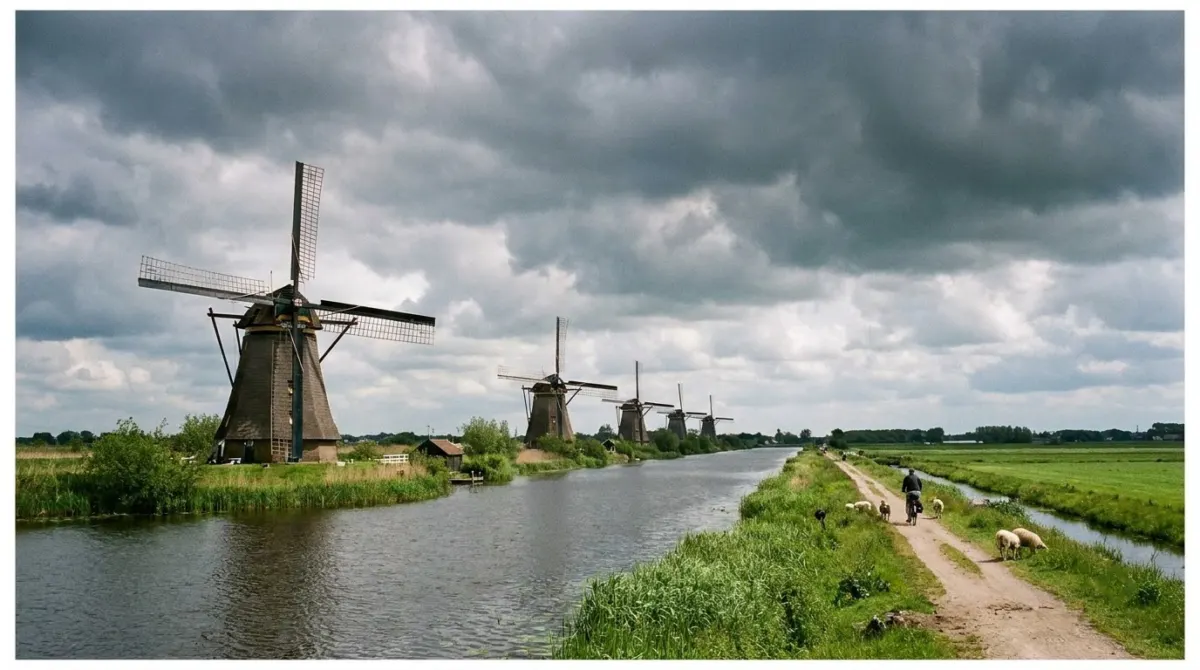
Day four for Zaanse Schans and the windmills, or the old Zuiderzee villages at Marken and Volendam, or Haarlem and the beach at Zandvoort.
Our guides to three days and four days in Amsterdam cover this half in detail.
Map shows live availability and prices. We may earn a commission on bookings made through it, at no extra cost to you.
Days 5 to 7 — the Randstad
The western cities sit so close together that one base covers all of them.
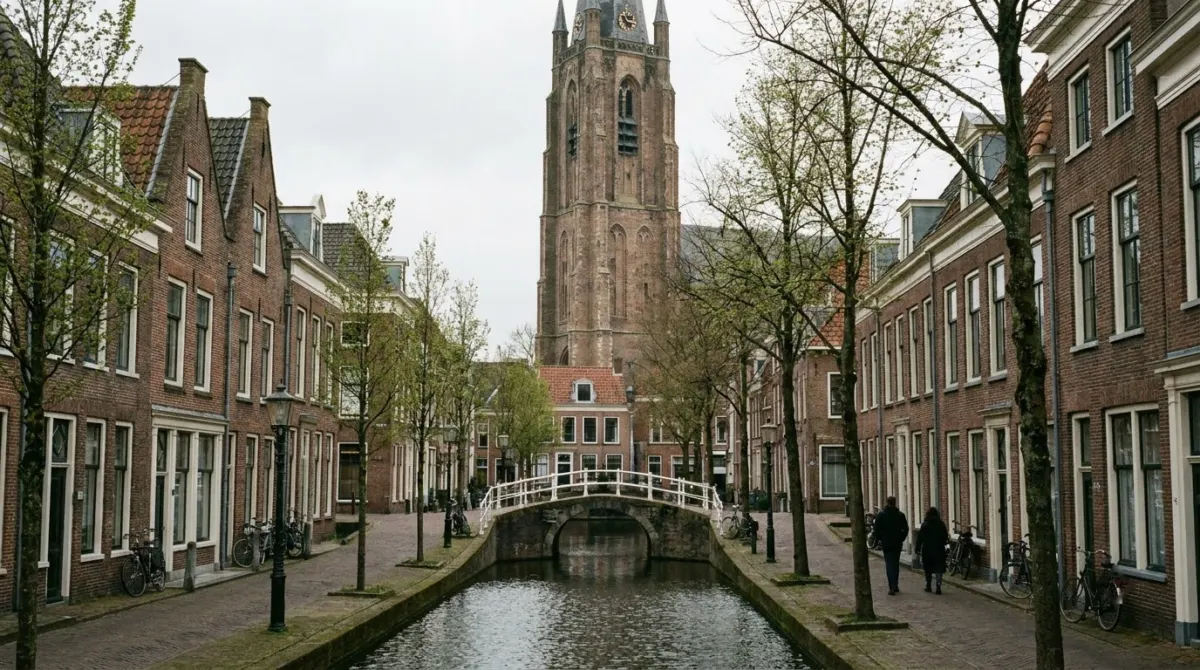
Delft is the prettiest: a small canal town with two enormous churches, the home of Vermeer and of the blue pottery.
The Hague is the seat of government and holds the Mauritshuis, a small museum with Vermeer’s Girl with a Pearl Earring and Fabritius’s Goldfinch in it. The beach at Scheveningen is fifteen minutes by tram.
Leiden is a university town of canals and courtyards, with the oldest botanical garden in the country.
Rotterdam is the modern counterweight: rebuilt after 1940, with the Markthal, the cube houses and a working port you can see from the water.
Base in Delft or The Hague and all four are within half an hour.
Days 8 to 10 — the south, or the east
Two directions, and they are genuinely different countries.
South to Maastricht, two and a half hours from Amsterdam, which feels Belgian or German rather than Dutch: hills, a Roman and medieval centre, caves under the city, and the best food in the country.
East to the Hoge Veluwe, where a national park of heath and forest contains the Kröller-Müller Museum, which holds the second largest Van Gogh collection in the world and a sculpture garden, and where white bicycles are free to use inside the park.
Take the south for food and a different culture; the east for landscape and art in an unexpected place.
The seven day version
Drop the third base.
- Days 1–4: Amsterdam, with Haarlem and the windmills.
- Days 5–7: Delft or The Hague, with Rotterdam and Leiden.
Two bases, one transfer of under an hour, and all the famous Dutch cities.
The five day version
One base, no transfers at all.
Five nights in Amsterdam: three days in the city and two day trips, usually Utrecht and either Haarlem or Rotterdam. Our 5 day Amsterdam itinerary is exactly that.
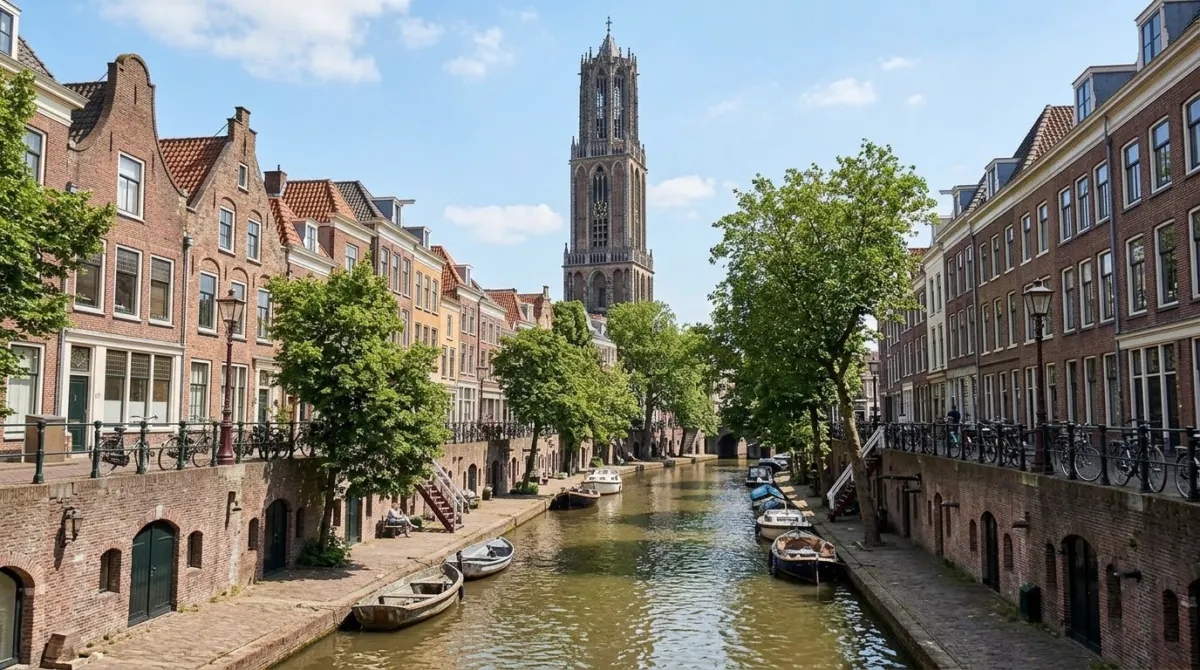
If Amsterdam prices are a problem, base in Utrecht instead: it is thirty minutes from Amsterdam, it is central for the whole country, and it is cheaper.
Trains, bikes and why not to drive
Trains run every fifteen to thirty minutes between all the cities in this guide, need no advance booking for domestic journeys, and are paid for with contactless or an OV-chipkaart.
Bicycles can be hired at almost every station, and the country is built for them: flat, with separated lanes everywhere. A day on a bike between Dutch towns is one of the best things you can do here.
Driving is the one thing to avoid. City parking is expensive and heavily restricted, the centres are designed against cars, and the trains go everywhere faster.
When to go
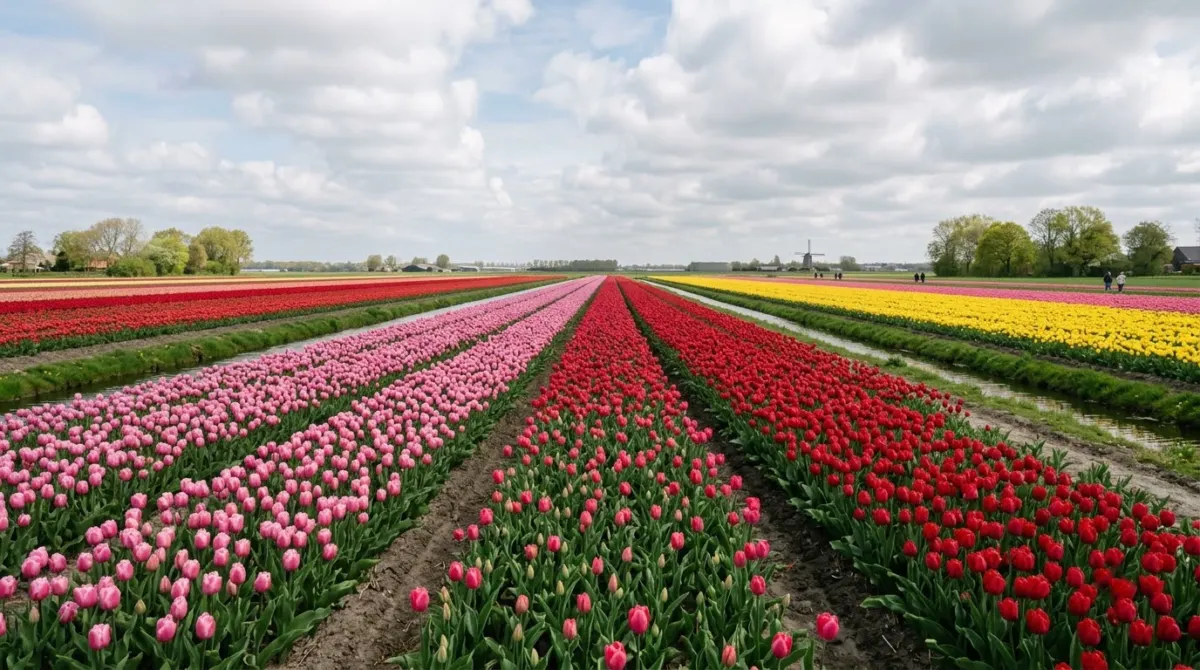
Late March to mid-May is tulip season, when Keukenhof and the bulb fields are open for about eight weeks. It is the busiest and prettiest period.
Summer is long and light, with the canals at their best in the evening and the coast usable.
Autumn is quiet and the light is good.
Winter is cold, dark by five and much cheaper, and the museums — which are the heart of a Dutch trip — are empty.
One date to check: King’s Day in late April, when the entire country turns orange and stops working. It is extraordinary and it fills every room weeks ahead.
Where to stay on this route
Amsterdam: the canal belt or the Jordaan for the city, Noord or Oost for value — see where to stay in Amsterdam.
The Randstad: Delft is the most pleasant base and The Hague the most practical, with more rooms and better connections. Rotterdam is cheaper than both and the least charming to come back to.
The south: Maastricht’s old centre, which is compact and walkable.
The east: Arnhem or Apeldoorn for the Hoge Veluwe, neither of which is a destination in itself.
Across the whole country, accommodation is cheaper than Amsterdam by a clear margin, which is worth knowing when you decide how many nights to spend in the capital.
Cycling in the Netherlands
This is the thing the country does better than anywhere else, and visitors under-use it.
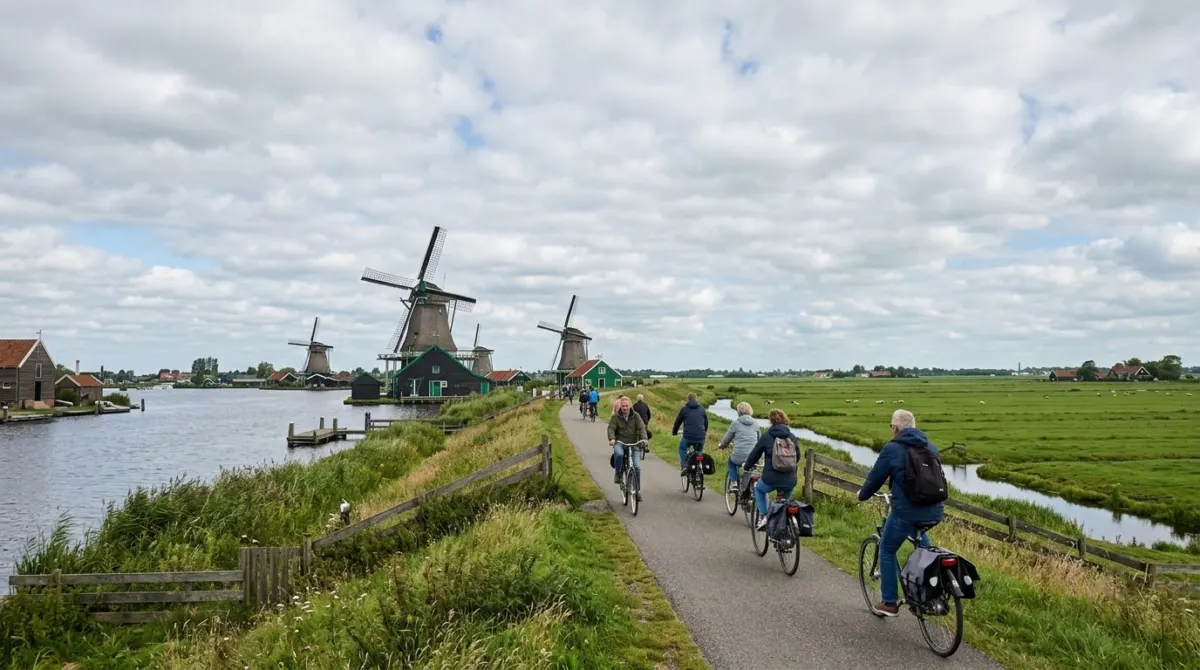
Bicycles can be hired at almost every railway station. The country is flat, the lanes are separated from traffic, and the national network of signposted routes connects towns and villages directly.
Two rides worth planning a day around: the Zaan region north of Amsterdam, past windmills and along dykes, and the bulb fields between Haarlem and Leiden in April, which is a far better way to see them than a coach to Keukenhof.
In cities, be careful: urban lanes are fast and used for commuting, and hesitating in them is genuinely dangerous.
Food, and what is actually Dutch
Three things worth knowing.
Lunch is bread. A broodje from a bakery is the normal midday meal, and it is cheap and good.
Dinner is early. Kitchens often stop at nine or half past, particularly outside Amsterdam, and reserving is normal even midweek.
Indonesian food is a Dutch institution. The rijsttafel, a spread of many small dishes, comes from the colonial period and is served in restaurants across the country. It is as much a part of eating here as anything native.
Markets — the Albert Cuyp in Amsterdam, the Haagse Markt in The Hague — are the cheapest good food anywhere in the country.
Practical notes
Trains: no reservations needed domestically, departures every fifteen to thirty minutes, contactless or OV-chipkaart at the gates.
Cash: card is accepted nearly everywhere, but some smaller places take only Dutch debit cards rather than credit cards, which catches visitors out.
Language: English is spoken almost universally and well.
King’s Day in late April shuts the country down and turns it orange. Book months ahead or avoid it deliberately.
Where the Netherlands surprises people
Three things that visitors consistently do not expect.
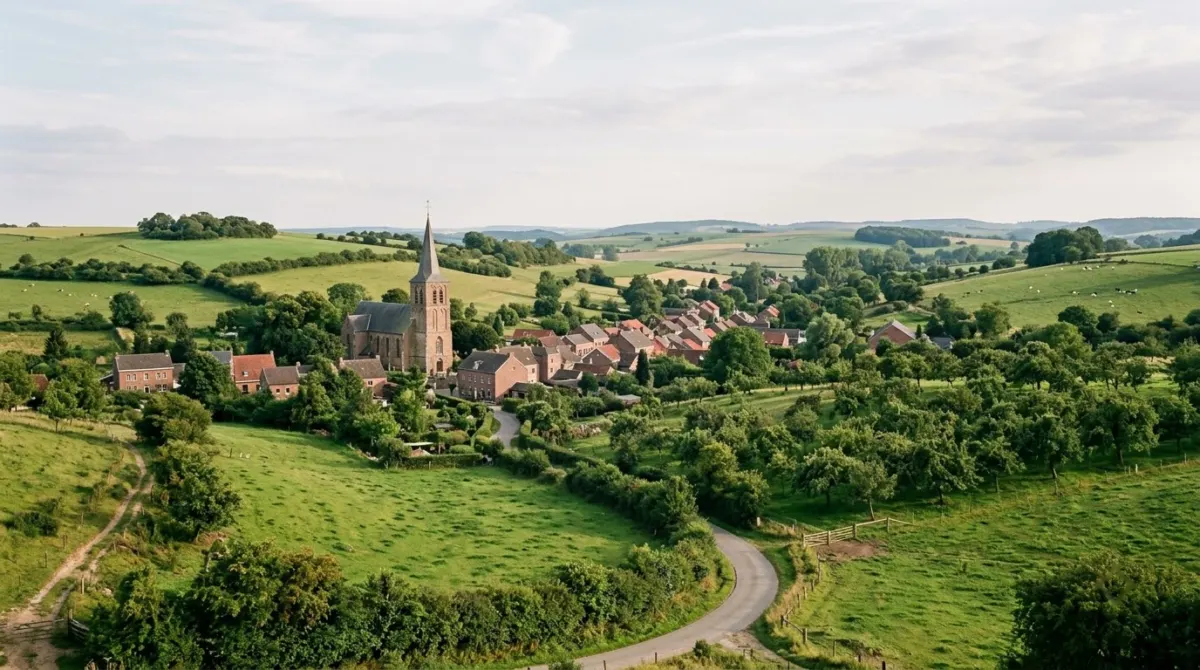
How small it is. The whole country is about 300 kilometres end to end, and you can cross it by train in under three hours.
How different the south feels. Maastricht and Limburg have hills, a Catholic history and a food culture that has more in common with Belgium than with Amsterdam.
How much is not Amsterdam. The capital receives the overwhelming majority of visitors, which leaves Utrecht, Delft, Leiden, Haarlem and Maastricht pleasantly uncrowded in exactly the months when Amsterdam is full.
How long each city needs
Planning by city rather than by trip makes this easier.
Amsterdam: three days, four with a day trip.
Utrecht: a day, two if you are using it as a base.
Rotterdam: a day, or two if modern architecture is a reason you came.
The Hague: a day, including the Mauritshuis and the beach.
Delft and Leiden: half a day each, and they combine.
Haarlem: half a day, a full one with Zandvoort.
Maastricht: two days, because it is far enough that one feels wasteful.
The Hoge Veluwe: a full day for the park and the Kröller-Müller.
Add them up, add a travel day, and the length of your trip answers itself.
What most itineraries get wrong
Too many bases. The country is 300 kilometres end to end and the trains are frequent, so three bases is the maximum worth attempting even on two weeks.
Too long in Amsterdam. Four days is right; six means paying capital prices for day trips you could run more cheaply from Utrecht or Haarlem.
Renting a car. It is slower, the parking is punitive and the centres are designed against it.
Only seeing the Randstad. Maastricht and the Hoge Veluwe are the two places that feel least like the postcard, and most visitors never reach either.
The short version
Five days means one base, usually Amsterdam. Seven means two, adding Delft or The Hague for the Randstad cities. Ten means three, with Maastricht in the south or the Hoge Veluwe in the east. Travel by train, hire a bike for a day in the countryside, do not rent a car, and check the King’s Day date before booking anything in late April.
Frequently asked questions
How many days do you need in the Netherlands?
Five covers Amsterdam and two day trips from one base. Seven adds the Randstad cities — Delft, The Hague, Leiden and Rotterdam. Ten reaches Maastricht in the south or the Hoge Veluwe in the east.
What is the best Netherlands itinerary?
Four nights in Amsterdam, three in Delft or The Hague for the western cities, and three in Maastricht or near the Hoge Veluwe. Every journey between them is under two hours by train.
Do you need a car in the Netherlands?
No, and it works against you. Trains run every fifteen to thirty minutes between all the main cities, city parking is expensive and restricted, and bicycles can be hired at nearly every station.
Can you see the Netherlands from Amsterdam?
Largely, yes. Haarlem is fifteen minutes, Utrecht thirty, Rotterdam about forty and The Hague fifty. Only Maastricht and the far east are too distant for comfortable day trips.
Is Maastricht worth visiting?
If you have ten days. It is two and a half hours south and feels Belgian or German rather than Dutch, with hills, a medieval centre, caves beneath the city and the best food in the country.
When is tulip season in the Netherlands?
Roughly late March to mid-May, with Keukenhof open for about eight weeks in that window. It is the busiest period of the year and accommodation across the country tightens accordingly.
Keep planning Netherlands
- Where to Stay in Amsterdam: Check the Stairs Before the District
- How Many Days in Amsterdam? Three, and Five as a Base
- 5 Day Amsterdam Itinerary: One Hotel, Three Cities
- Amsterdam in 1 Day: Pick One Thing, Then Walk
- 4 Day Amsterdam Itinerary: Three Days In, One Day Out
- 3 Day Amsterdam Itinerary: Two Days In, One Day Out
- Two Day Amsterdam Itinerary: Built Around One Ticket
Written and checked by
Triplarks Editorial
An editorial desk, not an invented persona: research, drafting and fact-checking are done by the same small team. Every number here carries the date it was read.