Quick answer
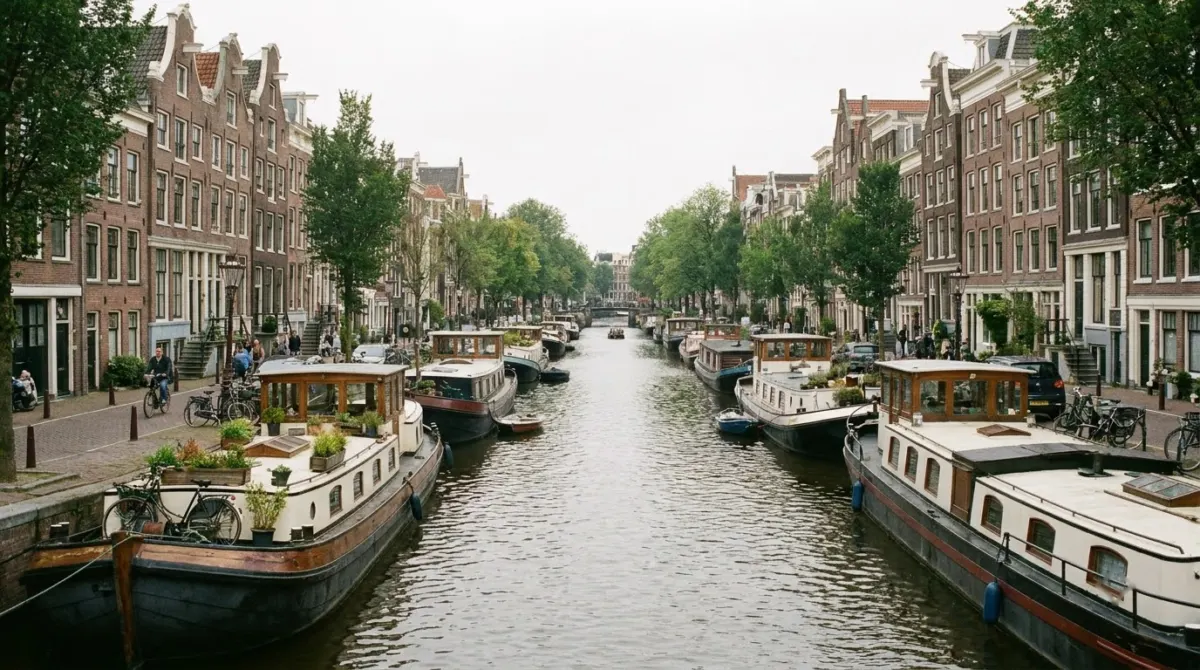
One hotel for five nights and three cities. Stay in the canal belt or the Jordaan to keep the city days on foot, or base in Haarlem or Utrecht if the Amsterdam rate is the constraint — both are under half an hour away.
On this page
- Amsterdam 5 day itinerary at a glance
- Days 1 and 2 — the city
- Day 3 — Utrecht
- Day 4 — back to Amsterdam, outside the ring
- Day 5 — Haarlem or Rotterdam
- The alternatives for your two free days
- Why one base beats moving
- Practical notes
- City Card, Museumkaart or neither
- Where to stay for five days
- Five days with children
- Five days in spring
- Rainy-day swaps across five days
- What five days still leaves out
- What five days does that three cannot
- Getting around on five days
- Evenings over five nights
- Five days as two trips in one
- The short version
- Frequently asked questions
Five days is the length at which Amsterdam stops being a destination and becomes a base. The city needs three days; the other two are better spent on trains, because the Netherlands is small, the rail network is dense, and nowhere else in the country is as expensive to sleep in.
Some links below are affiliate links. We may earn a commission if you book through them, at no extra cost to you. We do not rank hotels, and any prices on the map come live from the booking sites.
This is the five-day plan with the day trips compared. For shorter visits see four days, and for the country as a whole, our Netherlands itinerary.
Amsterdam 5 day itinerary at a glance
| Day | Where | Doing |
|---|---|---|
| 1 | Amsterdam | Rijksmuseum, canal belt, the Jordaan |
| 2 | Amsterdam | Van Gogh Museum, Anne Frank House |
| 3 | Utrecht | Wharf canals, the Dom tower |
| 4 | Amsterdam | Noord, Oost, the eastern islands |
| 5 | Haarlem or Rotterdam | A second city, or the modern one |
One hotel for five nights, three cities, and no packing after the first day.
Map shows live availability and prices. We may earn a commission on bookings made through it, at no extra cost to you.
Where to sleep on this route
Days 1 and 2 — the city
Day 1: the Rijksmuseum on an early slot, then the canal belt on foot through the Nine Streets into the Jordaan, and dinner there.
Day 2: the Van Gogh Museum, the Vondelpark, and the Anne Frank House at whatever time your slot falls. Evening in De Pijp.
Both museums and the house need booking online, and the Anne Frank slot is the one that decides the shape of everything else.
Day 3 — Utrecht
Half an hour by train, and the best day trip in the country.
Utrecht’s canals run a full storey below street level, with brick wharves and cellars opening directly onto the water and cafes along them — something Amsterdam does not have. The Dom tower, the tallest church tower in the Netherlands, stands apart from its cathedral because the nave collapsed in a storm in 1674 and was never rebuilt.
It is a university city, which makes it livelier and cheaper than Amsterdam, and the centre is small enough for a day.
Day 4 — back to Amsterdam, outside the ring
Return to the city and leave the canal belt.
Noord, on the free ferry from behind Centraal, for the EYE film museum, the A’DAM tower and the NDSM shipyard, which is a wharf of studios, street art and markets.
Or Oost and the eastern islands — the Maritime Museum with its replica East Indiaman, NEMO, the Wereldmuseum (the former Tropenmuseum, renamed in 2023) and the Oosterpark.
This is the day most four-day visitors skip and most five-day visitors remember.
Day 5 — Haarlem or Rotterdam
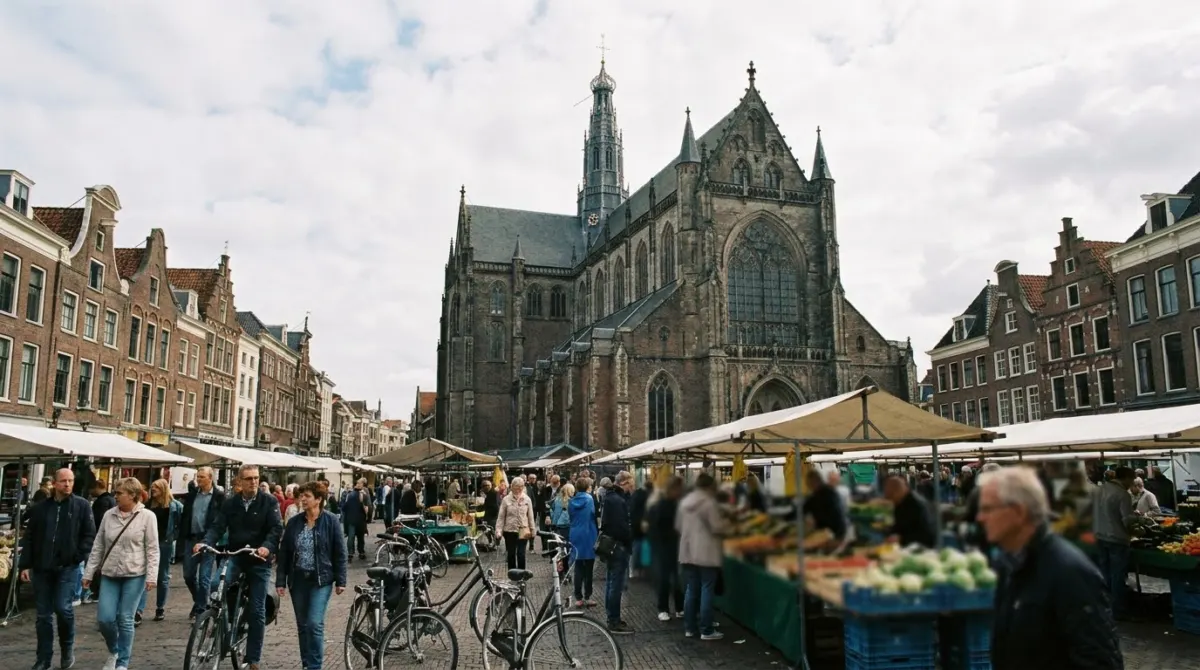
Haarlem, fifteen minutes away, is the gentle option: canals, gabled houses, a vast church on the market square, the Frans Hals Museum, and the beach at Zandvoort twenty minutes further.
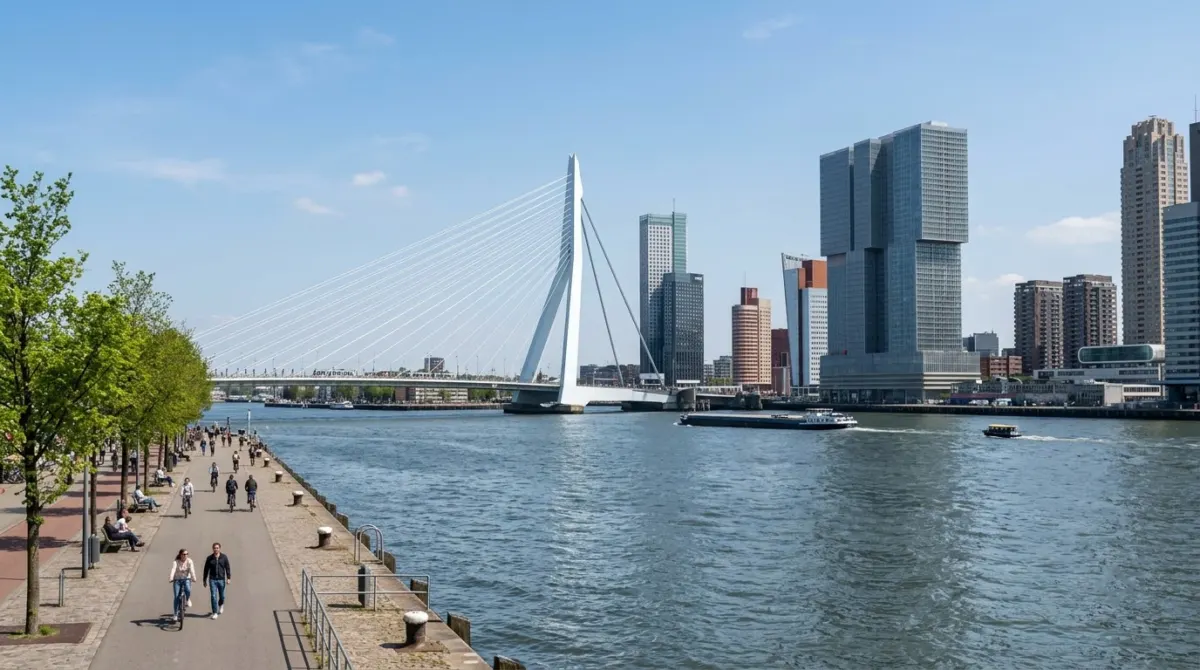
Rotterdam, about forty minutes on the fast train, is the opposite: a city rebuilt after 1940, with a skyline, the Markthal, the cube houses and the Erasmus bridge.
Take Haarlem if you want more of the same done quietly, Rotterdam if seventeenth-century gables have started to blur.
The alternatives for your two free days
Four more options, all under an hour.
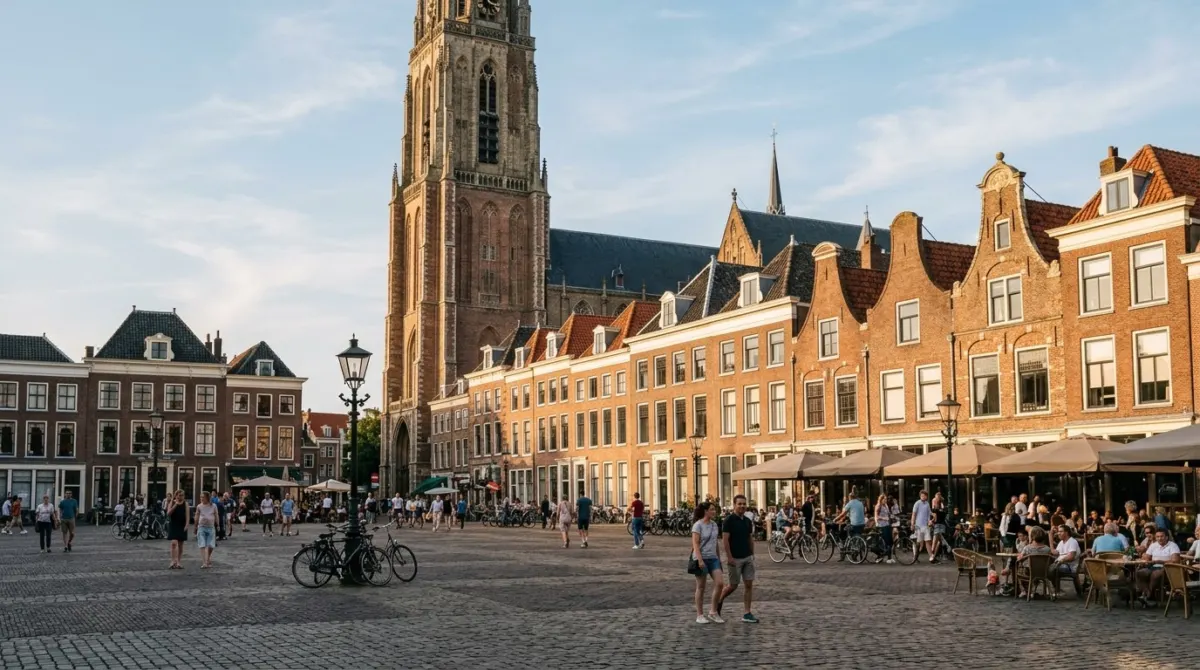
Delft — the prettiest small Dutch city, Vermeer’s home, two enormous churches and the blue pottery.
The Hague — the Mauritshuis, with Girl with a Pearl Earring, and the beach at Scheveningen.
Leiden — canals, courtyards and the oldest botanical garden in the country.
Zaanse Schans — working windmills, twenty minutes away, and the best option with children.
In spring, Keukenhof and the bulb fields replace all of them for about eight weeks.
Why one base beats moving
Dutch trains are frequent, fast and need no advance booking for domestic journeys, which removes the usual reason to relocate.
Against that, changing hotel costs you a checkout at eleven, a journey and a check-in at three — the middle of a day, for a saving of maybe thirty minutes of travel. On a five-day trip that trade is clearly bad.
The one case for moving is cost: Amsterdam is significantly more expensive than Haarlem or Utrecht, and basing in either and commuting in is a reasonable way to save money without losing time.
Practical notes
Book the Anne Frank House the moment slots release, and the two museums online.
Trains need no reservation, so choose days three and five on the morning according to the weather.
Contactless or an OV-chipkaart works on trains, trams and ferries.
Hire a bike for a day outside the city rather than in it — the countryside around Haarlem and the Zaan is flat, quiet and built for it.
For where to sleep, see where to stay in Amsterdam.
City Card, Museumkaart or neither
Five days is the first trip length where a pass is worth working out, and the two on offer reward very different plans.
The I amsterdam City Card, in its Total Experience version, bundles entry to more than seventy museums and attractions with unlimited GVB trams, buses, metro and ferries, one canal cruise and a 24-hour bike rental. It runs in consecutive hours from the moment you first use it, not in calendar days. The catch for this itinerary is what it leaves out: the Van Gogh Museum and the Anne Frank House are not included, and neither is any NS train, so the airport run and all three day trips are paid for separately.
The Museumkaart, the Dutch national museum pass, is sold to visitors as a temporary card that lasts 31 days and covers up to five museum visits. Its advantage here is reach: it is accepted by participating museums across the country, not only in Amsterdam, which suits a plan with two days out of town. You still reserve a start time at the Rijksmuseum, pass or no pass.
Neither is right if you will enter two or three museums and walk the rest. Tap a contactless bank card on the trams and pay each museum directly.
The quick test: write down the museums you will actually go into, then compare. On five days with two train days, the City Card is the hardest to justify.
Where to stay for five days
One hotel for the whole trip, and the choice matters a little more than on a short visit because you will be coming back to it tired five times.
The canal belt and the Jordaan are the pleasant central option, quiet at night and ten minutes from Centraal, which is where days three and five start.
De Pijp suits anyone who wants evenings more than mornings. Oud-Zuid is where lifts and larger rooms are reliable. Noord and Oost are cheaper and well connected.
On five nights the saving from basing in Haarlem becomes significant, and the commute is fifteen minutes each way on frequent trains. See where to stay in Amsterdam.
Five days with children
Swap the museums and keep the trains.
NEMO is a full day, the Maritime Museum has a replica ship to climb over, and Artis, the zoo in the east, is one of the oldest in Europe.
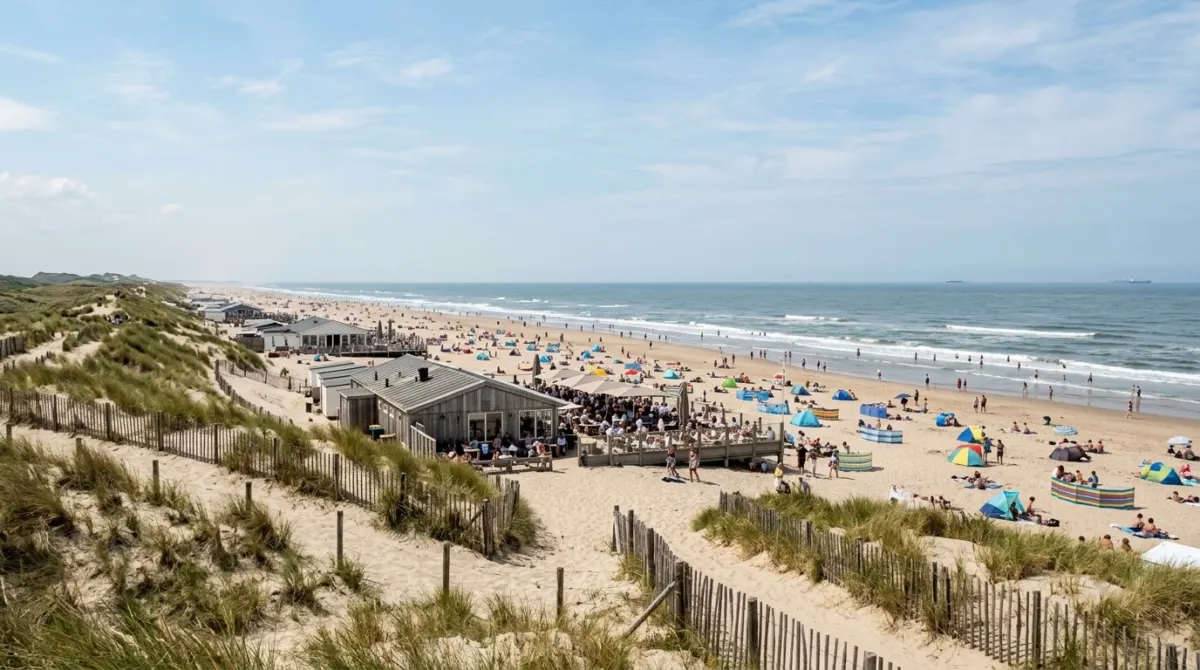
For the day trips, Zaanse Schans for the windmills and the beach at Zandvoort, twenty minutes beyond Haarlem, are the two that work best.
The free ferries to Noord cost nothing and count as a boat trip, which on a five-day trip with children is a useful thing to have in reserve.
Five days in spring
If your trip falls between late March and mid-May, restructure it.
Keukenhof and the bulb fields are open for roughly eight weeks and are a full day, best reached by bus from Schiphol or Haarlem rather than from the centre.
Better still, hire bikes at Haarlem or Leiden and ride through the fields themselves, which is free, uncrowded and considerably better than the gardens.
King’s Day in late April is worth planning around deliberately: the whole country stops and turns orange, and Amsterdam becomes one enormous street party. Accommodation is booked out months ahead.
Rainy-day swaps across five days
With two days unassigned, rain is a scheduling problem rather than a lost day. Move the walking to the dry days and hold these back for the wet ones.
Go small and stay central. The canal houses that open as museums are the best wet-weather plan in the city. Our Lord in the Attic is a seventeenth-century merchant’s house with a complete Catholic church in its attic, built in 1663 when Catholic services were officially forbidden. Museum Van Loon and Willet-Holthuysen are furnished family houses on the main canals, and Huis Marseille is the city’s photography museum, in two canal houses on the Keizersgracht.
Go inside the Royal Palace. The building on the Dam was built as the city hall in the seventeenth century, opens to visitors except during official events, and comes with a free audio tour.
Make Rotterdam the wet day out. The Markthal is a covered market under a huge arched roof, and the Kunsthal and the other museums around the Museumpark are a short ride away, so the city holds up in rain far better than Haarlem or Utrecht, where the pleasure is mostly walking beside the water.
With children, NEMO and the Maritime Museum are the obvious pair, and they sit close together on the eastern waterfront.
What five days still leaves out
Maastricht, two and a half hours south and a different culture.
The Hoge Veluwe and the Kröller-Müller Museum, which holds the second largest Van Gogh collection in the world.
The Wadden islands in the north, which almost no visitor reaches.
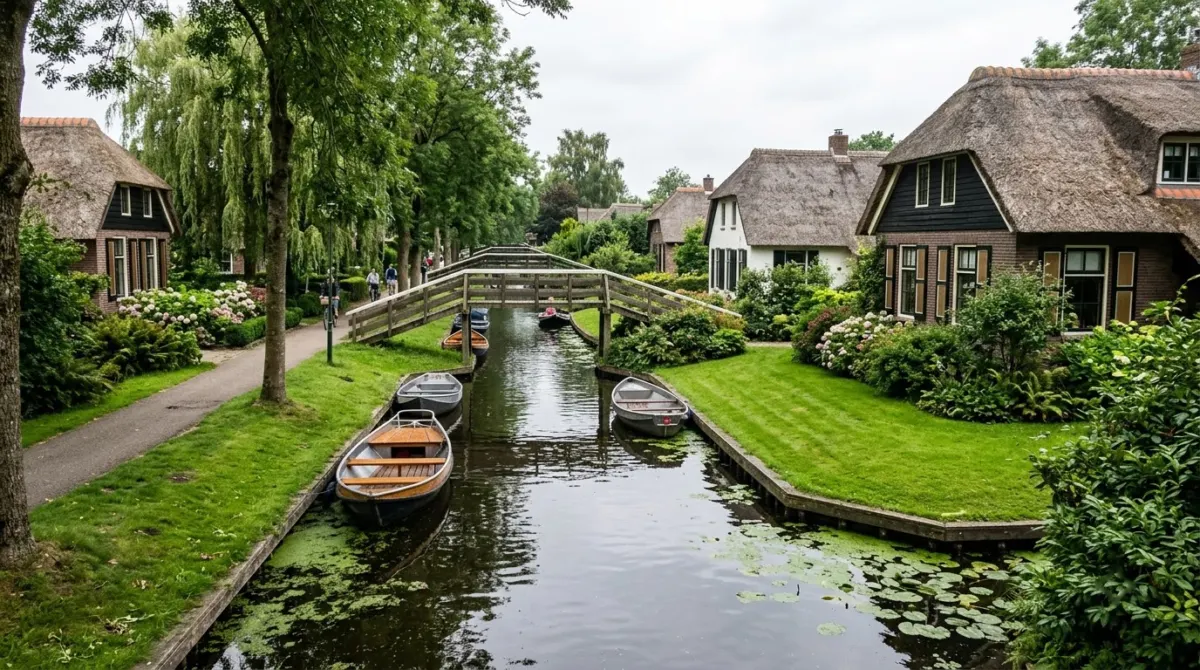
Giethoorn, the village with canals instead of roads, which is two hours away and heavily visited.
Our Netherlands itinerary covers the longer trips that reach these.
What five days does that three cannot
Three specific things.
A second city. Utrecht, Haarlem or Rotterdam is not a side trip on a five-day plan; it is a full day in a different place with its own character.
A day outside the ring. Noord and Oost are where Amsterdam stops performing, and they are the first thing cut on a shorter trip.
Weather flexibility. With five days and two of them unassigned until the morning, you can put the walking days on the dry ones and the museums on the wet ones, which in the Netherlands is worth more than any other planning decision.
Getting around on five days
Two of the five days are train days and three are walking days, which keeps the transport simple.
Trains to Utrecht, Haarlem and Rotterdam leave from Centraal every fifteen to thirty minutes, need no reservation and are paid for with contactless or an OV-chipkaart.
The free ferries behind Centraal cross to Noord every few minutes, day and night, and take no ticket.
Trams and the metro cover De Pijp, Oost and the south of the city, and a multi-day ticket is worth it only if you expect to use them daily.
Schiphol is fifteen to twenty minutes by train from Centraal, which makes arrival and departure days more useful than they are in most cities.
Evenings over five nights
Five evenings in one city is more than most short-break plans account for, and the easy mistake is spending all of them on the same three streets.
One late museum. The Anne Frank House is open until 22:00 on most days, so an evening slot gets you the house after the day crowds and keeps a whole day free.
One concert. The Concertgebouw sits on the edge of Museumplein, and on top of its evening program it runs free lunchtime concerts on many weeks of the season, which need a free ticket reserved online.
One night across the IJ. The ferries to Noord run around the clock, and the bars at NDSM and the waterfront by the EYE make a completely different evening from the canal belt.
One night in the squares. Leidseplein and Rembrandtplein are the city’s two main going-out squares: loud, packed and worth seeing once, though not from a hotel window.
The rest in the Jordaan and De Pijp, where most of the good casual restaurants are and where reserving a table a day or two ahead is normal.
Plan the ride home: trams and the metro stop at about half past midnight, and night buses take over after that.
Five days as two trips in one
A different way to think about the same five days: treat them as a three-day city break with a two-day Dutch tour attached.
The city break is Amsterdam — museums, canals, districts. The tour is Utrecht and one of Haarlem, Rotterdam, Delft or The Hague.
Framed that way, the question of what to do on days three and five stops being about filling time and starts being about which second city you want. That is the right question, because all of them are good and none of them is Amsterdam.
Check Amsterdam availability →
The short version
Two days for the museums and canals, one in Utrecht, one outside the ring in Noord or Oost, and one in Haarlem or Rotterdam. Keep one hotel for all five nights, book the Anne Frank House first and build around it, and choose the day trips on the morning according to the weather.
Frequently asked questions
Is 5 days too long in Amsterdam?
Not if you treat it as a base. Three days cover the city, and the other two are day trips — Utrecht in thirty minutes, Haarlem in fifteen, Rotterdam in forty. Five days spent only in the centre would be too long.
What is the best 5 day Amsterdam itinerary?
Two days for the museums and the canals, one in Utrecht, one outside the ring in Noord or Oost, and one in Haarlem or Rotterdam. One hotel for five nights and no packing after the first day.
Should I move hotels on a 5 day Netherlands trip?
No. Changing hotel costs the middle of a day and saves perhaps half an hour of travel, since the trains are frequent and nowhere is far. The exception is cost — Haarlem and Utrecht are both cheaper than Amsterdam.
What are the best day trips from Amsterdam?
Utrecht for the wharf canals, Haarlem for a quieter version of Amsterdam, Rotterdam for modern architecture, Delft for the prettiest small city, and Zaanse Schans for working windmills. All are under an hour.
Is Amsterdam expensive compared with the rest of the Netherlands?
Noticeably. The city caps new hotel development and has year-round demand, so basing in Haarlem or Utrecht and commuting in is a genuine way to cut costs without losing much time.
Is the I amsterdam City Card worth it for 5 days?
Usually not on this plan. It covers GVB trams, buses and ferries, a canal cruise and more than seventy museums, but not the Van Gogh Museum, the Anne Frank House or any NS train, so the airport and every day trip cost extra. A temporary Museumkaart, valid 31 days for up to five museums nationwide, fits a trip with day trips better.
Can you cycle between Dutch towns?
Yes, and it is one of the best things to do here. Bikes can be hired at most stations, the country is flat and the lanes are separated. The countryside around Haarlem and the Zaan is the easiest place to start.
Keep planning Netherlands
- Where to Stay in Amsterdam: Check the Stairs Before the District
- How Many Days in Amsterdam? Three, and Five as a Base
- Amsterdam in 1 Day: Pick One Thing, Then Walk
- Netherlands Itinerary: Three Bases, or One and a Rail Pass
- 4 Day Amsterdam Itinerary: Three Days In, One Day Out
- 3 Day Amsterdam Itinerary: Two Days In, One Day Out
- Two Day Amsterdam Itinerary: Built Around One Ticket
Written and checked by
Triplarks Editorial
An editorial desk, not an invented persona: research, drafting and fact-checking are done by the same small team. Every number here carries the date it was read.