Quick answer
Three bases over eight days: Dublin for two nights, Galway for three, Kerry for two. The eighth night is what lets both the Ring of Kerry and the Dingle Peninsula fit, so book the Kerry nights first — they are the scarcest on the route.
On this page
- 8 day Ireland itinerary: the eight days at a glance
- Days 1 and 2 — Dublin, no car
- Day 3 — the transfer that is worth a stop
- Day 4 — Cliffs of Moher and the Burren
- Day 5 — Connemara
- Day 6 — south to Kerry
- Day 7 — the Ring of Kerry
- Day 8 — Dingle, and out
- The alternative: eight days with Northern Ireland
- The Causeway Coast day, stop by stop
- What changes when you cross the border
- Driving notes
- What to book before you fly
- Where to sleep on this route
- Skellig Michael, if the boats are running
- The Gap of Dunloe, if you trade a drive for a walk
- Why the eighth day goes to Kerry, not somewhere new
- Three ways this route goes wrong
- Adding a ninth and tenth day
- When to take this route
- Packing for eight days
- Frequently asked questions
Eight days is the length at which an Irish trip stops being a race. Seven days forces a choice in Kerry between the Ring of Kerry and the Dingle Peninsula; eight lets you do both. That one extra night is what the day buys you, and it is the best use of it.
Some links below are affiliate links. We may earn a commission if you book through them, at no extra cost to you. We do not rank hotels, and any prices on the map come live from the booking sites.
This is the eight-day version of our Ireland itinerary, laid out day by day, with a second version at the bottom for anyone who would rather spend the extra day in Northern Ireland.
8 day Ireland itinerary: the eight days at a glance
| Day | Base | Doing |
|---|---|---|
| 1 | Dublin | Arrive, Trinity and the old city on foot |
| 2 | Dublin | Kilmainham Gaol, Guinness Storehouse, music |
| 3 | Galway | Collect car, Clonmacnoise on the way |
| 4 | Galway | Cliffs of Moher and the Burren |
| 5 | Galway | Connemara and Kylemore |
| 6 | Killarney | Drive south via Adare, Killarney National Park |
| 7 | Killarney | The Ring of Kerry |
| 8 | — | Dingle and Slea Head, then out of Shannon or Cork |
Where to sleep on this route
Days 1 and 2 — Dublin, no car
Collect the rental car on the morning you leave, not when you land. Dublin is twenty-five minutes across on foot and central parking is expensive.
Day one: Trinity College and the Book of Kells, the Georgian squares at Merrion and Fitzwilliam, the free National Museum of Ireland on Kildare Street, and the two cathedrals. Day two: Kilmainham Gaol in the morning — book before you fly, it sells out — and the Guinness Storehouse after it.
Our Dublin itinerary has these two days in full.
Day 3 — the transfer that is worth a stop
Collect the car mid-morning, once the Dublin commuter traffic has cleared. The run to Galway is about two and a half hours and nearly all motorway, which makes it the easiest drive of the week and the one with room in it.
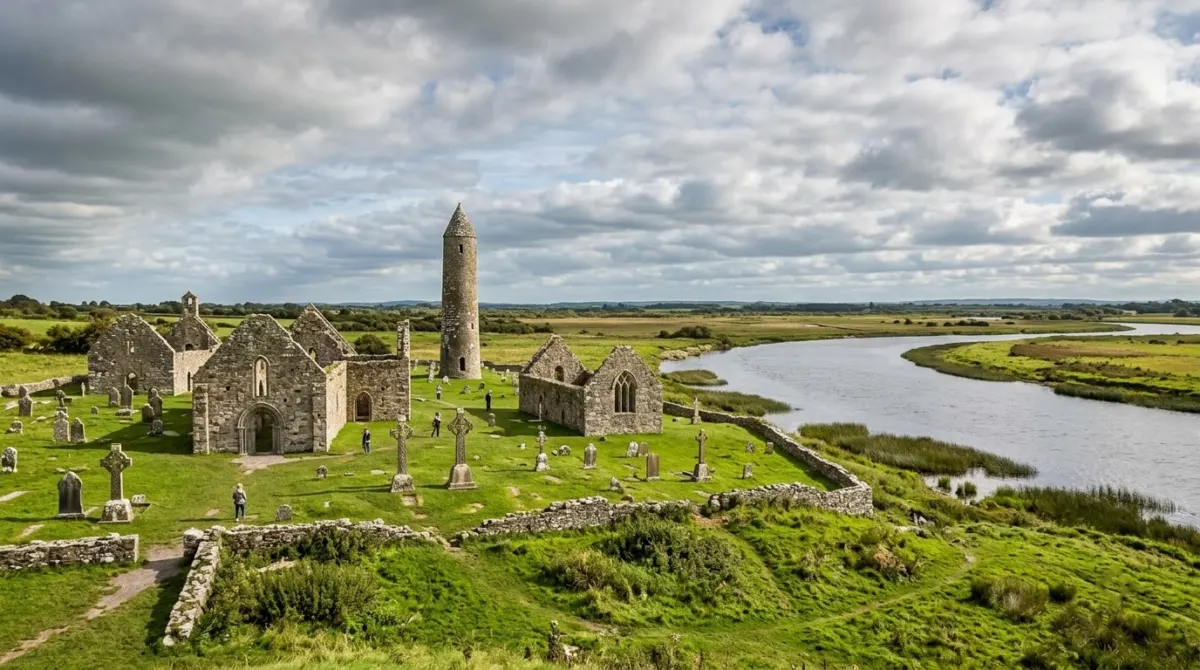
Clonmacnoise is the stop: a sixth-century monastic city on a bend of the River Shannon, with round towers, high crosses and the graves of kings. Roughly forty minutes of extra driving and an hour on site.
Arrive in Galway with the evening free. The Latin Quarter runs live music most nights.
Day 4 — Cliffs of Moher and the Burren
South into County Clare. The Cliffs of Moher reach around 214 metres and run roughly 14 kilometres, with paths from the visitor centre in both directions. Go early or late; the middle of the day is when every coach arrives at once.
The Burren on the way back is the opposite landscape: a limestone plateau of bare grey pavement with the Poulnabrone dolmen, a portal tomb around 5,800 years old, standing on it. Doolin is where to stop for lunch and music.
Day 5 — Connemara
North-west from Galway into mountains, bog and inlets, with the Twelve Bens at the centre. The usual loop takes in Kylemore Abbey on its lake, the fjord at Killary Harbour, and the coast road through Clifden.
It is a full day and it does not combine with anything else.
Map shows live availability and prices. We may earn a commission on bookings made through it, at no extra cost to you.
Day 6 — south to Kerry
Galway to Killarney is around three hours. Break it at Adare, a village of thatched cottages in County Limerick directly on the route.
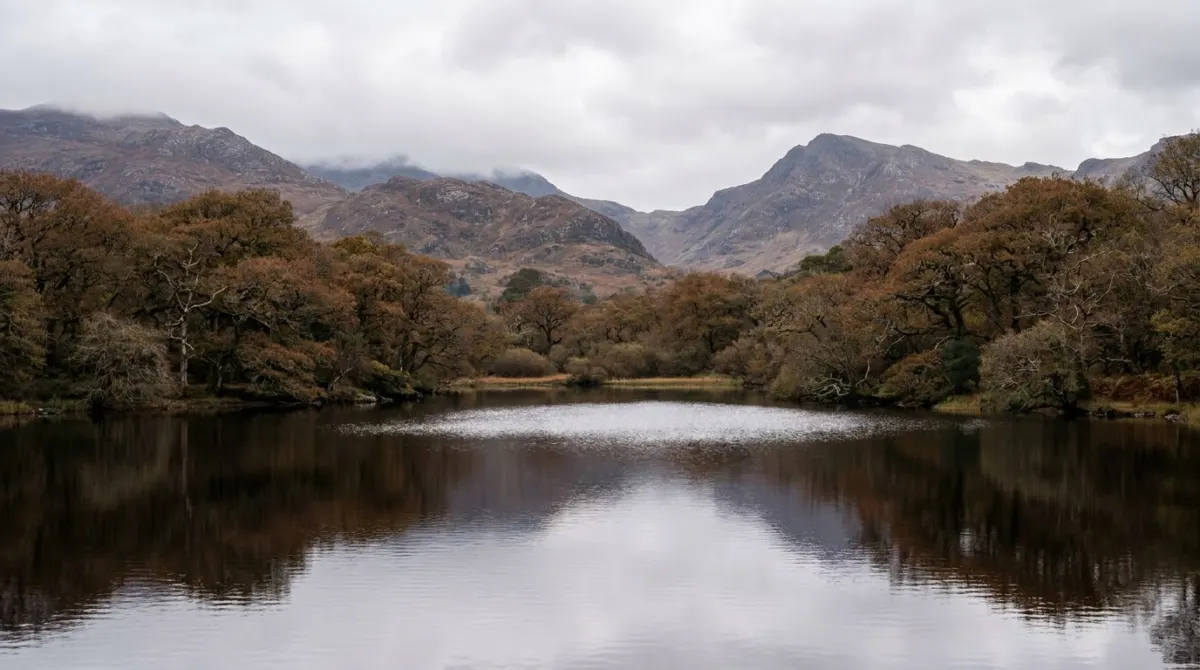
Use the afternoon inside Killarney National Park: Muckross House and gardens, Torc Waterfall, and the lakes. Keep the Ring of Kerry for tomorrow when you have the whole day.
Day 7 — the Ring of Kerry
A 179-kilometre loop, five to eight hours with stops. Two decisions matter and both are made before you leave: drive counter-clockwise, the same way the tour coaches go, and leave Killarney by about half past eight to stay ahead of them.
The full Ring of Kerry itinerary has every stop worth making, including the Skellig Ring detour that coaches cannot take.
Day 8 — Dingle, and out
The Dingle Peninsula is the reason eight days beats seven. Slea Head Drive is a loop of about 47 kilometres from Dingle town — beehive huts, the dry-stone Gallarus Oratory, the pier at Dunquin and the view to the Blasket Islands.
Drive it in the morning, eat in Dingle town, and go to your flight from there. Shannon is roughly two and a half hours away and Cork about the same.
The alternative: eight days with Northern Ireland
If you would rather see both coasts than both Kerry peninsulas:
- Days 1–2: Dublin.
- Day 3: north to Belfast, with Brú na Bóinne on the way.
- Day 4: the Causeway Coast — the Giant’s Causeway, the cliff road and the Glens of Antrim.
- Day 5: south-west to Galway, a long drive.
- Days 6–7: Cliffs of Moher, the Burren and Connemara.
- Day 8: out of Shannon, or on to Kerry if you have a ninth day.
This version has one long transfer in the middle and drops Kerry entirely. Take it if the Causeway Coast is the thing you came for.
The Causeway Coast day, stop by stop
Day four of the northern version is the reason to take it, so it is worth planning in more detail than a single line.
Start at the Giant’s Causeway. You can walk down to the stones for free. The National Trust’s Visitor Experience ticket adds reserved parking on site, the exhibition, audio guides in eleven languages and an hourly guided tour, and it recommends that everyone buys ahead. Four marked trails cover about five kilometres of shore and cliff top. The short blue trail goes straight to the stones, and the cliff-top paths give the better view of them.
Then drive the seven miles east to Carrick-a-Rede, the rope bridge to a small island. Advance tickets are essential, the bridge is about a kilometre’s walk from the car park with steps and uneven ground, and the National Trust posts weather updates on its site.
Leave the afternoon for the coast road south towards the Glens of Antrim, and you are back in Belfast by evening.
What changes when you cross the border
Three things, if you take the northern version. The currency is pound sterling, not the euro. Mobile roaming terms may change, because Northern Ireland is part of the United Kingdom. And your car hire agreement must permit cross-border driving — most do, but all state it explicitly.
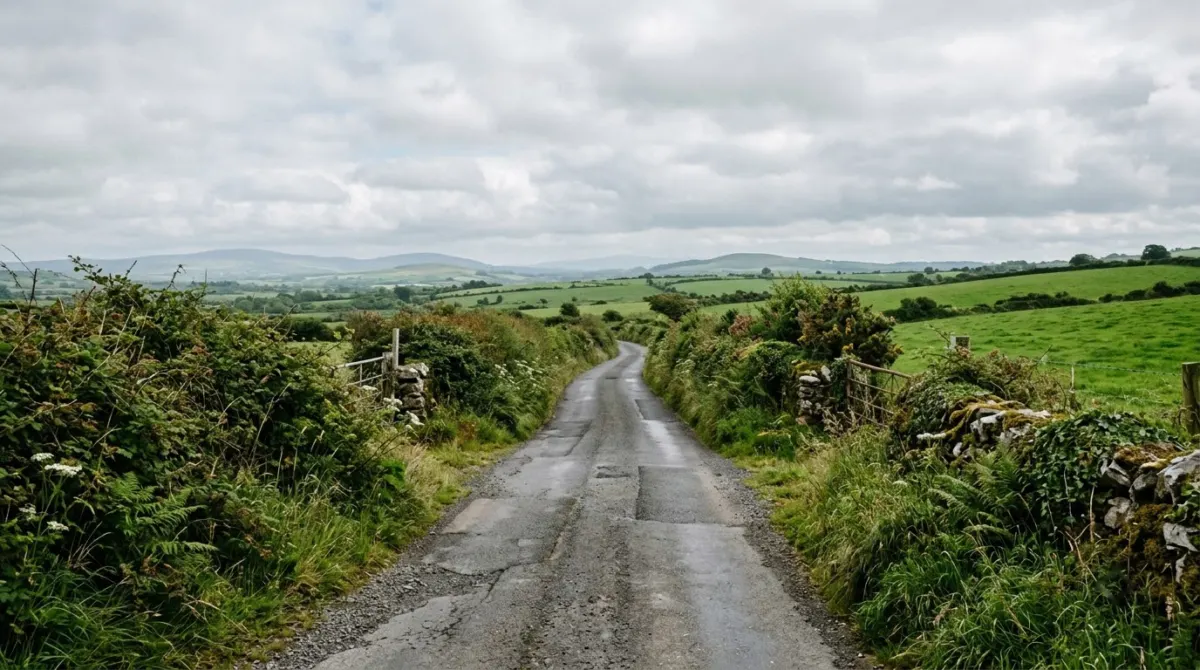
There is no border check to plan around; the crossing is unmarked beyond road signs changing from kilometres to miles.
One more thing, and it is a paperwork change rather than a road one. Most visitors who are not British or Irish citizens now need a UK Electronic Travel Authorisation to enter Northern Ireland, including when they arrive across the land border from the Republic. There is no check at the border, but the rule still applies. Each traveller needs their own, including children, so apply for the whole group before you leave home.
Driving notes
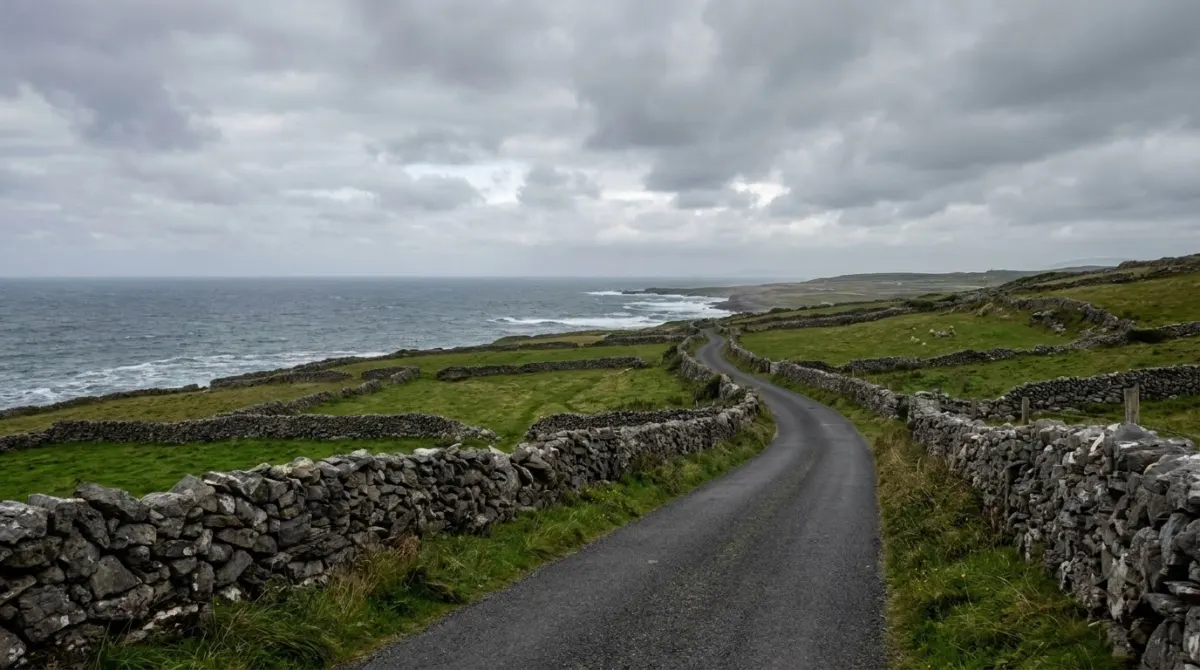
Motorways link Dublin to Galway, Limerick and Cork. Everything else is national and regional roads through towns, and on the peninsulas the roads narrow to a single lane with stone walls at the edge.
Allow about two-thirds of the speed your navigation app predicts once you leave the motorway. Expect sheep on open sections, and signs in Irish only in parts of Connemara and west Kerry.
The M50 toll on the way out of Dublin
Collecting the car in Dublin almost always means driving on the M50 ring road. Between junctions 6 and 7 it has a barrier-free toll: cameras on an overhead gantry read the number plate, and there is nowhere to pay at the roadside. Rental companies handle it in different ways. Some bill the toll to you automatically, often with a handling fee, while others expect you to pay it yourself online by 8pm the following day. Ask at the desk which applies before you drive off.
What to book before you fly
- Kilmainham Gaol — the only sight in Ireland that reliably sells out weeks ahead.
- The Book of Kells — timed entry at Trinity.
- Galway and Killarney nights — small towns, and both fill in summer.
- An automatic car, if you need one — manual is the default in Ireland.
Where to sleep on this route
Three bases. In Dublin, central and on foot — see where to stay in Dublin. In Galway, a street back from the Latin Quarter and near Eyre Square, where the day tours leave — see where to stay in Galway. In Kerry, Killarney town for walking to dinner, or outside it for the lakes.
Skellig Michael, if the boats are running
Kerry has one sight this itinerary cannot promise: Skellig Michael, the early monastic island off the Iveragh Peninsula. Landing trips run only in a season from about mid-May to the end of September, and even then only when the sea allows. Only a small number of licensed boats may land each day, so places sell out well ahead. Weather and sea conditions decide everything: in 2026 the season ended early, on 21 September.
If it matters to you, book a landing trip for day seven and keep the Ring of Kerry flexible. That way a cancelled boat costs you the island, not the day. It is the only change to this route worth the risk.
The Gap of Dunloe, if you trade a drive for a walk
The eight days give Kerry two driving days. If you would rather walk than drive, swap one of them for the Gap of Dunloe, the mountain pass on the western side of Killarney National Park. It costs you one peninsula and gives you the best day on foot in the county.
The usual way to do it is as a package of bus, walk and boat from Killarney town. A bus takes you to Kate Kearney’s Cottage at the northern end of the pass. From there the walk through the Gap is about 12 kilometres, roughly two and a half to three hours. It ends at Lord Brandon’s Cottage, an open-air café near the Black Valley. A boat then carries you across the lakes to Ross Castle, about an hour and a half, and a bus or a walk through the park brings you back to town. Some operators run it in reverse when the weather suits.
Ross Castle itself is open from early March to early November, and you can see inside only on a guided tour, first come, first served. Book the package the day before, once you have seen the forecast, because a wet Gap is a long walk in cloud.
Why the eighth day goes to Kerry, not somewhere new
The instinct with an extra day is to add a place. On this route that is the wrong move, and the reason is arithmetic rather than taste.
A new base costs you a checkout at eleven, a drive, and a check-in at three — the middle of a day gone before you have seen anything. A second night in a base you are already in costs you nothing and buys a full day of daylight.
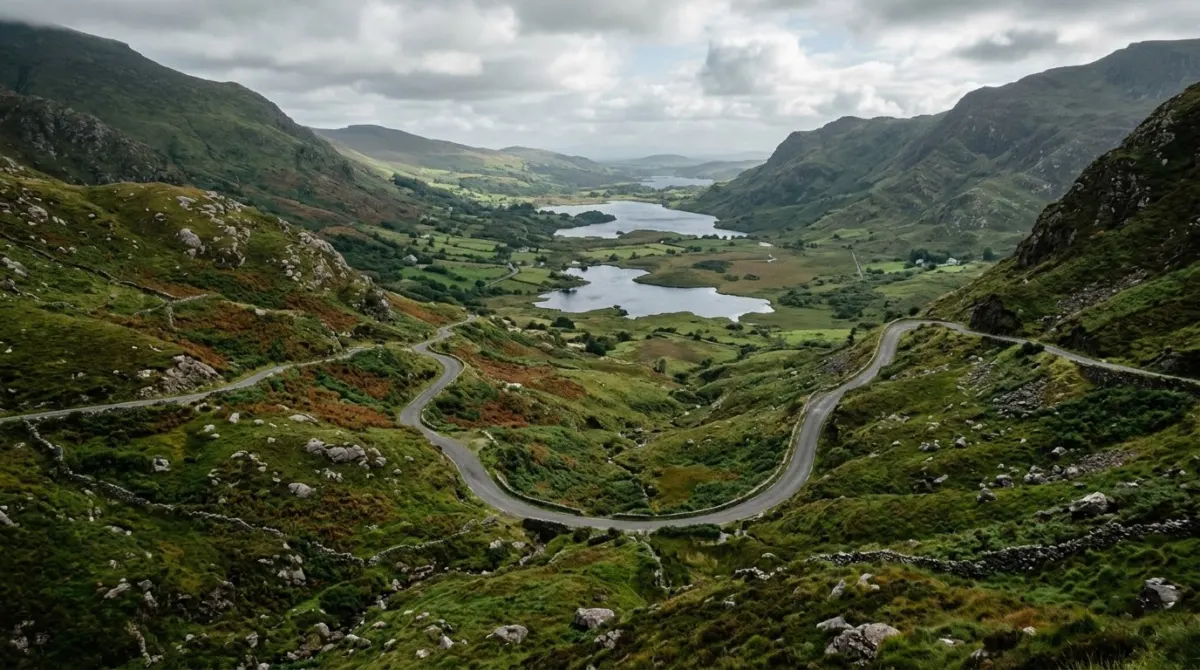
In Kerry specifically, the two things worth doing are each a full day in opposite directions. The Ring of Kerry runs west and south around the Iveragh Peninsula; Dingle and Slea Head run north-west on a different peninsula entirely. There is no version where both fit into one day, and there is no version where either is improved by rushing.
So the eighth night goes in Killarney or Kenmare, and the eighth day goes to whichever of the two drives you did not do on day seven.
Three ways this route goes wrong
Collecting the car at the airport on day one. It then sits in an expensive city car park for two days while you walk everywhere. Collect it on the morning of day three.
Starting the Ring of Kerry in the afternoon. The loop is five to eight hours with stops and the light goes early outside midsummer. An afternoon start means finishing the best stretch in the dark.
Flying home from Dublin. Killarney to Dublin Airport is roughly four hours, which turns your eighth day into a transfer. Shannon and Cork are both about an hour and a half from Kerry.
Adding a ninth and tenth day
If the trip stretches, the honest additions in order of value:
Day 9 — the south. Drive east from Kerry to Kinsale and Cork rather than back to Dublin. It adds the best food region in the country and the harbour town at Cobh, and it sets up a flight from Cork.
Day 10 — Kilkenny and Wicklow. Back towards Dublin through the medieval town at Kilkenny and Glendalough in the mountains, which turns the loop into a circuit.
Our southern Ireland itinerary covers that half of the island in full.
When to take this route
May, June and September are the best weeks: long days, everything open, and fewer coaches than midsummer. On the Ring of Kerry in particular, the difference between June and August is the number of vehicles on the narrow western stretch.
July and August give the longest evenings, which matters on a driving route, at the cost of traffic and accommodation that sells out months ahead.
October to March shrinks the daylight from about eleven and a half hours at the start of October to about seven and a half in late December. On eight days that costs you most of one driving day, and some rural places close for the season. The compensation is an empty Ring of Kerry.
Packing for eight days
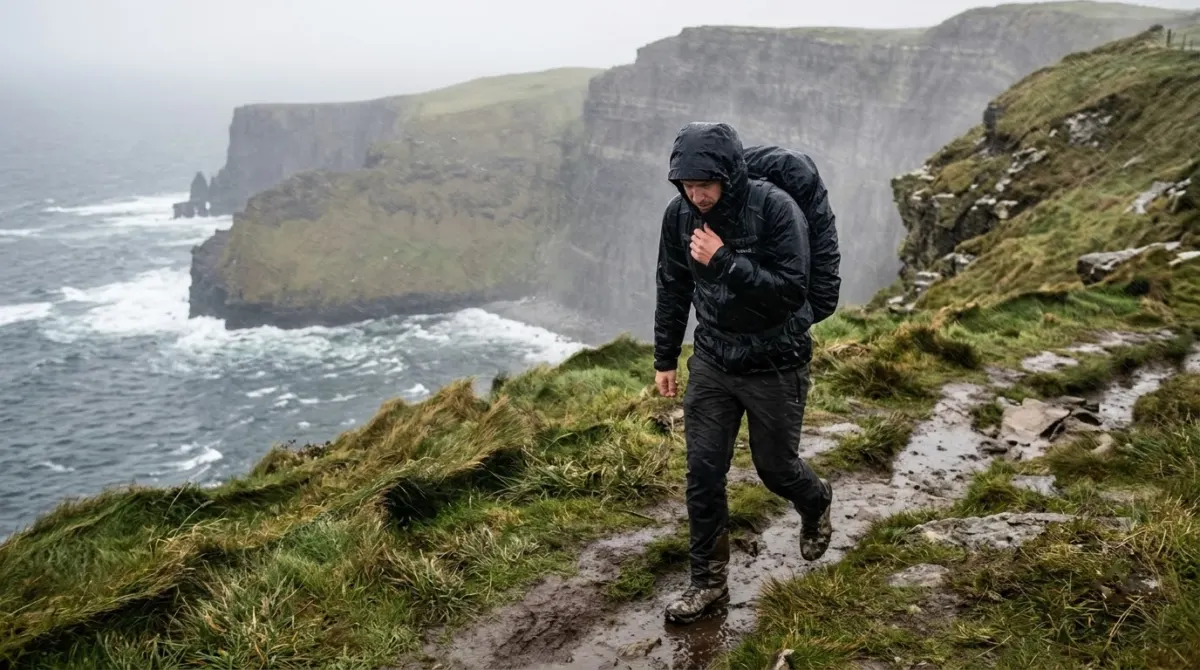
A waterproof jacket rather than an umbrella, because the rain on the west coast arrives sideways. Shoes that cope with wet grass, since the viewpoints at the Cliffs, in Connemara and on both Kerry peninsulas all involve a short walk off tarmac. And layers, because a single day on this route can move between sun, wind and rain inside an hour.
Frequently asked questions
Is 8 days enough for Ireland?
Yes, and it is the length at which the trip stops rushing. Seven days forces a choice in Kerry between the Ring of Kerry and the Dingle Peninsula; eight days fits both. Two nights in Dublin, three in Galway, two in Kerry.
What is the best 8 day Ireland itinerary?
Dublin for two nights, Galway for three with the Cliffs of Moher and Connemara as day trips, then Kerry for two with the Ring of Kerry and Dingle. Fly out of Shannon or Cork rather than driving back to Dublin.
Can you see Northern Ireland in 8 days?
Yes, but not alongside Kerry. The northern version runs Dublin, Belfast, the Causeway Coast and then Galway, which has one long transfer in the middle and leaves Kerry out entirely.
How many bases should an 8 day Ireland trip use?
Three. Checkout at eleven and check-in at three means each move costs the middle of a day, so a fourth base takes a day from somewhere better spent.
Do I need to change money for Northern Ireland?
Northern Ireland uses pound sterling rather than the euro, so yes if you are crossing. Cards work throughout. Check that your car hire agreement allows cross-border driving — most do, but they state it explicitly.
Should I fly in and out of Dublin on an 8 day trip?
Flying out of Shannon or Cork removes about four hours of driving from the last day. An open-jaw ticket usually costs little more than a return and it is the best booking decision on this route.
Keep planning Ireland
- Where to Stay in Kilkenny: On the Mile, or Beside the Station
- Where to Stay in Doolin: Book a Room You Can Walk Home To
- Where to Stay in Belfast: Four Quarters, Four Different Trips
- Where to Stay in Killarney: The Town, or the Lakes
- Where to Stay in Dingle: In Town, or Out Where the View Is
- Where to Stay in Ireland: Pick Three Bases, Not Seven
- Where to Stay in Galway: The Noise Decides It, Not the Distance
- Best Hotels in Dublin: What Each Kind of Building Gives You
Written and checked by
Triplarks Editorial
An editorial desk, not an invented persona: research, drafting and fact-checking are done by the same small team. Every number here carries the date it was read.