Quick answer
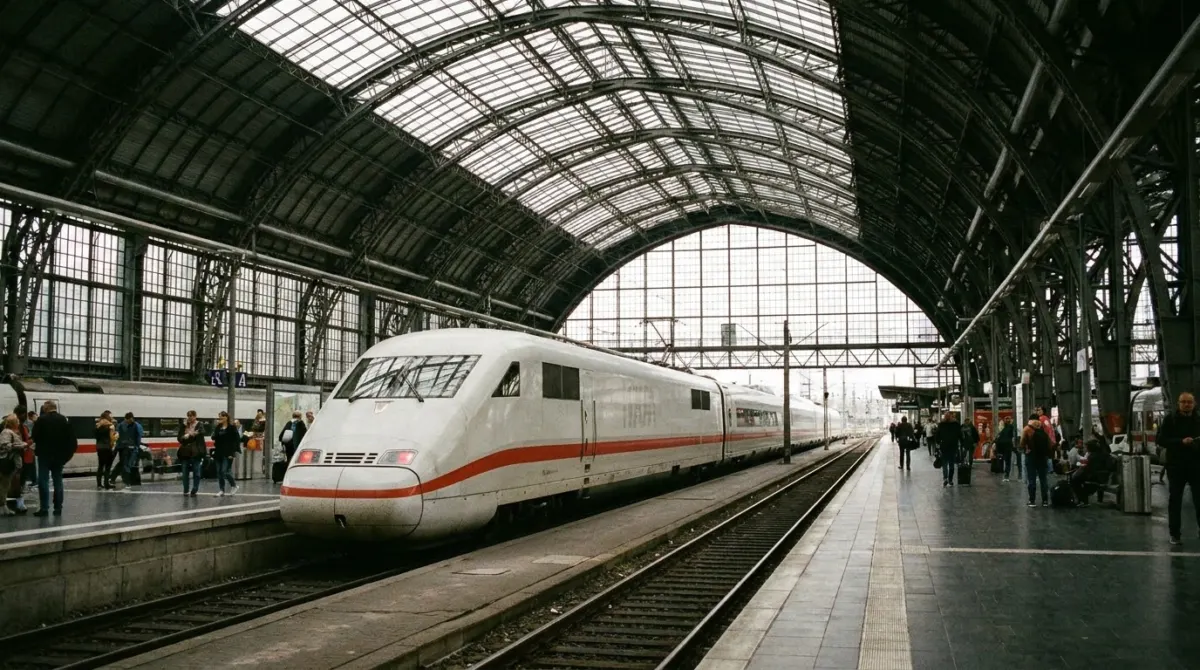
Five bases and four train journeys: Berlin, Dresden, Munich, Rothenburg and the Rhine. Book the long-distance tickets in advance for the saver fares, and stay inside the walls at Rothenburg — the town empties in the evening and that is when it is worth being there.
On this page
- 10 day Germany itinerary at a glance
- Days 1 to 3 — Berlin
- Day 4 — Dresden
- Days 5 to 7 — Munich
- Day 8 — Rothenburg ob der Tauber
- Days 9 and 10 — the Rhine
- Alternative 1 — the northern route
- Alternative 2 — the southern loop
- Trains, and when to hire a car
- When to go
- Where to stay on this route
- Day trips you can slot into the bases
- Swaps that keep the shape
- What this route leaves out
- Budgeting the days rather than the money
- Ten days in Germany with children
- Packing for five bases
- Practical notes
- What ten days costs you in transfers
- Adapting the route to your flights
- The short version
- Frequently asked questions
Ten days is the length at which a German trip stops being two cities and becomes a route. It fits Berlin and Munich — which are less alike than any other pair of large European cities in the same country — plus the medieval south and the Rhine, all on trains that make the connections easy.
Some links below are affiliate links. We may earn a commission if you book through them, at no extra cost to you. We do not rank hotels, and any prices on the map come live from the booking sites.
This is the ten-day route in detail, with two alternatives for people who want something other than the standard line. For the shorter and longer versions, see our Germany itinerary.
10 day Germany itinerary at a glance
| Days | Base | Nights |
|---|---|---|
| 1–3 | Berlin | 3 |
| 4 | Dresden | 1 |
| 5–7 | Munich | 3 |
| 8 | Rothenburg ob der Tauber | 1 |
| 9–10 | Rhine valley, then Cologne or Frankfurt | 2 |
Five bases, four train journeys, and no leg longer than about four hours.
Where to sleep on this route
Days 1 to 3 — Berlin
Three nights, used by theme rather than by map, because the sights are kilometres apart.
Day 1: the monumental centre — the Reichstag dome (free, registered in advance), the Brandenburg Gate, the Holocaust Memorial and Unter den Linden.
Day 2: the divided city — the Berlin Wall Memorial on Bernauer Straße, the Topography of Terror, the East Side Gallery.
Day 3: Museum Island in the morning, checking what is open, and a district in the afternoon.
Our Berlin itinerary has these three days in full.
Map shows live availability and prices. We may earn a commission on bookings made through it, at no extra cost to you.
Day 4 — Dresden
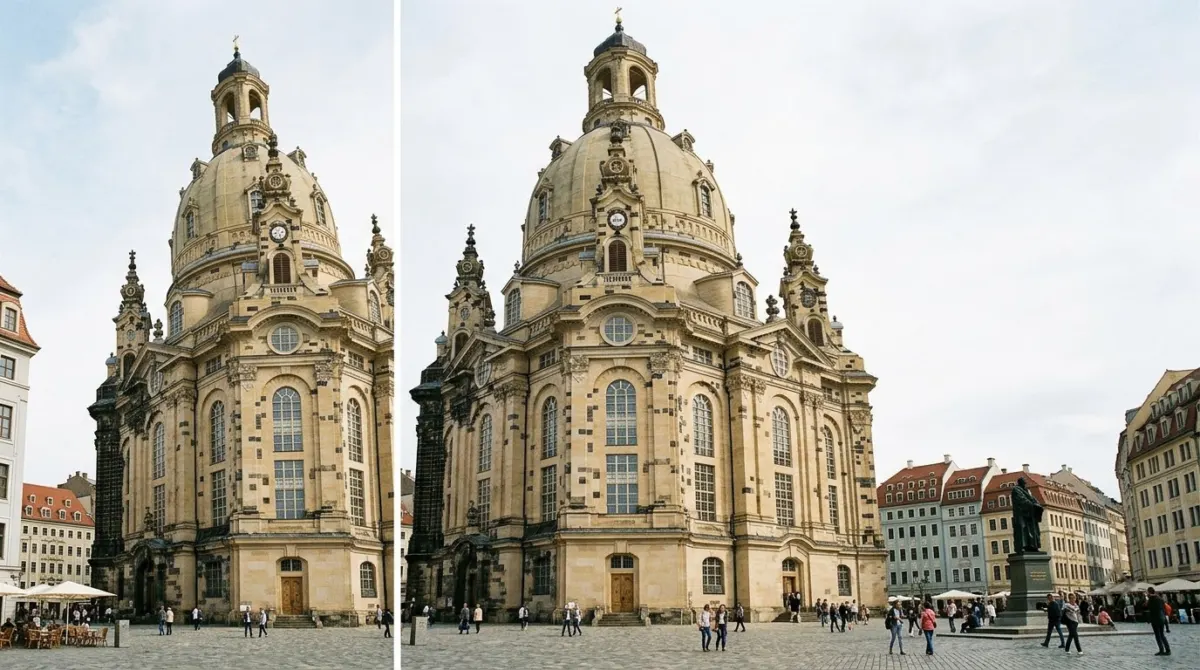
Two hours south of Berlin by train. The baroque old town was destroyed in February 1945 and rebuilt over decades; the Frauenkirche was reconstructed from its own rubble and finished in 2005, and the blackened original stones are visible in the new facade.
The Zwinger palace, the Semper Opera and the terrace above the Elbe fill a day comfortably. Stay the night: Dresden in the evening, once the day visitors leave, is the better version.
Days 5 to 7 — Munich
Dresden to Munich is about four and a half hours, or two and a half if you route via Leipzig and Nuremberg on the fast line.
Two days for the city — the Altstadt, the Viktualienmarkt, the Residenz, a Pinakothek and the Englischer Garten — and one day out, for Neuschwanstein, Salzburg or Dachau.
Our 3 day Munich itinerary is exactly this section.
Day 8 — Rothenburg ob der Tauber
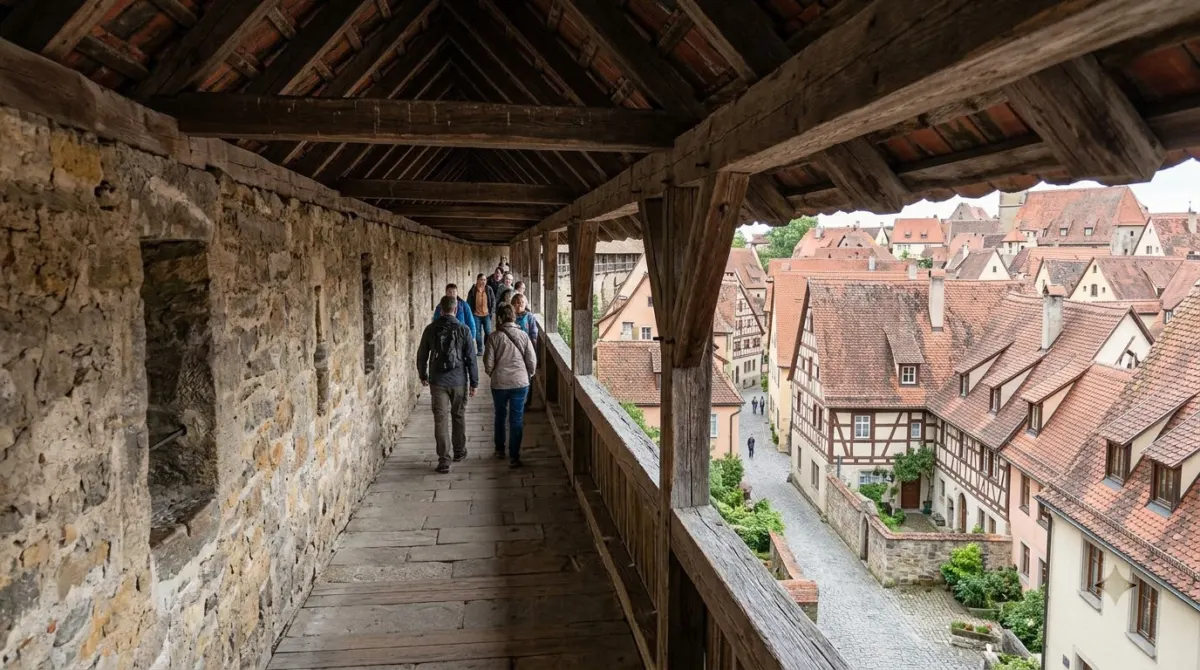
North-west from Munich, Rothenburg is the best-preserved walled medieval town in Germany and the high point of the Romantic Road.
The town is overwhelmed by coach groups in the middle of the day and almost empty in the evening and early morning, which makes an overnight stay disproportionately worthwhile. Walk the covered wall circuit at dusk, when everyone else has gone.
Getting there by train involves two or three changes; it is one of the few places on this route where a hire car for the day is genuinely easier.
Days 9 and 10 — the Rhine
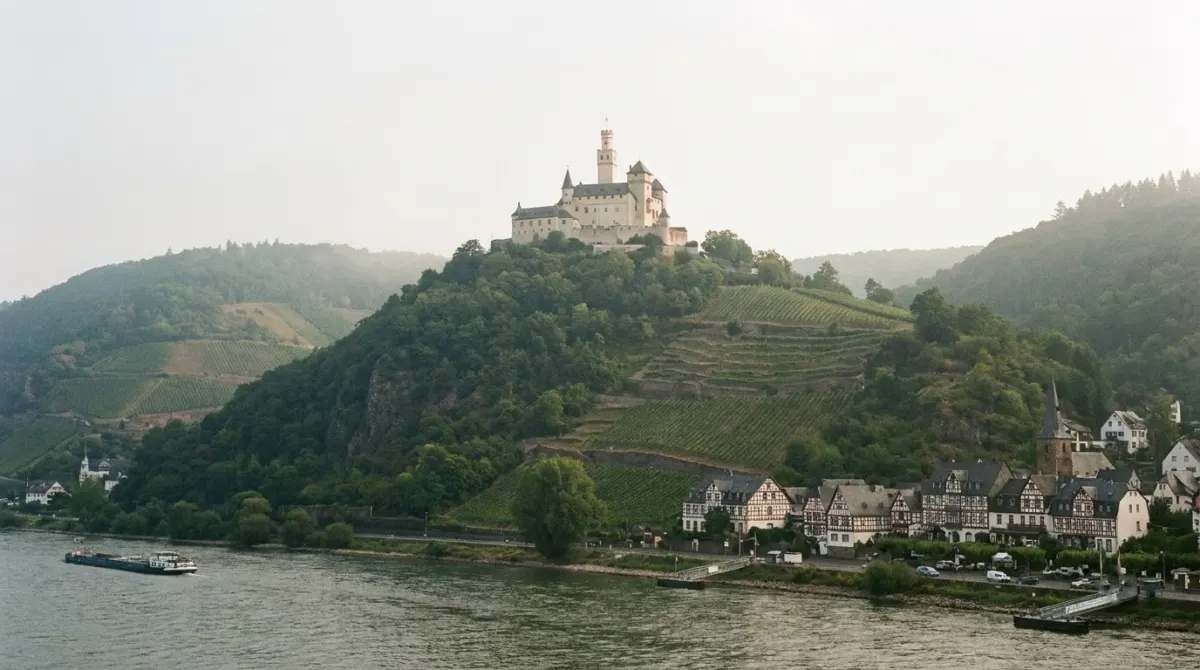
West to the Rhine Gorge, the sixty-kilometre stretch between Bingen and Koblenz where the river cuts through slate hills lined with vineyards and castles.
Base in Bacharach or St Goar, both small river towns with a castle above them. Spend a day on the water — the boats run between the towns and the view from the river is the point — or take the train that runs along the bank, which is cheaper and nearly as good.
Finish at Cologne for the cathedral, or at Frankfurt for the airport. Our guides to Cologne and Frankfurt cover both.
The Rhine boats in practice
The day boats through the gorge run a full timetable in the main season, roughly from Easter to October, with a reduced winter program from Rüdesheim and Bingen. Outside the main season, check the timetable before you build day nine around the river.
Going downstream, from Bingen towards Koblenz, is the faster and more relaxed direction. The simplest plan is to take the boat one way, step off at any town that appeals, and come back along the bank by regional train, which runs on both sides of the river and stops at every town.
Alternative 1 — the northern route
If you would rather see the sea than the south:
- Days 1–3: Berlin.
- Days 4–5: Hamburg — the port, the warehouse district and the Elbphilharmonie.
- Day 6: Lübeck, a brick gothic Hanseatic town an hour from Hamburg.
- Days 7–8: Cologne and the Rhine.
- Days 9–10: Frankfurt or Heidelberg, and out.
This version has no Bavaria in it at all, which is a legitimate choice and an unusual one.
Alternative 2 — the southern loop
If the Alps and the half-timbered towns are the draw, skip Berlin:
- Days 1–3: Munich and a day trip.
- Day 4: Salzburg or Berchtesgaden.
- Days 5–6: the Romantic Road — Füssen, Augsburg, Rothenburg — by car.
- Days 7–8: Heidelberg and the Neckar valley.
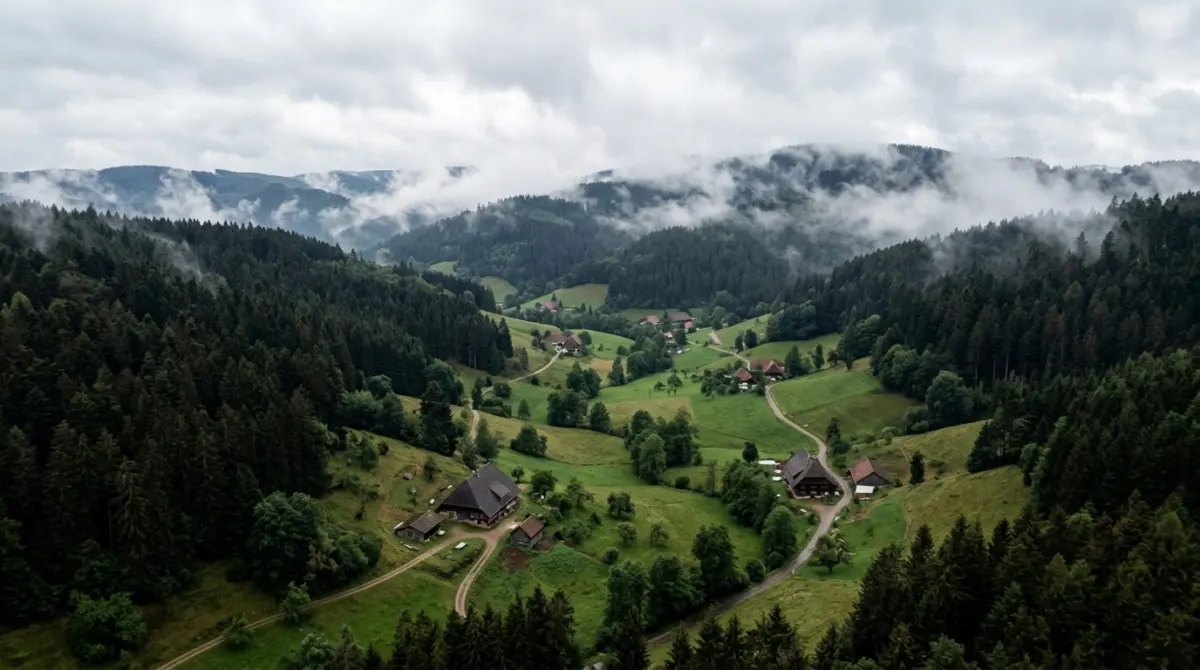
- Days 9–10: the Black Forest, out of Stuttgart or Frankfurt.
This is the version that justifies hiring a car, because almost none of it is well served by rail.
Trains, and when to hire a car
Nine of these ten days work better by train. Book long-distance tickets in advance for the saver fares, which are a fraction of walk-up prices and tied to a specific train.
Hire a car for the Romantic Road and the Black Forest only. Both are rural, both are about the drive, and both are awkward by rail. Everywhere else, a car costs you parking charges and gives you nothing.
Which ticket for which leg
The route mixes two kinds of train, and they are ticketed differently.
The long legs — Berlin to Dresden, Dresden to Munich, and the run towards the Rhine — are on long-distance ICE and IC trains. Saver fares are the cheapest way to travel on them, but they are valid only on the train you booked, so they suit fixed days. The flexible fare costs more and lets you take any train on the day.
The short legs — the branch line into Rothenburg, the trains along the Rhine, the S-Bahn to Potsdam or into the Saxon Switzerland — are regional trains. These are covered by the Deutschland-Ticket, a monthly subscription for local and regional transport across the whole country, which also covers buses, trams and U-Bahn in every city on the route. It is not valid on ICE, IC or EC trains, and it renews automatically until you cancel it.
For most visitors the sensible combination is saver fares for the three or four long legs and either the Deutschland-Ticket or local day tickets for everything else.
When to go
May, June and September are the best months on this route: long days, open attractions, and the Rhine at its best.
July and August are hot in the south and busy everywhere, and air conditioning is not universal in German hotels.
Late November and December swaps the Rhine for the Christmas markets, which are genuinely worth restructuring a trip around — Dresden, Nuremberg, Rothenburg and Cologne all have good ones.
Check the Oktoberfest dates whatever you do: they change accommodation prices across Munich and the surrounding region for about sixteen days from late September.
Where to stay on this route
Five bases, and the decision is different in each.
Berlin: pick the district first, then check its U-Bahn station — see where to stay in Berlin.
Dresden: anywhere in or beside the old town; the city is small and the Neustadt across the river is the livelier evening option.
Munich: inside the Altstadt ring for two city days, with the Hauptbahnhof in reach for day three — see where to stay in Munich.
Rothenburg: inside the walls, which is the entire point of staying the night.
The Rhine: a river town such as Bacharach or St Goar rather than Koblenz, which is a working city.
Day trips you can slot into the bases
The route has a little slack in Berlin and Munich, and each base has one day trip that earns a place if you want to use it.
From Berlin: Potsdam, for Sanssouci and its park, by S-Bahn or regional train. It takes the place of the third Berlin day rather than adding to it.
From Dresden: the sandstone cliffs of the Saxon Switzerland, upstream on the Elbe, where the S-Bahn runs to Kurort Rathen below the Bastei viewpoint; or Meissen, the porcelain town, downstream on the same line. Either needs a second night in Dresden.
From Munich: Neuschwanstein, Salzburg or Dachau, as above, one per trip.
From the Rhine: the Mosel valley, which joins the Rhine at Koblenz and has its own run of wine villages and castles, a short regional train ride upstream.
From Frankfurt, if you end there with a spare day: Heidelberg, about an hour by train.
Pick one, not five. Each day trip costs a day in a city, and a ten-day route with three of them becomes a trip spent on trains.
Swaps that keep the shape
The route works as a chain, and any single link can be replaced without breaking it.
Leipzig instead of Dresden. Leipzig is on the fast line between Berlin and Munich, a little over an hour from Berlin, so it makes the second leg shorter. It is Bach’s city and the place where the peaceful protests of 1989 began, with a livelier, younger feel than Dresden and fewer tour groups.
Bamberg or Nuremberg instead of Rothenburg. Both are on the main rail line, so this swap removes the most awkward train journey of the route. Bamberg’s old town is a UNESCO World Heritage site, built partly on an island in the river Regnitz; Nuremberg has the castle, the old town walls and, in December, one of the best-known Christmas markets in the country.
Heidelberg instead of the Rhine. If castles appeal more than the river itself, Heidelberg gives you the castle above the Neckar and the old university town in one place, with Frankfurt an hour away for the flight home.
Hamburg instead of Dresden. This turns the route into north to south: Berlin, Hamburg, then the long train to Munich. It works, but it makes the third leg the longest of the trip.
What this route leaves out
Hamburg, two hours from Berlin, which is a port city with water through the middle of it and nothing like the rest of this itinerary.
The Baltic coast and the brick gothic towns of the north.
Heidelberg and the Black Forest, which belong to the southern alternative.
Leipzig, which is on the Berlin to Munich line and is the most underrated city in the country.
All four fit comfortably into a fourteen-day trip, which is where our Germany itinerary goes next.
Budgeting the days rather than the money
Ten days with five bases leaves roughly seven full days of sightseeing once arrival, departure and the four transfers are counted.
Plan seven good days rather than ten. In practice that means one substantial thing per day: a museum cluster, a day trip, a town. The transfers themselves can carry something small — Dresden is a stop rather than a sacrifice, and Rothenburg is both a transfer and a destination.
Ten days in Germany with children
The route works well with children with a couple of changes, and the trains are the reason.
On Deutsche Bahn’s long-distance trains, young children travel free with a parent or grandparent, provided they are entered on the ticket, and the ICE trains have a family area with space for buggies and small children. That makes the long legs easier than a long drive.
Swap one history day in Berlin for the Natural History Museum and Tempelhofer Feld, where children cycle on the old runways. In Munich, the Deutsches Museum, the science and technology museum on an island in the Isar, is a full day that children of most ages enjoy. The walls of Rothenburg and a boat on the Rhine need no adaptation at all.
The main change is pace. Drop one base, staying four nights in Berlin and four in Munich with the Rhine at the end, or replace Rothenburg with a night in Nuremberg on the main line. Fewer hotel changes matter more to children than more sights.
Packing for five bases
Five hotels in ten days means four check-outs, four train journeys and a lot of carrying, so the packing decision is a real one.
Travel with one bag each that you can lift above your head. German trains have overhead racks and some space at the ends of the carriages, but nobody will lift a heavy suitcase for you, and the time between stations on the fast lines is short.
Expect stairs. Many smaller hotels in Rothenburg and the Rhine towns are in old buildings without lifts, and both have cobbled streets that are hard on wheels.
Plan for the weather of the whole route. The Rhine and Berlin can be cool and wet on the same days that Munich is warm, so layers and a light waterproof are better than heavy items for one climate.
If you will be in Germany longer, the larger stations have lockers and left-luggage services, which makes it possible to leave a second bag and travel light for the middle of the trip.
Practical notes
Book trains early. Saver fares on the fast lines are a fraction of walk-up prices and are tied to a specific departure.
Carry cash. Card acceptance is better than it was and still not universal, particularly in the east and in small restaurants.
Shops shut on Sundays, with station supermarkets the main exception. Buy food on Saturday.
Allow margin before flights. Long-distance punctuality in Germany is not what the reputation suggests, and a missed connection on the last day is the expensive kind.
What ten days costs you in transfers
Four train journeys, and each one takes a chunk of a day: Berlin to Dresden about two hours, Dresden to Munich four and a half, Munich to Rothenburg three with changes, Rothenburg to the Rhine about three.
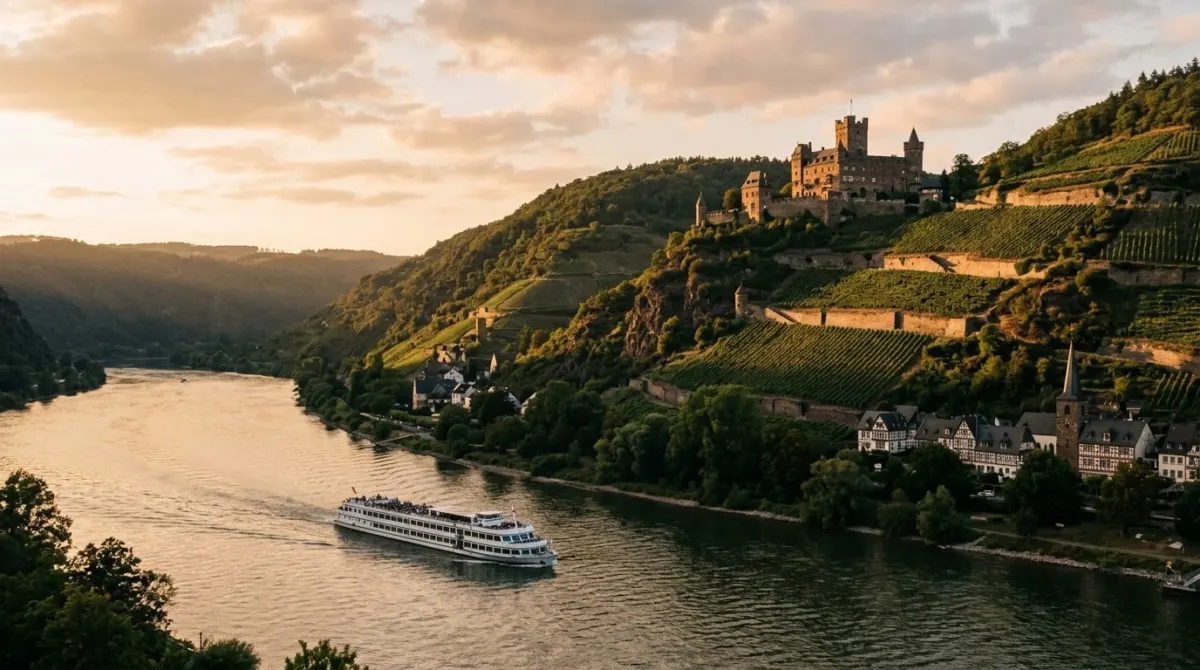
That is roughly a day and a half of the ten spent in motion, which is the price of five bases. The way to make it pay is to put something at the end of each leg rather than treating the arrival as the day’s achievement — Dresden’s old town at dusk, Rothenburg’s walls after the coaches leave, the Rhine boat on the afternoon you arrive.
Adapting the route to your flights
Ten-day routes usually break at the ends rather than in the middle, and the fix is to let the flights set the direction.
Into Berlin, out of Frankfurt is the standard and the one described here. Into Frankfurt, out of Berlin simply reverses it, which works identically.
Into and out of Frankfurt — common on long-haul tickets — is the awkward one, since it puts Berlin at the far end. The fix is to run the route as a loop: Frankfurt, the Rhine, Cologne, Berlin, Dresden, Munich, Rothenburg and back, which costs nothing extra in travel time because the train legs are similar.
The short version
Berlin three nights, Dresden one, Munich three, Rothenburg one, the Rhine two. Travel by train and book the long legs in advance; hire a car only if you take the southern alternative with the Romantic Road and the Black Forest. Stay inside the walls at Rothenburg, pick a river town rather than Koblenz on the Rhine, and check the Oktoberfest dates before fixing anything in Bavaria.
Frequently asked questions
What is the best 10 day Germany itinerary?
Berlin for three nights, Dresden for one, Munich for three, Rothenburg for one and the Rhine valley for two, finishing at Cologne or Frankfurt. Five bases, four train journeys and no leg longer than about four hours.
Is 10 days enough for Germany?
Enough for the two main cities plus the medieval south and the Rhine. It is not enough to add Hamburg and the Baltic coast as well, which is what the fourteen-day version is for.
Should I rent a car for 10 days in Germany?
Not for the whole trip. Trains are faster city to city and city parking is expensive. Hire a car for two or three days for the Romantic Road or the Black Forest, which are rural and poorly served by rail.
Is Rothenburg worth an overnight stay?
Yes, and it is one of the few places on this route where staying the night changes the experience. The town is full of coach groups in the middle of the day and almost empty in the evening, when the wall walk is at its best.
How long is the train from Berlin to Munich?
About four hours on the fast line. Breaking the journey at Dresden or Nuremberg turns it into two comfortable halves and adds a city worth a day.
What is the best time of year for a 10 day Germany trip?
May, June and September for long days and open attractions. Late November and December if you want the Christmas markets, which are strong in Dresden, Nuremberg, Rothenburg and Cologne. Check the Oktoberfest dates before booking anything in Bavaria.
Is the Deutschland-Ticket useful for a 10 day Germany trip?
For the short legs, yes. It covers regional trains and city transport across the country, including the Rhine valley trains, the line into Rothenburg and the U-Bahn in Berlin and Munich. It does not cover ICE, IC or EC trains, so book saver fares separately for the long legs between the main cities.
Keep planning Germany
- Where to Stay in Cologne: One Street Back From the Cathedral
- Where to Stay for Oktoberfest: Buy the Walk Home
- Where to Stay in Frankfurt: The City, the Station or the Airport
- Best Hotels in Munich: What the Money Actually Buys
- Where to Stay in Berlin: Pick a District, Not a Hotel
- Where to Stay in Munich: Inside the Ring, or One Stop Out
- How Many Days in Berlin? Four, and Why It Needs More Than Munich
- How Many Days in Munich? Three, and Four If You Use It as a Base
Written and checked by
Triplarks Editorial
An editorial desk, not an invented persona: research, drafting and fact-checking are done by the same small team. Every number here carries the date it was read.