Quick answer
Stay inside the Ring or just outside it in Neubau or Mariahilf, so every day starts with a short walk. Book Schonbrunn with a timed slot and buy a 72-hour transport ticket rather than single fares.
On this page
- Three day Vienna itinerary at a glance
- Day 1 — the imperial centre
- Day 2 — Schönbrunn, and music
- Day 3 — the art
- Variant: three days for music
- Variant: three days with children
- Variant: three days in winter
- Swapping one evening for a Heuriger
- Getting around
- What to book in advance
- What each sight actually takes
- Eating across three days
- Markets beyond the Naschmarkt
- Three days without the palaces
- The Vienna of 1900, on a third afternoon
- Where to stay for three days
- Getting the most from a Viennese coffee house
- Trading a day for the Wachau
- Three days in each season
- The short version
- Frequently asked questions
Three days is a comfortable Vienna: the imperial centre, Schönbrunn, the art, and one evening with music. It is not quite enough for the city — four is — but it covers everything most visitors came for.
Some links below are affiliate links. We may earn a commission if you book through them, at no extra cost to you. We do not rank hotels, and any prices on the map come live from the booking sites.
This is the plan with the hours filled in. For the question of length see how many days in Vienna; for districts, where to stay in Vienna. For a night beyond Vienna, see where to stay in Salzburg.
Three day Vienna itinerary at a glance
| Day | Morning | Afternoon | Evening |
|---|---|---|---|
| 1 | Innere Stadt and the cathedral | Hofburg and the Kaisergruft | Coffee house, then dinner |
| 2 | Schönbrunn | Gardens and the Gloriette | Concert or opera |
| 3 | Kunsthistorisches Museum | Belvedere, or the Naschmarkt | Neubau or Wieden |
Map shows live availability and prices. We may earn a commission on bookings made through it, at no extra cost to you.
Where to sleep on this route
Day 1 — the imperial centre
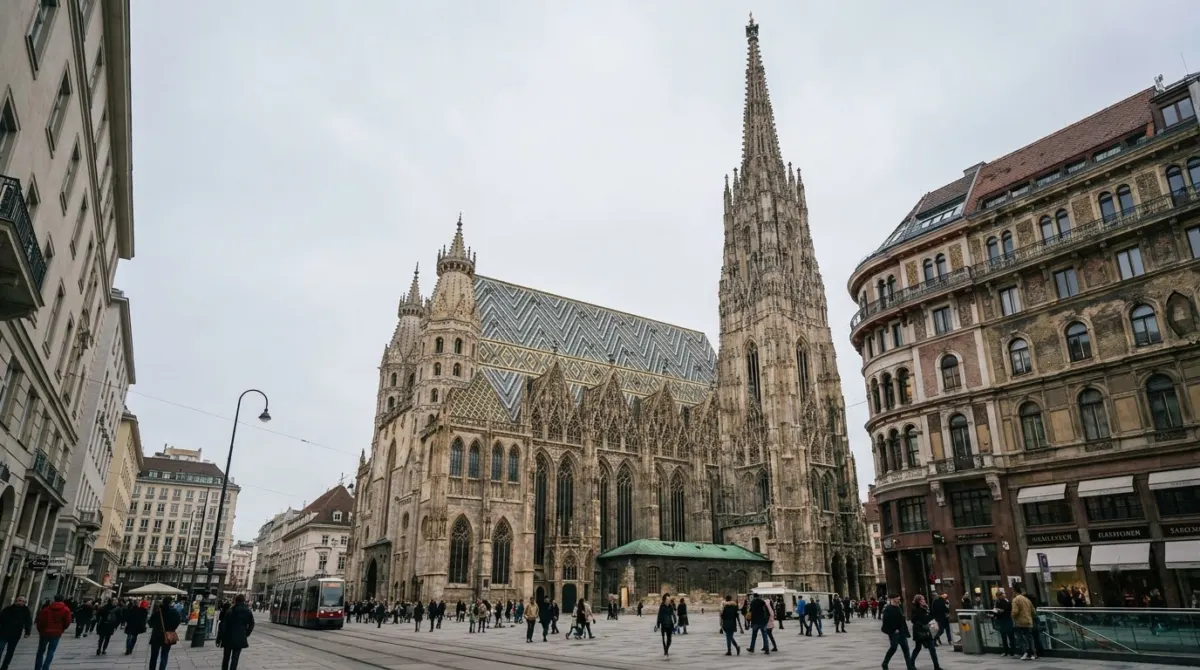
Morning. Start at St Stephen’s Cathedral in the middle of the Innere Stadt, with its patterned tiled roof and the south tower you can climb. Then walk the Graben and Kohlmarkt, the two grandest shopping streets in the city, to the Hofburg gates.
Afternoon. The Hofburg is a complex rather than a building: pick two of the imperial apartments, the Sisi museum, the silver collection and the imperial treasury, which holds the crown jewels of the Holy Roman Empire. Two to three hours.
Then the Kaisergruft beneath the Capuchin church, where 150 Habsburgs are buried in increasingly elaborate metal coffins. Half an hour, and more memorable than it sounds.
Evening. A traditional coffee house for an hour, then dinner in the first or fourth district.
Day 2 — Schönbrunn, and music
Morning. Schönbrunn, the Habsburg summer palace, on a timed slot booked in advance — it is the longest queue in Vienna. The state rooms take about two hours.
Afternoon. The gardens, which are free: the parterre, the maze, and the walk up the hill to the Gloriette for the view back over the palace and the city. The world’s oldest zoo is inside the grounds if you have children.
Evening. Music, which in Vienna is not a tourist add-on. The state opera sells standing places cheaply on the day, and there are concerts most nights across several halls. Book in advance if a specific performance matters.
The rest of the Schönbrunn grounds
The grounds hold more than the state rooms and the parterre, and day two has room for one or two of the extras.
The Palm House, a great iron-and-glass greenhouse, stands on the western side near the zoo. The maze and labyrinth, which are ticketed separately, are the part children remember. The Imperial Carriage Museum holds the court’s coaches and sleighs. And the Orangery hosts classical concerts every evening, which turns the music part of day two into the same trip as the palace.
Choose one or two at most. The gardens and the climb to the Gloriette already take a couple of hours, and the day should end with energy left for the evening.
Day 3 — the art
Morning. The Kunsthistorisches Museum, built to hold the Habsburg collection, with the largest group of Bruegels in the world, Vermeer, Raphael and Caravaggio. Three hours, and the building itself is worth half an hour of that.
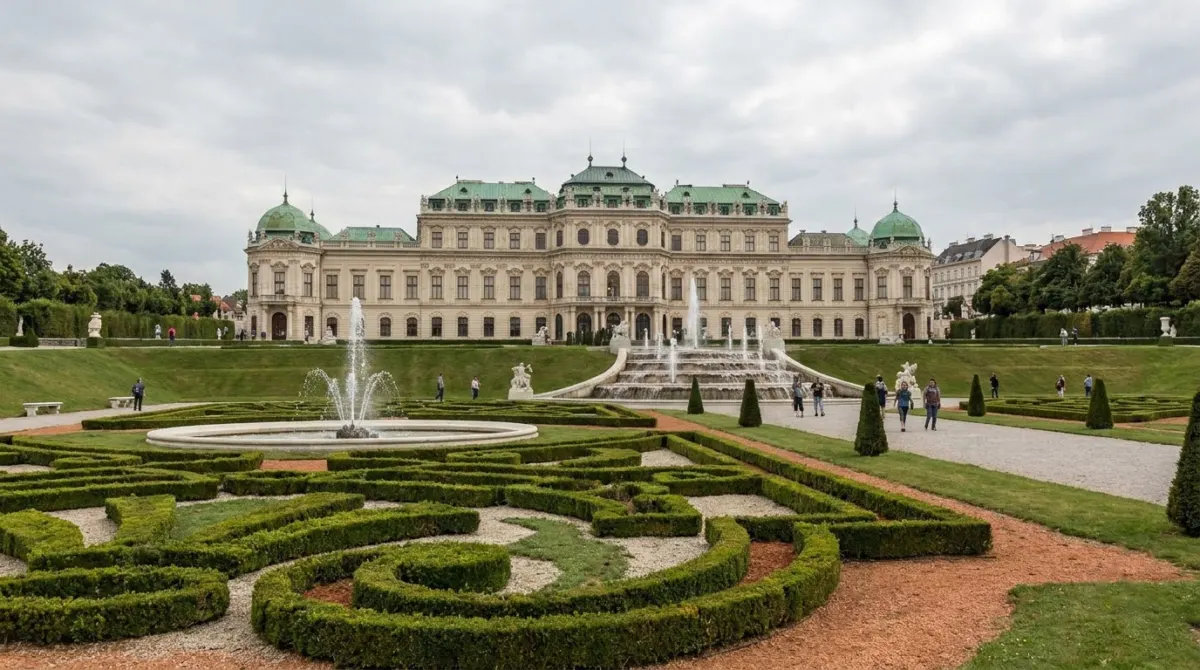
Afternoon. The Belvedere, two baroque palaces with a garden between them, where Klimt’s The Kiss hangs. Two hours.
If you would rather not do two museums in a day, swap the Belvedere for the Naschmarkt, the long market street in the fourth district, and the cafes around it.
Evening. Neubau or Wieden, outside the Ring, where the city eats.
Variant: three days for music
If this is why you came, restructure.
Keep day 1. Replace day 2’s afternoon with the Haus der Musik or a guided tour of the opera house, and day 3 with the Zentralfriedhof, where Beethoven, Brahms, Schubert and the Strauss family are buried in one corner.
Then take two evenings of performance rather than one. Vienna has concerts nearly every night across the Musikverein, the Konzerthaus and the opera, and standing tickets make it cheaper than people expect.
Variant: three days with children
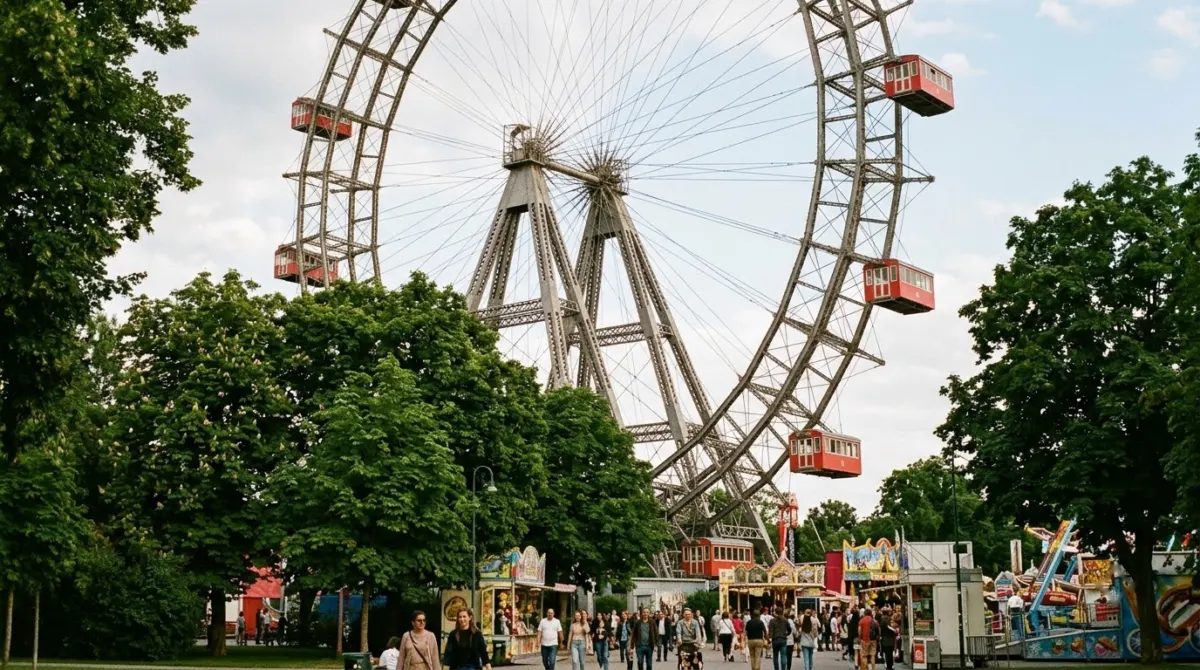
Day 1: the cathedral tower, then the Prater — a huge park with an old funfair and the Riesenrad ferris wheel, free to walk into.
Day 2: Schönbrunn and the zoo, which is the oldest in the world and takes a full afternoon.
Day 3: the Natural History Museum opposite the Kunsthistorisches, and the Haus des Meeres aquarium in a converted flak tower.
Variant: three days in winter
From mid-November the Christmas markets open across the city, in front of the Rathaus, at Schönbrunn, at the Belvedere and in the smaller squares. They are evening affairs, which suits the short daylight.
January and February bring the ball season, when the city holds hundreds of formal balls, and the museums are at their emptiest.
Days are shorter, so plan one large sight per day rather than two.
Swapping one evening for a Heuriger
Of the three evenings, give one to music and consider giving another to a Heuriger, a wine tavern attached to one of Vienna’s own vineyards. The tradition is recognized by UNESCO as intangible cultural heritage, and it shows a different city from the one inside the Ring.
A genuine Heuriger serves only wine from its own vineyards and announces that it is open with a bunch of pine twigs over the door and a sign reading ausg’steckt. In the simplest places the food is a cold buffet of spreads, cheeses and cured meats; those with a full restaurant license add hot dishes. Order the house white, or a Gemischter Satz, the Viennese field blend made from several grape varieties grown and harvested together.
The best-known taverns are in Grinzing, Nussdorf, Sievering and Neustift am Walde in the 19th district: tram 38 from Schottentor runs to Grinzing, and the D tram from the Ring ends in Nussdorf. Stammersdorf, across the Danube in the 21st, is less visited and more local.
Three tips. The smaller taverns open only on set dates, so check before you set out. The places on Grinzing’s main street that cater to coach groups are the weakest; walk a few streets uphill. And the best Heuriger evening is a warm one in a garden, which makes this the natural replacement for the opera on a summer trip, when the house is closed.
Getting around
The Innere Stadt is walkable end to end in twenty minutes. Beyond it, the U-Bahn is fast and the trams are useful — lines 1 and 2 between them run along most of the Ring past the grand buildings for the price of an ordinary fare.
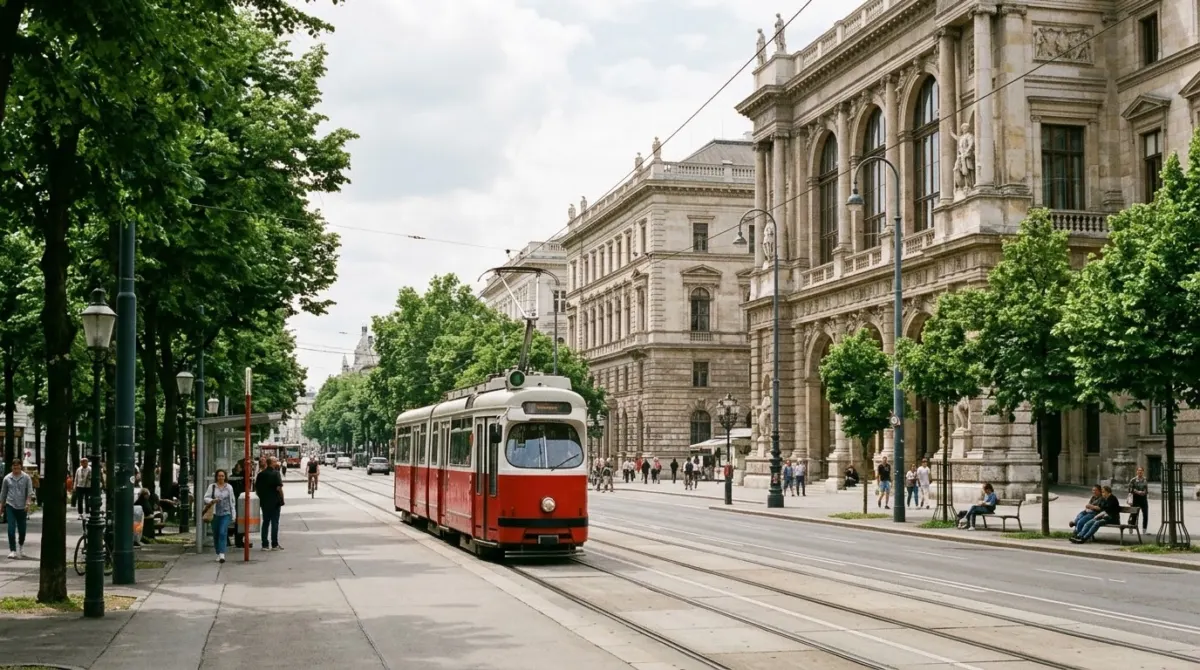
Buy a 24, 48 or 72 hour ticket rather than singles. For the airport, the railjet from the Hauptbahnhof is nonstop and takes about fifteen minutes. Until the end of October 2027 the inner-city rail line is closed for rebuilding, so the City Airport Train runs as a coach from Wien Mitte and the S7 terminates at St Marx.
What to book in advance
- Schönbrunn, with a timed slot.
- Concert or opera tickets, if a particular performance matters.
- The Spanish Riding School, for a performance rather than a morning training session.
- Accommodation, if your dates fall during the Christmas markets.
The museums generally do not need booking outside peak weeks.
What each sight actually takes
Useful durations, because Vienna’s sights are bigger than they look and three days has no slack.
St Stephen’s Cathedral: an hour, more with the tower or the catacombs.
The Hofburg: two to three hours for two of its museums.
The Kaisergruft: half an hour.
Schönbrunn: two hours inside, two more for the gardens and the Gloriette.
The Kunsthistorisches: three hours minimum.
The Belvedere: two to three hours.
A coffee house: an hour at least, and that is the correct use.
One large item plus one or two small ones is a Viennese day. Two large items is possible and tiring.
Eating across three days
Three things worth building into the plan.
A coffee house, properly: one coffee, a glass of water, a newspaper and no hurry. The traditional houses are in the first, fourth, sixth and ninth districts.
A Beisl, the Viennese neighbourhood tavern, for schnitzel, goulash and Tafelspitz. These are outside the Ring, which is where you should be eating in the evening anyway.
The Naschmarkt for lunch, which is a long street of stalls and small restaurants in the fourth district and the best cheap eating in the centre.
Prices inside the Ring are noticeably higher than five minutes outside it.
Markets beyond the Naschmarkt
The Naschmarkt is the famous market and the most visited. Vienna has others that are less polished and more Viennese, and one of them fits easily into any of the three days.
The Brunnenmarkt in the 16th district is the longest street market in the city, close to a kilometre of stalls with a multicultural character, opening at one end onto Yppenplatz, a square of cafes and restaurants. It is a short ride out on the U6 to Josefstädter Strasse, and it is where you see how the city actually shops.
The Karmelitermarkt in Leopoldstadt, ten minutes’ walk over the canal from the first district, is smaller, with a farmers’ market on Saturdays and restaurants round the square.
The Naschmarkt flea market runs on Saturday mornings at the far end of the market, with several hundred sellers. Go early; it is winding down by early afternoon.
The market stalls close on Sundays. If your third day falls on a Saturday, take the Karmelitermarkt or the flea market first thing and the Kunsthistorisches after it.
Three days without the palaces
If imperial interiors do not appeal, Vienna still fills three days easily.
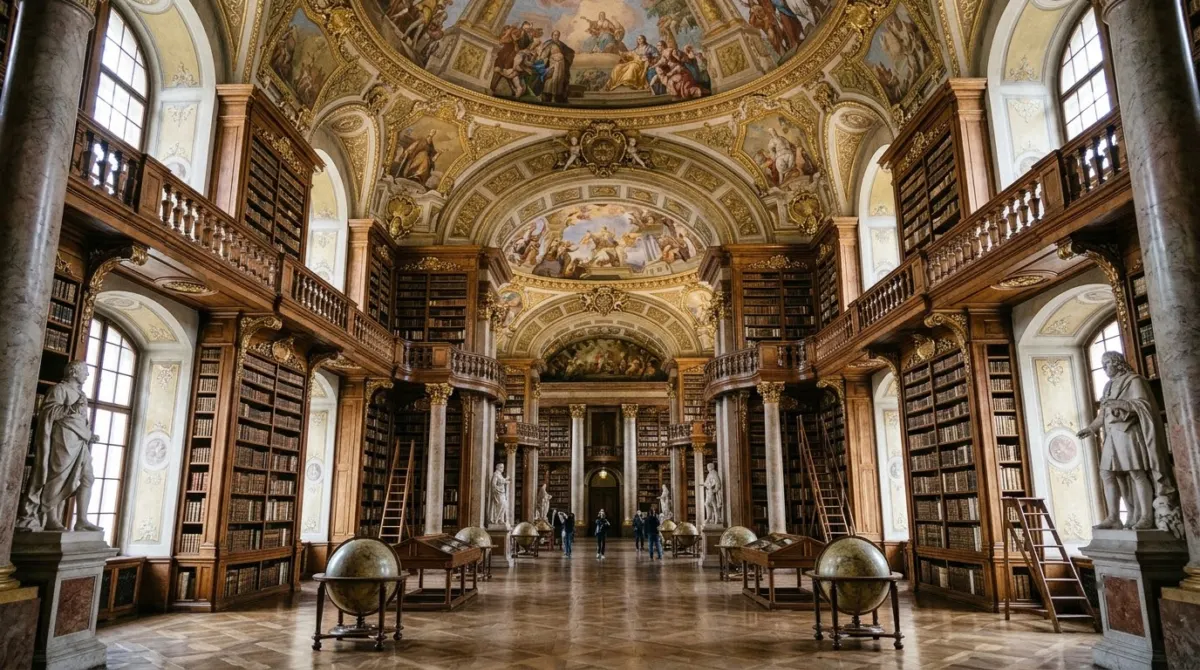
Day 1: the Innere Stadt on foot, the cathedral, and the national library state hall, which is one of the most beautiful rooms in Europe.
Day 2: the Kunsthistorisches in the morning and the Leopold Museum in the MuseumsQuartier in the afternoon for Schiele and Klimt.
Day 3: the Naschmarkt, Neubau, the Prater, and the Zentralfriedhof where the composers are buried.
That is a city of markets, art and coffee rather than of Habsburgs, and it is arguably the more interesting Vienna.
The Vienna of 1900, on a third afternoon
The palaces are Habsburg Vienna. The city’s other great moment came around 1900, when Klimt, Schiele and the architect Otto Wagner remade its art and its streets, and the best of it lies within a few minutes of Karlsplatz.
- The Secession, the exhibition hall under the gilded dome of leaves, built by Joseph Maria Olbrich while he worked for Wagner. In its basement is Klimt’s Beethoven Frieze, 34 metres long, painted for an exhibition in 1902.
- The Karlsplatz pavilions, Wagner’s entrances to the old city railway, in white marble slabs with gilded ornament. One holds a seasonal Otto Wagner display, the other a cafe.
- The Post Savings Bank on the Ring, built between 1904 and 1912, with granite and marble outside and aluminum used inside and out, which was unusual for its time. Wagner designed the interior down to the fittings.
Further out, Wagner’s church at Steinhof, described as the first modernist church in Europe, and his station buildings along the U4 and U6 reward a fourth day.
On three days, the Secession and Karlsplatz fit between the Belvedere and dinner, and they make a better third afternoon than the Naschmarkt if you have already seen it. Seen after Klimt’s paintings at the Belvedere, the frieze makes more sense.
Where to stay for three days
All three days work from anywhere inside the Ring or immediately outside it.
The Innere Stadt puts day one on your doorstep and costs the most. Neubau and Mariahilf are ten to fifteen minutes’ walk away, on the U-Bahn for Schoenbrunn and the Belvedere, and noticeably cheaper. Wieden is the choice if the Naschmarkt and the food matter.
Wherever you stay, buy a multi-day transport ticket rather than singles — see where to stay in Vienna for the districts in full.
Getting the most from a Viennese coffee house
Worth a section, because visitors routinely use them wrongly and then wonder what the fuss is.
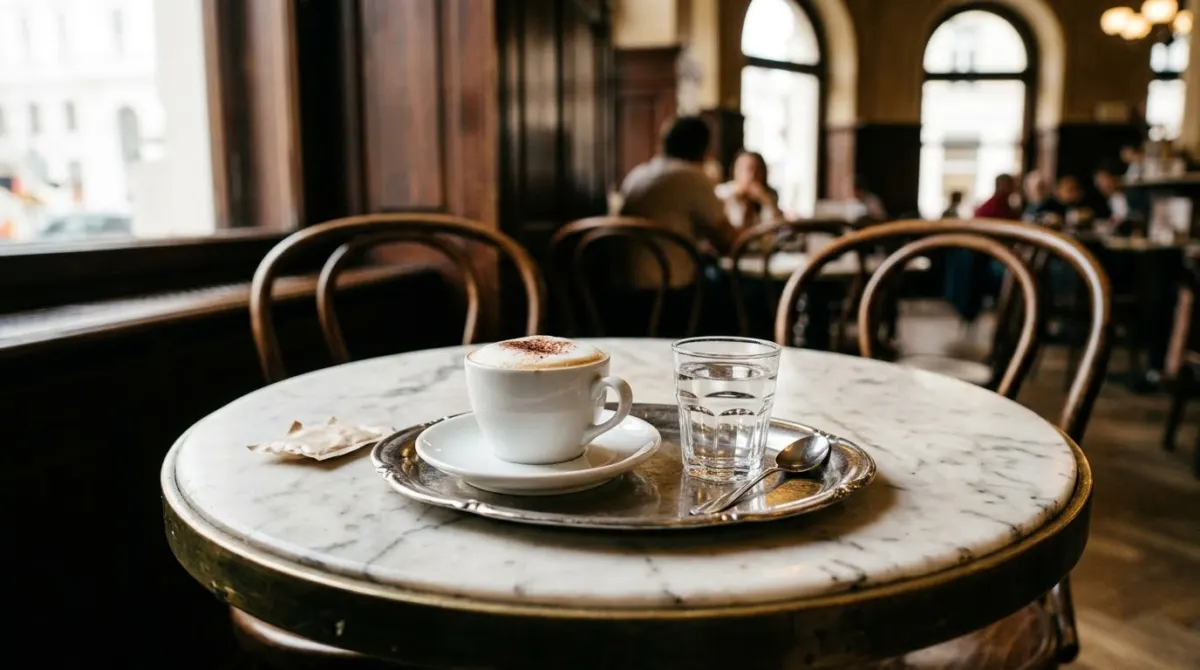
The convention: you order one coffee, it arrives on a small silver tray with a glass of water, and the table is yours for as long as you want it. Newspapers on wooden rods are provided, and nobody will bring the bill until you ask.
Order by name rather than asking for coffee in general: a Melange is the standard milky one, an Einspaenner is black with whipped cream in a glass, a Verlaengerter is a long black.
The traditional houses are in the first, fourth, sixth and ninth districts. Doing this properly once is worth more than a third museum.
Trading a day for the Wachau
Three days is the minimum at which a day out of the city is worth discussing, and the one worth discussing is the Wachau: the stretch of the Danube valley west of Vienna between Melk and Krems, terraced with vineyards and a UNESCO World Heritage site since 2000.
The shape of the day: the train to Melk for the baroque abbey and its library, about ten minutes’ walk up from the station. Then east along the river, by boat in season or on the 715 bus, which runs hourly all year through Spitz, Weissenkirchen and Dürnstein, where Richard the Lionheart was held in the castle above the town. Finish in Krems and take the train back to Vienna, about an hour.
The Wachau boats run from around April to early November. Outside that season the bus covers the same villages with less romance.
What it costs you is day three’s art. If you came for paintings, stay in Vienna. If you have seen the big museums before, or the weather is fine in spring or autumn, it is the best single day out from the city, and it adds a landscape that three Vienna days otherwise lack.
Three days in each season
Spring and autumn are the best: mild, the concert season running, and the gardens open.
Summer is hot and the opera is closed for the season, which matters if music is why you came. The Danube island and the Prater are the compensation.
Mid-November to Christmas brings the markets across the city, which are evening affairs and therefore add to the plan rather than replacing anything.
January and February are cold, cheap and quiet, with the ball season running and the museums at their emptiest.
The short version
One large sight a day: the Innere Stadt and the Hofburg, then Schoenbrunn and its gardens, then the Kunsthistorisches and the Belvedere. Book Schoenbrunn with a timed slot, buy a 72-hour transport ticket, eat outside the Ring, and give a full hour to a coffee house rather than treating it as a stop. Swap in the Leopold Museum and the Zentralfriedhof if palaces are not your thing.
Only two days? Use the 2-day Vienna itinerary instead.
Frequently asked questions
What is the best 3 day Vienna itinerary?
Day one for the Innere Stadt, the cathedral and the Hofburg. Day two for Schönbrunn and its gardens, with music in the evening. Day three for the Kunsthistorisches Museum and the Belvedere.
Is 3 days enough for Vienna?
It is a comfortable city break covering the Hofburg, Schönbrunn, the art and an evening of music. A fourth day is what lets you see the districts outside the Ring, where Vienna actually lives.
Do I need to book Schönbrunn in advance?
Yes, with a timed slot. It is the longest queue in Vienna, and the state rooms take about two hours. The gardens behind it are free and need nothing booked.
How do I see a concert in Vienna?
Concerts run most nights across the Musikverein, the Konzerthaus and the state opera. The opera sells standing places cheaply on the day, which involves queueing; for a specific performance, book ahead.
Can you do Vienna in 3 days with children?
Yes, with substitutions: the cathedral tower and the Prater funfair, Schönbrunn with the world's oldest zoo, and the Natural History Museum or the aquarium in the converted flak tower.
Is the Vienna Pass worth it for 3 days?
It depends entirely on how many paid sights you visit. The arithmetic works if you do Schönbrunn, the Hofburg, the Belvedere and the Kunsthistorisches in three days; it does not if you spend a day in coffee houses and markets.
Keep planning Austria
- Where to Stay in Salzburg: Five Minutes Either Side of the River
- Where to Stay in Vienna: Just Outside the Ring
- How Many Days for Prague, Vienna and Budapest? Ten, Split 3-4-3
- How Many Days in Salzburg? Two, and Three for the Lakes
- How Many Days in Vienna? Four, Because the Palaces Are Half Days
- Austria and Switzerland Itinerary: Cities First, Mountains Last
- Vienna 2 Day Itinerary: Pick Two of the Four Big Things
- Prague, Vienna, Budapest: Ten Days, Two Trains, Three Currencies
Written and checked by
Triplarks Editorial
An editorial desk, not an invented persona: research, drafting and fact-checking are done by the same small team. Every number here carries the date it was read.