Quick answer
Three nights in Prague, four in Vienna and three in Budapest, with two train journeys of four hours and two and a half. Book the trains in advance for the saver fares, and remember you will cross three currencies — carry little cash and decline every offer to be charged in your home currency.
On this page
- Prague, Vienna and Budapest itinerary: the ten day route
- Which direction
- Days 1 to 3 — Prague
- Day 4 — Prague to Vienna
- Days 4 to 7 — Vienna
- Days 8 to 10 — Budapest
- The three currencies
- Trains, and how to book them
- The seven day version
- The fourteen day version
- Where to stay in each city
- What each city is actually like
- When to go
- Practical notes
- How many nights in each
- What to book before you go
- Common mistakes on this route
- The short version
- Frequently asked questions
Prague, Vienna and Budapest are the classic central European route, and they are unusually easy to combine: the three cities sit roughly in a line, the trains between them are fast and frequent, and no leg takes more than four hours.
Some links below are affiliate links. We may earn a commission if you book through them, at no extra cost to you. We do not rank hotels, and any prices on the map come live from the booking sites.
What catches people out is not the travel. It is that you will cross three currencies and two language areas in a week, and that the three cities are far less alike than their joint billing suggests.
Prague, Vienna and Budapest itinerary: the ten day route
| Days | City | Nights |
|---|---|---|
| 1–3 | Prague | 3 |
| 4 | Train to Vienna | — |
| 4–7 | Vienna | 4 |
| 8–10 | Budapest | 3 |
Two train journeys in ten days, both under four and a half hours, and three capitals with no backtracking.
Where to sleep on this route
Which direction
Either works, and the decision should be made by your flights.
Prague to Budapest is the common order. It starts with the prettiest city and ends with the one that is cheapest, which is a reasonable shape for a budget.
Budapest to Prague works identically in reverse and is worth taking if the flights are better.
What does not work well is putting Vienna at one end, because it sits in the middle geographically and the train times are shortest from there to both sides.
Days 1 to 3 — Prague
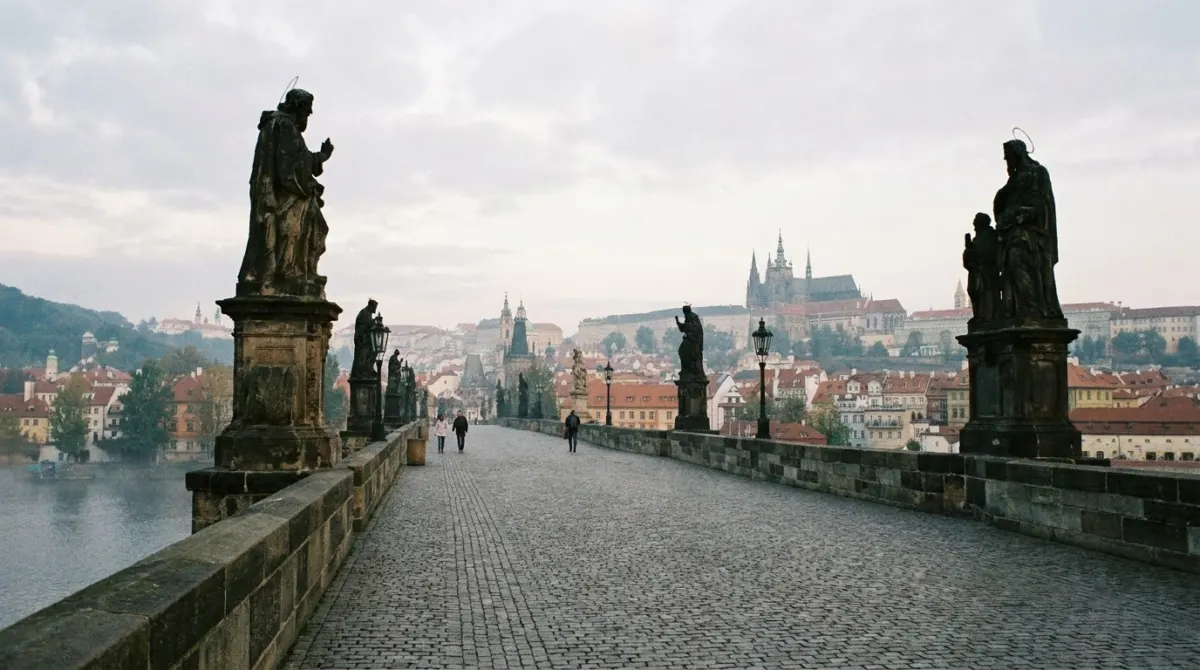
Three nights. The Old Town Square and the astronomical clock, the Charles Bridge at dawn before the crowds, and Prague Castle with St Vitus Cathedral on the hill above the river.
Beyond the postcard: the Jewish Quarter with its synagogues and old cemetery, the Vyšehrad fortress south of the centre, and the beer halls, which are a genuine institution rather than a tourist product.
Prague is the most visited of the three and the most crowded in its centre. Early mornings and the districts beyond the Old Town are where it improves.
Day 4 — Prague to Vienna
About four hours by direct train, with departures every two hours. Book in advance for the cheaper fares.
An alternative worth considering: break the journey at Český Krumlov, a small medieval town in a bend of the Vltava in southern Bohemia, which is three hours from Prague by bus and two and a half from Vienna. A night there adds a day and is the single best addition to this route.
Map shows live availability and prices. We may earn a commission on bookings made through it, at no extra cost to you.
Days 4 to 7 — Vienna
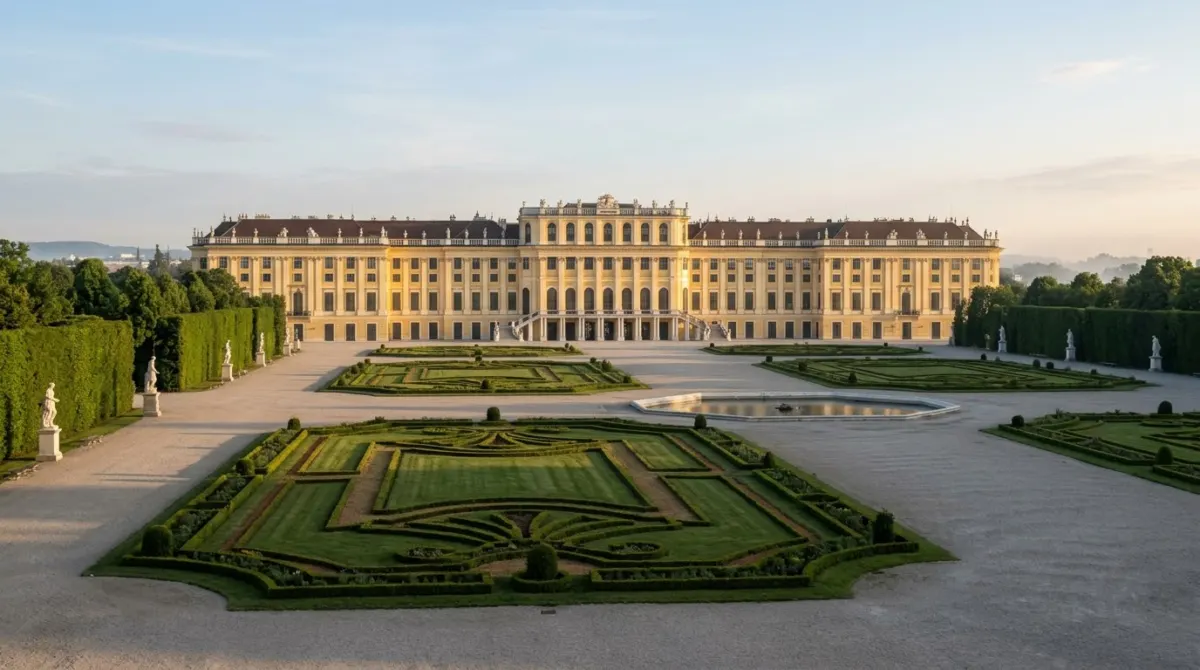
Four nights, because Vienna’s sights are large: Schönbrunn, the Hofburg, the Kunsthistorisches and the Belvedere are each a half day.
Add the Naschmarkt, the coffee houses and an evening of music, and the four days fill themselves. Our three day Vienna itinerary is the compressed version, and where to stay in Vienna covers the districts.
If you are short of time, Vienna is the city to cut to three days — but it is also the one most people wish they had given longer.
Days 8 to 10 — Budapest
Two and a half hours from Vienna by train, and the cheapest of the three cities by a clear margin.
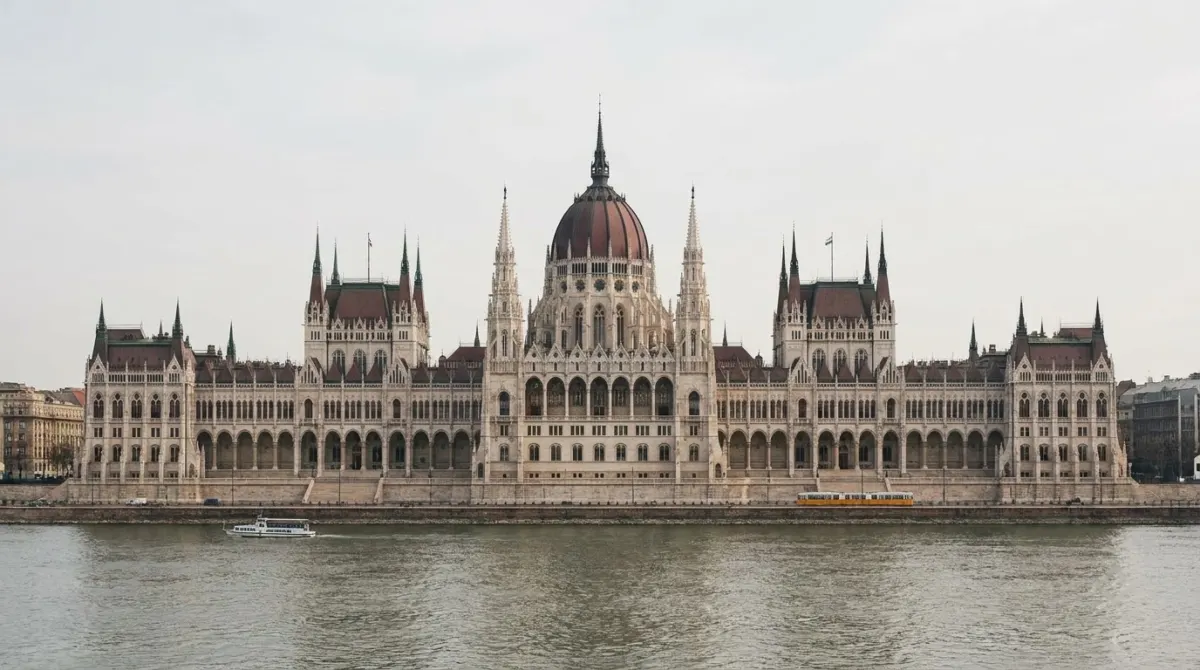
Budapest is two cities joined by bridges: hilly Buda with the castle district and the Fisherman’s Bastion, and flat Pest with the parliament building, the grand boulevards and the ruin bars.
The thermal baths are the thing that distinguishes it — Széchenyi in the park and Gellért in an art nouveau building are the two most visited, and an afternoon in one is a proper activity rather than a curiosity.
The three currencies
This is the practical thing nobody mentions until you are at a ticket machine.
Czech Republic: the koruna. Austria: the euro. Hungary: the forint.
Cards work almost everywhere in all three, which solves most of it. Two warnings. Avoid the airport and tourist-area exchange booths, particularly in Prague, where the margins are among the worst in Europe. And when a card machine offers to charge you in your home currency, decline — the conversion rate is always worse.
Do not change large amounts of koruna or forint at the end, because they are difficult to use elsewhere.
Trains, and how to book them
All three legs are run by comfortable intercity trains with departures every one to two hours.
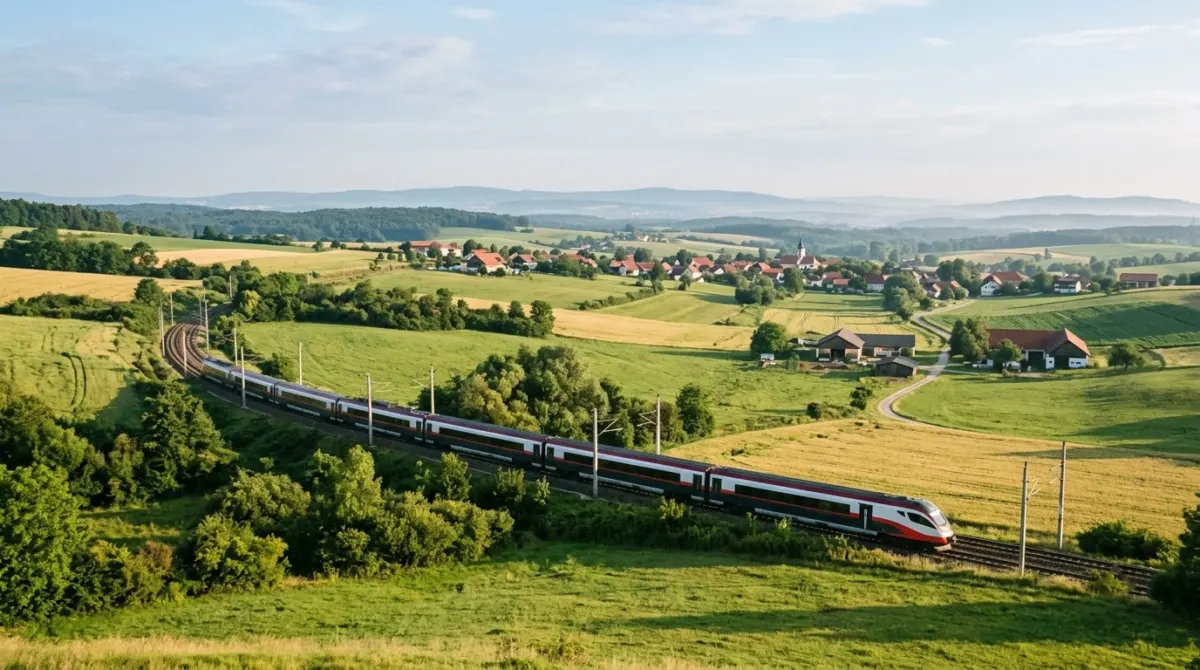
Prague to Vienna: about four hours. Vienna to Budapest: about two and a half. Prague to Budapest direct: about seven, which is why you go through Vienna.
Book in advance for the saver fares, which are a fraction of walk-up prices and tied to a specific train. Seat reservations are cheap and worth it in summer.
Buses are cheaper and slower; the overnight train between Prague and Budapest exists and is the one way to save a hotel night.
The seven day version
Three nights in two cities and one in the third does not work well. Instead, drop a city.
Prague and Vienna: four nights and three, with Český Krumlov in between if you can.
Vienna and Budapest: four and three, which is the easiest pairing of all because the leg is short.
Seven days across three capitals means two and a bit days each, which is a tour rather than a trip.
The fourteen day version
Add two cities, not two days to each.
Český Krumlov between Prague and Vienna, for a night.
Bratislava, an hour from Vienna by train or boat, for a day or an overnight.
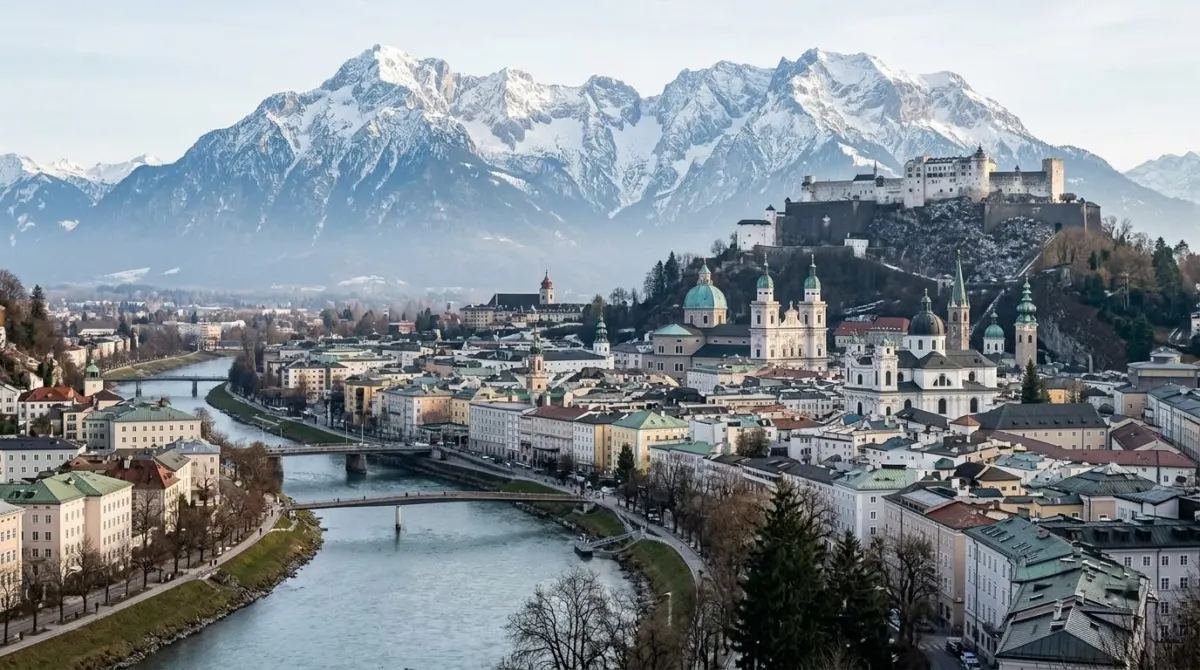
Salzburg, two and a half hours west of Vienna, which adds the Alps to a route that otherwise has none.
Alternatively give Budapest five nights and use it as a base, since it is the cheapest of the three.
Where to stay in each city
Prague: stay near the Old Town but not on the main squares, which are loud at night. Vinohrady and Malá Strana are the two districts regular visitors return to.
Vienna: just outside the Ring in Neubau or Mariahilf — ten minutes’ walk to the cathedral and noticeably cheaper than the first district. See where to stay in Vienna.
Budapest: Pest side, districts V, VI or VII, which put you between the parliament, the boulevards and the ruin bars. Buda is quieter and involves crossing a bridge each evening.
Across the three, Budapest is the cheapest by a clear margin and Vienna the most expensive, so if the budget is uneven, give Vienna the shorter stay and Budapest the longer one.
What each city is actually like
They are grouped together and they are not alike.
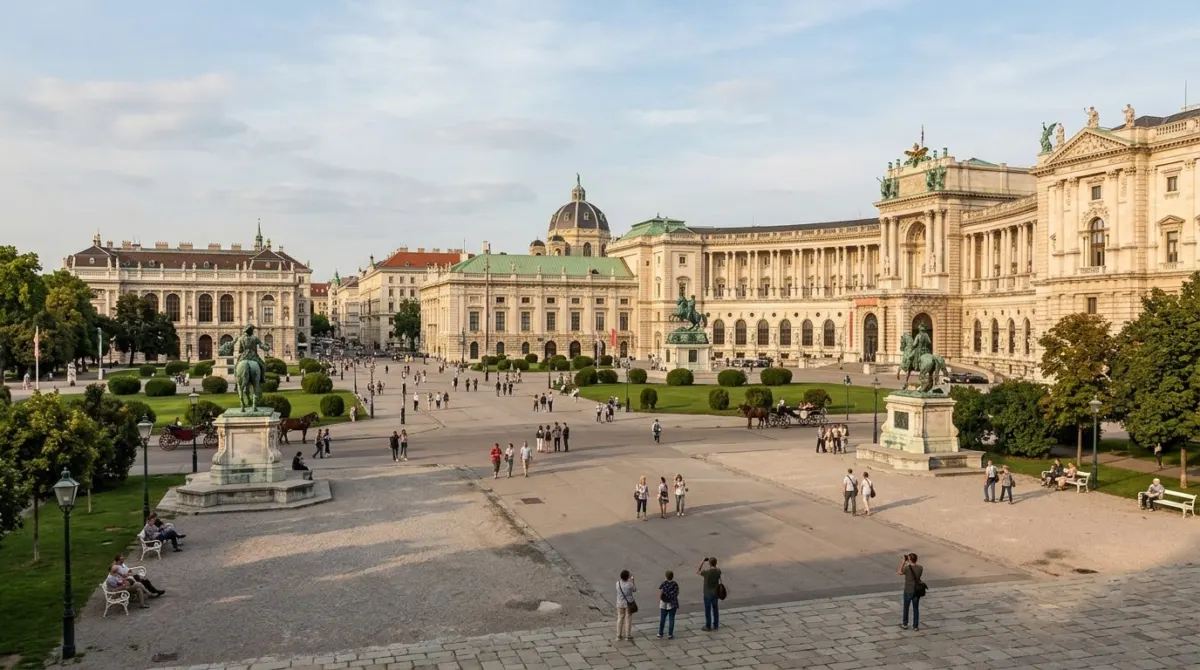
Prague is medieval, compact and the most visited — the Old Town is beautiful and genuinely overwhelmed from mid-morning to evening in summer.
Vienna is imperial, ordered and expensive, built on a scale that still reflects an empire of fifty million people. It is the least crowded of the three.
Budapest is grander in parts and shabbier in others, with the baths, the ruin bars and a more relaxed feel. It is where most people end up wishing they had more time.
When to go
May, June and September are the best months on this route: warm, long days and manageable crowds.
July and August are hot — all three cities get genuinely hot, and air conditioning is less common than you would expect — and Prague in particular is at its busiest.
Late November and December swap the weather for Christmas markets, which are strong in all three cities and are an evening activity.
January and February are cold, cheap and quiet, and the museums and baths are at their best.
Practical notes
Book trains in advance for the saver fares, which are tied to a specific departure.
Validate what needs validating. Public transport in all three cities uses systems with fines for travelling without a stamped or activated ticket, and inspectors are common.
Tipping is normal in all three, usually by rounding up or around ten per cent.
Tap water is safe to drink throughout.
How many nights in each
The split matters more than the total, and it is not even.
Prague: three. Enough for the Old Town, the castle, the Jewish Quarter and one district beyond the centre.
Vienna: four. Its sights are half days each, which no amount of efficiency changes.
Budapest: three. Buda, Pest and one long afternoon in a thermal bath.
If you have to cut one night, take it from Prague, where the centre is compact. If you have an extra, give it to Budapest, which is the cheapest of the three and the one people most often want more of. Our how many days guide works through the alternatives.
What to book before you go
- Trains, for the saver fares, which are tied to a specific departure and cost a fraction of walk-up prices.
- Schoenbrunn in Vienna, with a timed slot.
- A thermal bath in Budapest at a weekend, when the main ones are busy.
- Accommodation in Prague, which has the tightest supply of the three in its centre.
Everything else on this route can be left open, and should be — ten days across three capitals works best with room to sit still for an afternoon.
Common mistakes on this route
Equal nights in each city. Vienna needs more, Budapest tolerates fewer.
Flying between them. The trains are faster door to door than any of these flights once airports are counted.
Changing too much money. Three currencies, cards everywhere, and leftover forint and koruna are hard to use afterwards.
Staying on Prague’s Old Town Square. It is the loudest address in the city, and the quiet districts are ten minutes away.
The short version
Ten days: three in Prague, four in Vienna, three in Budapest, with two train journeys of four hours and two and a half. Go in either direction but do not put Vienna at an end. Carry little cash across three currencies, decline every offer to be charged in your home currency, and add Český Krumlov if you have an extra night.
Frequently asked questions
What is the best order for Prague, Vienna and Budapest?
Prague to Vienna to Budapest, or the reverse. The cities sit roughly in a line, so you never backtrack. Avoid putting Vienna at one end, because it is the middle point and the train legs are shortest from there.
How long does the train take between Prague, Vienna and Budapest?
Prague to Vienna is about four hours, Vienna to Budapest about two and a half, and Prague to Budapest direct about seven — which is why most routes go via Vienna. All run every one to two hours.
How many currencies do you need for Prague, Vienna and Budapest?
Three: Czech koruna, euro and Hungarian forint. Cards work almost everywhere, so carry little cash, avoid tourist exchange booths and always decline a card machine's offer to charge you in your home currency.
How many days do you need for Prague, Vienna and Budapest?
Ten is the comfortable minimum — three, four and three. Seven means two and a bit days each, which is better spent on two of the three cities than all of them.
Is Cesky Krumlov worth adding?
It is the single best addition to this route: a small medieval town in a bend of the river in southern Bohemia, three hours from Prague and two and a half from Vienna, which breaks the longest leg of the trip.
Which of the three cities is cheapest?
Budapest, by a clear margin, followed by Prague. Vienna is the most expensive of the three for accommodation and eating out, which is worth knowing when you decide how to split the nights.
Keep planning Austria
- Where to Stay in Salzburg: Five Minutes Either Side of the River
- Where to Stay in Vienna: Just Outside the Ring
- How Many Days for Prague, Vienna and Budapest? Ten, Split 3-4-3
- How Many Days in Salzburg? Two, and Three for the Lakes
- How Many Days in Vienna? Four, Because the Palaces Are Half Days
- Austria and Switzerland Itinerary: Cities First, Mountains Last
- Vienna 2 Day Itinerary: Pick Two of the Four Big Things
- Three Day Vienna Itinerary: One Large Thing a Day
Written and checked by
Triplarks Editorial
An editorial desk, not an invented persona: research, drafting and fact-checking are done by the same small team. Every number here carries the date it was read.