Quick answer
Two days means picking two of the four big sights. Stay near a U-Bahn station rather than paying for an address inside the Ring, buy a 48-hour transport ticket, and book Schonbrunn with a timed slot before you arrive.
On this page
- Vienna 2 day itinerary at a glance
- Day 1, hour by hour
- Day 2, hour by hour
- The art swap
- The weekend version
- If it rains
- When one of the two days is a Sunday
- Seeing the city from above
- Two days with children
- Getting around on two days
- Where to stay for two days
- Eating on a short visit
- The Spanish Riding School in two days
- Two days without spending much
- Two days in winter
- What two days leaves out
- Two days with a Vienna Pass, or without
- What each sight actually takes
- Arriving and leaving on two days
- Two days as part of a longer route
- The short version
- Frequently asked questions
Two days in Vienna means choosing two of the four big things, because Schönbrunn, the Hofburg, the Kunsthistorisches and the Belvedere are each a half day.
Some links below are affiliate links. We may earn a commission if you book through them, at no extra cost to you. We do not rank hotels, and any prices on the map come live from the booking sites.
This plan takes the two that give the most contrast — the imperial centre and the summer palace — and fits the city around them. For longer stays, see our three day Vienna itinerary and how many days in Vienna.
Vienna 2 day itinerary at a glance
| Day | Morning | Afternoon | Evening |
|---|---|---|---|
| 1 | St Stephen’s and the Innere Stadt | Hofburg, Kaisergruft | Coffee house, dinner in the 7th |
| 2 | Schönbrunn, timed slot | Gardens, then the Belvedere or the Naschmarkt | Concert, or the Prater |
Map shows live availability and prices. We may earn a commission on bookings made through it, at no extra cost to you.
Where to sleep on this route
Day 1, hour by hour
From opening. St Stephen’s Cathedral, in the middle of the first district, with its patterned roof and the catacombs below. Climb the south tower if the queue is short — 343 steps and the best view of the Innere Stadt.
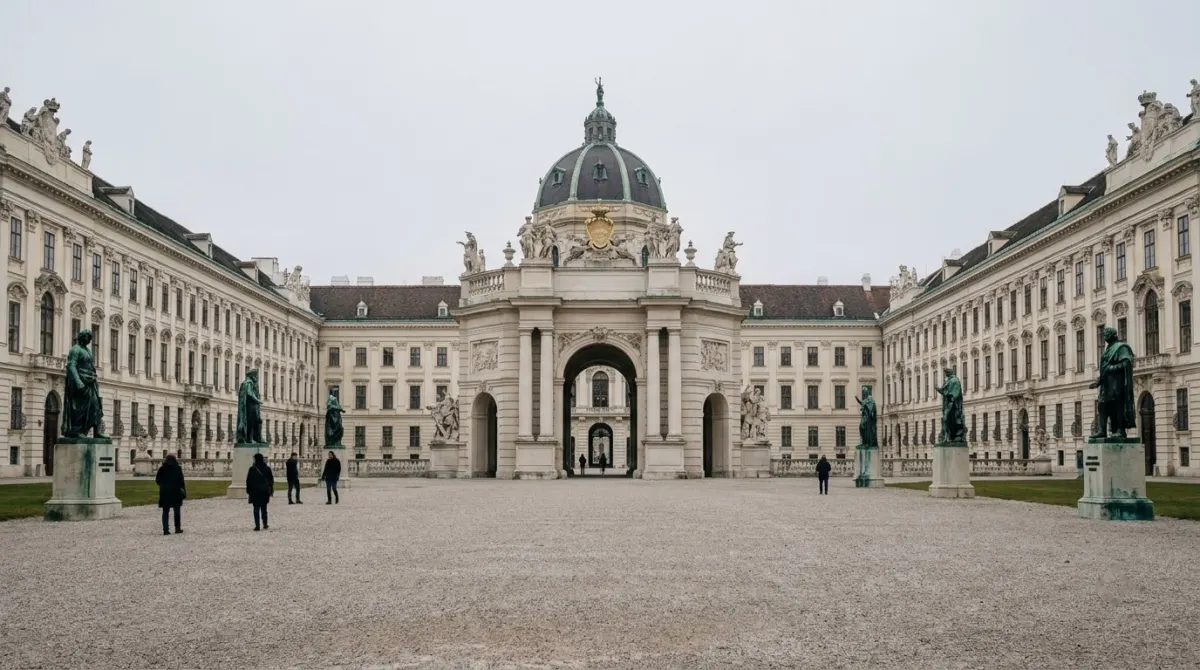
Late morning. Walk the Graben and Kohlmarkt to the Hofburg, past the plague column and the imperial confectioners.
Afternoon. The Hofburg: choose the imperial apartments and the Sisi museum, or the treasury, which holds the crown of the Holy Roman Empire and is the better of the two if you have to pick. Two hours.
Then the Kaisergruft, the Habsburg crypt under the Capuchin church, which takes half an hour and is the strangest thing in Vienna.
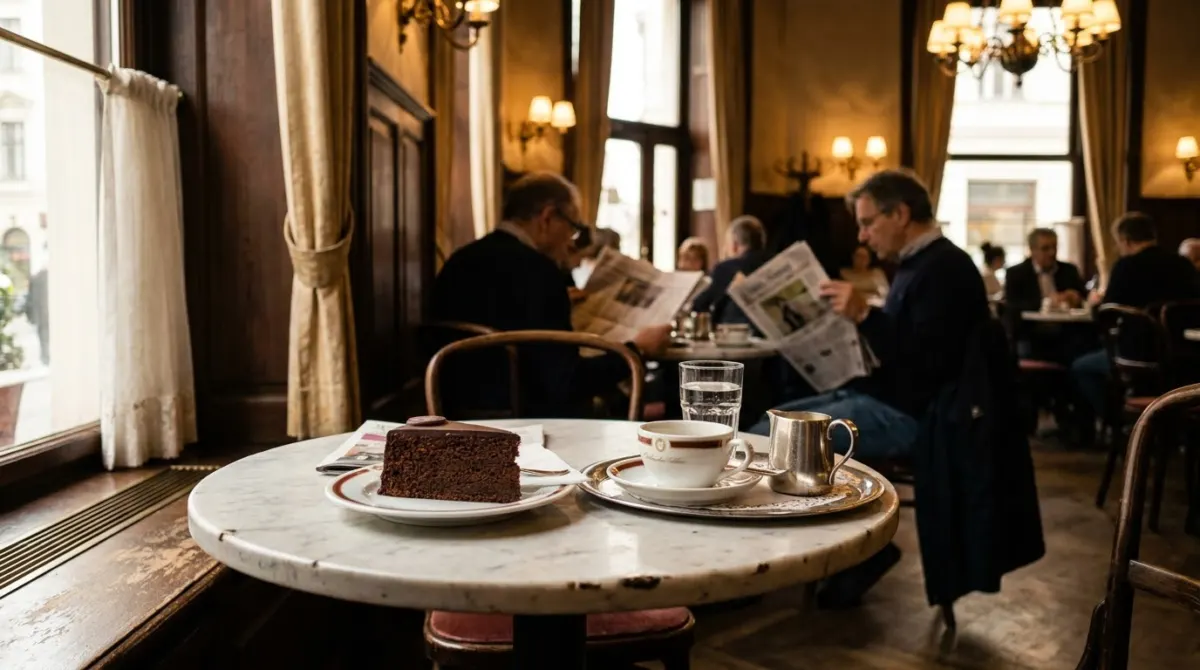
Evening. An hour in a traditional coffee house — the correct use is a newspaper and no hurry — then dinner in Neubau or Wieden, outside the Ring.
Day 2, hour by hour
From opening. Schönbrunn, the Habsburg summer palace, on a timed slot. The state rooms take two hours and the queue without a slot is the longest in the city.
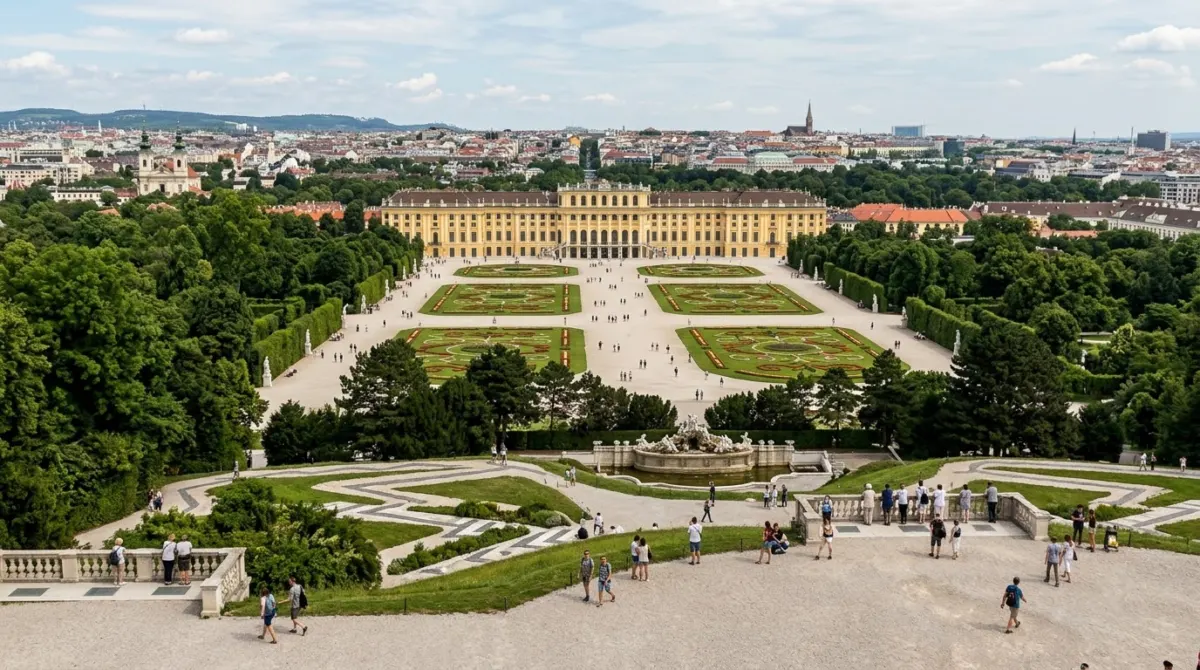
Midday. The gardens, which are free: the parterre, the fountains, and the climb to the Gloriette for the view back down over the palace, the city and the hills beyond.
Afternoon. Back into town for the Belvedere and Klimt’s The Kiss, or — if two palaces in a day is too much — the Naschmarkt and the cafes around it.
Evening. A concert, or the Prater and its old funfair if the weather is good.
Which Schönbrunn ticket
The palace sells a shorter and a longer visit: one covers 22 of the state rooms, the other all 40 rooms open to the public. The ticket names have changed over the years, so go by the room count. On two days take the shorter one, because the gardens and the Gloriette are the better use of the extra time.
Every palace ticket carries an entry time. Bought at the door in summer, that time can be an hour or more away, which on a two-day plan is the morning gone. Buy online, for the first slot you can manage.
The art swap
If paintings interest you more than palaces, change day 2 entirely.
Replace Schönbrunn with the Kunsthistorisches Museum, which holds the Habsburg collection — the largest group of Bruegels anywhere, Vermeer, Raphael, Caravaggio — in a building that is itself a sight. Three hours.
Then the Belvedere in the afternoon for Klimt and Schiele. That gives you two of the strongest collections in Europe in a day, and no palace at all.
The weekend version
A Friday evening to Sunday afternoon is slightly less than two full days.
Friday evening: the Innere Stadt on foot when it is lit, and dinner.
Saturday: day 1 above, complete, with the Naschmarkt added in the morning since it is at its best on Saturday.
Sunday: Schönbrunn on an early slot, then the airport. The railjet from the Hauptbahnhof takes about fifteen minutes.
If it rains
The plan barely notices. Both days are built around interiors, and the only outdoor elements — the Schönbrunn gardens and the walk down the Graben — can be shortened.
The wet-weather additions worth knowing: the Kunsthistorisches, the Albertina for prints and drawings, the national library state hall, which is one of the most beautiful rooms in Europe, and any coffee house for two hours.
When one of the two days is a Sunday
Austria keeps Sunday closing, and on a two-day visit it decides which day does what.
Shops are shut, apart from those in the main railway stations and at the airport. Some bakeries open for a few hours in the morning, and the supermarkets in the big stations are where the city does its Sunday shopping.
The Naschmarkt stalls are closed, though some of its restaurants open. Put the market on the Saturday instead, when the flea market also runs at its far end in the morning.
Museums, palaces and coffee houses are open, which makes Sunday the natural day for Schönbrunn or the art swap.
Sunday morning also has something no other day offers. From mid-September to June the Vienna Boys’ Choir sings at the 9:15 Mass in the Hofburg chapel, together with men from the State Opera chorus and members of the Vienna Philharmonic. Seats are ticketed, and the choir sings from the gallery behind you, so you hear rather than watch most of it. It fits before a late-morning palace slot.
Seeing the city from above
Two days leaves room for one view, and the right one depends on where the plan already takes you.
St Stephen’s south tower: 343 steps to a lookout about 72 metres up, in the middle of day one’s route. Narrow stone stairs and no lift.
St Stephen’s north tower: the lift option, up to the platform beside the Pummerin, the cathedral’s great bell, with a dozen steps at the end. Lower and less dramatic, and the one to take with children or tired knees.
The Gloriette at Schönbrunn: free, already on day two, with the palace and the city laid out below.
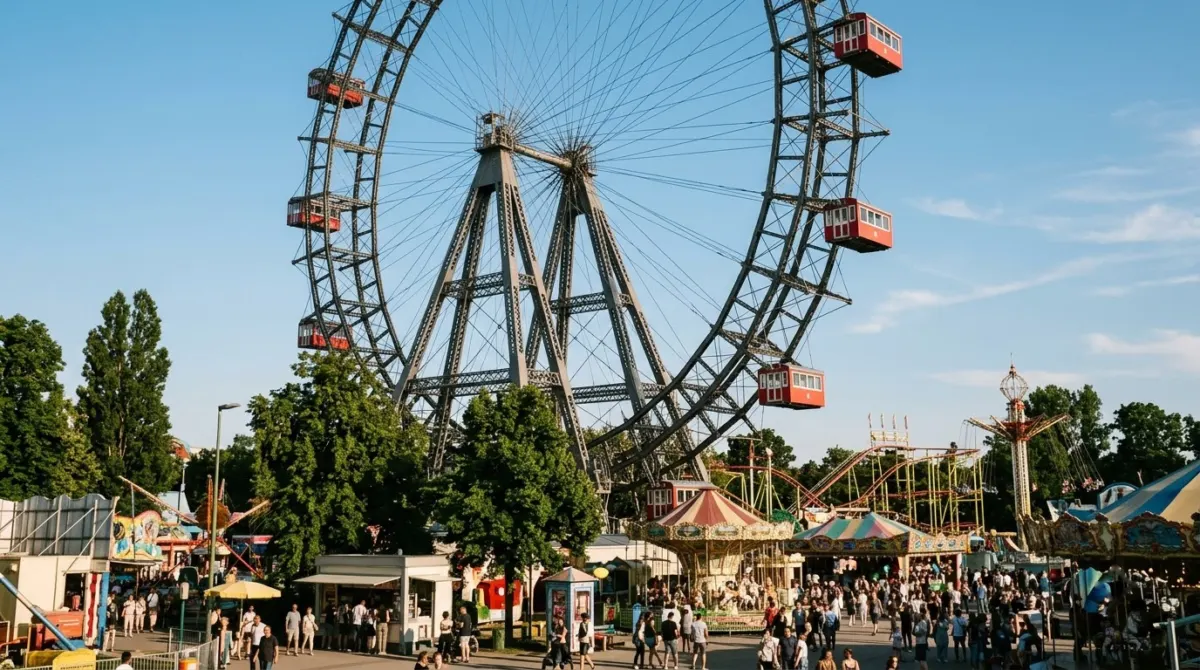
The Riesenrad in the Prater: slow enclosed cabins and the evening light, which suits the last night of the plan.
The Kahlenberg, on the edge of the Vienna Woods, has the widest view of all and is the one two days cannot really afford: the 38A bus from Heiligenstadt takes up to half an hour each way, and it is only worth it in clear weather.
On a clear morning, the south tower is the most efficient. In the evening, the wheel.
Two days with children
Swap the Hofburg for the Prater, where the funfair and the Riesenrad are free to walk into, and the Belvedere for the Natural History Museum or the zoo at Schönbrunn, which is the oldest in the world.
Keep Schönbrunn: the gardens and the maze work well, and the palace tour is short enough.
Getting around on two days
The Innere Stadt is twenty minutes across on foot. For Schönbrunn and the Belvedere you will use the U-Bahn or the tram, and a 48 hour ticket is almost certainly worth it.
Trams 1 and 2 between them run along most of the Ring past the opera, the parliament, the Rathaus and the university for an ordinary fare, which is the cheapest city tour in Vienna.
For the airport, take the railjet from the Hauptbahnhof, nonstop in about fifteen minutes. Until the end of October 2027, while the inner-city rail line is rebuilt, the City Airport Train from Wien Mitte runs as a coach and the S7 stops short at St Marx.
Where to stay for two days
On two days the walking should be short, which argues for staying inside the Ring or immediately outside it.
The Innere Stadt puts day one entirely on foot and costs the most. Neubau and Mariahilf, the 7th and 6th districts, are ten to fifteen minutes’ walk from the cathedral, on the U-Bahn for Schönbrunn, and noticeably cheaper.
If you are arriving or leaving by train, Wieden puts you near the Hauptbahnhof, where the airport railjets leave, and Landstrasse near Wien Mitte. See where to stay in Vienna.
Eating on a short visit
Three things to fit in, and all of them are quick enough for two days.
A coffee house, for an hour. The tradition is one coffee, a glass of water and as long as you like.
A Beisl, the neighbourhood tavern, for schnitzel or goulash. These are outside the Ring, where the prices are also lower.
The Naschmarkt for lunch on day two, since it is on the way between Schönbrunn and the centre.
And for late at night, a Würstelstand, the sausage stand found on squares across the centre, which is how much of Vienna eats after a concert.
Book dinner at weekends; Vienna’s better restaurants fill.
The Spanish Riding School in two days
The Lipizzaner stallions are stabled and ridden inside the Hofburg, which puts them directly on day one’s route. There are two ways to see them.
The morning exercise is a training session of about an hour from ten o’clock on selected weekday mornings. You choose a date online and collect the tickets at the box office on Michaelerplatz. It slots in before the treasury without moving anything else in the day.
A full performance is the formal show, on far fewer dates and sold well ahead. If you want one, build day one around it rather than the other way round.
Two practical points. The riding hall is a listed building with no lift, and its galleries are reached by stairs. And neither session is worth chancing on the day in high season: reserve, or leave it for another trip.
Two days without spending much
Vienna’s best free things fit a two-day plan almost exactly.
- The Schönbrunn gardens and the walk up to the Gloriette. Only the palace, the zoo and a few enclosed gardens such as the maze charge.
- The Wien Museum on Karlsplatz, whose permanent exhibition on the city’s history is free, the first public museum in Austria to drop its charge.
- The Augarten, the main avenue of the Prater and the paths along the Danube Canal, for walking between sights.
- The Naschmarkt, for lunch from the stalls rather than the sit-down restaurants.
- A coffee house, where one coffee buys the table for as long as you want it.
Spend what you save on the two things worth paying for on a short visit: one palace interior and one concert.
Two days in winter
From mid-November the Christmas markets open across the city — in front of the Rathaus, at Schönbrunn, at the Belvedere — and they are evening events, which fits a two-day plan without displacing anything.
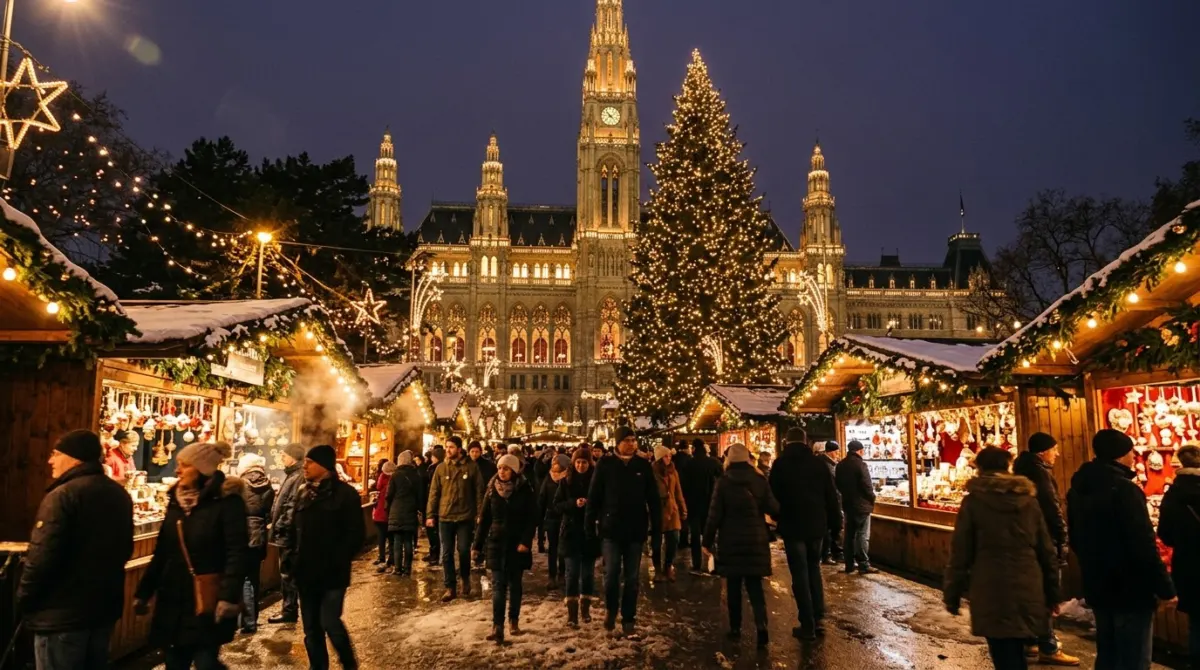
Days are short, so move the outdoor parts to the middle of the day: the Schönbrunn gardens before three rather than after.
January and February are the cheapest months and the museums are empty, which on a two-day trip is worth more than the weather costs.
What two days leaves out
The Kunsthistorisches, unless you take the art swap.
The districts outside the Ring, where Vienna actually lives.
Any day trip — Bratislava is an hour, the Wachau valley an hour, and neither fits.
A second evening of music, which if you came for the concerts is the thing you will miss most.
The wine villages on the city’s north-western edge, where an evening in a Heuriger garden is a Viennese ritual of its own and a good reason to come back.
Our how many days in Vienna guide covers what the third and fourth days add.
Two days with a Vienna Pass, or without
The city sells a sightseeing pass covering most paid attractions, and on two days the arithmetic is marginal.
It works if you do Schoenbrunn, two Hofburg museums and the Belvedere inside forty-eight hours, which is an intense pace. It does not work if you spend half of day two in the gardens and a coffee house, which is the more enjoyable version of this trip.
Buy single tickets and a 48-hour transport pass instead, and put the difference towards a concert.
What each sight actually takes
Durations matter more on two days than on four.
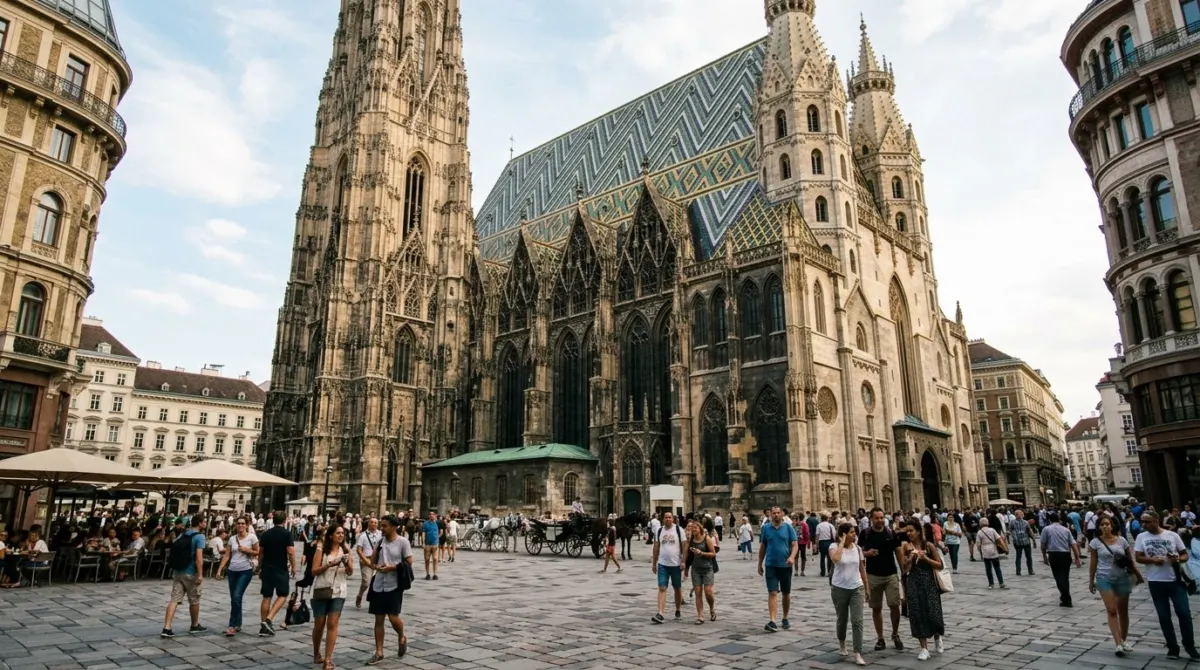
St Stephen’s: an hour, more with the tower.
The Hofburg: two to three hours for two of its museums.
The Kaisergruft: half an hour.
Schoenbrunn: two hours inside and two for the gardens.
The Belvedere: two hours.
The Kunsthistorisches: three, which is why it does not fit alongside Schoenbrunn.
Two days holds roughly two large items and three or four small ones, and that is the whole budget.
Arriving and leaving on two days
Vienna is easy at both ends, which is what makes two days work.
The airport is about fifteen minutes from the Hauptbahnhof by nonstop railjet, every half hour, so an afternoon arrival still leaves an evening and a midday departure still leaves a morning. Until the end of October 2027 the inner-city rail line is closed for rebuilding, so the City Airport Train runs as a coach from Wien Mitte and the S7 stops at St Marx.
If you are arriving by train from Prague, Budapest, Munich or Salzburg, you will come into the Hauptbahnhof or Westbahnhof, both on the U-Bahn and about fifteen minutes from the centre.
On a two-day trip, staying within a few minutes of a U-Bahn station is worth more than staying inside the Ring.
Two days as part of a longer route
Most two-day visits to Vienna are one leg of a central European trip, and that is a sensible way to use the city.
Prague is four hours by train, Budapest two and a half, Salzburg two and a half, Munich four. On a ten-day route taking in three capitals, two to four days in Vienna is the normal share.
If that is your trip, our Prague, Vienna and Budapest itinerary covers the route and how many days covers the split.
The short version
Two days means two of the four big sights. Take the Innere Stadt and the Hofburg on day one and Schoenbrunn on an early slot on day two, with the Belvedere or the Naschmarkt after it. If paintings interest you more than palaces, swap Schoenbrunn for the Kunsthistorisches. Buy a 48-hour ticket, stay near a U-Bahn station, and eat outside the Ring.
Frequently asked questions
Is 2 days enough for Vienna?
Two days covers two of the four big sights — typically the Hofburg and Schönbrunn — plus the Innere Stadt and a coffee house. It is a fair share on a central European trip and tight if Vienna is the whole holiday.
What should I do in Vienna in 2 days?
Day one for St Stephen's, the Graben, the Hofburg and the Kaisergruft. Day two for Schönbrunn on an early timed slot, its gardens, and either the Belvedere or the Naschmarkt in the afternoon.
Should I choose Schönbrunn or the Hofburg?
Schönbrunn if you want gardens and a day out of the centre; the Hofburg if you want the treasury and the imperial apartments without leaving the first district. On two days most people do both, one per day.
Can you see the Kunsthistorisches and Schönbrunn in two days?
You can, but it is two half-days of looking plus travel and it crowds out the city itself. If paintings matter more than palaces, swap Schönbrunn for the Kunsthistorisches and the Belvedere and skip the palaces entirely.
Is a weekend enough for Vienna?
A Friday evening to Sunday afternoon covers the Innere Stadt, one large sight and Schönbrunn on the last morning. The Naschmarkt is at its best on Saturday, which fits the shape well.
Do I need a transport pass for 2 days in Vienna?
A 48-hour ticket is usually worth it, because Schönbrunn and the Belvedere both need the U-Bahn or a tram. Trams 1 and 2 between them also run along most of the Ring past the grand buildings for an ordinary fare.
Keep planning Austria
- Where to Stay in Salzburg: Five Minutes Either Side of the River
- Where to Stay in Vienna: Just Outside the Ring
- How Many Days for Prague, Vienna and Budapest? Ten, Split 3-4-3
- How Many Days in Salzburg? Two, and Three for the Lakes
- How Many Days in Vienna? Four, Because the Palaces Are Half Days
- Austria and Switzerland Itinerary: Cities First, Mountains Last
- Prague, Vienna, Budapest: Ten Days, Two Trains, Three Currencies
- Three Day Vienna Itinerary: One Large Thing a Day
Written and checked by
Triplarks Editorial
An editorial desk, not an invented persona: research, drafting and fact-checking are done by the same small team. Every number here carries the date it was read.