Quick answer
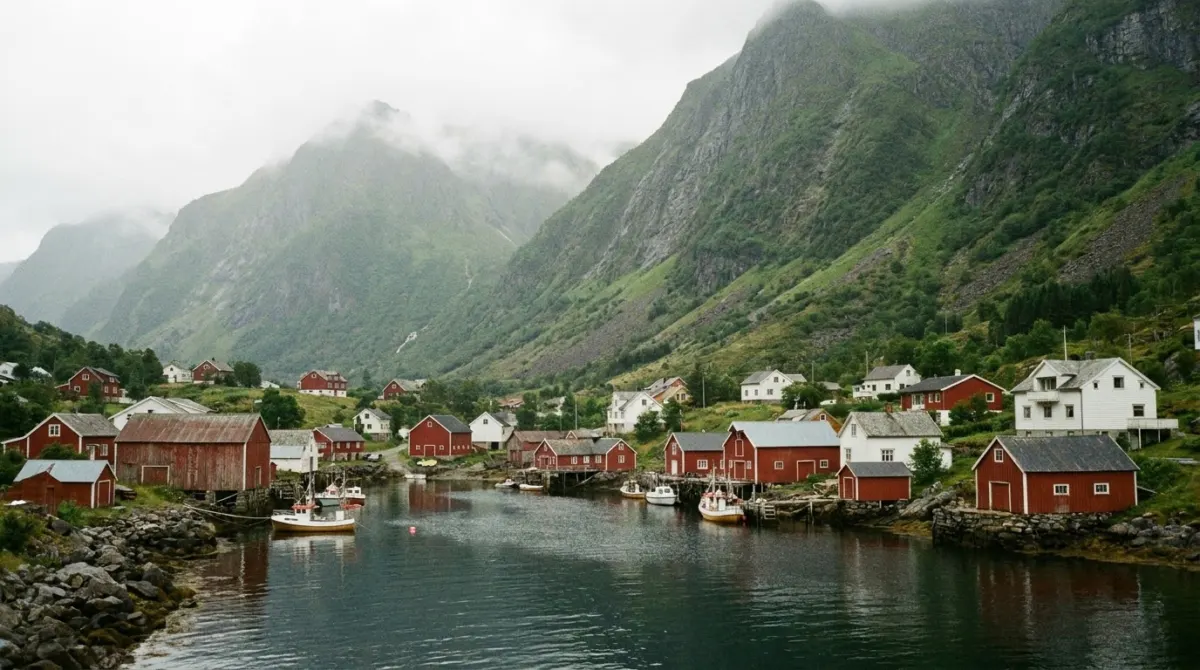
Seven days covers Oslo, the Bergen railway, the Sognefjord and Bergen with no internal flights. Ten adds Lofoten or Tromso. Book the fjord village nights early — the supply there is tiny and the season is short.
On this page
- Norway itinerary: the ten day route
- Days 1 and 2 — Oslo
- Day 3 — the Bergen railway
- Days 4 and 5 — the fjords
- Days 6 and 7 — Bergen
- Days 8 to 10 — the north
- Driving, the train, or neither: how to move through Norway
- Lofoten, Preikestolen and what this route leaves out
- The seven day version
- The northern lights version
- Fourteen days: adding Geiranger and Ålesund
- Midnight sun and polar night
- When to go
- Getting around Norway
- Arriving and leaving: the airport transfers
- What a fjord day actually involves
- Where to stay on this route
- Packing for Norway
- What Norway costs, in practice
- Norway with a car
- Booking ahead in Norway
- What Norway leaves you with
- The short version
- Frequently asked questions
Norway is long. Oslo to the North Cape is about the same distance as Oslo to Rome, and the country’s best-known places — the western fjords, Lofoten, Tromsø — are spread across all of it.
Some links below are affiliate links. We may earn a commission if you book through them, at no extra cost to you. We do not rank hotels, and any prices on the map come live from the booking sites.
That makes the first question not where to go but how far north to commit, because the answer decides whether you need flights inside the trip.
Norway itinerary: the ten day route
| Days | Base | Doing |
|---|---|---|
| 1–2 | Oslo | The city, the museums, the fjord |
| 3 | The Bergen railway | Oslo to Myrdal and Flam |
| 4–5 | The Sognefjord | Flam, Naeroyfjord, Aurland |
| 6–7 | Bergen | Bryggen, the market, the funicular |
| 8–10 | Lofoten or Tromso | Fly north |
Where to sleep on this route
Days 1 and 2 — Oslo
Two nights. The Viking Ship Museum and the Fram polar ship on the Bygdøy peninsula, the Vigeland sculpture park, the opera house you can walk on the roof of, and the new waterfront museums.
Oslo is expensive and more interesting than its reputation, and two days is the right length before heading west.
Day 3 — the Bergen railway
The train from Oslo towards Bergen is one of the great railway journeys in Europe, climbing over a high plateau above the tree line.
At Myrdal, the Flåm railway drops twenty kilometres down a valley to the fjord — one of the steepest standard-gauge lines in the world.
Many people do this as the Norway in a Nutshell round trip in a single long day. It is better taken slowly with a night at the bottom.
Days 4 and 5 — the fjords
Base at Flåm or Aurland on the Aurlandsfjord, an arm of the enormous Sognefjord.
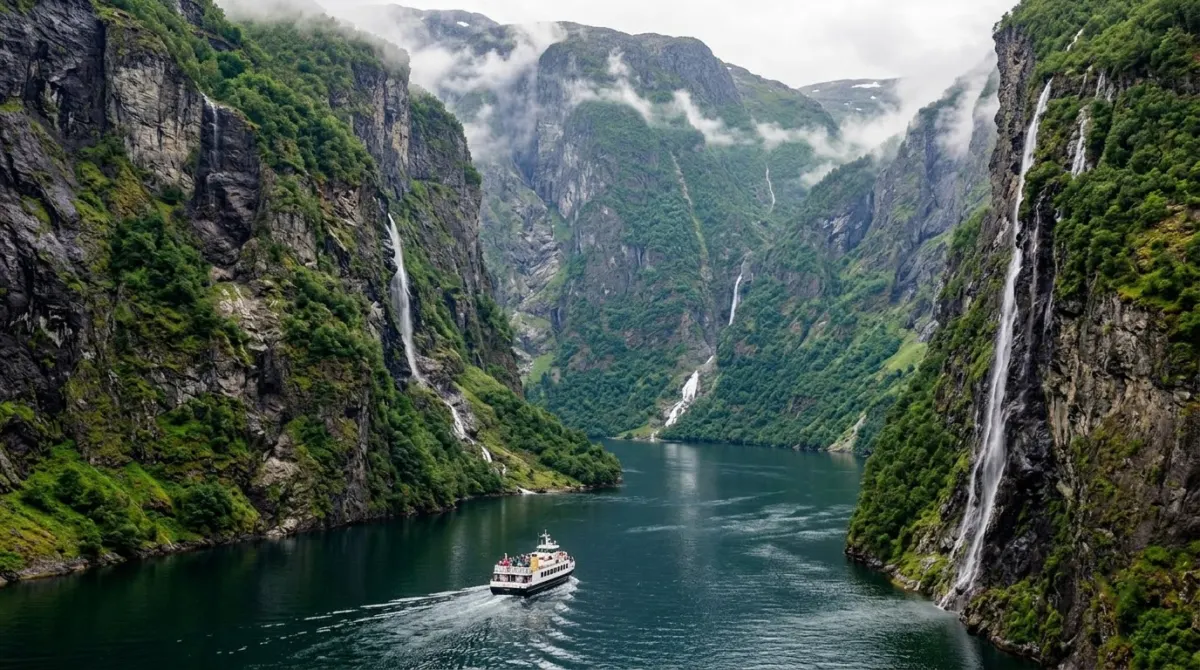
From there: the boat through the Nærøyfjord, which is the narrowest navigable fjord in the world and a UNESCO site; the Stegastein viewpoint above Aurland; and walking or cycling in the valleys.
Two nights here is the difference between seeing a fjord and spending time in one.
Map shows live availability and prices. We may earn a commission on bookings made through it, at no extra cost to you.
Days 6 and 7 — Bergen
Boat or train onward to Bergen, the old Hanseatic port, with the wooden warehouses of Bryggen on the harbour, the fish market and the funicular up Fløyen for the view.
Bergen is also the wettest city in Europe by most measures, which is worth packing for rather than worrying about.
Days 8 to 10 — the north
This is where you decide, and both options involve a flight of about two hours from Bergen or Oslo.
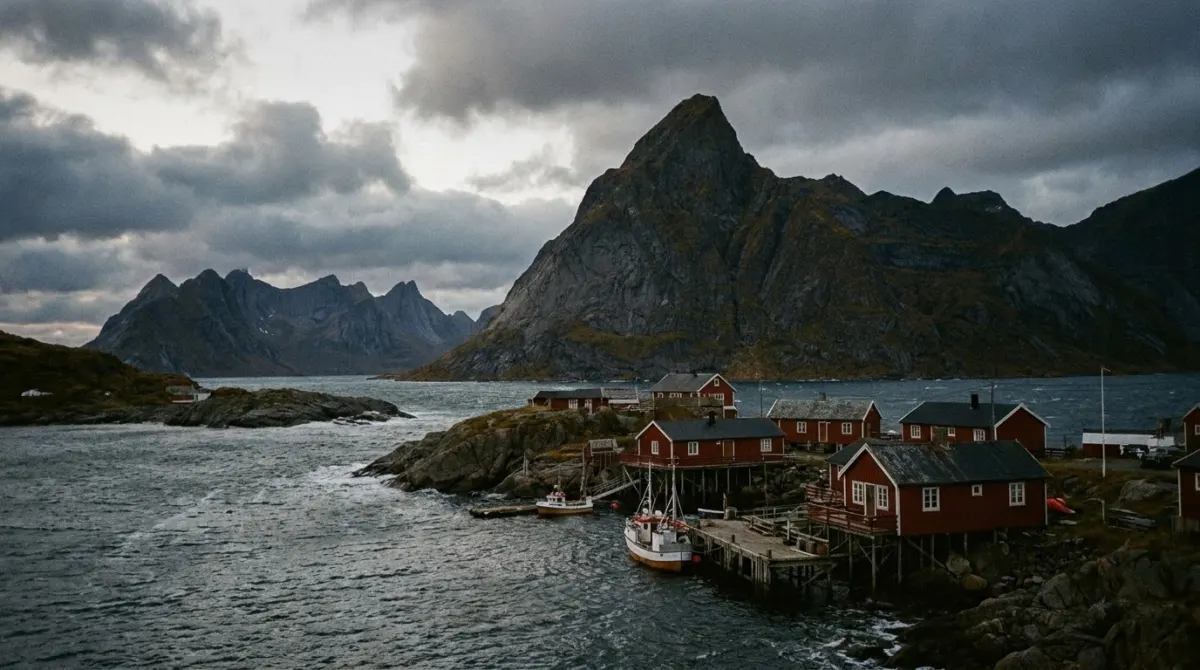
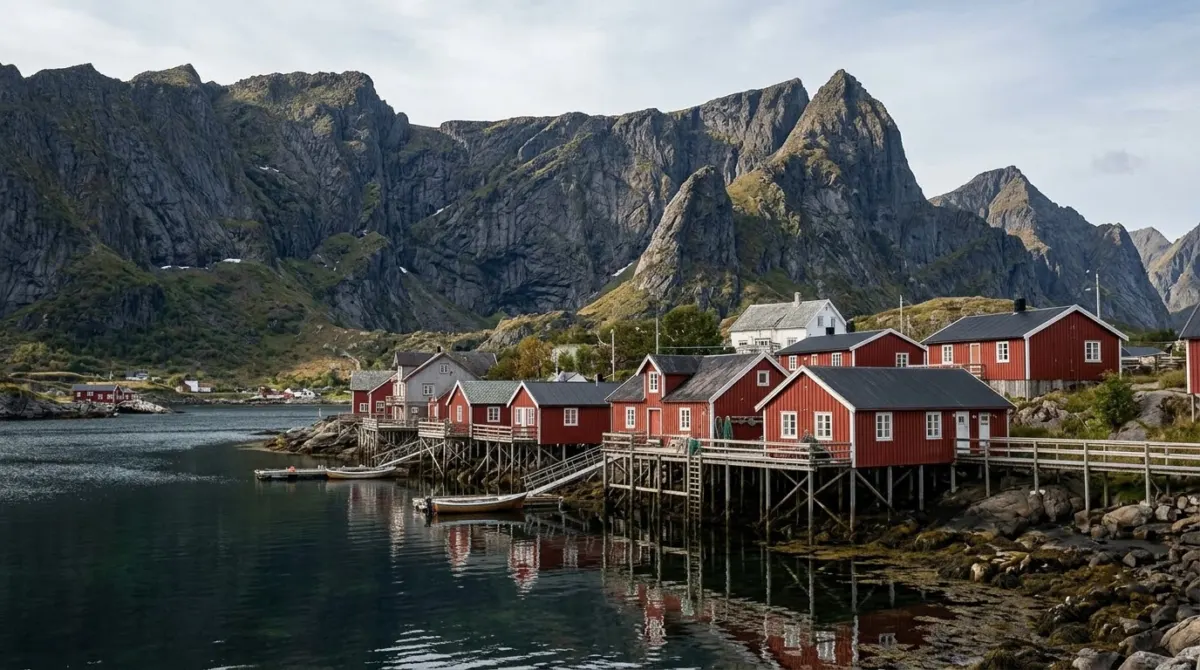
Lofoten, an archipelago inside the Arctic Circle with mountains rising straight from the sea and fishing villages beneath them. Best in summer, when the midnight sun makes an evening the same as a morning.
Tromsø, further north, is a small city and the usual base for the northern lights between roughly late September and late March, with whale watching in winter and the Arctic cathedral year-round.
Driving, the train, or neither: how to move through Norway
This route can be run three ways, and the choice changes the trip more than the order of the stops does.
As a road trip. Renting a car gives you the side valleys, the viewpoints between the towns and the freedom to stop. It also means ferries, tunnels and tolls, all billed automatically to the rental, and a slower average speed than the map suggests. Norway’s mountain passes close in winter, so a self-drive itinerary is a May to October proposition.
By train. The Oslo to Bergen line is one of the great railway journeys in Europe and covers the spine of this route without a car at all. The train to Bergen takes about seven hours, and the Flåm branch line drops off it into the fjords.
By fjord cruise. The Hurtigruten coastal service and the shorter Nærøyfjord boats cover water the roads cannot reach. A fjord cruise is the one part of Norway that is genuinely better from the deck than from a viewpoint.
Most people end up mixing them: train for the long legs, a car for two or three days in one region.
Lofoten, Preikestolen and what this route leaves out
Ten days covers the south and the central fjords properly. Two famous places sit outside it.
The Lofoten Islands are a thousand kilometres north of Bergen, with their own flights and their own week. Adding them to this route means dropping the fjords, not extending the trip by a day.
Preikestolen, the Pulpit Rock, is near Stavanger in the southwest — a four-hour return hike for one of the most photographed views in the country. It fits only if you route in or out through Stavanger.
Norway in winter is a different itinerary entirely: the mountain roads close, the fjord boats thin out, and the reason to come is the northern lights above the Arctic Circle rather than the scenery of the south.
The seven day version
Drop the north.
- Days 1–2: Oslo.
- Day 3: the Bergen railway and the Flåm line.
- Days 4–5: the Sognefjord.
- Days 6–7: Bergen, and fly home.
This is the classic Norwegian week and it needs no internal flights.
The northern lights version
If the aurora is the reason you are coming, restructure entirely.
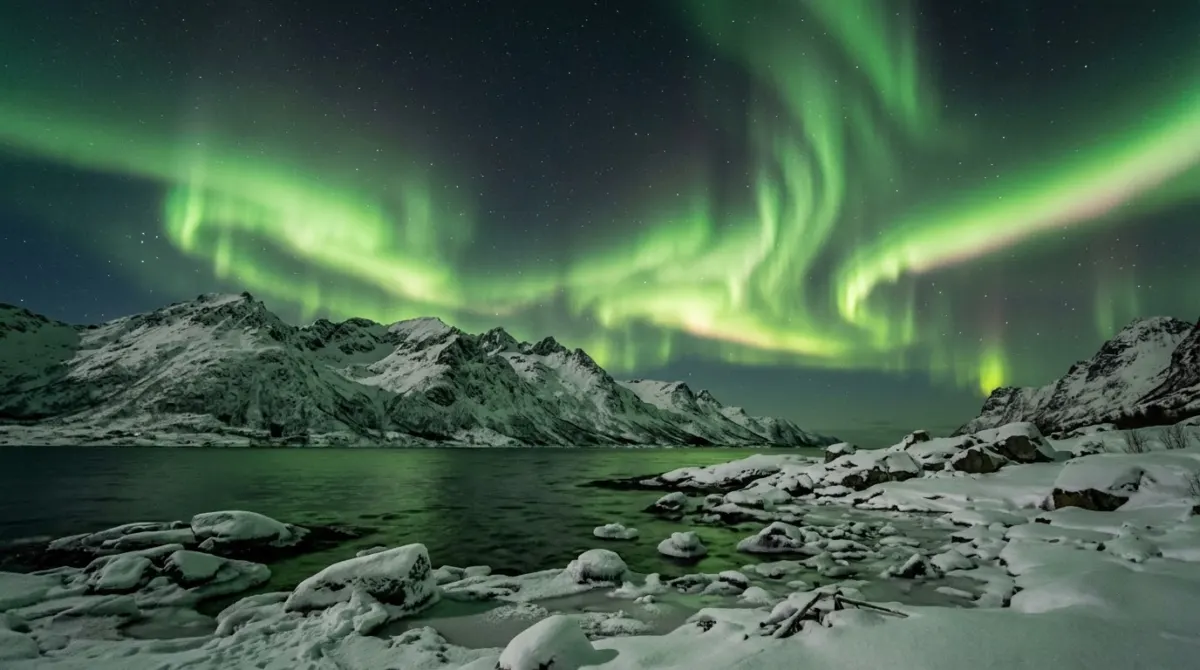
Fly to Tromsø or Alta and stay three or four nights between late September and late March. The lights need darkness, clear sky and patience, and more nights means more chances — one night is a lottery.
Combine with dog sledding, whale watching in the early winter, or a stretch of the coastal ferry, which runs the length of the country and takes passengers as well as cargo.
Fourteen days: adding Geiranger and Ålesund
With two weeks, the best addition is not more of the far north but the fjords above the Sognefjord, which the ten-day route passes beneath without touching.
The Geirangerfjord is the other half of the West Norwegian Fjords World Heritage Site, inscribed together with the Nærøyfjord in 2005: sheer walls, abandoned farms on the ledges, and the Seven Sisters waterfall, best seen from the old mountain farm at Skageflå. The car ferry between Hellesylt and Geiranger runs all year and is the slow, scenic way in.
Ålesund, on the coast, is the natural base and has its own airport. The town burned in January 1904 and was rebuilt within a few years in stone and brick, in the Art Nouveau style, which is why it looks unlike any other Norwegian town. The steps up Aksla give the view over it.
A workable shape: the ten-day route as far as Bergen, then fly or drive to Ålesund for three or four nights, with one day for Geiranger and one for the Trollstigen hairpins. Trollstigen is a summer road. It usually opens in May and closes in autumn, and rockfall work has kept it shut for a whole season before, so check the Statens vegvesen road status before building a day around it.
From Ålesund, either fly back through Oslo or join the coastal ferry northbound if the Arctic is the next trip anyway.
Midnight sun and polar night
Above the Arctic Circle the sun does not set for weeks around midsummer, and does not rise for weeks around midwinter.
Practically: in June and July in Lofoten or Tromsø you can walk at midnight, and sleeping requires a dark room. In December and January there is a few hours of blue twilight rather than daylight, which is beautiful and does not suit a sightseeing trip.
When to go
June to August for the fjords, the hiking and the midnight sun, with the most visitors and the highest prices.
May and September for fewer people, with everything still open.
Late September to March for the northern lights, with the fjord region largely dormant.
Getting around Norway
Three systems, and you will use all of them.
Trains run from Oslo to Bergen, Trondheim and Bodø, and the Bergen line is one of the great railway journeys in Europe in its own right.
Boats are public transport rather than excursions: express boats and car ferries cross the fjords on timetables, and the coastal ferry runs the length of the country carrying passengers, cars and freight.
Flights are how Norwegians cover the long distances. Oslo or Bergen to Tromsø or Lofoten takes about two hours against two days by road.
Arriving and leaving: the airport transfers
This route runs open-jaw — into Oslo, out of Bergen or the north — and both ends work without a taxi.
Oslo Airport at Gardermoen sits north of the city, and two kinds of train leave from the terminal. Flytoget, the airport express, reaches Oslo Central Station in about twenty minutes, with departures roughly every ten minutes for most of the day. Vy‘s regional trains take a few minutes longer and cost noticeably less, which makes them the better choice unless you are in a hurry. Both stop at Oslo S, a short walk from most central hotels.
Bergen Airport at Flesland is south of the city. The Bybanen light rail runs from the terminal to Byparken in the centre in about three-quarters of an hour with no change. Buy the ticket before boarding, from the machine or the Skyss app, because it cannot be bought on board. The airport bus is quicker, at around half an hour.
Flying home from the north often means a connection through Oslo. The small regional flights above the Arctic Circle are more exposed to winter weather than the trains in the south, so leave a buffer between the last northern flight and the long-haul one.
What a fjord day actually involves
The classic combination is a train, a boat and a bus, and the timings matter because services are infrequent.
From Flåm: the boat through the Nærøyfjord to Gudvangen takes about two hours, with a bus back over the mountain road. The Flåm railway up to Myrdal takes about an hour each way.
Check the timetable before planning the day rather than after. Outside summer, several of these services run once or twice a day or not at all.
Where to stay on this route
Oslo: central, near the station or the waterfront, since both museums clusters are reachable from there.
The fjords: Flåm is convenient and busy; Aurland five minutes away is quieter, and Balestrand or Undredal are quieter still.
Bergen: near Bryggen and the harbour, which is where everything is.
Lofoten: the fishing villages of Reine, Hamnøy and Henningsvær, often in converted fishermen’s cabins called rorbuer.
Tromsø: the island centre, which is small and walkable.
Packing for Norway
Three things regardless of season: a waterproof jacket, because Bergen alone has rain on more days than not; layers, because fjord weather changes within the hour; and shoes that handle wet rock.
In winter above the Arctic Circle, add proper thermal layers and boots with grip. Aurora watching means standing still outside for hours, which is colder than walking.
In summer, add an eye mask. The midnight sun is not a figure of speech.
What Norway costs, in practice
Three specific numbers shape a Norwegian budget, and none of them are the hotel.
Eating out is the largest difference from the rest of Europe, and it applies to every meal rather than only to dinner.
Alcohol is heavily taxed and sold through a state monopoly outside bars and restaurants, with limited opening hours.
Transport, particularly the scenic routes and the fjord boats, adds up quickly if bought individually.
The usual response is a kitchen, a supermarket and a transport pass, which together change the trip’s cost more than any choice of accommodation. Supermarket lunches are normal behaviour here, not a compromise.
What is free is the landscape, and the right to roam allows walking and wild camping on uncultivated land, which is a genuine part of how Norwegians use their own country.
Norway with a car
Driving is excellent here: the roads are good, the traffic is light and the scenery is continuous. It is also slower than the map suggests, because of ferries, tunnels and the fact that you will stop constantly.
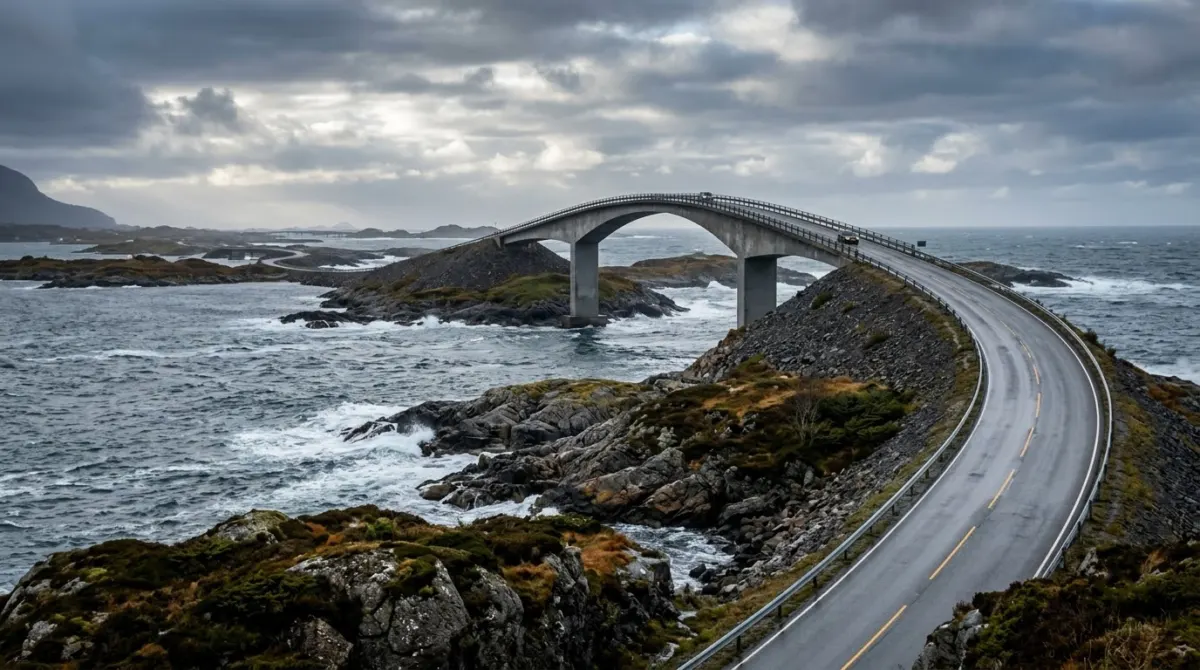
Two things to know. Ferries are part of the road network and are paid automatically by number plate on many routes. And tolls work the same way, with the rental company billing you later.
The classic driving routes are the Atlantic Road, Trollstigen and the Geiranger area, all of which are seasonal and close in winter.
Booking ahead in Norway
Three things need advance booking and the rest does not.
The Bergen railway and the Flam line in summer, where the cheaper fares go early and the trains fill.
Accommodation in the fjord villages, which have very few rooms and a short season.
Lofoten in summer, where the fishermen’s cabins are limited and book months ahead.
What does not need booking is the fjord boats outside peak weeks, the city hotels, or anything in the north in winter except an aurora tour on a clear night.
What Norway leaves you with
Two things worth knowing before you book, because they change expectations.
The weather is the itinerary. Fjord and mountain days depend entirely on cloud, and a flexible day in each base is worth more than an extra sight.
The distances are real. Norway is longer than most visitors expect, and a trip that tries to combine the southern fjords with the far north in a week will spend most of it moving.
Pick the fjords or the Arctic, give it a week, and leave the other for another trip.
The short version
Seven days for Oslo, the Bergen railway, the Sognefjord and Bergen, with no internal flights. Ten if you add Lofoten in summer or Tromsø in winter, which needs a two-hour flight. Three or four nights in the north if the aurora is the point, because one night is a lottery. Use supermarkets for lunch, keep the mountain and fjord days flexible for weather, and book the fjord boats and trains in advance in summer.
Want a shorter or longer route? See the 5-day Norway itinerary, the 7-day Norway itinerary and how many days you need in Norway; heading north for the lights, see where to stay in Tromsø.
Frequently asked questions
How many days do you need in Norway?
Seven for Oslo, the fjords and Bergen with no internal flights. Ten if you want Lofoten or Tromsø as well, which needs a flight of about two hours. Three or four nights in the north if the aurora is the point.
What is the best Norway itinerary for first timers?
Two nights in Oslo, the Bergen railway and the Flåm line, two nights on the Sognefjord and two in Bergen. It is the classic week and it runs entirely on trains and boats.
Is Norway in a Nutshell worth it?
The route is excellent; doing it in one day is the problem. The same trains and boats taken over two days with a night at Flåm or Aurland give you the fjord rather than a glimpse of it.
When can you see the northern lights in Norway?
Roughly late September to late March, from Tromsø or further north. They need darkness, clear skies and patience, so plan three or four nights rather than one.
Is Norway very expensive?
Yes, particularly for restaurants and alcohol. Supermarket lunches, accommodation with a kitchen and transport passes all help, and the landscape itself is free — the right to roam allows walking and wild camping on uncultivated land.
Should I visit Lofoten or Tromsø?
Lofoten in summer for mountains rising straight out of the sea and the midnight sun. Tromsø in winter for the northern lights, whale watching and a small city with somewhere to eat.
Keep planning Norway
- Where to Stay in Tromso: Central, Because the Tours Leave From There
- Where to Stay in Bergen: Close to the Harbour, Because of the Rain
- Where to Stay in Oslo: Sentrum First, Then the Districts
- Best Hotels in Oslo: The Pricing Runs Backwards Here
- How Many Days in Norway? Seven for the Fjords, Ten for the Arctic
- How Many Days in Oslo? Two, and Three If You Like Museums
- How Many Days in Bergen? Two, and the Rain Is the Reason
- 5 Day Norway Itinerary: One City and One Fjord
Written and checked by
Triplarks Editorial
An editorial desk, not an invented persona: research, drafting and fact-checking are done by the same small team. Every number here carries the date it was read.