Quick answer
Check the day of the week before the hotel. Oslo runs on business travel, so midweek rates are often far higher than weekends and July is cheaper than May. Take breakfast included where you can — it is substantial enough to replace lunch in a city where eating out is expensive.
On this page
- Best hotels in Oslo: the four kinds of place to stay
- Why Oslo pricing runs backwards
- What the breakfast is worth
- Four things to check before booking
- Which area, briefly
- Staying near the station
- Getting in from the airport
- When Oslo fills up
- How many nights
- What is actually worth paying for
- What a night in Oslo actually costs you
- Apartments versus hotels
- Accessibility and practicalities
- When Oslo is cheapest
- Where the hotels actually are
- Booking windows
- What a Norwegian hotel room is like
- The short version
- Frequently asked questions
This is not a ranked list of hotels, because a ranking that does not know your dates is worth very little in a city where the same room can double in price between a Tuesday and a Saturday.
Some links below are affiliate links. We may earn a commission if you book through them, at no extra cost to you. We do not rank hotels, and any prices on the map come live from the booking sites.
What follows is what the different kinds of Oslo accommodation actually get you, how the pricing works — which is unusual here — and the four things worth checking before you book. For the rest of the trip, see our Norway itinerary.
Best hotels in Oslo: the four kinds of place to stay
Business hotels. The bulk of Oslo’s stock, concentrated in the centre and around the station. Modern, reliable, with lifts, good heating and generous breakfasts.
Design and boutique hotels. Converted older buildings in the centre and around Bjørvika, where the newer waterfront development is.
Apartments. Widespread and the sensible answer for three nights or more, because eating out in Norway is where the money goes.
Hostels. Unusually good and not only for young travellers, with private rooms as well as dorms.
Why Oslo pricing runs backwards
This is the single most useful thing to know about booking here.
Oslo’s hotel market is driven by business travel, so rates are highest from Monday to Thursday and often fall sharply at weekends. That is the opposite of most European tourist cities.
The same applies in summer: July is Norway’s holiday month, the city empties of workers, and a hotel that is expensive in May can be noticeably cheaper in July.
If your dates are flexible by a day or two, shifting a stay onto a Friday and Saturday is the easiest saving available in this city.
What the breakfast is worth
Norwegian hotel breakfast is substantial: breads, cheeses, cured fish, eggs, fruit and often waffles, included in most mid-range and upper rates.
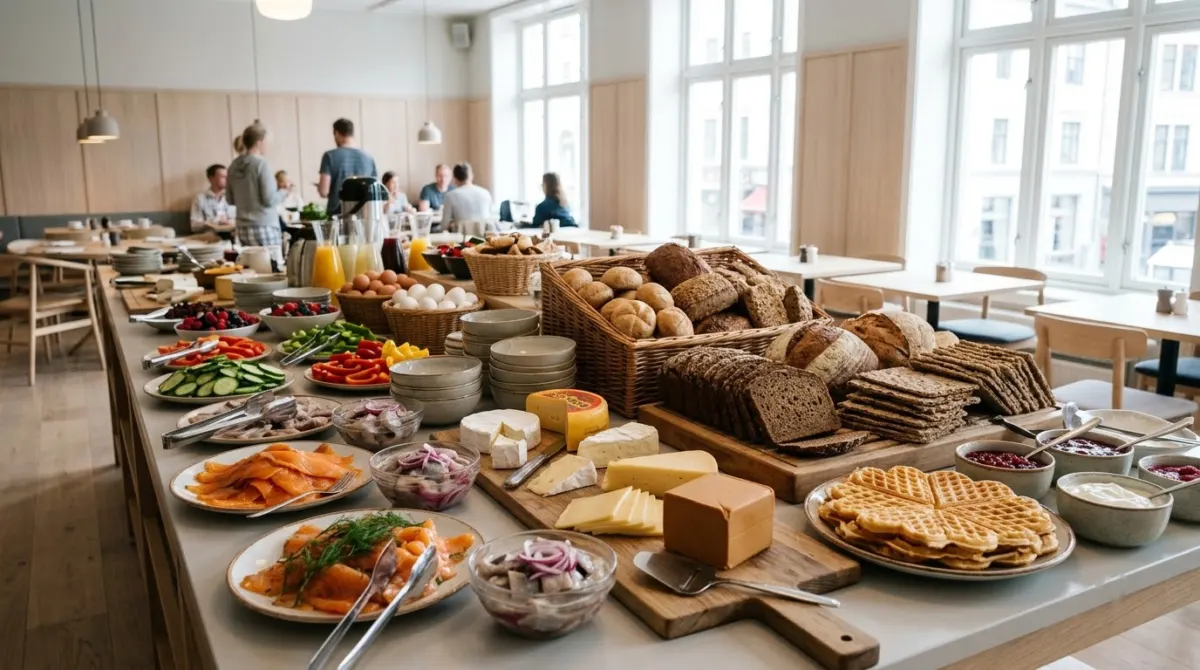
In a country where eating out is genuinely expensive, that matters more than it does elsewhere. A large breakfast can replace lunch, and the difference between a room with breakfast included and one without is frequently worth more than the price gap.
It is also why the apartment-versus-hotel calculation is less obvious here than in southern Europe.
Four things to check before booking
Breakfast included or not, for the reason above.
Distance to a T-bane or tram stop, which matters more than distance to the centre, since the network is quick and the city is spread out.
Whether there is a kitchen, if you are staying more than two nights.
Air conditioning, which is uncommon and occasionally missed in a hot July — though Oslo summers are mild by European standards.
Map shows live availability and prices. We may earn a commission on bookings made through it, at no extra cost to you.
Which area, briefly
Sentrum, the centre between the station and the palace, puts everything on foot and has the most rooms.
Grünerløkka, east of the river, is the district with the bars, cafes and vintage shops.
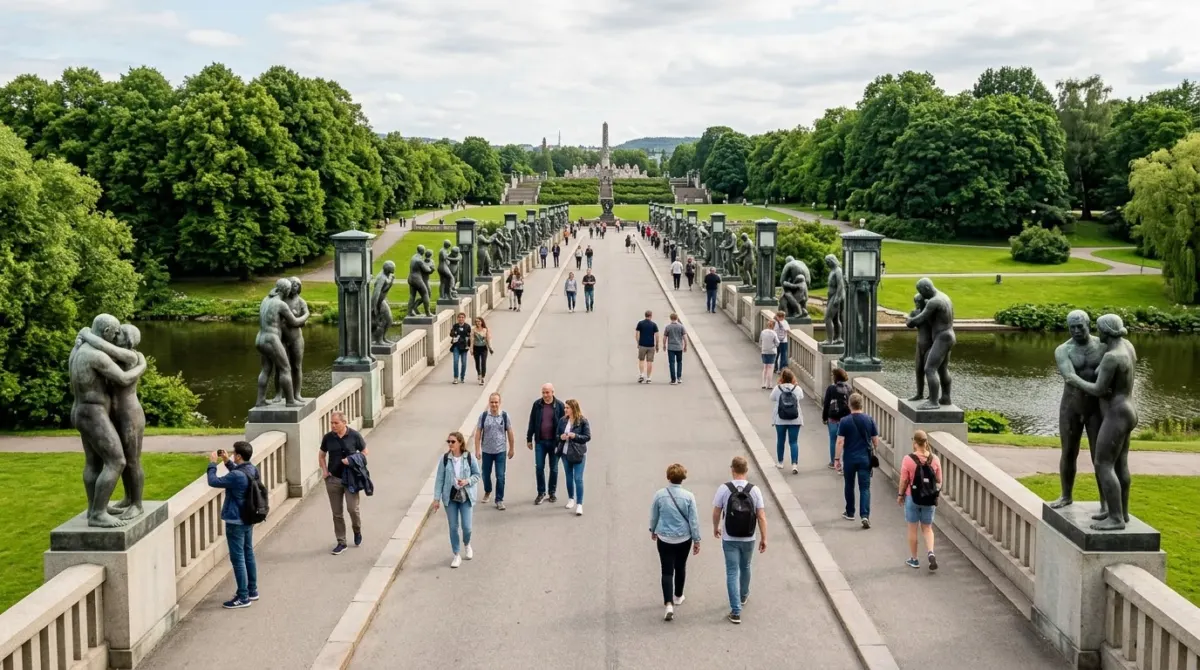
Frogner and Majorstuen, west, are residential and handsome, near the Vigeland sculpture park.
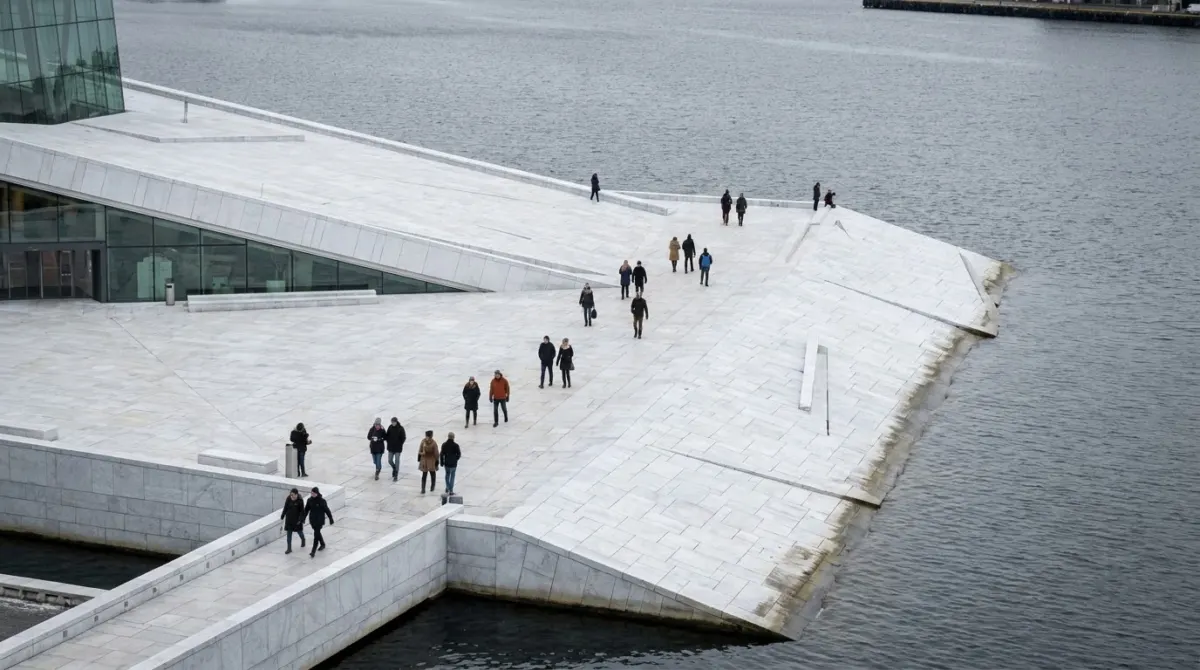
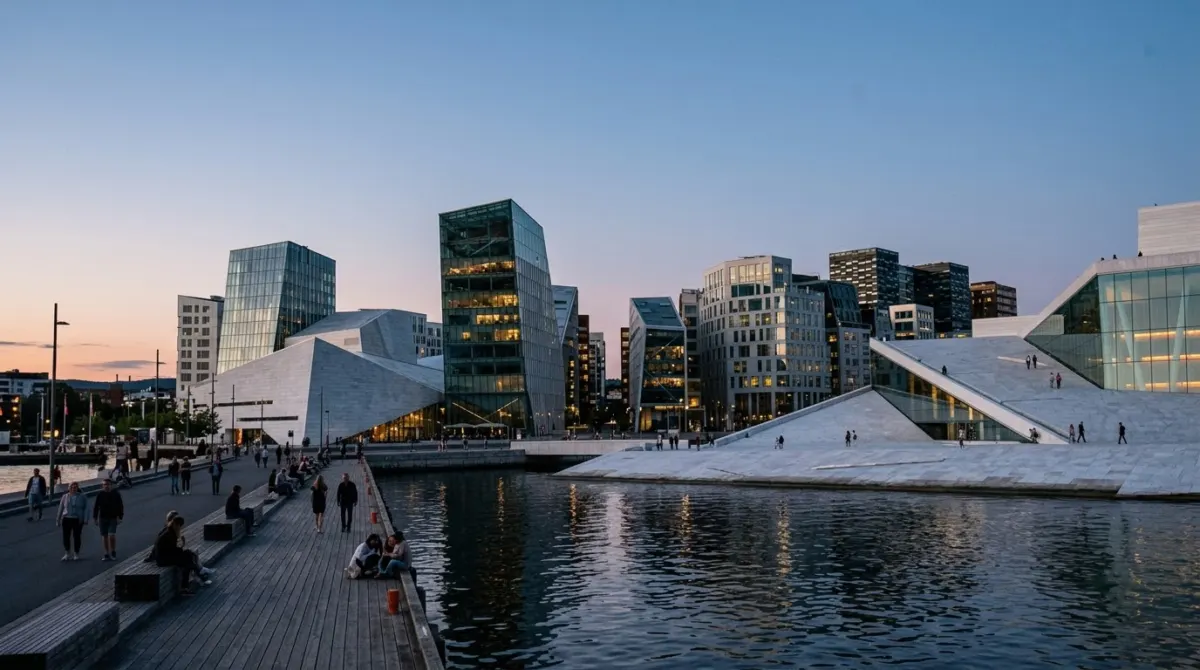
Bjørvika, the new waterfront, has the opera house and the newest hotels.
Our guide to where to stay in Oslo goes through each in detail.
Staying near the station
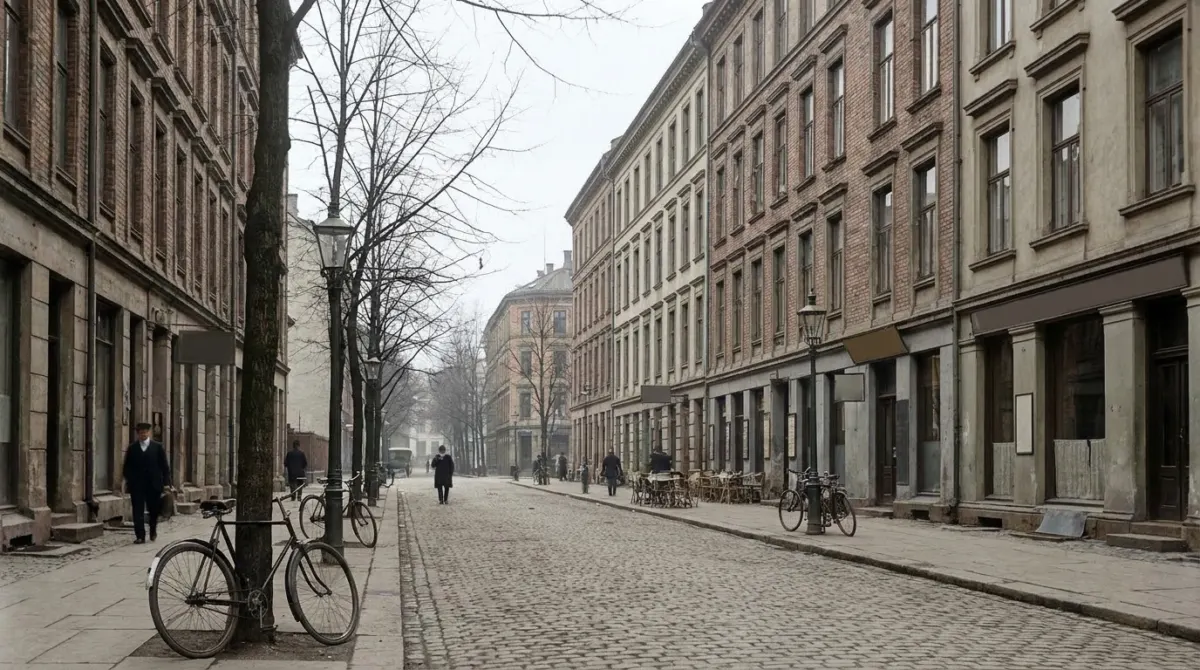
Oslo Central Station sits at the eastern end of the centre, with the airport trains, the regional network and the T-bane beneath it.
The streets immediately east of it, around Grønland, hold the cheapest rooms in central Oslo. The area is multicultural, lively and a little rough at night in the way station districts are, and it is five minutes’ walk from the centre.
For a short stay or an early flight it is a reasonable trade. For a first visit with a family, the centre or the west is easier.
Getting in from the airport
Gardermoen is about fifty kilometres north, with two train options from the same platform: the Flytoget airport express, which takes about twenty minutes, and the ordinary regional train, which takes about twenty-five and costs considerably less.
Most visitors take the first without knowing the second exists. They arrive at the same station.
When Oslo fills up
Three predictable periods.
Midweek in spring and autumn, when conference and business travel is at its heaviest.
Mid-May, around the national day on the seventeenth, when the city is full and celebratory.
Christmas and New Year, for the markets and the holiday weeks.
Outside those, Oslo is one of the easier northern European capitals to book at short notice, particularly at weekends.
How many nights
Two nights covers the museums on the Bygdøy peninsula, the Vigeland park and the waterfront.
Three adds the Munch museum, the Holmenkollen ski jump and a district beyond the centre. Our guide to how many days in Oslo works through each length.
What is actually worth paying for
In order: breakfast included, a kitchen for longer stays, and a central position that removes transport costs in a city where everything is expensive.
What is not worth paying for is a view. Oslo’s are pleasant rather than remarkable, and you will be out all day.
What a night in Oslo actually costs you
Accommodation is expensive here, but it is not where most visitors are surprised. That is food.
A restaurant dinner with a drink in central Oslo is comfortably the highest in this guide’s coverage, and alcohol carries heavy tax on top. Two people eating out twice a day will spend more on meals than on the room.
Three responses that Norwegians themselves use: a large hotel breakfast, a supermarket or food-hall lunch, and alcohol bought from the state monopoly shop rather than a bar. None of these are budget behaviour here; they are normal.
Apartments versus hotels
The calculation is closer in Oslo than in most cities, because hotel breakfast is substantial and included at mid-range rates.
One or two nights: a hotel usually wins. Breakfast is covered, reception handles luggage, and you are not shopping on arrival.
Three nights or more: an apartment with a kitchen starts to win clearly, particularly for families or groups, because dinner is where the money goes.
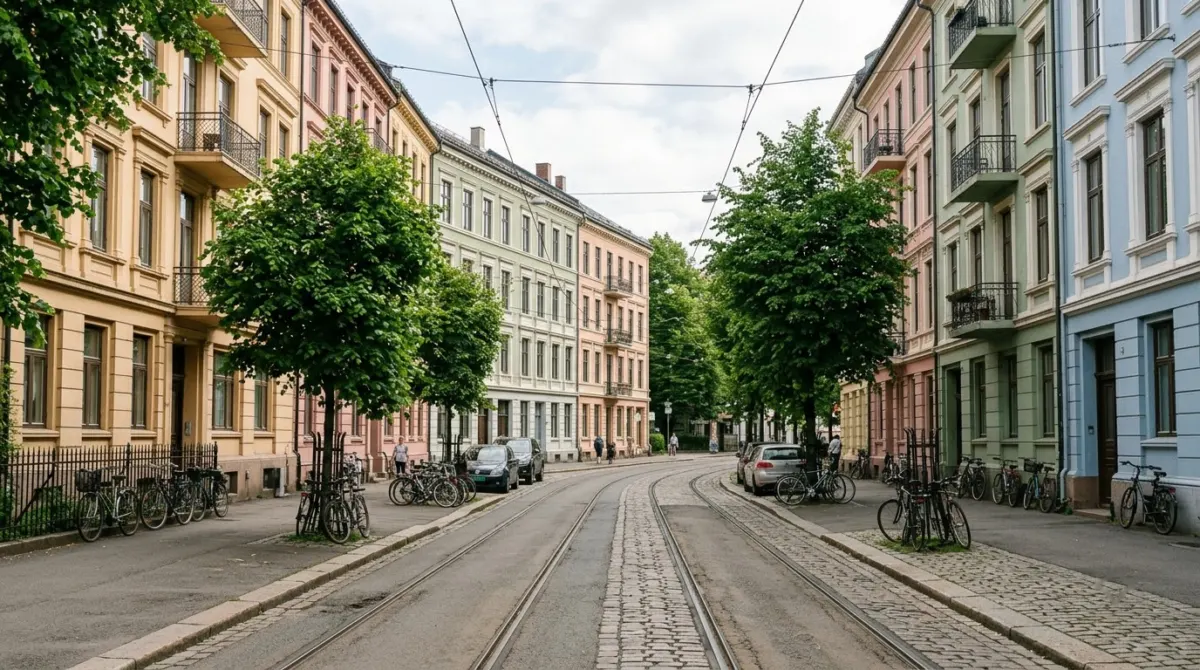
A week: an apartment, without question, ideally in Grünerløkka or Frogner where there are supermarkets and places to eat that are not aimed at visitors.
Accessibility and practicalities
Oslo is one of the easier European capitals for step-free travel. Most hotels are modern with lifts, the T-bane and trams are largely accessible, and the city centre is flat.
Two things to check anyway. Older converted buildings in the west and in Grünerløkka may have stairs or a lift that starts above the ground floor. And winter brings ice on pavements, which matters more than any building feature.
When Oslo is cheapest
Three windows, and they are not the obvious ones.
Weekends year-round, because the business travellers leave.
July, when Norwegians take their holidays and the city empties of workers.
January and February, which are dark and cold and the cheapest months of all, with the museums empty.
The most expensive nights are midweek in May, June, September and October, which is the conference season.
Where the hotels actually are
Oslo’s accommodation is not evenly spread, which narrows the decision more than the district names suggest.
Sentrum and the station hold the large majority of hotel rooms, most of them modern and business-oriented.
Bjørvika, the new waterfront, holds the newest buildings and the highest rates.
Grünerløkka and Frogner have relatively few hotels and a lot of apartments, which is why longer stays tend to end up there.
Grønland, east of the station, has the cheapest central rooms and the fewest frills.
If you want a hotel rather than an apartment, you are realistically choosing between the centre, the station and the waterfront.
Booking windows
Oslo is one of the easier northern capitals to book at short notice, with three exceptions.
Midweek in the conference season, roughly May, June, September and October, when business demand peaks.
Mid-May around the national day on the seventeenth.
The Christmas weeks, when the markets run.
Outside those, a couple of weeks is usually enough, and weekends are both cheaper and easier to find.
What a Norwegian hotel room is like
Consistent and a little plain, which is not a complaint.
Rooms are generally modern, warm, well insulated and clean, with good beds and reliable showers. Wooden floors and muted colours are the norm. What they rarely have is air conditioning, which is almost never needed, or much character.
Two things worth knowing. Twin beds pushed together with separate duvets is the Scandinavian standard, so a double bed may not be what you expect. And family rooms are relatively common and often cheaper than two rooms, because Norwegian hotels cater to domestic travel.
The short version
Check the day of the week before anything else: Oslo’s business-driven pricing makes a Tuesday considerably more expensive than a Saturday, and July cheaper than May. Take breakfast included where you can, take an apartment for three nights or more, choose a district by its tram or metro stop, and use the ordinary regional train from the airport if you would rather save the fare than five minutes.
Frequently asked questions
Are hotels in Oslo cheaper at weekends?
Usually, yes. Oslo's hotel market runs on business travel, so rates are highest from Monday to Thursday and often fall at weekends — the opposite of most tourist cities. July is also cheaper, because the city empties for the Norwegian holiday month.
Is breakfast worth paying for in an Oslo hotel?
Often yes. Norwegian hotel breakfasts are substantial enough to replace lunch, and eating out is expensive, so the gap between a rate with breakfast and one without is frequently smaller than what the meal would cost.
What should I check before booking a hotel in Oslo?
Whether breakfast is included, how far it is to a T-bane or tram stop, whether there is a kitchen if you are staying several nights, and the dates — because midweek and weekend pricing differ sharply here.
Is the area around Oslo Central Station safe?
It is an ordinary large station district: busy, a little rough at night, and fine with normal city sense. The streets around Grønland just east of it have the cheapest central rooms and are five minutes from the centre.
How do I get from Oslo airport to the city?
Two trains leave from the same platform: the Flytoget airport express in about twenty minutes, and the ordinary regional train in about twenty-five for considerably less. Both arrive at Oslo Central Station.
Are apartments better than hotels in Oslo?
For three nights or more, often yes, because a kitchen offsets the cost of eating out. For one or two nights a hotel with breakfast included is usually the better deal.
Keep planning Norway
- Where to Stay in Tromso: Central, Because the Tours Leave From There
- Where to Stay in Bergen: Close to the Harbour, Because of the Rain
- Where to Stay in Oslo: Sentrum First, Then the Districts
- How Many Days in Norway? Seven for the Fjords, Ten for the Arctic
- How Many Days in Oslo? Two, and Three If You Like Museums
- How Many Days in Bergen? Two, and the Rain Is the Reason
- 5 Day Norway Itinerary: One City and One Fjord
- 7 Day Norway Itinerary: Two Cities, One Railway, One Fjord
Written and checked by
Triplarks Editorial
An editorial desk, not an invented persona: research, drafting and fact-checking are done by the same small team. Every number here carries the date it was read.