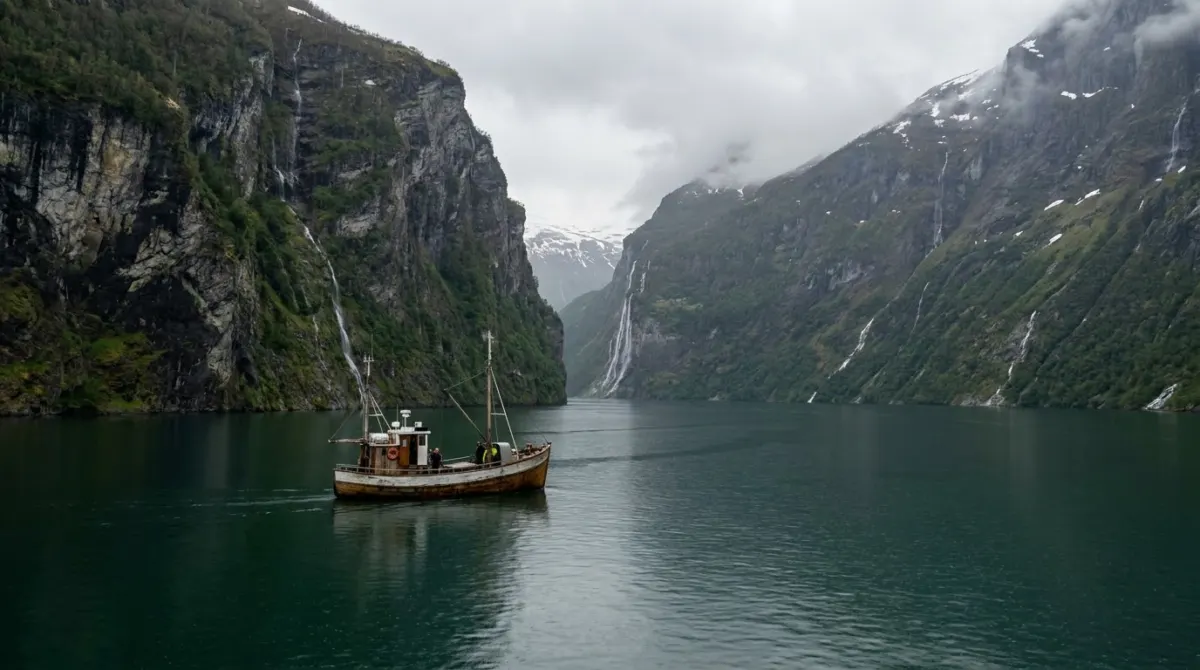
Quick answer
Seven days for Oslo, the Sognefjord and Bergen with no internal flights. Ten if you add Lofoten or Tromso. Book the fjord village nights first, because the supply there is tiny and the season is short.
On this page
- How many days in Norway: what each length covers
- Why seven days is the natural length
- What five days covers
- What the tenth day buys
- The northern lights need their own count
- The midnight sun and the polar night
- Fourteen days, and what to do with them
- What makes Norway take longer
- When to go
- Picking the trip rather than the number
- What a Norwegian day actually holds
- Budgeting days against the weather
- How the regions divide
- Driving versus trains and boats
- Which airport to fly into
- Adding Stavanger and the big hikes
- What to book, and when
- How long Oslo and Bergen each deserve
- Where the days go on a seven-day trip
- Packing for the length of trip you choose
- Common mistakes on a Norwegian itinerary
- The short version
- Frequently asked questions
Seven days for the southern fjords. Ten if you want the Arctic as well. Fourteen to take either of them slowly. And three or four nights minimum if the northern lights are the reason you are coming, because one night is a lottery.
Some links below are affiliate links. We may earn a commission if you book through them, at no extra cost to you. We do not rank hotels, and any prices on the map come live from the booking sites.
The reason Norway needs more planning than its size suggests is distance: Oslo to the North Cape is roughly the same as Oslo to Rome, and the famous places are spread along all of it. For the bases, see where to stay in Oslo and where to stay in Bergen.
How many days in Norway: what each length covers
| Days | Realistic plan | Internal flights |
|---|---|---|
| 4–5 | Oslo and one fjord, or Bergen and one fjord | No |
| 7 | Oslo, the Sognefjord, Bergen | No |
| 10 | The above plus Lofoten or Tromsø | One |
| 14 | Fjords and Arctic, unhurried | One or two |
| 3–4 (winter) | Tromsø and the aurora | Direct |
Map shows live availability and prices. We may earn a commission on bookings made through it, at no extra cost to you.
Where to sleep on this route
Why seven days is the natural length
Because the classic route has a shape that fits it exactly: two nights in Oslo, the Bergen railway and the Flåm line as a travel day, two nights on the Sognefjord, and two in Bergen.
That needs no internal flights, uses trains and boats throughout, and covers the city, the railway, the fjord and the port. Our 7 day Norway itinerary sets it out day by day.
What five days covers
One city and one fjord.
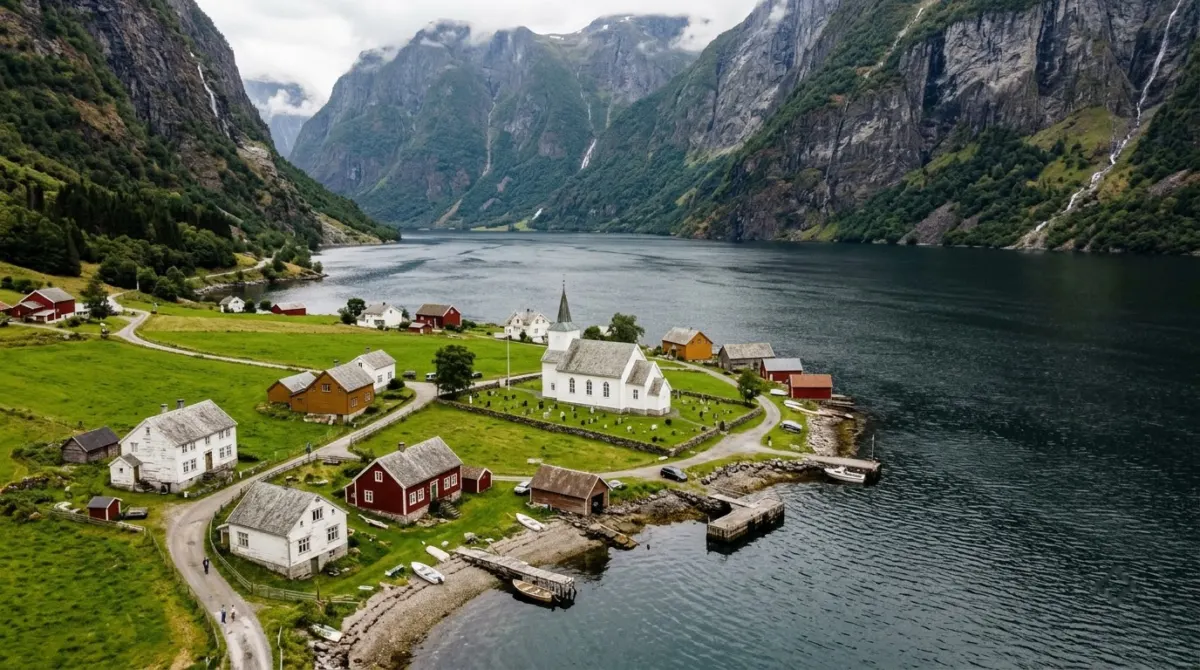
Oslo plus the Sognefjord, returning to Oslo; or Bergen plus a fjord, flying in and out of Bergen, which removes the long rail day.
Five days does not comfortably hold Oslo, the fjords and Bergen with the train in between — that is the seven-day trip compressed, and the compression lands on the fjord, which is the part you came for.
What the tenth day buys
The Arctic, and it needs a flight.
Lofoten in summer, for mountains rising straight from the sea, fishing villages and the midnight sun.
Tromsø in winter, for the northern lights, whale watching and a small city with somewhere to eat.
Both are about two hours by air from Oslo or Bergen. Driving there instead takes two days each way, which is a trip in itself rather than a transfer.
The northern lights need their own count
If the aurora is the reason you are coming, forget the fjords and plan differently.
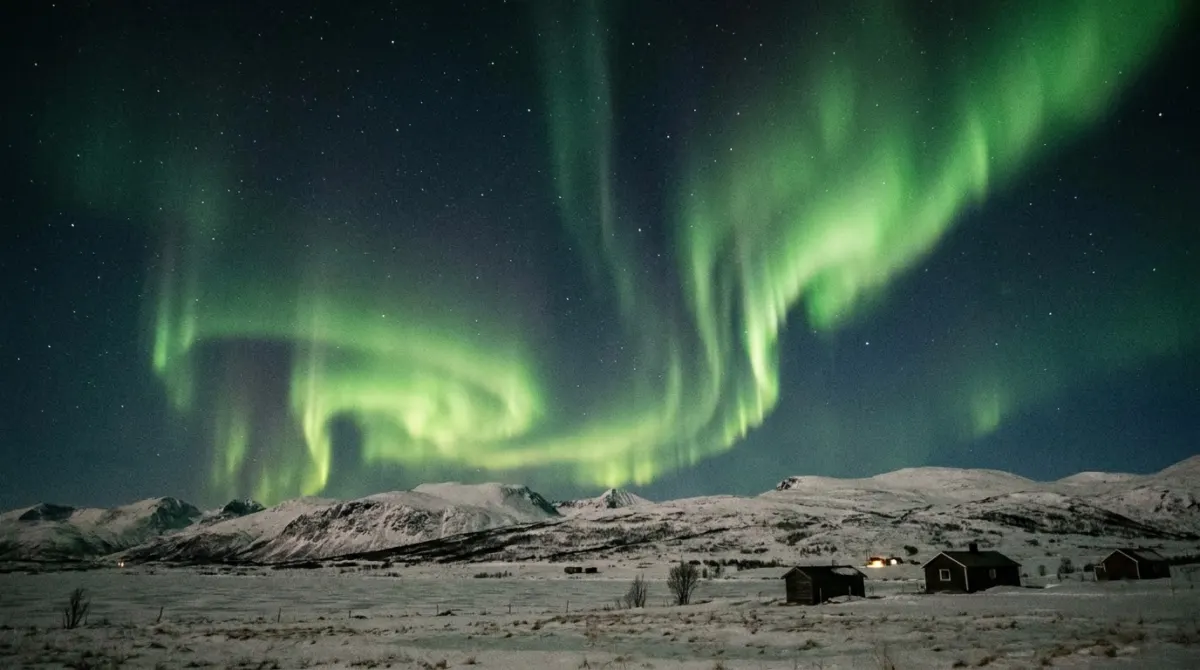
The lights appear between roughly late September and late March, and they need darkness, clear skies and solar activity at the same time. Any single night is a coin toss.
Three nights is the sensible minimum and four is better. Tromsø, Alta and Senja are the usual bases, and chase tours drive for hours to find a gap in the cloud, which is how most successful sightings happen.
The midnight sun and the polar night
Above the Arctic Circle the sun does not set for weeks around midsummer, and does not rise for weeks around midwinter.
In June and July that means you can walk a ridge at midnight and that you will need a dark room to sleep. In December and January it means a few hours of blue twilight rather than daylight, which is beautiful and not suited to sightseeing.
Both are reasons to plan the length of a trip around the season rather than the other way round.
Fourteen days, and what to do with them
Three good shapes.
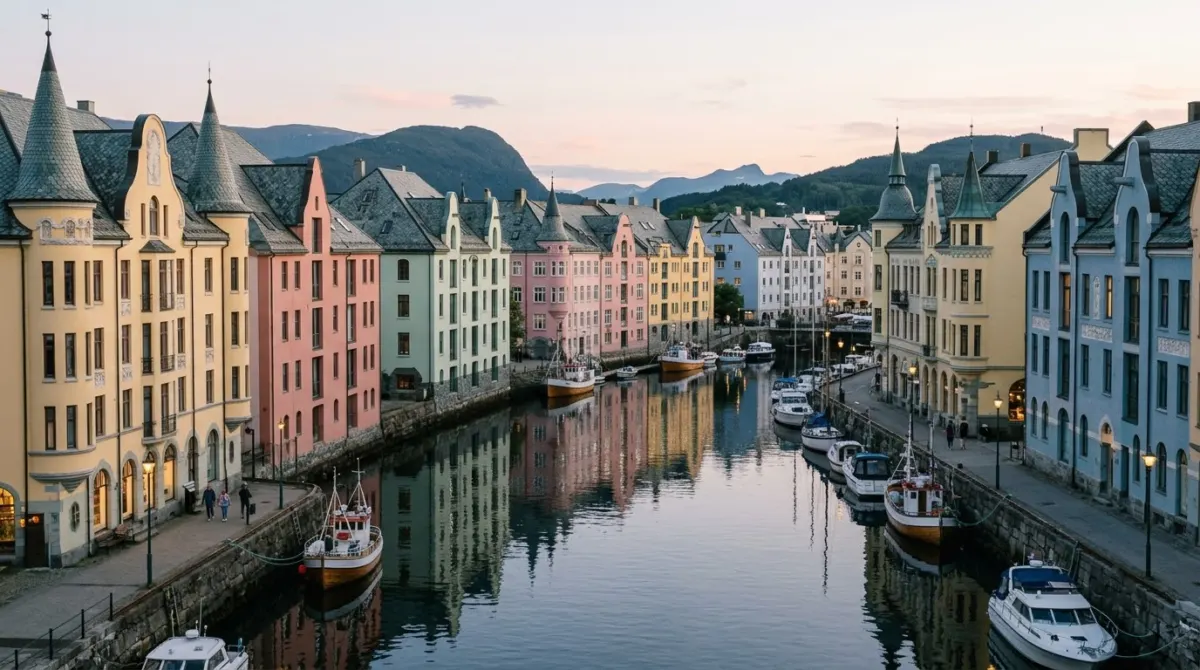
Fjords slowly: Oslo, the Sognefjord, the Hardangerfjord, Ålesund and Geiranger, Bergen. No flights, a car for the middle section.
South and north: the seven-day classic, then a week in Lofoten or Tromsø.
The coastal ferry: the working ship that runs the length of the country, taking about six days one way, with the fjords at one end and the Arctic at the other.
Where Geiranger fits
The Geirangerfjord is on the UNESCO World Heritage list together with the Nærøyfjord, and it is the reason most fourteen-day trips hire a car. It is a long way north of the Sognefjord, so it does not fit into the classic train-and-boat week. Give it two nights of its own, with Ålesund as the town base on either side. The mountain roads in and out, including Trollstigen, close in winter, which makes Geiranger a late-spring-to-autumn plan.
What makes Norway take longer
Three things that affect every itinerary here.
Transport runs to a timetable. Fjord boats and rural buses go once or twice a day, and missing one costs you an afternoon.
The weather is the itinerary. Views are the product, and a cloudy day removes them.
The distances are real. Norway is longer than most visitors expect, and the attractive places are at both ends.
When to go
June to August for the fjords, hiking and the midnight sun, with the highest prices and most visitors.
May and September for fewer people with everything still running.
Late September to March for the northern lights, with the fjord region largely dormant.
Picking the trip rather than the number
Norway resists being planned by duration, because the country offers three distinct holidays.
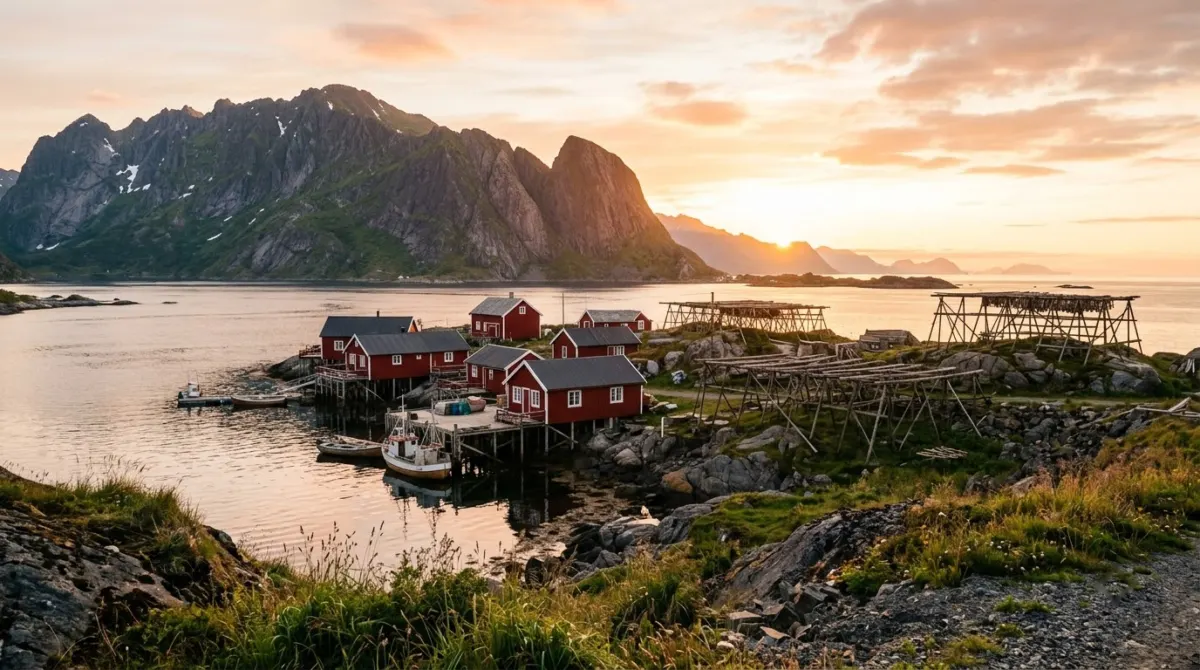
The fjords — trains, boats and villages in the south-west, best from May to September, seven days.
The Arctic in summer — Lofoten, the midnight sun, mountains and fishing villages, five to seven days of its own.
The Arctic in winter — the northern lights, dog sledding and whales, three to five days based in Tromsø or Alta.
Choose which of the three you are taking, give it the days it needs, and add the others on another trip rather than squeezing them into one.
What a Norwegian day actually holds
Fewer things than in most countries, and that is the point.
A fjord day is typically one boat and one walk. A Lofoten day is one drive and two viewpoints. An aurora night is several hours of standing outside in the cold.
Trying to fit three activities into a Norwegian day usually means seeing none of them properly, because the distances between them are long and the transport runs infrequently.
Budgeting days against the weather
The single most useful planning habit here is to leave one flexible day in each region.
On a seven-day fjord trip, that means two nights on the Sognefjord rather than one, so a cloudy morning is not the whole fjord. On a four-night aurora trip, it means three chances rather than one.
Visitors who build tight itineraries in Norway are the ones who come home having seen rain.
How the regions divide
Norway splits into four travel regions, and knowing which you are visiting makes the day count obvious.
The east — Oslo and the inland valleys. Two or three days.
The fjords — the Sognefjord, Hardangerfjord, Geiranger and Bergen. Four to seven days.
The north — Lofoten, Tromsø and the Arctic coast. Four to seven days, and a flight to reach.
The far north — Finnmark and the North Cape. A trip of its own.
Most visitors take the first two. Adding the third is what turns a week into ten days.
Driving versus trains and boats
Both work, and they suit different trips.
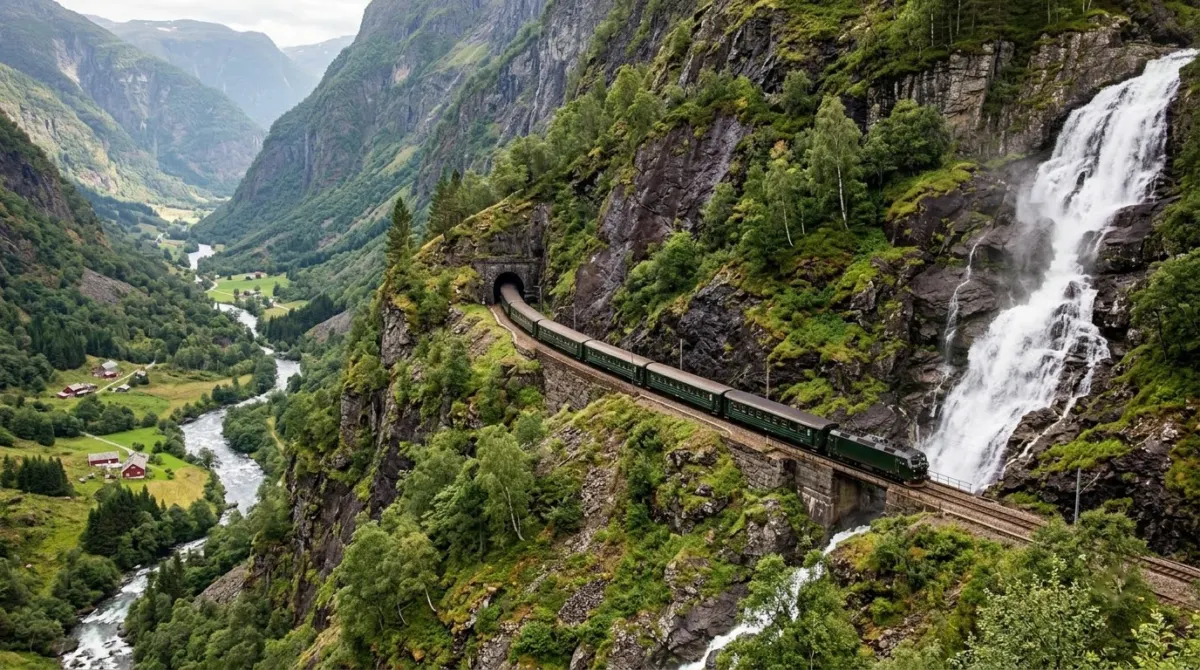
Trains and boats cover Oslo, the Bergen railway, the Flåm line, the Sognefjord and Bergen without a car at all, and that is the classic week.
A car is what opens the smaller fjords, Geiranger, the Atlantic Road and Lofoten’s side roads. It is slower than the map suggests because of ferries and tunnels, and tolls and ferry charges are billed automatically to the rental.
A common compromise: trains and boats for the classic section, then a hire car for three or four days in one region.
Which airport to fly into
Where you land affects your day count more than people expect. A route that starts in one city and ends in another saves you a full day of backtracking.
Oslo Gardermoen is the main international gateway. The Flytoget airport express gets you to central Oslo in about twenty minutes, and trains leave roughly every ten minutes, so you can arrive at midday and still have the afternoon in the city.
Bergen Flesland is the gateway to the fjords. The Bybanen light rail and the airport express bus both run from the terminal into the city centre. Flying straight into Bergen is what makes the five-day Bergen-and-a-fjord trip work.
Book open-jaw. On the classic week, fly into Oslo and home from Bergen, or the other way round. The Bergen railway then does the crossing once, as the main event of the trip. A round trip from Oslo forces you to cross the mountains twice, or to add an internal flight back.
Arctic airports: Tromsø, Bodø (the usual hop to Lofoten) and Evenes for Lofoten and Vesterålen all connect to Oslo, so a ten-day trip can enter in the south and leave from the north.
Adding Stavanger and the big hikes
Norway’s three famous hikes are all in the fjord region, and each one needs a whole day, not an afternoon.
Preikestolen (Pulpit Rock) sits above the Lysefjord near Stavanger. It is the most manageable of the three: about eight kilometres return and roughly four hours walking, with the season running from May to October. In winter it needs a guide and proper equipment.
Kjeragbolten is the boulder wedged in a crevice high above the same fjord. It is a longer and steeper day than Preikestolen, so plan it as a hike of its own, not an add-on.
Trolltunga, in the Hardangerfjord region, is the big one: about 27 kilometres return from the main trailhead, with an ascent of almost 800 metres, and 10 to 12 hours including breaks. Visit Norway advises starting before 8 a.m. Outside the summer season, go only with a guide.
What it does to the count: add two days for Stavanger and Preikestolen, and two more if Trolltunga or Kjerag is the reason you are coming. Stavanger connects to Bergen by air or by the Kystbussen coastal express, about four and a half to five hours with two ferry crossings included. That makes Oslo, Stavanger, the fjords and Bergen a natural ten-day route for hikers with no Arctic leg.
Leave a weather day. All three hikes are exposed, and a day of fog or rain on the plateau is a day to postpone, not to push through.
What to book, and when
- The Bergen railway and the Flåm line in summer, where cheap fares go early.
- Fjord village accommodation, which is scarce and seasonal.
- Lofoten in summer, months ahead.
- Aurora tours only once you are there and the forecast is clear.
How long Oslo and Bergen each deserve
The cities are where most itineraries either overspend or underspend.
Oslo: two days. One day is enough for the waterfront, the Opera House roof and Akershus Fortress. The second day is for the museums of your choice and Vigeland Park. A third day in Oslo usually comes out of the fjord, which is a poor trade on a one-week trip.
Bergen: one and a half to two days. The wooden Hanseatic wharf of Bryggen is a UNESCO World Heritage site and takes a morning. The Fløibanen funicular climbs Mount Fløyen in about six minutes from near the fish market. The good version is to ride up and walk down through the woods, which takes about an hour. Bergen is also the best base for a day on the Hardangerfjord if you have an extra day and no car.
Tromsø: two nights at least, even on an aurora trip, because the city is where you wait out cloudy evenings and plan the next chase.
One rule holds across all three: plan the city days around the fjord or Arctic days, and not the other way round. A city is pleasant in the rain. A fjord in the rain is barely there.
Where the days go on a seven-day trip
Worth spelling out, because the classic week has two travel days hidden inside it.
Day 1 is arrival and half of Oslo. Day 2 is Oslo. Day 3 is the Bergen railway and the Flåm line, which is a full day of moving even though it is also the best day of the trip.
Days 4 and 5 are the fjord. Days 6 and 7 are Bergen and the flight home.
That leaves four days of actual sightseeing out of seven, which is normal for Norway and the reason five days feels tight.
Packing for the length of trip you choose
On a long trip, packing matters more here than in most places, because the weather can change within a single fjord day.
- Layers, not one heavy coat. A base layer, a warm mid-layer and a waterproof shell cover a summer fjord trip and most of a spring or autumn one.
- Waterproof shoes with grip. Fjord paths, wet quaysides and boat decks are slippery. For the big hikes, bring proper boots.
- An eye mask in summer. North of the Arctic Circle, the midnight sun means the room never gets dark on its own.
- Serious winter gear for aurora trips. A night chasing the lights means hours standing still in the cold. Many aurora tours lend thermal suits, but bring your own warm layers, hat and gloves.
The longer the trip, the more likely you are to meet every kind of weather on it, so a fourteen-day itinerary should be packed for all four seasons in a light way.
Common mistakes on a Norwegian itinerary
Doing Norway in a Nutshell in one day. The route is excellent and the single-day version reduces the fjord to a two-hour boat between two trains.
One night per fjord village. The weather needs a second chance, and the villages are the point.
Driving to the Arctic. Two days each way from the fjords, against a two-hour flight.
Booking an aurora trip for one night. It is a lottery, and three nights turns it into a reasonable bet.
Underestimating food costs. This is the budget item that surprises people, not the hotel.
The short version
Seven days for Oslo, the Sognefjord and Bergen, entirely on trains and boats. Ten if you add Lofoten in summer or Tromsø in winter, which needs one flight of about two hours. Fourteen to take either half unhurried. Three or four nights minimum if the northern lights are the point, because one night is a coin toss. Whatever the length, leave a flexible day in each region: in Norway the weather decides what you see.
For a short trip, follow the 5-day Norway itinerary; going north, see where to stay in Tromsø.
Frequently asked questions
How many days do you need in Norway?
Seven for Oslo, the Sognefjord and Bergen with no internal flights. Ten if you add Lofoten or Tromsø, which needs a two-hour flight. Fourteen to take either half slowly.
Is 5 days enough for Norway?
For one city and one fjord. Oslo and the Sognefjord, or Bergen and a fjord flying in and out of Bergen. Trying to fit Oslo, the fjords and Bergen into five days compresses the fjord, which is the part you came for.
How many days do you need to see the northern lights?
Three at minimum and four is better. The lights need darkness, clear skies and solar activity at once, so a single night is a coin toss. Tromsø, Alta and Senja are the usual bases between late September and late March.
Do you need internal flights in Norway?
Not for the southern fjords, which run on trains and boats. For Lofoten or Tromsø, yes — about two hours by air against two days each way by road.
Is Norway better in summer or winter?
Summer for the fjords, hiking and the midnight sun. Winter for the northern lights, dog sledding and whale watching in the north. They are different trips rather than better and worse versions of one.
Why does Norway take longer than it looks?
Because rural transport runs once or twice a day, the weather decides whether a view exists at all, and the country is as long as Oslo to Rome with the famous places at both ends.
Keep planning Norway
- Where to Stay in Tromso: Central, Because the Tours Leave From There
- Where to Stay in Bergen: Close to the Harbour, Because of the Rain
- Where to Stay in Oslo: Sentrum First, Then the Districts
- Best Hotels in Oslo: The Pricing Runs Backwards Here
- How Many Days in Oslo? Two, and Three If You Like Museums
- How Many Days in Bergen? Two, and the Rain Is the Reason
- 5 Day Norway Itinerary: One City and One Fjord
- 7 Day Norway Itinerary: Two Cities, One Railway, One Fjord
Written and checked by
Triplarks Editorial
An editorial desk, not an invented persona: research, drafting and fact-checking are done by the same small team. Every number here carries the date it was read.