
Dominical is a surf town that never bothered to become a resort. The main street is still dirt, the buildings are still low, and the beach is still one of the most dangerous stretches of water in Costa Rica.
Some links below are affiliate links. We may earn a commission if you book through them, at no extra cost to you. We do not rank hotels, and any prices on the map come live from the booking sites.
Quick answer: where to stay in Dominical. In town if you surf, backpack or are staying a short time: you can walk to the beach and the bars. In the hills for ocean views, quiet and a pool, but you will need a 4×4 every single day.
That last part is the thing to understand before you book. Playa Dominical is a beach for surfing and for walking. It is not a beach for swimming, and people drown here.
What you get in exchange is a town with an actual character, a waterfall an hour inland, and the whole Costa Ballena coast starting at the end of the road. Prices and details checked 18 August 2026.
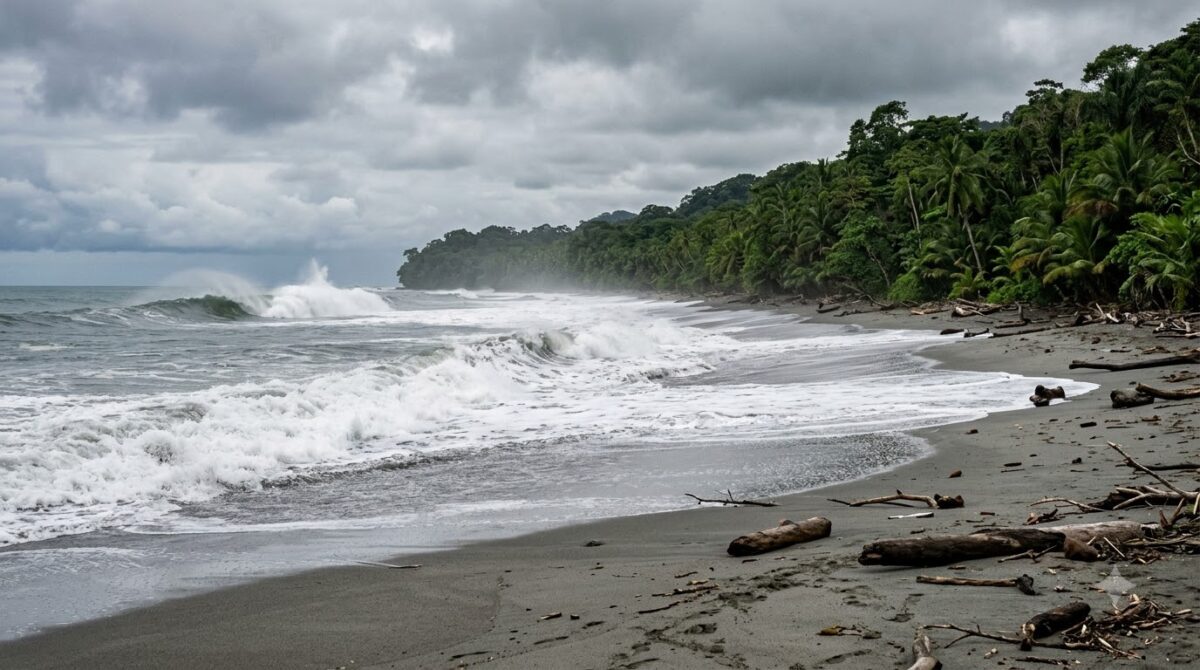
Should you visit Dominical on your Costa Rica vacation?
Yes, if you surf, or if you want a base for the southern Pacific coast that has not been polished. No, if you want to swim, or if you want comfort.
Dominical is located on Costa Rica’s south Pacific coast, in the canton of Dominical, Puntarenas, where the Baru river meets the Pacific Ocean. It is a small town at the northern end of the stretch of coast called the Costa Ballena. It is small — a few hundred residents, one main road, a handful of sodas and bars — and it has kept the backpacker and surfer character that Tamarindo and Jaco lost twenty years ago.
- Come for: consistent waves, cheap living, cool vibes, Nauyaca Waterfalls, a genuinely relaxed town, and easy access to the whole southern coast.
- Do not come for: swimming, resorts, nightlife beyond a few bars, or paved streets.
Two nights is enough to see it. A week makes sense if you came to surf.
What this beach town in Costa Rica is known for
Three things, in order of how much they define the place.
- The surf. A powerful, consistent beach break that works most of the year. This is the reason the town exists in its current form.
- The hippie and surfer character. Dominical was a hard-to-reach surf outpost until the coastal highway was paved around 2010. It has developed since, but slowly and mostly upmarket into the hills rather than along the sand.
- Nauyaca Waterfalls. The best-known waterfall on this coast sits inland from town, and a lot of people who stay in Dominical came for that.
What it is not known for, and never will be, is a swimmable beach.
Playa Dominical: why you should not swim there
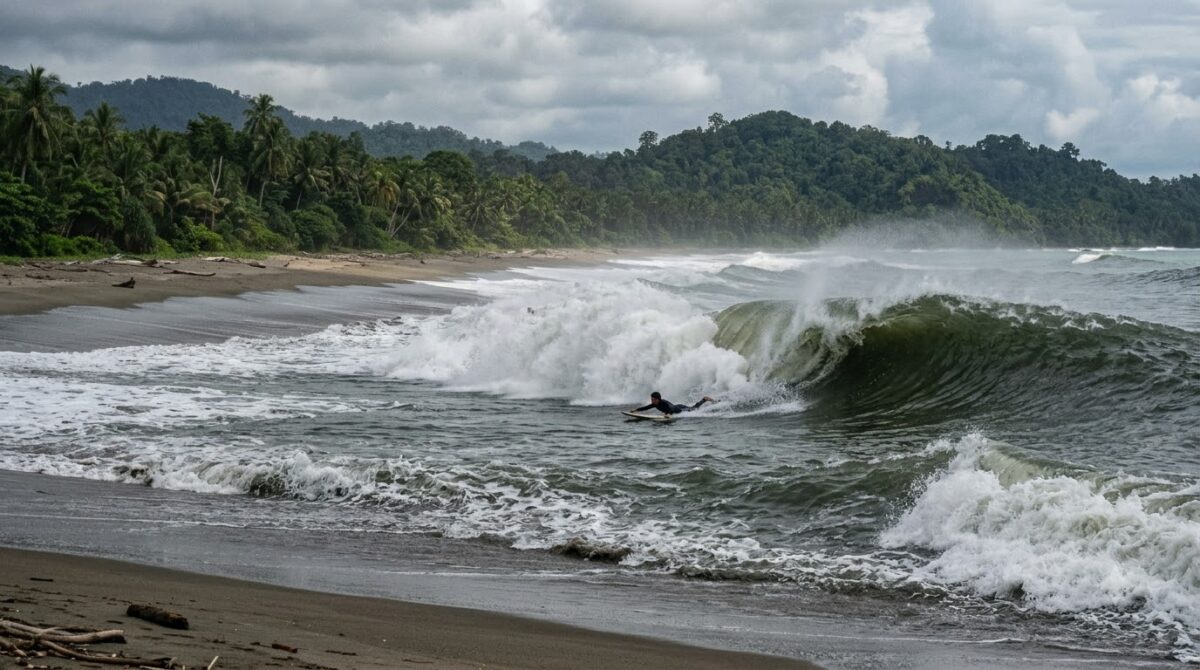
Dominical beach runs roughly four kilometres of dark grey sand backed by palms and jungle, with the Baru river mouth at the northern end. It is a wide, wild, genuinely beautiful beach.
It also has some of the strongest rip currents in Costa Rica. The combination of a steep beach profile, a heavy shore break and the river mouth produces water that pulls hard and unpredictably.
The clearest evidence of how serious this is: Dominical has a permanent lifeguard service, which almost no beach in Costa Rica does. It exists because of the drowning rate. Swim only between the flags, when the lifeguards are on duty, and take their advice literally.
- If you want to swim, drive three kilometres south to Playa Dominicalito, a small sheltered cove protected by rocks. It is calm, shallow and where local families go.
- Do not swim at the river mouth. Ever. Current plus crocodiles.
- Do not go in at dawn or dusk when the lifeguards are off and visibility is poor.
The beach is superb for walking, for sunset, and for watching people who know what they are doing get thrown around.
Dominical surf: consistent waves for experienced surfers
Surf schools in Dominical
Dominical is an intermediate to advanced break, and that is worth being honest about. The wave is fast, powerful and closes out often. It is not a beginner beach in the way Samara or Tamarindo are.
- Best conditions at mid to high tide; low tide often closes out entirely. This is a surfing beach for experienced surfers before it is anything else.
- Biggest swell from roughly April to October, which is also the wet season.
- Surf schools in town run lessons at around US$45–70 for two hours including the board, and the good ones take beginners to calmer spots nearby rather than pretending Dominical itself is suitable.
- Board rental runs about US$15–25 a day from several shops on the main street.
If you have never surfed and Dominical is your only stop, take the lesson, but expect to be taught somewhere else.
Things to do in Dominical and the area around Dominical
The town itself takes twenty minutes to see. Everything worth doing is within about an hour.
- Nauyaca Waterfalls — the main inland attraction, covered below.
- Hacienda Baru — a private wildlife refuge on the edge of town with trails, a canopy walk and mangrove. Good for sloths and birds without a long drive. Entry around US$8–15.
- Alturas Wildlife Sanctuary — a rescue and rehabilitation centre in the hills above town, with a viewpoint over the coast.
- Poza Azul — a small local waterfall and swimming hole a short drive inland, free or nearly so.
- Horseback riding into the hills or along the beach, around US$50–70.
- Yoga — several studios in and above town, a legacy of the long-stay crowd.
- Stand up paddleboarding on the Baru river estuary, which is flat when the sea is not.
- Sunset from the beach — the coast faces west here, and it is the standard evening.
Rainforest and hiking trails near Dominical
The hills immediately behind town are rainforest, and the transition from beach to jungle happens within a couple of kilometres. Hacienda Baru alone has several hiking trails through primary and secondary forest, plus a zip line and a canopy observation platform.
This habitat is why the wildlife here is good: sloths, toucans, scarlet macaws in the coastal almond trees, and four monkey species across the wider area. Our Costa Rica wildlife guide covers what you can expect to see and where.
Nauyaca Waterfalls, inland from Dominical
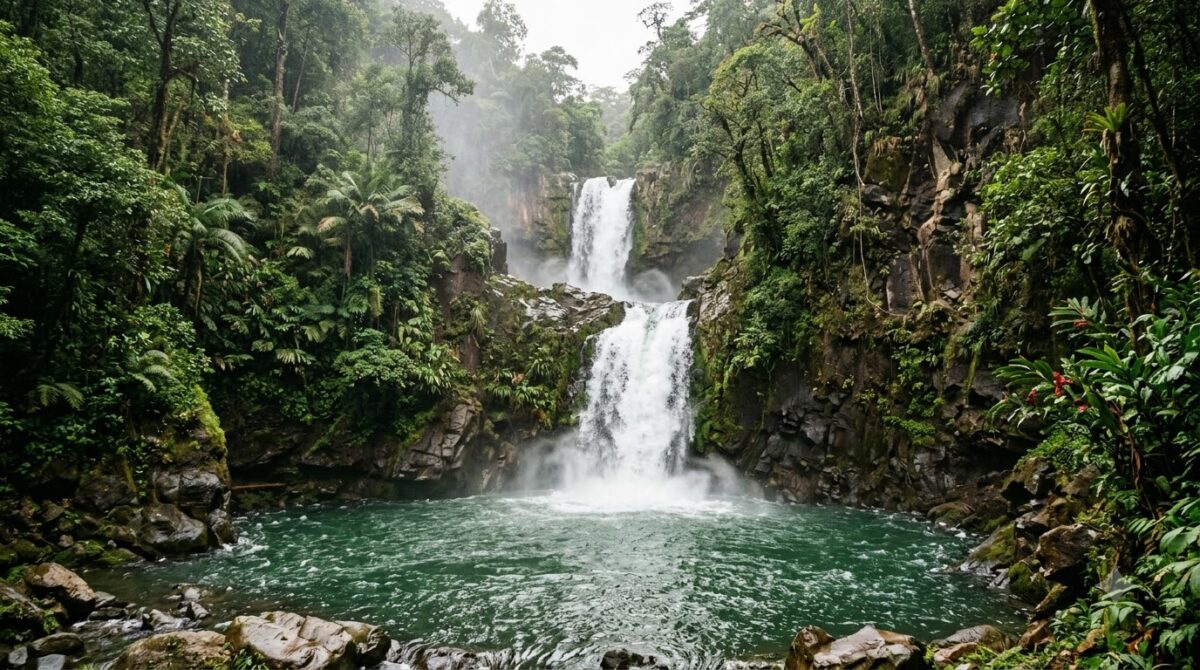
Nauyaca Waterfalls is the best-known waterfall on the southern Pacific coast: two tiers dropping into a large green pool, about 12 kilometres inland from Dominical.
You reach it three ways — a 4×4 shuttle, a horseback tour, or walking the roughly four-kilometre access track in on your own. The walk is free-ish and hot; the shuttle is the sensible option in the wet season.
Our Uvita guide covers Nauyaca in detail alongside the rest of the Costa Ballena, since most people combine the two.
Beaches south of Dominical: Dominicalito, Playa Hermosa and Uvita
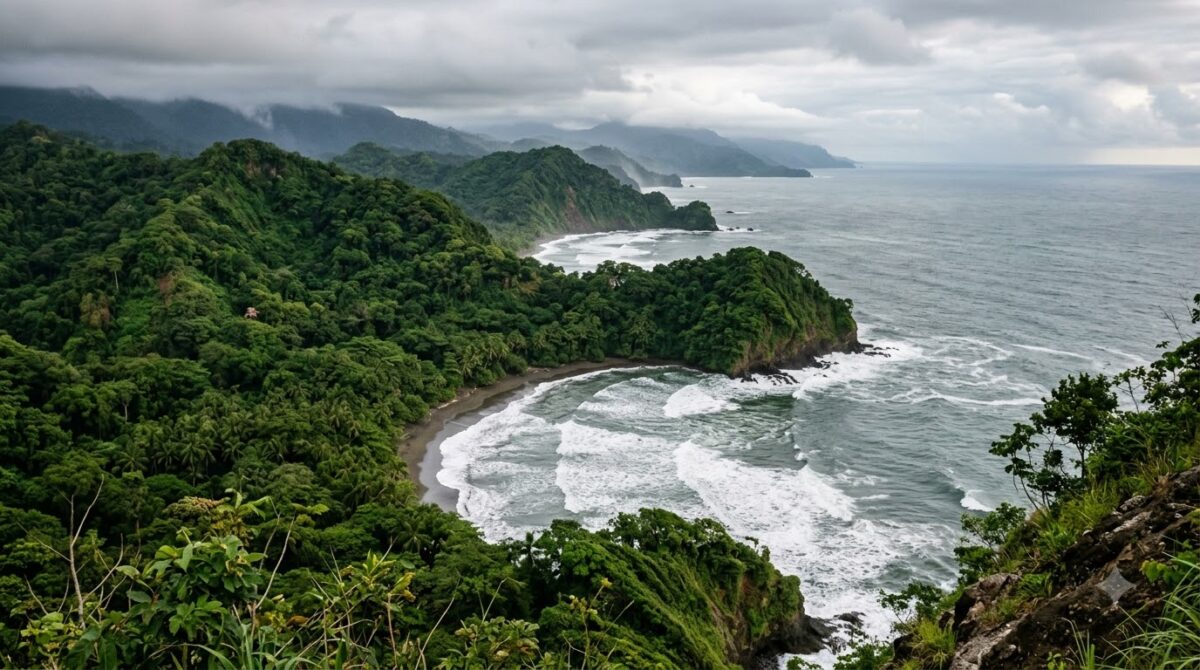
Dominical is the northern end of a run of coast that gets calmer and emptier as you move south.
| Beach | From Dominical | Good for |
|---|---|---|
| Playa Dominicalito | 3 km south | Swimming, families, calm cove |
| Playa Hermosa | 5 km north | Long, empty, still surf |
| Playa Ventanas | 25 km south | Sea caves at low tide |
| Playa Uvita | 17 km south | The whale tail sandbar, whale watching |
Uvita is the other main base on this coast and the one to choose if you want whale watching and calm water rather than surf. Humpback whales pass here twice a year. See our guide to Uvita for the whale tail and Marino Ballena National Park.
Going the other way, Manuel Antonio National Park is about 45 minutes north and is the busiest place on this coast by a wide margin.
Day trips: Manuel Antonio National Park and further south
Dominical works well as a base because it sits between two of the best national parks on this coast.
- Manuel Antonio National Park — 45 minutes north, the most visited park in the country and the easiest place to see monkeys and sloths. Tickets sell online in advance and the park closes one day a week. See our Manuel Antonio guide.
- Marino Ballena National Park — 20 minutes south at Uvita, where the whale tail sandbar appears at low tide.
- Corcovado National Park — two to three hours south on the Osa Peninsula. The densest wildlife in Costa Rica, but guided entry is compulsory and it books out months ahead, so it is a stay rather than a day trip.
- Whale and dolphin watching — boats run from Uvita rather than Dominical. Humpbacks pass twice a year and dolphins are close to year-round.
Whale watching on the Costa Ballena
The humpback whale season is the reason this coast is called the Costa Ballena. Whales from two separate populations pass here — the southern group roughly July to October and the northern group December to March — which gives Uvita two whale watching seasons a year. Boats cost around US$70 and leave from Uvita, 20 minutes south.
Snorkeling is poor directly off Dominical because of the surf and sediment. The reef at Marino Ballena and the trips to Cano Island out of Uvita and Sierpe are where snorkelling on this coast actually happens.
Dominical town, and getting around
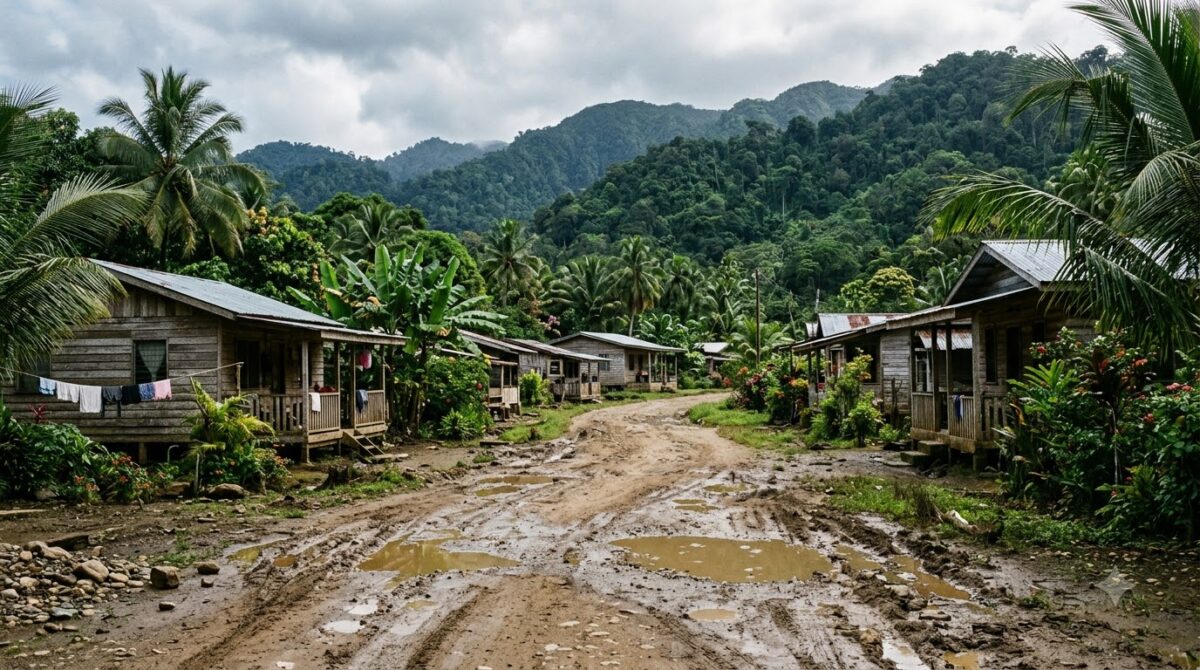
The town center is one road through town running parallel to the beach, plus a short spur up to the highway. You can walk all of it in fifteen minutes. There are a couple of small supermarkets, several surf shops, a scattering of bars and restaurants, and a lot of dogs.
Getting around: you walk in town. For anything else you need a vehicle. There is no Uber, taxis are informal and few, and the buses along the coastal highway run infrequently.
A standard car is fine for Dominical itself and the coastal highway. You want 4×4 for the hill roads inland, where the accommodation with the views sits — those roads are steep, unpaved and get badly rutted in the wet season. Our guide to driving in Costa Rica covers what that means in practice.
Dominical restaurants and where to eat
Cafe Mono Congo, Fuego Brewing and Del Mar Taco Shop
For a town this small the food is decent, and it is cheap by Costa Rican coastal standards. Names that come up consistently — check current opening days locally, as small places here close on rotation:
- Cafe Mono Congo — the breakfast and coffee place, above the main street. Where everyone starts the day.
- Fuego Brewing Company — craft beer brewed on site, on the road into town, with food and a view. Fuego is the closest thing to a night out here.
- Del Mar Taco Shop — cheap, fast, on the beach road.
- The sodas — typical Costa Rican casado for US$7–10, and the best value in town. See our guide to Costa Rican food for what to order.
Budget roughly US$8–12 for a soda meal and US$15–28 a head for the sit-down places.
Dominical hotels and vacation rentals
Boutique hotels and villas outside of Dominical
Accommodation splits by altitude, and it matters more than usual here.
| In town | In the hills | |
|---|---|---|
| Price | US$20–90 | US$150–450 |
| Type | Hostels, cabinas, small hotels | Boutique hotels, villas, vacation rentals |
| You get | Walk to the beach and the bars | Ocean views, quiet, pool, jungle |
| You need | Nothing | A 4×4, every single day |
In the town of Dominical is right for surfers, backpackers and short stays. It is noisy at weekends and basic, but you can walk everywhere.
In the hills is where the money went. There are some genuinely spectacular boutique hotels and villas in the ridges outside of Dominical with views down the whole coast. The catch is that you will drive a steep dirt road to get anywhere, including to dinner, and in the wet season that road is not always fun.
Map shows live availability and prices. We may earn a commission on bookings made through it, at no extra cost to you.
How to get to Dominical and the closest airport
The closest airport is Quepos (XQP), about 45 minutes north, served by small domestic aircraft from San Jose. Most people do not use it.
| From | Time | Notes |
|---|---|---|
| San José, Costa Rica (SJO) | 3.5 hours | National Route 27 then Route 34 |
| Quepos / Manuel Antonio | 45 min | Paved coastal highway |
| Uvita | 20 min | Paved |
| Liberia (LIR) | 6–7 hr | Wrong airport for this coast |
| Quepos airport (XQP) | 45 min | Domestic flights from San Jose, 30 min in the air |
There are three realistic ways to get to Dominical: drive, shuttle, or fly to Quepos and drive the last 45 minutes. Whichever of the ways to get there you choose, you end up on the same road. The coastal highway — National Route 34, the Costanera Sur — is fully paved and good. It is the road that changed this coast when it was completed, and it is why Dominical is now 3.5 hours from the capital rather than six. The inland road climbs east to San Isidro de El General, which is the nearest large town and where you go for a hospital or a proper supermarket.
Shared shuttles run from San Jose, Manuel Antonio and Uvita for roughly US$55–70 per person.
Dominical weather and the best time to visit
The Dominical area is the wet end of Costa Rica’s Pacific coast, and one of Costa Rica’s rainiest tourist regions. It gets significantly more rain than Guanacaste, and the green season is genuinely green.
- December to April — dry season, sunniest, busiest, smaller surf.
- May, June and November — clear mornings, afternoon rain, far fewer people, good surf.
- July and August — a drier spell, plus the first whale watching season further south at Uvita.
- September and October — the wettest months on this coast and the ones to avoid if you are not surfing. Biggest swell, heaviest rain, some businesses shut.
The worst month to visit Costa Rica depends entirely on where you are going. On this coast it is September or October. On the Caribbean side those same months are the driest and best — see our guide to the best time to visit Costa Rica, and Tortuguero for the coast that runs backwards.
More Costa Rica travel guides for this coast
Dominical sits in the middle of the best-linked stretch of the Pacific. Each neighbour has a guide of its own:
- Uvita — 20 minutes south, whale tail and Nauyaca in detail
- Manuel Antonio — 45 minutes north, the national park
- The Osa Peninsula — Corcovado, two to three hours south
- The best beaches in Costa Rica — how this coast compares
- Things to do in Costa Rica — the full picture
What to know before you go
- The beach is dangerous. Swim between the flags or go to Dominicalito.
- Bring cash. There is an ATM but it runs dry, and small places are cash only.
- Book hill accommodation with a 4×4 in mind, not as an afterthought.
- Crocodiles live in the Baru river. Do not swim at the river mouth or walk the banks at dusk.
- Nothing is open early. This is a surf town; the town wakes up late except for the surfers, who are gone by six.
- It rains hard here. More than most of the Pacific coast, in every season.
Dominical asks more of you than most Costa Rican beach towns and gives back something the polished ones cannot. Whether that is a good trade depends entirely on whether you surf.
Frequently asked questions
Is Dominical, Costa Rica worth visiting?
Yes if you surf or want an unpolished base for the southern Pacific coast, with Nauyaca Waterfalls inland and Uvita and Manuel Antonio within an hour. No if you want to swim or want comfort: the beach has strong rip currents, the town is dirt roads, and it rains heavily.
What is Dominical, Costa Rica known for?
Its surf above everything else. Dominical has a powerful, consistent beach break that works most of the year, and the town kept its surfer and backpacker character after the coastal highway was paved. It is also the closest base to Nauyaca Waterfalls, the best-known waterfall on this coast.
Can you swim at Dominical beach?
Not safely. Playa Dominical has some of the strongest rip currents in Costa Rica, which is why it is one of the few beaches in the country with a permanent lifeguard service. Swim only between the flags when lifeguards are on duty. For calm water go to Playa Dominicalito, three kilometres south.
Is Dominical good for beginner surfers?
No. It is an intermediate to advanced break: fast, powerful and it closes out often. Surf schools in town will take beginners to calmer spots nearby rather than teaching at Dominical itself. If you have never surfed, Samara or Tamarindo are better places to start.
What is the closest airport to Dominical, Costa Rica?
Quepos (XQP) is closest, about 45 minutes north, served by small domestic aircraft from San Jose on a 30 minute flight. Most visitors instead fly into San Jose (SJO) and drive three and a half hours via Route 27 and the coastal Route 34. Liberia is the wrong airport for this coast.
Do you need a 4×4 in Dominical?
Not for the town or the coastal highway, both of which a standard car handles. You do need one if you are staying in the hills above town, where most of the boutique hotels and villas are: those access roads are steep, unpaved and rut badly in the wet season.
How many days do you need in Dominical?
Two nights is enough to see the town, the beach and Nauyaca Waterfalls. A week makes sense if you came to surf, or if you are using Dominical as a base for Uvita, Manuel Antonio and the Costa Ballena rather than moving hotels.
What is the worst month to visit Costa Rica?
It depends on the coast. On the Pacific, including Dominical, September and October are the wettest and the ones to avoid unless you are surfing. On the Caribbean those same months are the driest and best. There is no single worst month for the whole country.
Prices, drive times and restaurant details read 18 August 2026. Lifeguard hours at Playa Dominical vary by season, and small businesses here close on rotation — check locally.