
Almost every packing list for Costa Rica you will find is a product list with affiliate links attached. This one is not, because this site does not sell anything. So here is the version that tells you what to leave at home.
Some links below are affiliate links. We may earn a commission if you book through them, at no extra cost to you. We do not rank hotels, and any prices on the map come live from the booking sites.
Quick answer: where to stay. Most first trips combine La Fortuna, Monteverde and a Pacific beach such as Manuel Antonio. Monteverde is the base to pack for: nights are cool there, so check that your room has heating or good blankets.
What you need to pack for a trip to Costa Rica comes down to a handful of absolute essentials, plus whatever your particular route demands. Pack light and you will thank yourself on the third hotel change.
The short version: a rain jacket, closed-toe shoes you do not mind ruining, a dry bag, and half the clothes you were going to bring. Costa Rica is warm, wet and casual. Nobody is looking at your outfit and the laundry is cheap.
Prices and park rules checked 20 August 2026.
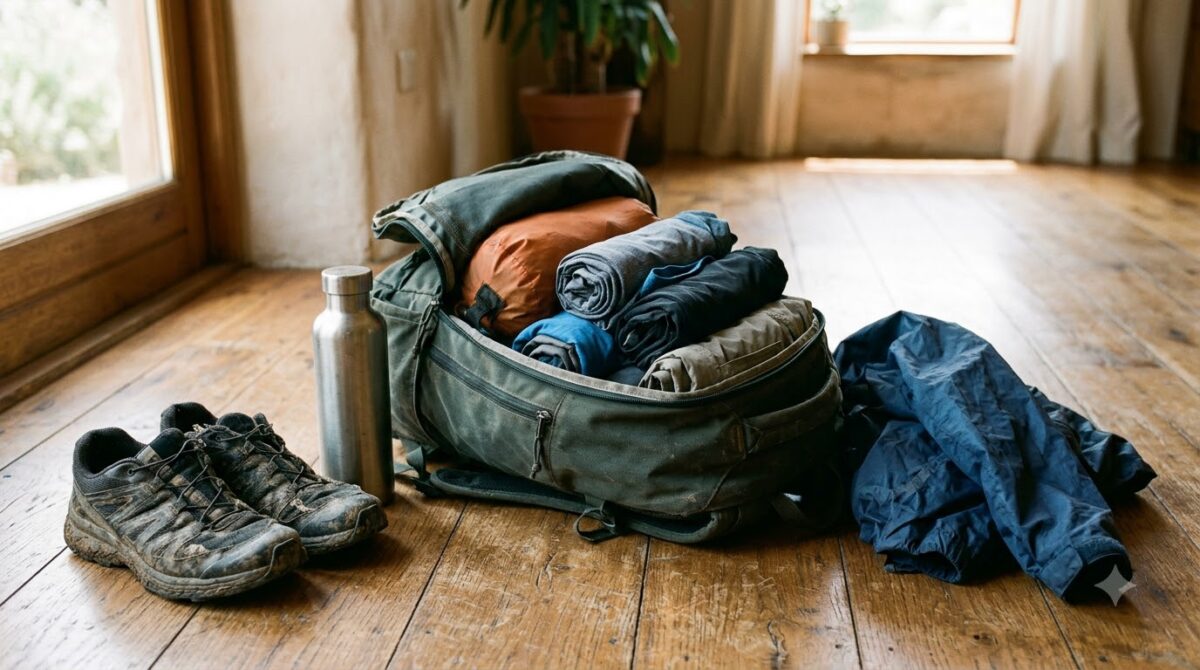
Costa Rica packing list: the essential items that actually matter
If you get these right, the rest is detail.
- A lightweight rain jacket. Not a poncho, not an umbrella. It rains in every month somewhere in this country.
- Closed-toe shoes with grip. Compulsory on most tours, and the difference between walking a muddy trail and sliding down it.
- A dry bag. More useful than any gadget you own. Boats, waterfalls, afternoon downpours.
- Bug spray that works. Buy it before you fly; local stock is patchy outside the cities.
- Sunscreen and a reusable water bottle. Reef-safe sunscreen in Costa Rica is not just etiquette — You are 10 degrees from the equator and some parks ask for it specifically.
Everything below is elaboration on those five, plus what to skip.
What clothing to pack for Costa Rica’s climate
Costa Rica has no dress code worth worrying about. Even the good restaurants are shorts-and-sandals places. What matters is that things dry.
Cotton is the mistake. In this humidity a cotton t-shirt takes a day and a half to dry and starts to smell before it does. Synthetic or merino dries overnight.
| Item | How many, for 10 days | Why |
|---|---|---|
| Quick-dry t-shirts | 4–5 | You will sweat through one a day |
| Shorts | 2–3 | One pair is always damp |
| Long pants, quick-dry | 1–2 | Evenings, mosquitoes, cloud forest |
| Long-sleeve light shirt | 1 | Sun protection, and insects at dusk |
| Swimsuit | 2 | So one can dry |
| Fleece or sweater | 1 | Monteverde is 15°C, not 30°C |
| Underwear and socks | 5–6 | Laundry costs a few dollars |
The sweater surprises people. Costa Rica’s tropical climate is not uniform: visitors arrive from the lowlands into Monteverde in shorts and spend the evening buying a sweatshirt in the village. At 1,400 metres it runs 15–20°C and it is damp. Same at Poas, Irazu, and San Gerardo de Dota if you go looking for quetzals.
Is it too hot for jeans in Costa Rica?
In the lowlands, yes. On the Pacific and Caribbean coasts it runs 30°C with high humidity, and jeans in that take forever to dry and stay damp against your legs all day. Locals wear them, but locals are not walking a rainforest trail at midday.
Where jeans are fine: San José, Costa Rica and the Central Valley, Monteverde, and any evening in the highlands, where it is cool enough that they are comfortable. Plenty of Costa Ricans wear jeans daily in those places.
Where to leave them: the beach towns, Tortuguero, the Osa Peninsula, or any day with hiking in it. Long pants in quick-dry fabric do the same job at a quarter of the weight.
Bring one pair at most, and only if your trip includes the highlands.
Waterproof gear: the one item to get right
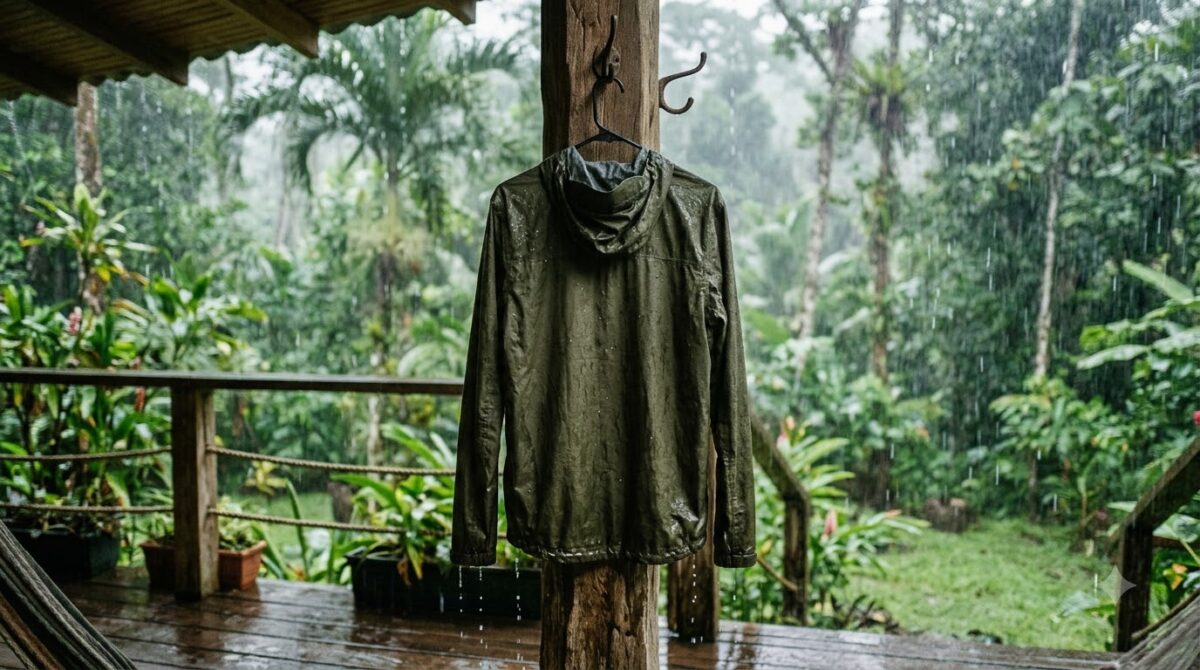
Bring a lightweight, breathable, hooded rain jacket. This is the most useful single item in your bag in any season, including the dry one.
- Breathable matters more than fully waterproof. A cheap plastic shell keeps rain out and sweat in, and at 90 per cent humidity you end up equally wet either way.
- Hood, not umbrella. You will be on boats and trails where a hand is needed.
- Skip rain pants unless you are visiting during the rainy season. Your legs dry.
- A rain cover for your day bag is worth more than most people expect, especially around Arenal Volcano where afternoon rain is close to daily.
- A cheap plastic poncho is worth throwing in as a backup for a day pack. They cost almost nothing and pack to the size of a fist.
A raincoat, rain jacket or poncho belongs in the bag in every season, wet season or dry. If you are traveling to Costa Rica in the green season, add a second dry set of clothes kept permanently in a dry bag. Getting soaked is fine. Having nothing dry to change into at the end of the day is not.
Shoes: closed-toe is not optional
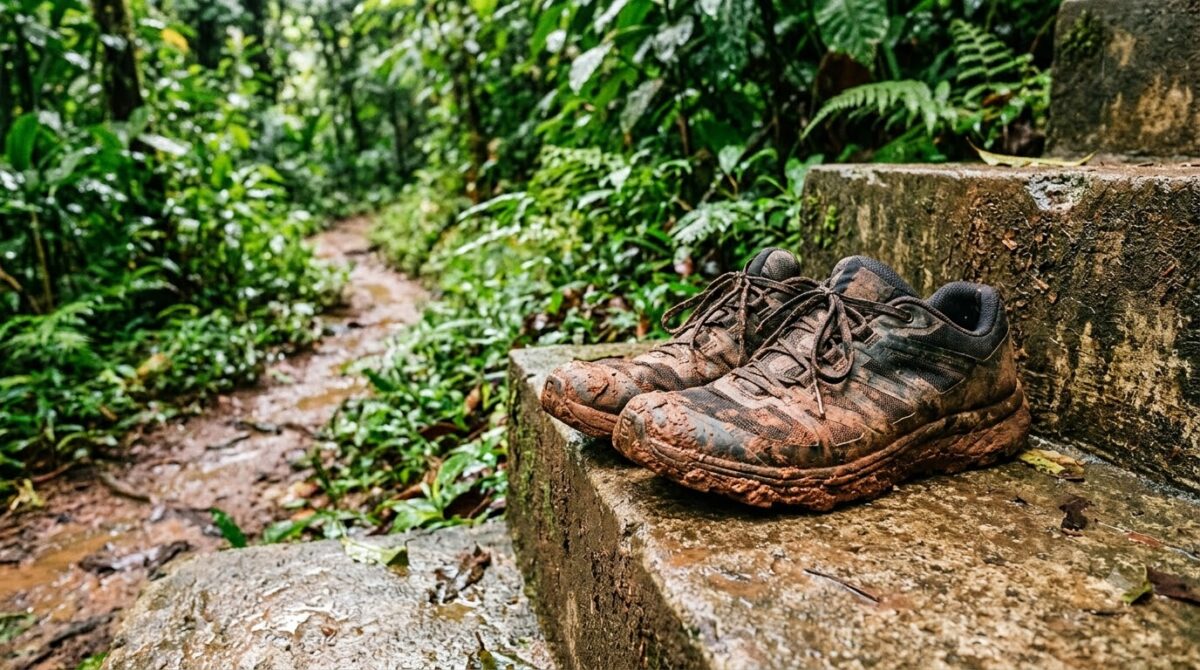
This catches people out at the gate. A lot of tours refuse entry in open shoes — zip lines, hanging bridges, canyoning, most guided hikes. Sandals will not get you on.
| Bring | For |
|---|---|
| A pair of hiking shoes, trail shoes or sturdy sneakers | Everything. This is the pair that matters |
| Sandals or flip-flops | Beach, town, hostel showers |
| Sport sandals with a heel strap | Optional. Good for waterfalls and river crossings |
You do not need heavy hiking boots. Tennis shoes with decent tread are fine for most trails. Boots are heavy, they take forever to dry, and a broken-in trail shoe handles every trail on a normal itinerary. The exception is Chirripo, the country’s highest peak, which is a genuine mountain hike.
Sneakers or hiking boots both work; what matters is that they are already broken in and you would not mind throwing them away. Costa Rican mud is red, sticky, and does not come out.
Mosquito repellent, sunscreen and a water bottle
These two are worth buying at home. Both are available here, but the choice is limited outside San Jose and the prices in tourist towns are roughly double.
Repellent. Mosquitoes are worst at dawn and dusk, in the lowlands and on the Caribbean side. Dengue is present in Costa Rica, so this is not purely a comfort question. Something with a meaningful concentration of DEET or picaridin is what works; the citronella wristbands do not.
Sunscreen. High factor, and reef-safe if you will be in the water. Several marine parks and tour operators here ask for reef-safe formulations, and the sun at this latitude burns faster than people expect even under cloud.
Add after-sun or aloe. You will use it.
The dry bag, and everything electronic
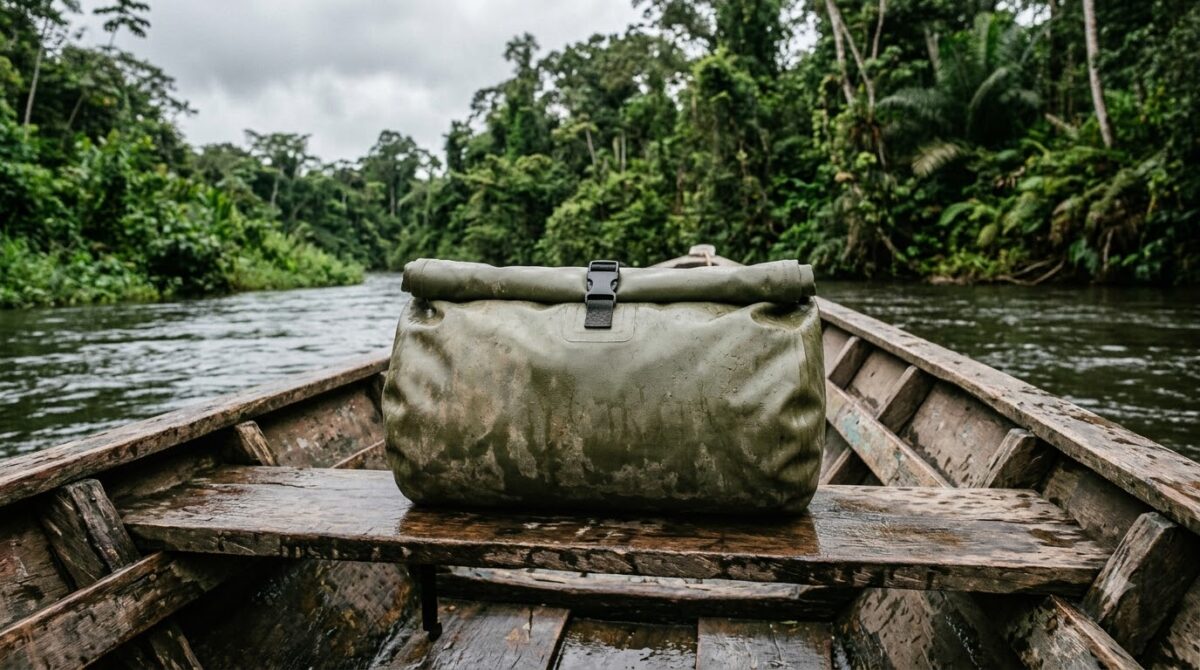
Bring a dry bag. A 10–20 litre roll-top is enough. This is the item most first-time visitors skip and most repeat visitors would not travel without.
You will be on open boats to Tortuguero, in the rain on a canal trip, at the base of a waterfall, or in a car with a leaking window. Phones, passports and camera gear all live in it.
- Waterproofing for electronics — a waterproof phone pouch — cheap, and lets you use the phone through the plastic.
- Power bank — power cuts happen in rural areas and boats have no sockets.
- Plug adapter — Costa Rica uses the same flat two-pin plugs and 120V as the US and Canada. Visitors from Europe, the UK and Australia need an adapter; North Americans need nothing.
- Head torch — genuinely useful for night walks, early boat departures and power cuts. Better than a phone light because it leaves your hands free.
- Binoculars — if you care about the wildlife of Costa Rica at all, a small pair transforms the trip. See our wildlife guide for what you will be looking at.
Documents, money and health items to bring to Costa Rica
- Passport valid well beyond your stay, plus a photocopy or photo kept separately.
- Driving licence if you are renting a car. No international permit needed for most nationalities — see our guide to driving in Costa Rica.
- A credit card with no foreign transaction fee, and a backup card. Rental car deposits put a large hold on your limit.
- Some US dollars in small notes plus colones for sodas, tolls and parking attendants.
- Basic medical kit — rehydration salts, antihistamine, painkillers, plasters, anti-diarrhoea tablets, motion sickness tablets if you are taking boats.
- Travel insurance that covers adventure activities. Zip lining and rafting are excluded by some policies.
Tap water is safe to drink in most of the country, so a reusable bottle saves money and plastic. A filter bottle is unnecessary for the standard tourist route.
Map shows live availability and prices. We may earn a commission on bookings made through it, at no extra cost to you.
Health and safety items to bring when you visit Costa Rica
Costa Rica has good pharmacies and you can buy most things in any town. These are the ones worth carrying because you will want them at the wrong moment.
- Any prescription medication you take, in its original packaging, with enough for the whole trip plus a few days.
- Rehydration salts. Heat, humidity and a long walk empty you faster than you notice.
- Painkillers — ibuprofen or a Tylenol-type paracetamol. Also useful for the altitude if you add a highland stop.
- Loperamide or a similar over-the-counter drug for an upset stomach.
- Antihistamine for bites and unexpected reactions.
- Motion sickness tablets if you are taking boats, which you are if Tortuguero or Cano Island is on the list.
- Plasters and antiseptic for the blisters that damp shoes cause.
Weather and temperature vary more by altitude than by month here, so check the regions table below before you decide what you need to bring. Tap water is safe to drink almost everywhere on the standard route, so a reusable water bottle covers hydration without buying plastic. Water quality is one thing visiting Costa Rica makes easy.
What NOT to pack for Costa Rica
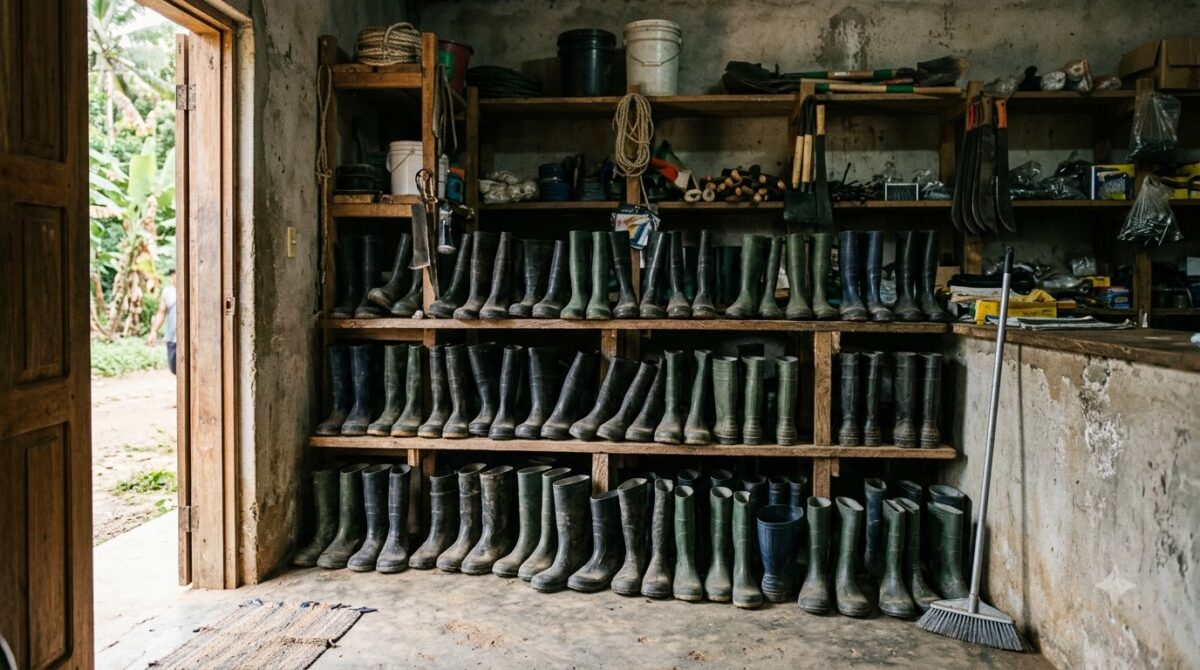
This is the section the affiliate lists leave out, because there is nothing to sell you.
- Rubber boots. Do not fly them in. They cost a few dollars in any Costa Rican hardware shop, and most rainforest lodges lend them free. They take up a third of a suitcase for nothing.
- Hiking boots, unless you are climbing Chirripo. Heavy, slow to dry, unnecessary.
- Smart clothes. There is nowhere on a normal itinerary that requires them.
- A hairdryer. Most places have one and your hair will not be dry anyway.
- Large amounts of cash. ATMs are everywhere and cards work almost everywhere.
- Jewellery and anything you would hate to lose. Theft from parked cars and bags on beaches is the main crime against visitors here.
- A drone, unless you have checked the rules. They are prohibited in national parks.
- Camouflage clothing. Not a legal problem in Costa Rica, but it is in some neighbouring countries and it looks odd here.
- Too many books. Weight, and they go damp.
The single biggest saving is clothes. Laundry costs a few dollars a load in every beach town and most hotels will do it. Pack for five days and wash once.
Common mistakes when you pack light for a Costa Rica vacation
The same five come up again and again, and none of them is about forgetting an item.
- Packing cotton. A cotton t-shirt takes a day and a half to dry in this humidity. Everything you bring should be quick-dry.
- Packing only for heat. Monteverde is 15°C and wet. People arrive in shorts and buy a sweater in the village.
- Packing too much. Laundry is a few dollars a load. Five days of clothes covers two weeks.
- Assuming the dry season is dry. Rain at any time of year is normal here. Pack rain gear in every month.
- Bringing new shoes. Costa Rica is where you find out they do not fit, on a muddy trail, an hour from the car.
Deciding what to pack for Costa Rica is mostly a subtraction problem. The country is casual, warm and wet, and almost nothing you own is required.
What to pack for Costa Rica during the rainy season
The green season runs roughly May to November on the Pacific side, with September and October wettest. On the Caribbean the pattern inverts — see when to visit Costa Rica.
What changes if you travel then:
- Add a second dry bag, or several sealed plastic bags.
- Add quick-dry trousers and a second pair of shoes, so one can dry while you wear the other.
- Add rain trousers if you are doing serious hiking.
- Bring more socks than feels sensible. Wet socks are the most miserable part of a wet trip.
- Expect roads to be worse. If you are hiring a car, this is the season for a real 4×4.
- Leave the suede and leather at home. They will not survive.
Know what to bring: a packing list for Costa Rica by region
Costa Rica is small but its climates are not, and outdoor activities around Costa Rica differ sharply from the Costa Ballena to the highlands. What you need at 1,400 metres in cloud is not what you need on the Caribbean coast. This is where most generic lists fall down.
| Where | Climate | Add to the bag |
|---|---|---|
| La Fortuna, San Carlos and Arenal Volcano | Hot, humid, frequent rain | Swimwear for hot springs, rain jacket, repellent |
| Monteverde | 15–20°C, wet, windy | Fleece, warm layer, waterproof, closed shoes |
| Jaco and Manuel Antonio National Park | Hot and humid, beach days | Light clothes, sun protection, day bag that closes |
| Osa Peninsula and Corcovado National Park | Very wet, tropical rainforest, remote | Dry bags, long sleeves, strong repellent, spare everything |
| Tortuguero National Park | Rain in every month, kayaking | Dry bag, dark clothes for turtle tours, boat luggage limits |
| Tamarindo, Costa Rica and Nicoya | Driest, hottest, snorkeling and surfing | Sun protection, more water, less rain gear |
| Puerto Viejo de Talamanca and the Caribbean | Wet Nov–Jan, drier Sep–Oct | Rain gear year-round, repellent |
Two specifics worth planning around. Turtle nesting tours at Tortuguero require dark clothing and allow no flash photography. And small aircraft to the Osa and Tortuguero limit checked luggage to around 11kg, so lodges will store the rest of your bag in San Jose.
How much money should you bring to Costa Rica?
Very little cash. Cards work almost everywhere on the tourist route, and ATMs are in every town of any size.
- Carry the equivalent of US$100–200 in colones for sodas, market stalls, tolls, parking attendants and small shops.
- Some small US dollar notes are accepted widely, but you get a poor rate paying in them. Use colones where you can.
- Two cards, on different networks. A car rental deposit puts a hold of US$1,000 to US$3,000 on one of them for the whole trip.
- Tell your bank you are travelling. Card blocks are the most common money problem here, not theft.
Budget-wise, a Costa Rica vacation runs roughly US$55 per person per day at the budget end and US$110 mid-range, excluding transport between regions. Our 10 day itinerary breaks the costs down leg by leg.
Costa Rica travel tips: how much luggage you actually need
A carry-on sized bag is enough for two weeks, and there are practical reasons to keep it that small here.
- Shared shuttles, the public bus and small boats all have limited space, and you may be carrying your own bag over sand or up steps.
- Domestic flights limit you to roughly 11kg.
- Rural roads and unpaved lodge tracks make wheeled hard cases a nuisance. A soft duffel or a backpack is easier.
- Laundry is cheap and everywhere.
If you are on a single-base beach holiday, none of this matters and you can bring what you like. If you are doing our 10 day itinerary with four moves, pack small.
Check hotels across Costa Rica →
Frequently asked questions
What should you not pack for Costa Rica?
Rubber boots, hiking boots, smart clothes, a hairdryer, large amounts of cash, jewellery and anything you would hate to lose. Rubber boots cost a few dollars in local hardware shops and most rainforest lodges lend them free, so flying them in wastes a third of a suitcase.
Do I need hiking boots for Costa Rica?
No, unless you are climbing Chirripo. A broken-in trail shoe or sturdy trainer handles every trail on a normal itinerary, dries faster and weighs less. What you do need is closed-toe shoes: zip lines, hanging bridges and most guided hikes refuse entry in sandals.
What kind of rain jacket do I need for Costa Rica?
A lightweight, breathable, hooded one. Breathability matters more than being fully waterproof, because at 90 per cent humidity a cheap plastic shell keeps the sweat in and you end up equally wet. Skip rain trousers unless you are travelling in September or October.
Do I need a dry bag in Costa Rica?
Yes, and it is the item most first-timers skip. A 10 to 20 litre roll-top covers boats to Tortuguero, canal trips in the rain, waterfalls and afternoon downpours. Phones, passports and camera gear live in it. A waterproof phone pouch is a cheap addition.
What plug adapter does Costa Rica use?
Costa Rica uses the same flat two-pin plugs and 120V supply as the United States and Canada, so North American visitors need nothing. Travellers from Europe, the UK, Australia and most of Asia need an adapter, and should check whether their devices handle 120V.
How much clothing should I pack for Costa Rica?
Around five days worth, then wash. Laundry costs a few dollars a load in every beach town. Bring quick-dry synthetic or merino rather than cotton, which takes a day and a half to dry in this humidity, and add one fleece for Monteverde and the highlands.
Do I need insect repellent and what kind?
Yes, and buy it before you fly, since choice is limited outside San Jose and prices in tourist towns are roughly double. Use something with a meaningful concentration of DEET or picaridin. Dengue is present in Costa Rica, so this is not only a comfort question.
What size luggage is best for Costa Rica?
A carry-on sized soft bag or backpack, even for two weeks. Shared shuttles and small boats have limited space, domestic flights cap checked luggage at around 11kg, and wheeled hard cases are awkward on unpaved lodge tracks and sand.
Park rules, plug standards and prices read 20 August 2026. Reef-safe sunscreen requirements and drone rules vary by park — check the official parks site before travelling.