
Figuring out where to stay in Rome is not really a hotel decision. It is a neighbourhood decision, and once you have made it the hotel part gets easy.
Some links below are affiliate links. We may earn a commission if you book through them, at no extra cost to you. We do not rank hotels, and any prices on the map come live from the booking sites.
Quick answer: where to stay in Rome. On a first trip, stay inside the historic centre or in Monti: the extra you pay is bought back in walking. Trastevere if you are here to eat and go out at night, Prati if you are bringing children.
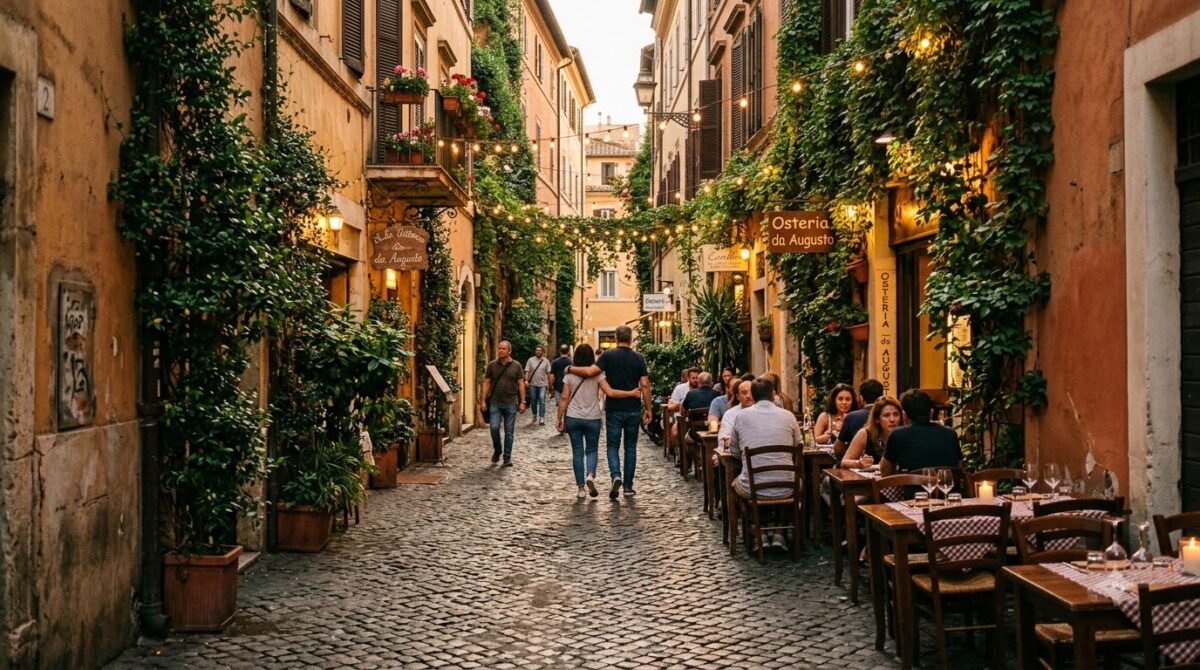
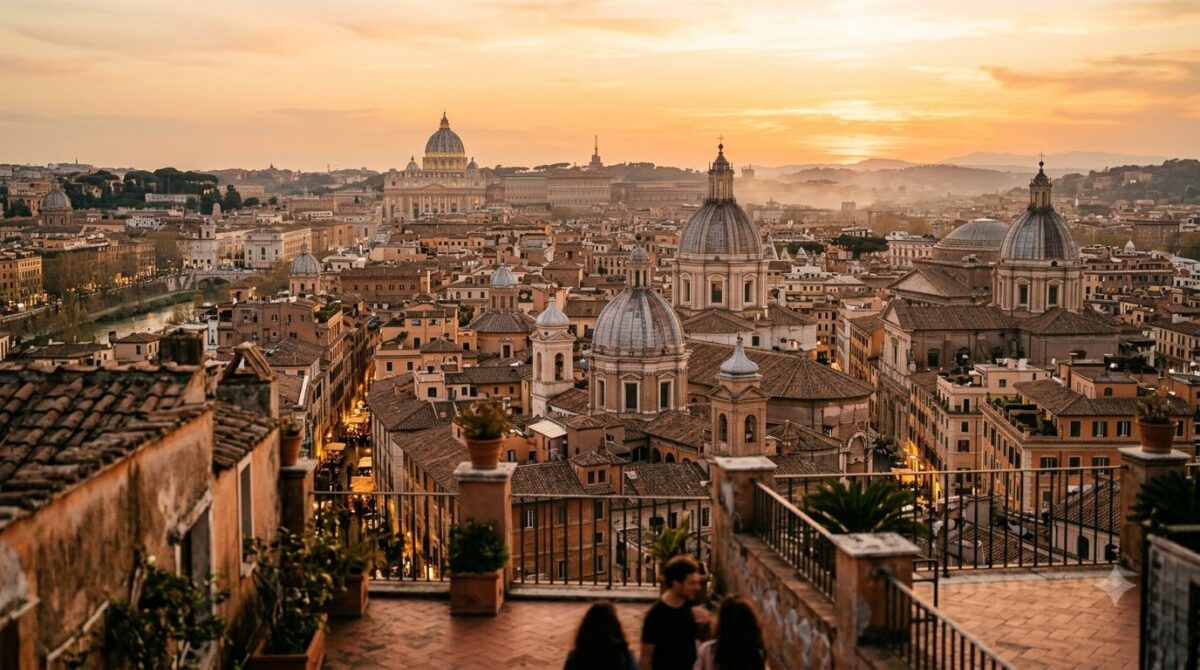
Rome’s historic centre is small. Most of the areas below are twenty to thirty minutes on foot from each other, and every one of them is walkable to something you came to see. What actually changes between them is noise at night, how many restaurants near you serve tourists rather than locals, and how much you pay for the same room.
Areas, transport and access rules checked 6 September 2026. Rome hotel prices move sharply by season, so treat any figure you see as a starting point and confirm at the time you book.
The short answer
| If you are | Stay in |
|---|---|
| A first time visitor with three days | Centro Storico or Monti |
| Here to eat and go out at night | Trastevere |
| Travelling on a budget | Monti, Testaccio or San Giovanni |
| Bringing children | Prati |
| Wanting a high-end stay | Spanish Steps and Piazza del Popolo |
| Here for two nights, arriving late | Centro Storico, and pay for it |
If you read nothing else: on a first trip to Rome, stay inside the historic centre or in Monti. The extra you pay is bought back in walking, and in Rome walking is how you see the city.
Centro Storico: the middle of everything
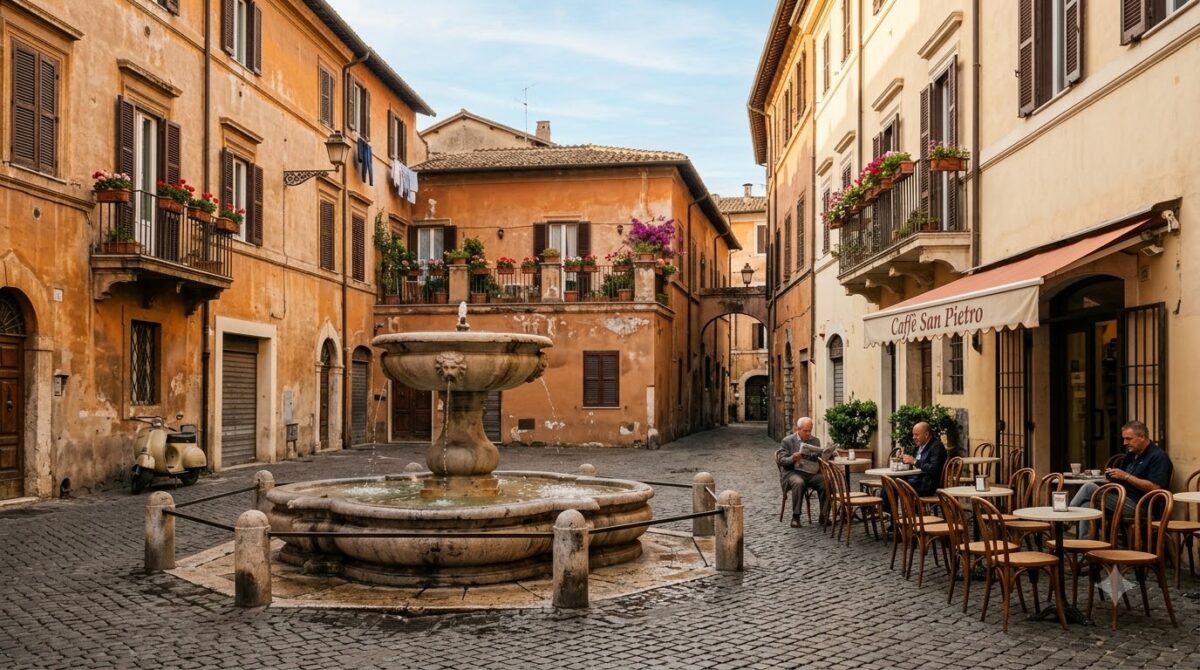
The Centro Storico is the tangle of streets around the Pantheon, Piazza Navona and Campo de’ Fiori. This is the heart of Rome, and staying here means the Trevi Fountain is a ten minute walk and the Pantheon might be at the end of your street.
Who it suits: first time visitors, short stays, and anyone who would rather pay more than commute.
- Everything on foot. Pantheon, Piazza Navona, Trevi, the Jewish Ghetto, and across the river to Trastevere in about fifteen minutes.
- You will pay for it. This is consistently the most expensive part of central Rome for hotels.
- Rooms are small and old. These are converted historic buildings. Lifts are rare, stairs are common, and the ceiling may be beautiful while the bathroom is not.
- Restaurants near the big sights are the weakest in Rome. Walk five streets away from any famous piazza before eating.
The catch nobody mentions: Campo de’ Fiori is a market by day and a drinking square by night, and it is loud until two in the morning. If your hotel is on it, ask for a room at the back.
Map shows live availability and prices. We may earn a commission on bookings made through it, at no extra cost to you.
Monti: the best balance in Rome
Monti sits between the Colosseum and Termini station, and it is the area most people wish they had picked. It is a small grid of cobbled streets with independent shops, wine bars and a genuine neighbourhood feel, and the Colosseum and Roman Forum are about ten minutes away on foot.
Who it suits: almost everyone. Especially second-time visitors, and anyone who wants central Rome without the crowd noise.
- Walkable to the Colosseum, the Forum and the Centro Storico. Two Metro stops, Cavour and Colosseo, sit at its edges.
- Cheaper than the Centro Storico for a comparable room, usually noticeably so.
- The Monti neighbourhood eats well. The restaurants here serve people who live in Rome, which is the whole difference.
- Quiet by ten or eleven on most streets, with the bar noise concentrated around Piazza della Madonna dei Monti.
The one downside: Monti is on a hill, and the streets are cobbled. With a heavy suitcase, the walk from Termini is longer than it looks on a map.
Trastevere: atmosphere, at the cost of sleep
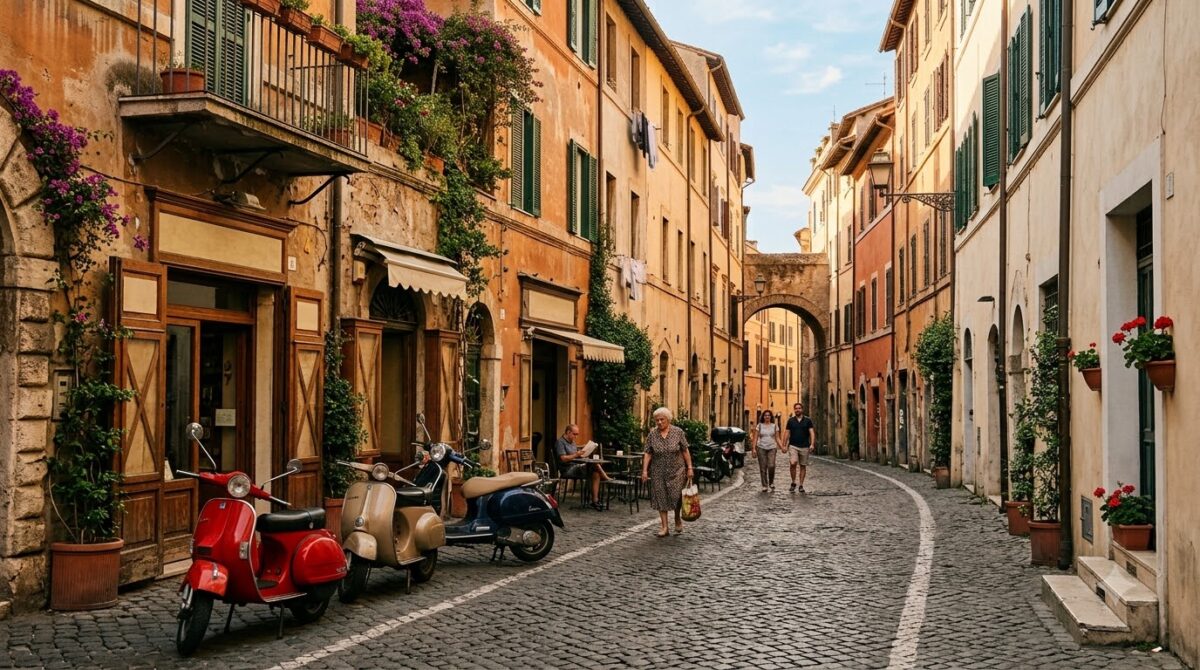
Trastevere is across the Tiber, and it is the area everyone falls in love with. Ivy on ochre walls, washing strung between windows, cobbled lanes that go nowhere in particular, and the densest concentration of good restaurants in the city.
Who it suits: people whose trip is built around eating and evenings out, and couples who do not mind noise.
- The best food and bar scene in Rome, and it is not close.
- Walkable to the Centro Storico in about fifteen minutes across Ponte Sisto.
- Fewer big sights than anywhere else on this list. You will walk out of Trastevere every morning.
- No Metro station. Trams and buses only, which is fine but slower.
Be honest with yourself about the noise. The streets around Piazza Santa Maria in Trastevere and Piazza Trilussa are loud until very late, every night, in every season. If you sleep lightly, choose a room away from the piazzas or stay somewhere else and walk over for dinner. A quiet stay in Trastevere is possible, but you have to pick the street deliberately.
Prati and the Vatican: calm, and the best value
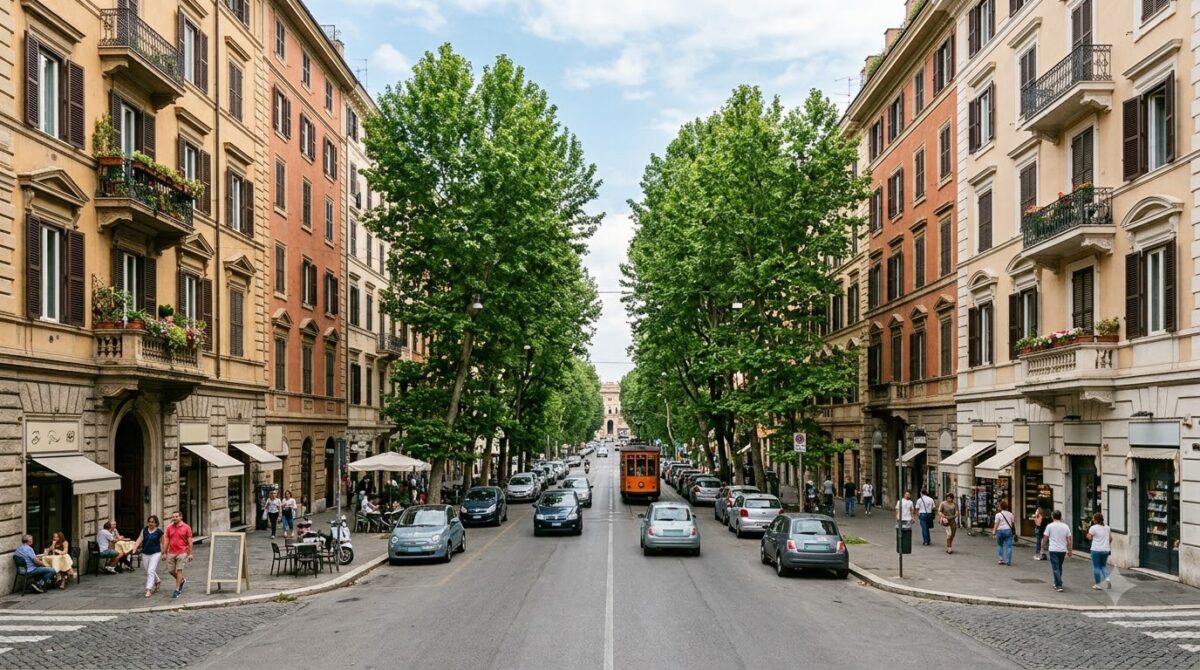
Prati is north of the Vatican, and it is where Romans actually live. Wide nineteenth-century boulevards, proper pavements, ordinary shops, and none of the medieval charm. That sounds like a criticism and it is not.
Who it suits: families, longer stays, and anyone who wants a full-sized hotel room at a fair price.
- Rooms are bigger and cheaper than the equivalent in the historic centre, because the buildings are newer.
- Two Metro stops and easy buses. Fifteen minutes to the Centro Storico on foot across the river.
- Walking distance to the Vatican Museums, which matters more than it sounds when you have an early timed entry.
- Restaurants serve locals, and prices reflect that.
The trade-off: Prati is not romantic. If part of what you want from Rome is stepping out of the door into something beautiful, this is not the area.
Spanish Steps and Piazza del Popolo: the expensive end
The area between the Spanish Steps, Piazza del Popolo and Via Veneto holds most of Rome’s luxury hotels and all of its designer shopping. Via dei Condotti runs from the foot of the Spanish Steps and is the smartest street in the city.
Who it suits: people who want a high-end stay and are choosing the hotel first and the city second.
- The concentration of luxury hotels is highest here, including several small luxury hotels in converted palazzi.
- Very central and very well connected, with the Spagna and Flaminio Metro stops.
- Quiet at night compared with Trastevere or Campo de’ Fiori.
- Thin on ordinary restaurants. This is a shopping district, and eating here costs more for less.
On the Rome Cavalieri: the city’s best known five-star hotel is not in this district at all. It sits on Monte Mario, above and outside the centre, with the best view in Rome and a shuttle into town. It is a resort in a city, which some people want and most first-time visitors do not.
Termini: read this before you book there
Search any hotel site for Rome and the cheapest results cluster around Roma Termini. There is a reason.
The area immediately around the station is the least pleasant part of central Rome. It is not dangerous in the way people fear, but it is scruffy, busy with traffic, and thin on reasons to be there in the evening. Pickpocketing around the station and on the buses that leave it is the most common problem tourists report anywhere in Rome.
- It is genuinely convenient for the airport train, onward trains and the Metro. On a one-night stop before an early train, that convenience is worth something.
- Walk two or three streets and it improves fast — towards Monti to the west, or the Esquilino and San Giovanni areas to the south.
- Watch your bag in the station and on the 64 bus, which runs to the Vatican and is the most worked route in the city.
If the saving is small, spend it and stay in Monti instead. It is the same distance from the Colosseum and a completely different evening.
Testaccio and San Giovanni: where the value is
Two areas that rarely make a guide to the best places to stay in Rome, and both deserve to.
Testaccio is south of the centre and is the serious food neighbourhood of Rome — a covered market, the classic Roman offal dishes, and almost no tourists staying overnight. It is a twenty-five minute walk or a short Metro ride to the Colosseum.
San Giovanni sits around the basilica of the same name, on the Metro line A, with ordinary prices and a fifteen minute ride into the centre. It suits a longer stay where you want a kitchen and a supermarket more than you want a view.
How many nights do you need in Rome?
Three nights is the working minimum for a first visit: one day for ancient Rome, one for the Vatican, and one for the centre and whatever you missed. Two nights means choosing between the Colosseum and the Vatican, and people regret that choice.
Four or five nights lets you add Ostia Antica, the Borghese Gallery or a slower pace. If Rome is part of a longer route, our 10 day Italy itinerary sets out how three days here fits with Florence, Cinque Terre and Venice.
Practical things that change which hotel you pick
- Do not plan to drive. Central Rome is a ZTL, a limited traffic zone enforced by camera, and each entry is a separate automatic fine that arrives months later. If your hotel has parking it must register your plate in advance.
- Airport transfers are fixed price. Rome sets a flat taxi fare between Fiumicino and the area inside the Aurelian walls, so a licensed white taxi cannot overcharge you. The Leonardo Express train runs to Termini in about 32 minutes.
- There is a city accommodation tax, charged per person per night and usually collected at the hotel rather than included in the online price.
- Air conditioning is not universal in older buildings, and Rome in July and August is genuinely hot. Check, if you are travelling in summer.
- Lifts are the exception in the historic centre. If stairs are a problem, confirm it in writing before booking.
Where to stay in Rome for a first trip, in one line
Monti if you want the best balance, Centro Storico if the trip is short, Trastevere if it is about the evenings, Prati if you need space. Those four cover almost everyone, and the walk between any two of them is under half an hour.
Hotel, boutique hotel or apartment?
Once the area is settled, the type of place matters more in Rome than in most cities, because the buildings are old and what you get varies wildly at the same price.
- Boutique hotels in converted palazzi are the characteristic Rome stay. Ten to thirty rooms, a courtyard, sometimes a roof terrace. This is where the city’s best hotels sit, and small luxury hotels of this kind cluster in the Centro Storico and around the Spanish Steps.
- Apartments win on a longer stay or with a family. A kitchen and a washing machine change a week-long trip completely, and in Monti or Prati an apartment often costs less than two hotel rooms. Check whether the building has a lift and which floor you are on.
- Large chain hotels sit mostly outside the historic centre, near Termini or out towards the airport. They give you a predictable modern room and a lift, at the cost of the walk.
- Affordable hotels in central Rome are usually small family-run places on the upper floors of residential buildings. They are often excellent value. Read recent reviews for the two things that go wrong: noise from the street, and no air conditioning.
One rule that applies to all of them: in the historic centre, ask which floor the room is on and whether there is a lift. Four flights of stone stairs with luggage is a real feature of Rome hotels, not a rare accident.
Does the season change where you should stay?
A little, and in ways that are easy to plan around.
- Rome in March, and through to May, is the sweet spot. Mild, and outdoor tables are back. Prices climb steadily from Easter, so book earlier than feels necessary for spring.
- July and August are hot enough that air conditioning stops being optional and a room with a shaded courtyard is worth paying for. This is also when the historic centre is at its busiest, which makes Prati and Monti more attractive.
- November to February is the cheapest time to visit Rome, and the historic centre is the obvious choice because short daylight makes walking distance count for more.
Whatever the season, book further ahead than you would for most European cities. Rome runs close to full through most of the year, and the good rooms in the small central hotels are the first to go.
Heading south afterwards? The train takes just over an hour — see whether Naples is worth visiting before you add it.
Heading to Portugal on the same trip? Our guide to where to stay in Lisbon takes the same neighbourhood-first approach.
Working out the days themselves? Our Rome 3 day itinerary splits the city by area so you never cross it twice.
Short stay? See the Rome 2 day itinerary for why staying central matters more on two days than on five.
Not sure how long to book? How many days in Rome breaks down what one, two, three and four days each cover.
Adding Spain to the trip? Our guide to where to stay in Barcelona compares the Eixample, El Born, Gracia and the beach neighborhoods.
Florence next on the route? Where to stay in Florence takes the same approach for a city where everything is already walkable.
Checking current rates in Rome
Everything above is about position — which area suits which kind of trip. What it deliberately does not do is quote prices, because rates in Rome move a long way by season, by day of the week and by how far ahead you book, and any figure printed in a guide is out of date the week after it is written.
These searches show live availability and current prices, so you can check them against the areas described above:
These are affiliate links. If you book through one we may earn a commission, at no extra cost to you. It does not affect which areas we recommend above — nobody pays to be listed here.
Frequently asked questions
What is the best area to stay in Rome for the first time?
Monti or the Centro Storico. Monti gives you the better balance of price, quiet and neighbourhood feel while still being ten minutes from the Colosseum. The Centro Storico costs more but puts the Pantheon, Piazza Navona and the Trevi Fountain on your doorstep, which matters most on a short stay.
Is Trastevere a good place to stay in Rome?
Yes, if your trip is built around food and evenings. It has the best restaurant and bar scene in the city and is fifteen minutes on foot from the historic centre. The drawback is noise: the streets around the main piazzas stay loud until very late every night, so pick a room away from them if you sleep lightly.
Should I stay near Termini station in Rome?
Only for a single night around an early train or flight. The area right by the station is the least pleasant part of central Rome and has the city worst pickpocketing. Walk a few streets towards Monti or San Giovanni and it improves quickly, usually for a similar price.
How many nights should I spend in Rome?
Three is the working minimum for a first visit: one day for the Colosseum and Roman Forum, one for the Vatican, and one for the historic centre. Two nights forces you to choose between ancient Rome and the Vatican. Four or five allows the Borghese Gallery or a day trip.
Where should families stay in Rome?
Prati. The buildings are newer than in the historic centre, so rooms are larger and cheaper for the same standard, the pavements are wide, and it is walking distance to the Vatican Museums. It is fifteen minutes on foot across the river to the centro storico.
Is it worth paying more to stay in central Rome?
On a short trip, yes. Rome is a walking city and the sights are clustered, so a central room buys back time you would otherwise spend on buses. On a stay of five nights or more the maths changes and areas like San Giovanni or Testaccio become better value.
Do I need a car in Rome?
No, and it is actively a problem. The historic centre is a limited traffic zone monitored by cameras, and every unauthorised entry generates a separate fine that reaches you months afterwards through the rental company. The Metro, buses and walking cover everything, and taxis from the airport are a fixed fare.